UN Body Calls Out Phl On Rights Violations
“The Philippines should replace an exclusively punitive approach to drug control with one fully in line with the ICCPR (International Covenant on Civil and Political Rights),” the United Nations Human Rights Committee said.
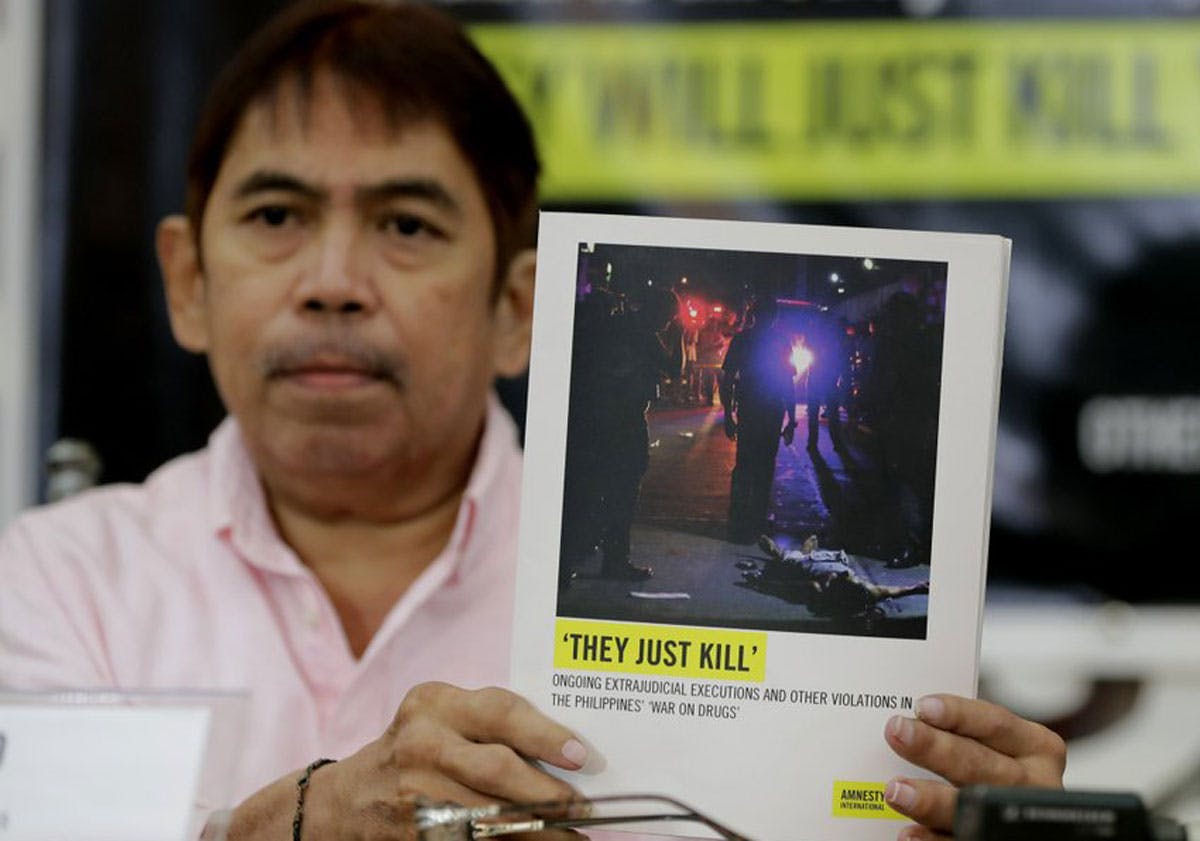
The United Nations Human Rights Committee (UNHRC) is concerned about reports of grave human rights violations and the high number of extrajudicial killings in the Philippines, particularly in the context of the campaign against illegal drugs.
The UNHRC issued its latest findings on the Philippines after examining the implementation of civil and political rights in the country, based on a summary of 58 stakeholders’ submissions for its universal periodic review, including a report from the Commission on Human Rights.
The Philippines has participated in the past three cycles of the universal periodic review in 2008, 2012 and 2017 and will undertake the fourth cycle review on Nov. 14.
The findings contain the UNHRC’s main concerns and recommendations on the implementation of the International Covenant on Civil and Political Rights (ICCPR).
“The Philippines should replace an exclusively punitive approach to drug control with one fully in line with the ICCPR,” the UNHRC said.
The report of the Office of the United Nations High Commissioner for Human Rights noted the overcrowding in prisons caused by drug-related arrests.The UNHRC recommended that the Philippines immediately reduce prison and police detention by expanding non-custodial measures, and intensify efforts to improve detention conditions for all detainees.
“The Committee is concerned about the long pretrial detention of former senator Leila de Lima since 2017 and politically motivated charges of rebellion and sedition against opposition members, and it urges the Philippines to refrain from using criminal laws to harass, intimidate and exclude opposition members from public life and electoral processes,” the report read.
The report mentioned that the withdrawal of the Philippines from the Rome Statute of the International Criminal Court was regrettable.
The UN committee said the Philippine government “should investigate and prosecute in a timely manner all cases of past human rights violations and ensure that perpetrators are brought to justice.”
It added that the government “should review and amend the Anti-Terrorism Act” as it violates international covenants that were ratified by the Philippine government.
The Committee said the Philippine government should put an end to red-tagging, as it further exposes activists, human rights defenders, and individuals to death threats, intimidation, at-tacks, arbitrary arrests and detention, enforced disappearances and extrajudicial killings.
“Attempts to reintroduce the death penalty should cease. The systematic ‘red-tagging’ of and disinformation about activists, human rights defenders and civil society organizations, including members of indigenous peoples’ communities, by the National Task Force to End Local Communist Armed Conflict, had resulted in threats, harassment and targeted killings,” the report said.
Counter-terrorism measures must respect fundamental freedoms and should not be used against legitimate dissenters and human rights activists.
The Commitee urged the Philippines to “put an end to extrajudicial killings of suspected drug offenders and users.”
“In doing so, it should ensure that high level officials refrain from inciting violence and extrajudicial killings, especially of suspects of drug use or trade,” the Committee said.
The Philippines was also urged to abolish the “drug watch lists” of individuals suspected of drug use or trade and the practice of “Oplan Tokhang,” and redouble its efforts to promptly, independently and thoroughly investigate all allegations of extrajudicial killings and bring perpetrators, including law enforcement officials, to justice.