Time Out For Adults: Why It’s Necessary To Set Up Your Own Quiet Space At Home
Breathe in the present and live a balanced life through meditation.
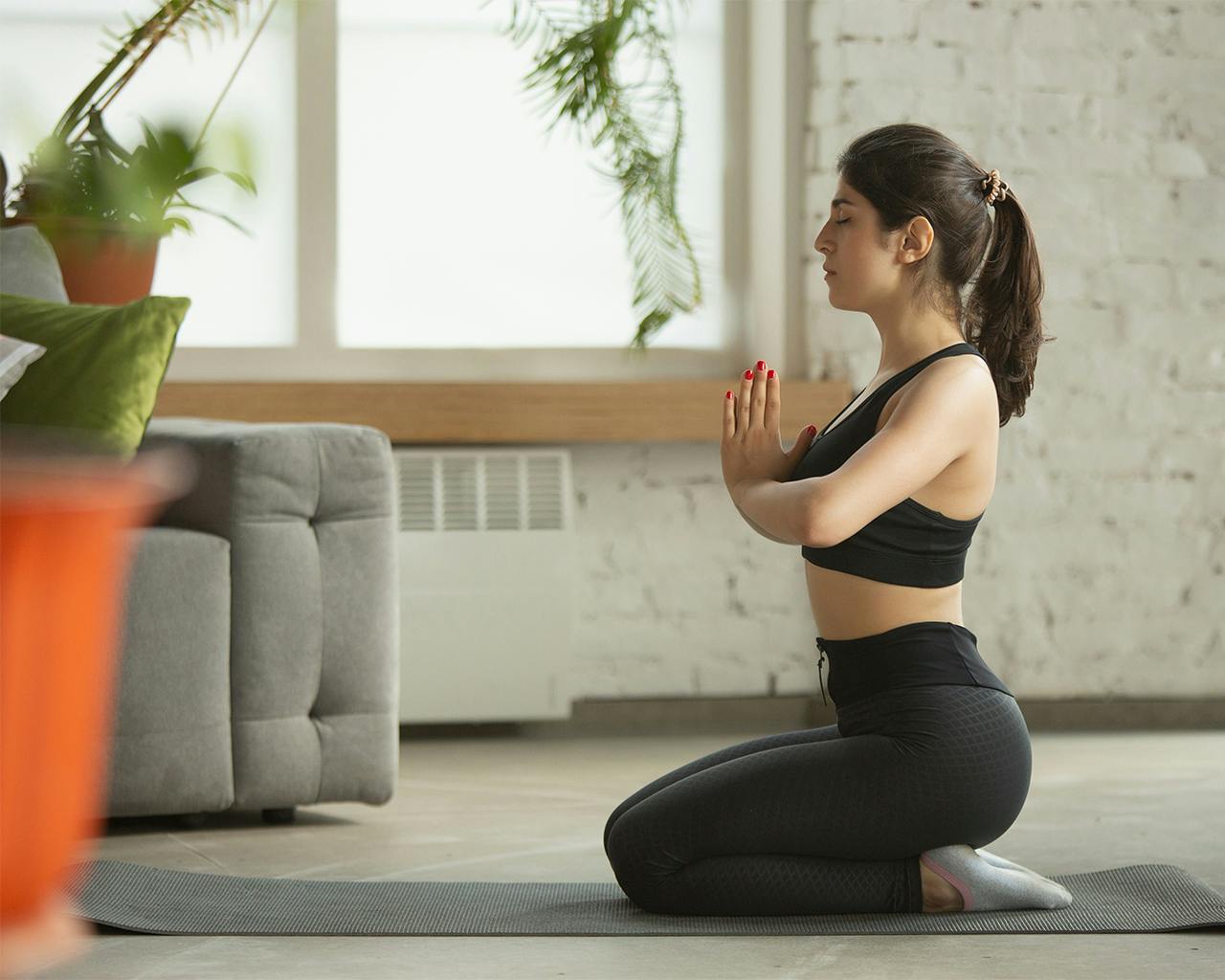
Have you ever felt weary, sad, or low-spirited these last 9 months? With a lot of uncertainty around us, it’s normal to be this way. Being separated from our loved ones and not being able to go back to our normal lives aggravates our fears and worries relating to COVID-19, thus our mental health may suffer.
One way to cope with all the stress and anxiety during this time is to practice mindfulness through meditation. Ken Walkama, a senior dharma teacher in Boston, says in his Meditation Booklet, “Meditation is learning to be fully present, awake to what it is. Mindfulness meditation is the practice of being fully present to whatever happens in the present.” Meditation is the way to calm your worries and be mindful of the here and now without getting overwhelmed.
The beauty of meditation is that you can set up your own space anywhere – moreso in your own home. Create your safe little haven of peace and calm with these tips from experienced yoga instructors.
1. Find the right spot.
Look around your home and see which area makes you feel comfortable and not cramped.
Says Teacher Jervin Tuason, a yoga instructor at Ananda Marga Yoga Center, “Dedicate a room [for] meditation. It is recommended to meditate at the same place and around the same time every day. Choose a quiet space where you can sit for some time in peace and free from any distraction.”
The space can be in your backyard or garden, if not a room. Ultimately, it’s about finding a spot that gives you privacy and where you can relax your mind and body.
2. Acknowledge distractions.
A serene and calm place is the key to finding inner peace through meditation. Allan Ray Enriquez, a yoga teacher and fitness coach, says this is “not about avoiding, [but] acknowledging [the distractions] and letting them go. Avoidance is giving focus to the distraction.”
There are surely a lot of distractions at home, especially if you do not live alone. Says Teacher Jervin, “It’s perfectly normal to have distractions in meditation, [but] just allow it to [pass] and command your body and mind to be in its most peaceful state. Simply exhale all those tensions and distractions away.”
3. Keep the area clean and uncluttered.
An organized environment results to a more relaxed mind. Zwen, a yoga teacher from Siargao, says, “When you have too many things around you, it could be bothersome. When you go to your place for meditation, the goal is to relax and let your thoughts go free. You can’t do that if you have to clean up your space first.”
Take it up a notch by adding fragrances or using essential oils in your space -- the choice is all yours! “You can [have] fresh flowers or fragrances which immediately create a feel-good atmosphere. You can also use incense sticks or essential oils. What I recommend is an air diffuser to make sure that there is always fresh air,” she added.
4. Choose a space with good lighting.
You can set your meditation space near your windows to get as much natural light as possible. Zwen advises, “If it is too bright, it can disturb and dazzle you [and] if it is too dark, you might fall asleep. The light is a color that accompanies us in our meditation, so it should be well chosen, [should] make us feel good [and] radiate a little warmth. Therefore, use a dimmed light, or candles.”
5. Personalize your space.
“You can use a meditation or yoga mat as base and a meditation pillow for your meditation corner. But since it should be your very personal place where you want to feel comfortable, you can set up even more accents,” says Zwen.
Let your meditation space be a place that brings in and reflects not only your personality, but the things that you love as well. “What you can do to personalize your meditation corner is to add a few favorite items, [like] a picture or poster of a magical place. Bring in everything you like to feel comfortable in your meditation corner,” she added.
6. Establish calmness and desire to meditate.
One of the requirements to meditation is a clear and calm mind. “Establishing calmness in meditation is important because it allows you to see things clearly and in different perspectives as well. Try to simply forget all the things that no longer serve you well, set aside those clouded thoughts and simply try to be in a state of surrender”, says Teacher Jervin.
Desire results to consistency, so turn your meditation into a habit and avoid excuses. “Start with five minutes a day [and] increase it every week”, Allan Ray suggests.
In meditation, as with anything else, the beginning is always the most challenging especially in the face of uncertainty. But, given the right attitude and regular practice, everything from thereon will flow smoothly.