



This Sari-Sari Store Owner Managed To Expand Her Business During The Pandemic, Here’s How
Corazon Gaylon is one of the beneficiaries of a program that helps people “graduate” from being ultra-poor and stand on their own by having sustainable businesses.
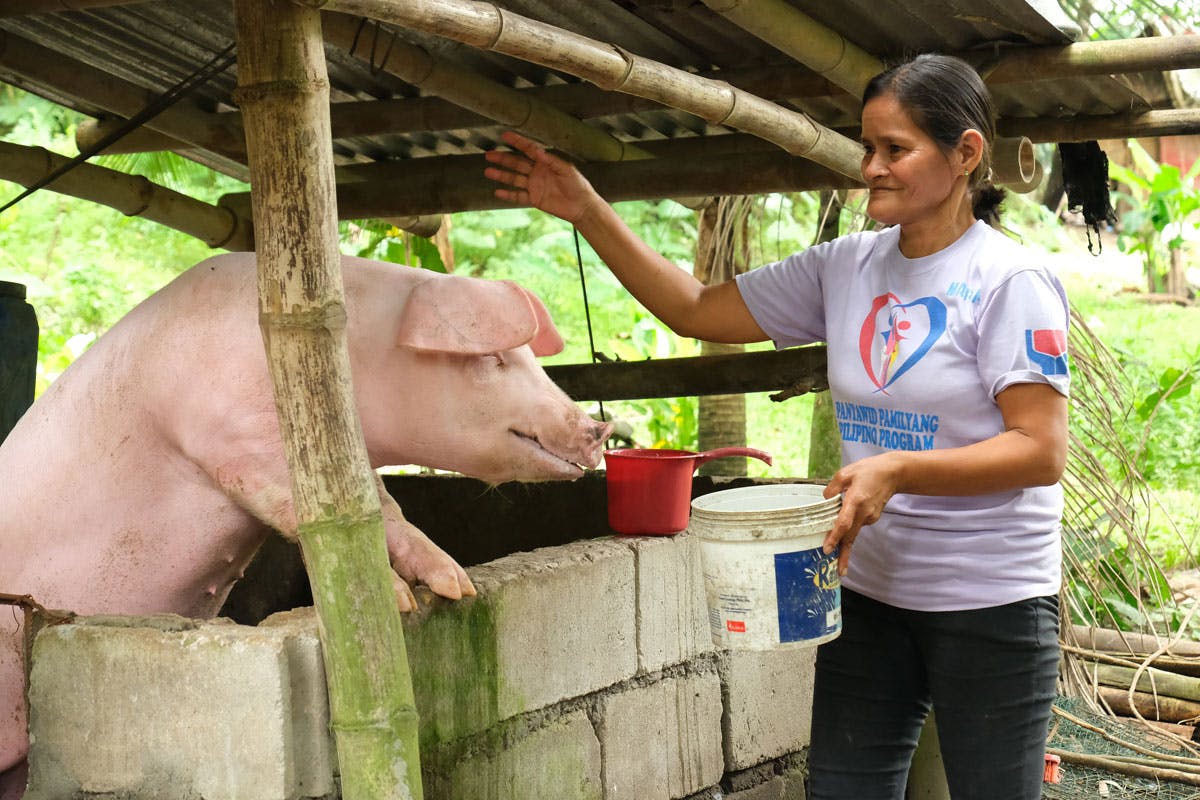
Corazon Gaylon, a resident of Barangay Salvacion in Murcia, Negros Occidental, could hardly make both ends meet even if she’s a conditional cash transfer (CCT) program beneficiary.
So she had to work on a farm and in a carinderia as well as do laundry every Saturday for P300. Still, there were times she had to borrow money to be able to provide for her family.
Gaylon said she had to wake up at 3 a.m. to be able to start working early, but accepted the low pay because life was hard and she had limited opportunities.
But Gaylon’s life changed when she was selected to become a part of the Department of Labor and Employment’s (DOLE) Ultra-Poor Graduation Program that was launched in the Philippines in 2018 in partnership with Asian Development Bank and the international organization BRAC.
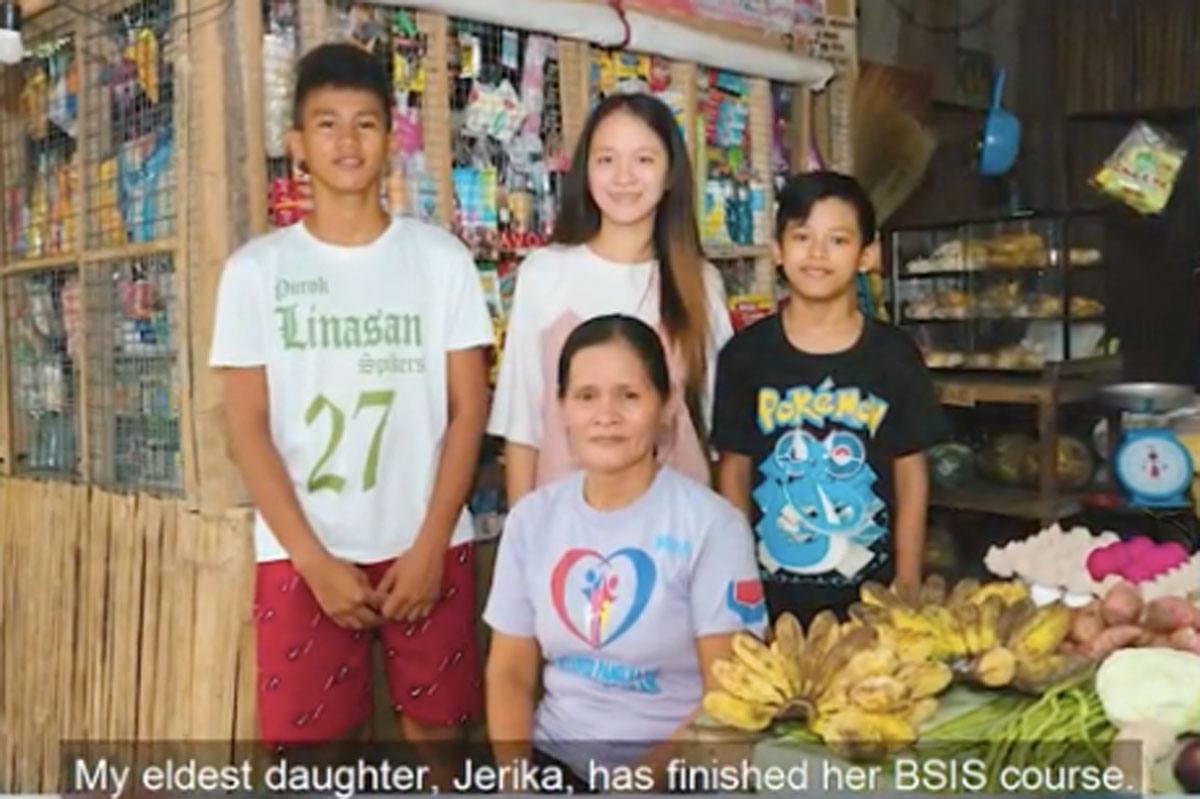
Gaylon indeed graduated from being ultra-poor to a sari-sari store owner who can already send her three children to school. She even has a savings account now.
When the pandemic struck in March last year, Gaylon was prepared and was even able to expand her business using her savings.
How did this happen? As she became part of DOLE’s Graduation approach, Gaylon underwent training on basic business as well as risk and asset management.
Gaylon was then given two pigs and five sacks of feed to start a piggery business. From the profit of selling pigs, she was able to start a sari-sari store and also venture into raising and selling chicken and turkey.
In a video about her journey uploaded by BRAC on YouTube on Dec. 20, Gaylon said their lives had been easier since then and her eldest daughter Jerika had finished Bachelor of Science in Information System while the second is in second year college and the youngest is in Grade 8. She’s no longer in debt, too.
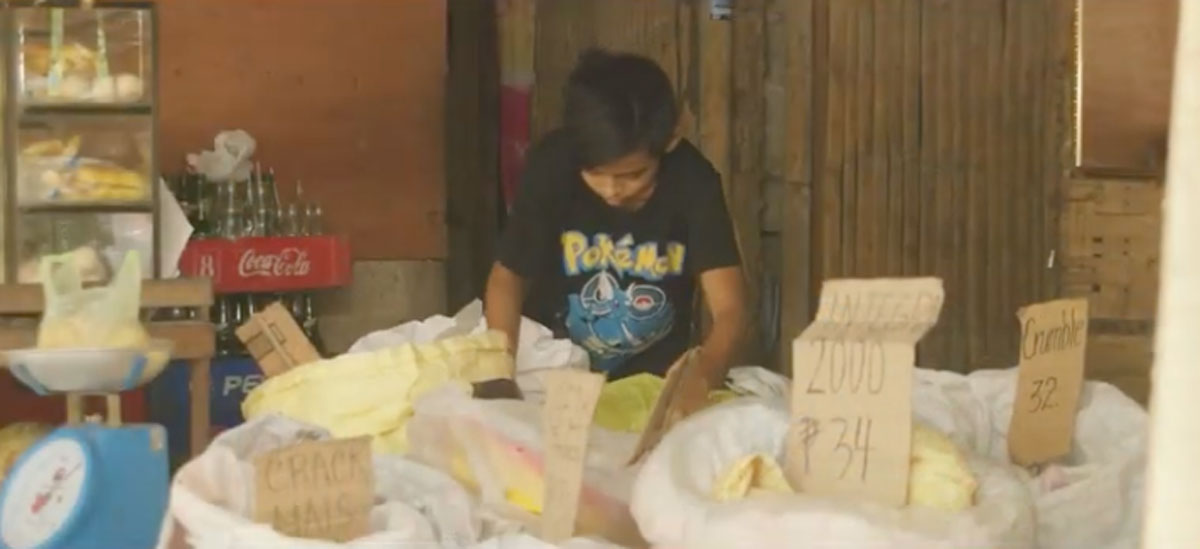
During the lockdown imposed to prevent the spread of coronavirus disease 2019 (COVID-19), Gaylon stressed her training helped her a lot because she was able to prepare for it. She sold cooked food and had plenty of customers when they butchered two pigs.
Their store did not only ensure they had food on the table, Gaylon disclosed, neighbors bought from them because they had a lot of supplies.
The project also taught them to put money aside, the reason why Gaylon was grateful for the project.
Holistic approach
Karen Trayvilla, DOLE Bureau of Workers with Special Concern director, said the Graduation Program was a study that started in 2018 until the peak of the pandemic in 2020.
The approach is “holistic,” and everything that beneficiaries would need comes in one package," Trayvilla noted. DOLE initiated the project in 29 barangays across five municipalities in Negros Occidental with 1,600 CCT beneficiaries as participants.
The project was supposed to be conducted by the Department of Social Welfare and Development (DSWD) with the CCT beneficiaries as participants, but when it did not push through, the DOLE took over its implementation.
According to Trayvilla, DOLE took charge of the livelihood assistance while the DSWD extended the cash transfer. The Department of Health provided the health component such as COVID-19 awareness.
"The project beneficiaries were taught a lot of things such as financial literacy, business management, family development and even risk management just in case there is calamity, they know to protect their assets, " she said.
‘Kabuhayan’ project
Trayvilla underscored DOLE gave an exemption considering that CCT beneficiaries are beyond the coverage of the DOLE's Integrated Livelihood and Emergency Employment Program (DILP).
She explained the DOLE's purpose to engage in the project was to gather policy inputs for inclusion in the DILP guidelines.
Across the country's 16 regions, DOLE has long been implementing DILP also known as “Kabuhayan,” initially intended for poor, vulnerable and marginalized workers. The program has since been expanded covering other sectors.
There are three types of livelihood initiatives under the DILP – the Kabuhayan formation, Kabuhayan Enhancement and Kabuhayan Restoration. Most the beneficiaries sought assistance to set up new business.
Trayvilla bared a beneficiary is entitled to as much as P30,000 grant while assistance for a group beneficiary ranges from P250, 000 to P1 million depending on the number of members. Group beneficiaries are required to have project management team and profit-sharing scheme.
As to the specific type of livelihood, Trayvilla added, DOLE allows the beneficiaries to choose what business to embark on taking into consideration their skills and interest.
Most of the beneficiaries opt for food business, especially when the pandemic started and the lockdown was imposed last year, Trayvilla stated.
Under the revised guidelines, the qualified beneficiaries of the DOLE's livelihood programs are those who are self-employed with insufficient income, landless farmers, marginalized fisherfolk, unpaid family workers, working women and youth, low wage and seasonal workers, workers displaced or to be displaced. Persons with disability, senior citizens, indigenous people, parents of child laborers, former rebels and victims of armed conflict may also qualify for the livelihood program.
DOLE partners with local government units in the profiling and selection of beneficiaries though Trayvilla said there are also "walk-in" applicants.
"We have to select ‘yung merong aptitude sa livelihood. And then of course frame of mind towards sustainability para hindi masayang ang resources ng ating taxpayers," Trayvilla told The Philippine STAR in an interview.
Less than half or only 26,900 of the 54,754 beneficiaries last year were females probably because housewives had to tend to their children. She said female beneficiaries commonly choose low-risk livelihood like sari-sari stores so they could stay at home with the children.
High success rate
There was a surge in applicants last year, but DOLE was unable to accommodate all due to limited budget. Those who were not assisted in 2020 will be prioritized this year.
The success rate of the DOLE-assisted livelihood project, Trayvilla said, is high. Results of the assessment done in 2018 on the status of the projects of about 1,200 beneficiaries after two years of grant under the DILP showed 84 percent of the group projects and 87percent of individual projects are still operational.
Similar assessment undertaken in 2019 among more than 2,000 beneficiaries indicated that 96 percent of the group projects and 83 percent of the individual projects are still operational after two years of grant.
For this year, Trayvilla said, DOLE intends to adopt changes in the implementation of the livelihood program. "We want the source of income of the beneficiaries to be more diversified kasi kung matagal ang return of investment, baka magamit sa food consumption ‘yung asset so at least there should be two sources of income to ensure sustainability," she said.
Social protection
DOLE intends to incorporate in the DILP guidelines the good practices that were observed in the Graduation Program.
Project coordinator Marlowe Popes said the Graduation initiative is a form of social protection that helps develop resilience to shocks and extends benefits far beyond the individual.
Popes noted the majority of the project beneficiaries belonged to the informal sector and mostly workers in the haciendas and small farmers.
He said BRAC made sure that the program was adjusted to the needs of the participants when the COVID-19 pandemic broke out in 2020. The coaches of the beneficiaries continued monitoring, provided health and information guidance on how to continue the livelihood projects through text messages and phone calls.
"They did not hesitate to do things just to be able to monitor the progress of the projects that DOLE has funded. This will help in the future policies of DOLE as regards t livelihood program," DOLE's Negros chief employment labor officer Mary Agnes Capigon revealed.
Trayvilla said DOLE would push for the inclusion of coaching and mentoring in DILP this year.
“‘Yung coaching and mentoring ‘yun ang kailangan na kailangan natin para ma-support ‘yung livelihood natin. I-demand natin maging part ito (ng guidelines) at matutukan. We asked our partners to help us in the monitoring so ‘yun ang ating titingnan," she bared.
Trayvilla said DOLE could not fully monitor the livelihood projects due to the high number, particularly the individual beneficiaries.
"Then of course, ‘yung savings, paano matutulungan ang ating beneficiary magkaroon ng savings at magkaroon ng bank account where they can save," Trayvilla added.
Trayvilla emphasized savings help create additional asset that can be readily tapped by the beneficiaries in cases of economic shock. "If beneficiaries build on their savings, it is also an indication of credit worthiness," she said.
DOLE is also looking to pour additional budget for the livelihood program to accommodate more beneficiaries. She said budget is one of the areas that DOLE is trying to improve on.
Additional funds may come from the National Employment Recovery Strategy (NERS) program allocation and possibly from the proposed “Bayanihan to Arise As One Act” or Bayanihan 3 if enacted into law.
She said DOLE requested for P1.4 billion for the implementation of the livelihood program in 2021, but only P909, 516, 000 has been approved.
From the current budget, DOLE hopes to provide at least 40,000 beneficiaries livelihood assistance this year.
Trayvilla said DOLE is set to launch in March a coffee table book on the successful beneficiaries of the DILP to encourage other agencies to also extend livelihood assistance to more people in the country.


