The Philippines Doesn’t Have National Heroes, Here’s Why
Until now, no law has been passed to officially declare any Filipino historical figure as a national hero. Historians said public acclamation could be better than Congress determining who the country’s heroes should be.
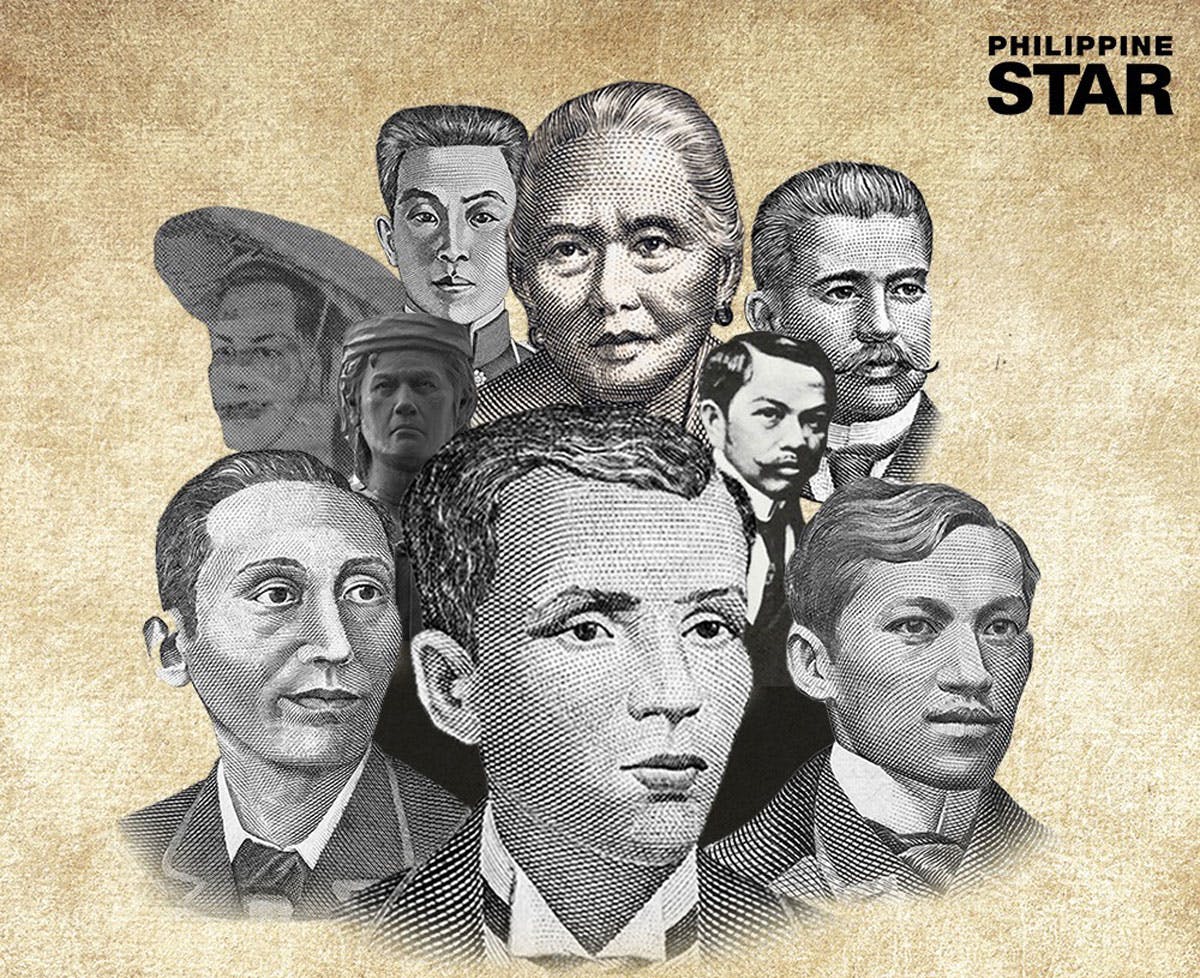
Considering the cycle of politics in the country and the shifting public attitudes about what makes a hero, the Philippines has not officially proclaimed national heroes to avoid making it easy for everyone to “jump into the bandwagon” and have their idols or relatives be declared as one.
Historian Jose Victor Torres gave this explanation in an interview with “The Chiefs” on One News last Aug. 29, the last Monday of the month when Filipinos observed National Heroes Day, an annual regular public holiday to honor the bravery of those who struggled for the country’s freedom.
“I think, for one thing, the difficulty of having a national hero by proclamation would mean everyone will jump into the bandwagon and say, ‘hey, please declare my relative as a hero,’ and so on and so forth’ and anyone can play with that kind of thing,” he said in a mix of Tagalog and English.
Until now, no law – by way of an executive order or proclamation – has been passed to officially declare any Filipino historical figure as a national hero. This is despite the recommendation of the defunct National Heroes Committee (NHC) for at least nine people to be given that distinction in 1995.
The list includes the likes of Dr. Jose Rizal, Andres Bonifacio, Apolinario Mabini, Emilio Aguinaldo, Marcelo H. del Pilar, Juan Luna, Melchora Aquino, Gabriela Silang, and Sultan Muhammad Dipatuan Kudarat – all of whom lived and died resisting the Spanish colonial occupation or a few years after.
The late former President Fidel Ramos created the NHC in March 1993 to “study, evaluate and recommend Filipino national personages/heroes in due recognition of their sterling character and remarkable achievements for the country.”
Of the initial nine historical figures the NHC submitted for consideration, only Rizal and Bonifacio gained wide recognitions as national heroes by virtue of “public acclamation” with the 30th day of December and November officially declared as regular non-working holidays in their respective honor.
“Jose Rizal was never declared a national hero, but he became a hero by acclamation. The Filipino people accepted the way that he changed the nation during that time and, of course, it needs a very wide dissemination to be accepted by the people,” Torres explained.
Bonifacio himself and his fellow revolutionaries in the Katipunan movement were largely inspired and influenced by the life and works of Rizal, according to several historical accounts. Rizal was the founder of La Liga Filipina, which served as predecessor to the Katipunan.
Torres pointed out that the path towards becoming a national hero “is not something that would be declared and forced down our throats because that would be a problem with regards to the later credibility of other Filipinos who are to be declared as heroes.”
In Rizal’s case, the position he now holds in Philippine history is “a tribute to the continued veneration or acclamation of the people in recognition of his contribution to the significant social transformations that took place in our country.”
This is according to the executive summary of the “Selection and Proclamation of National Heroes and Laws Honoring Filipino Historical Figures” released by the National Commission for Culture and the Arts (NCCA).
From what the NCCA gathered, based on its research, Rizal Day on Dec. 30 was decreed by Aguinaldo himself – the first president of the Philippine constitutional republic – in 1898 to mourn the death of the Filipino nationalist, as well as other victims of the revolution.
In 1921, members of the Philippine legislature enacted a law, declaring Nov. 30 as Bonifacio Day after his birth anniversary. Other less prominent historical figures were also given annual celebratory tributes with special working or non-working holiday status, but limited only to their respective hometowns.
‘Human frailty’ as an issue
For Torres, who teaches history at the De La Salle University, there is no need to officially declare anyone as a hero by way of legislation. Instead, the historian emphasized that “we should properly educate the people on why these people we respect can be considered as heroes.”
He also noted there are not many countries in the world that go out of their way to proclaim their nationals as heroes because “a lot of these persons who are declared as heroes might be questioned and there might be some personal motives behind it.”
“For example, the presidents of the United States don't declare every president of the United States a hero. But of course, they acknowledge the contributions of these people, which means acceptance,” Torres said.
The history professor added that in terms of criteria, there will always be criticism on a person’s contributions to the country, citing the case of former senator Benigno “Ninoy” Aquino Jr., who has been constantly vilified by the sympathizers of his political rivals.
“We all know that people have been discrediting former senator Benigno Aquino Jr… But there is always a problem with that because sometimes, when we look at heroes, we have to accept them to be humans,” Torres underscored.
“Human frailty comes in. Of course, you can question [someone] for being a hero, but you cannot remove the fact that the act that he (Aquino) did, changed the nation. And that is, for me, what made him a hero,” he said.
Aquino was assassinated on Aug. 21, 1983, which spawned many conspiracy theories from different opposing political camps that left a lot of unsuspecting Filipinos, especially those who belong to future generations, confused about the truth.
In a separate interview over One News’ “Sa Totoo Lang” program also on Aug. 29, another historian Xiao Chua echoed Torres’ views, saying that verified documents would be needed before anyone can be recognized as a Philippine hero through public acclamation.
“Hindi pwedeng tsismis ‘yung naratibo tungkol sa ‘yo. Kailangan maraming makakapag-attest na ikaw ay isang bayani (You cannot rely on gossips alone for your narrative. There must be a lot of people who can attest to your heroism),” Chua said.
He cited Rizal, as example, whose novels ‘Noli Me Tangere’ (1887) and ‘El Filibusterismo’ (1891) probed the cancers of Filipino society during the Spanish colonization. Its themes of oppression by the ruling class in government on the ordinary people still resonate today.
“‘Yan ‘yung isang ebidensya, ‘di ba, na 'yan ay humingi siya ng reporma sa Espanya. At dahil doon, eventually, ay pinatay siya (That serves as clear evidence that he [Rizal] sought reforms from Spain, and because of that, he was killed eventually),” Chua explained.
The same thing can be said about Bonifacio, who is widely regarded as the “Ama ng Himagsikan” (Father of Philippine Revolution). Like Torres, Chua believes that naming heroes should not be left for the members of Congress to decide because it can be abused.
“Hindi maganda 'yan kasi kapag ganoon, any Tom, Dick and Harry can be a hero, basta may numero ka sa Kongreso (It’s not a good idea because any Tom, Dick and Harry can be a hero, as long as you have the numbers in Congress),” Chua said.