



Sugar Crop Restricted To Local Consumption
Sugar Regulatory Administration acting administrator David John Thaddeus Alba said there would be no allocation for the US quota as sugar for this crop year would be classified as “B” or domestic sugar.
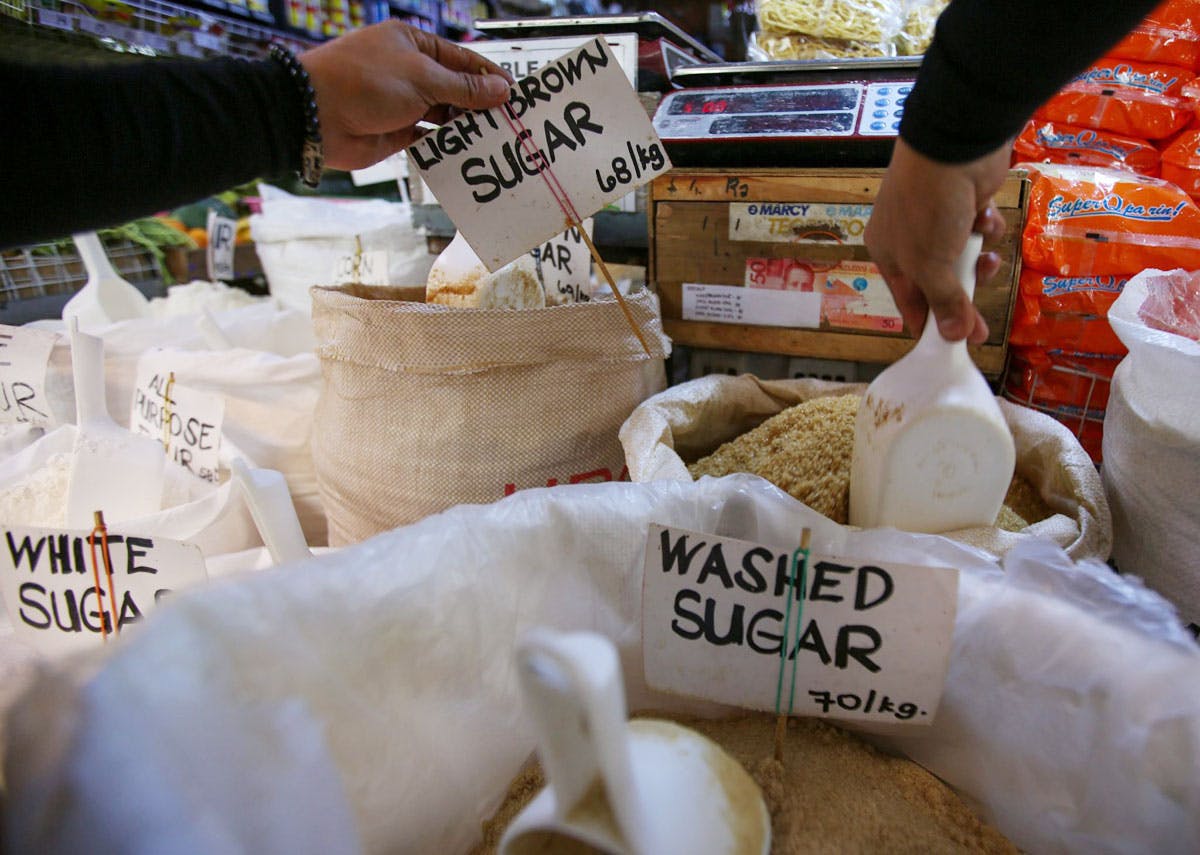
The Sugar Regulatory Administration (SRA) is set to issue orders next week allocating the sugar output for this crop year solely for domestic consumption and allowing the importation of 150,000 metric tons of refined sugar to boost local supply.
In Sugar Order No. 1 being readied for release next week, SRA acting administrator David John Thaddeus Alba said on Thursday, Aug. 25, there would be no allocation for the US quota as sugar for this crop year would be classified as “B” or domestic sugar.
The quota would be met again as soon as local sugar needs stabilize, he said.
Five percent of sugar production in the country is allocated for the US quota, Alba explained.
He said stakeholders would still be consulted regarding the scheme and inputs would be submitted to President Marcos for approval. As concurrent chief of the Department of Agriculture, Marcos chairs the SRA Board.
Alba also stressed that sugar importation is inevitable, as the industry cannot meet market demand.
“We cannot also do away with the talk of importation as the industry cannot meet the market demand, as yet. Upon the recommendation made during the sugar stakeholders meeting with the President, we will work on the importation order of 150,000 metric tons of purely refined sugar as a balancing act to stabilize market prices and this is what is enshrined in SO2,” the SRA acting chief said at an industry convention in Bacolod City, or 68th Philsutech.
“Our target is to have the SO2 released by mid-September so its arrival will not interfere with the resumption of operations by our sugar refineries that normally starts mid-November,” Alba said.
The 150,000 MT of imported refined sugar is expected to arrive by middle of November this year, he added. The country’s sugar requirement is pegged at 2.5 million MT.
He blamed the shortfall in sugar production in the past few years on various factors, including climate change, high prices of input prices, and the COVID-19 pandemic.
“But your SRA Board believes that 2.5 million metric tons is achievable, if we focus on farm productivity and ensure the efficiency of our mills for higher recovery. There are also doable remedies such as implementing a good drainage plan in your farms, and maximizing our resources to invest in research and development, technology and mechanization,” Alba said.
“This is also why we will work on ensuring that we get the full funding allotted for the implementation of the Sugar Industry Development Act (SIDA) so we can efficiently utilize it to meet the industry’s needs,” he added.
This year, funding for SIDA was further cut down to a fourth of its original P2 billion allocation or at only P500 million, as SRA had been accused of under-utilizing the SIDA fund.
“But with proper programming and with the support of President Marcos and our allies in both houses of Congress, we will ask help to circumvent the red tape and go full blast in utilizing the SIDA Fund by next year to make us globally competitive,” he said.
No to liberalization
Alba also said the SRA would block any effort to liberalize the sugar industry. “And while we do not want to take cognizance of the rumor mill, there have been whispers to resurrect the issue of liberalization and that is something we have to prepare against,” he said.
“As your new acting administrator, I, along with the other members of the sugar board, Mr. Paul Azcona representing the planters, Ms. Mitzi Mangwag representing the millers, the Department of Agriculture and our nation’s leader, will work hand in hand to ensure that these threats are prevented,” he said.
The Kilusang Magbubukid ng Pilipinas (KMP), for its part, has asked the government to “reverse” its liberalization policy, which it said is focused on importation.
“Importation is not the solution to the high prices of rice, sugar and other food,” KMP chairperson emeritus Rafael Mariano said in a statement.
“To get out from this vicious cycle of food insecurity and hunger, the government must decisively reverse its liberalization policies that bolster food import dependency. Local production, not imports, should be seriously strengthened,” he said.
Alba said some lobby groups in Congress are actively pushing for sugar importation.
He cited a statement of Quezon Rep. Wilfrido Mark Enverga, who chairs the House committee on agriculture and food, that the beverage industry should be given separate sugar importation orders so that its sugar purchase won’t have effect on local prices.
Malacañang earlier announced that it was seriously considering the proposal of beverage companies to be allowed to import sugar.
The country’s top beverage manufacturers – Coca-Cola Beverages Philippines Inc. (CCBPI), Pepsi-Cola Products Philippines and ARC Refreshments Corp. – earlier said the industry is facing a shortage of premium refined sugar or bottlers’ grade sugar, “a key ingredient” of their products.
CCBPI said the beverage industry needs at least 450,000 MT of premium refined bottler grade sugar to allow full utilization of its manufacturing capacity until end of the year.
‘Affordable options’
The Department of Trade and Industry (DTI) said that while prices of sugar remain high, consumers have more affordable options offered by three large supermarkets.
“We still see high prices of sugar, reaching P100, P105 per kilo, but the important thing is we are able to give choice to the consumers, because three supermarkets that entered into an agreement with the President are now able to sell P70 per kilo of white refined sugar at all SM, Robinsons, and Puregold retail chains,” DTI-Consumer Protection Group Undersecretary Ruth Castelo said at a briefing on Thursday.
Last week, Press Secretary Trixie Cruz-Angeles said that the owners of SM Supermarket, Robinsons Supermarket, and Puregold agreed to the suggested retail price of P70 per kilo from a high of P90 to P110 per kilo.
She said Robinsons Supermarket agreed to sell one million kilos at P70 a kilo while SM Supermarket committed to sell its inventory also at P70.
Puregold also agreed to offer one million kilos of sugar, also at P70 per kilo.
Angeles said Executive Secretary Vic Rodriguez appealed to business owners to lower the price of sugar “even temporarily” to make it affordable to ordinary consumers, at least until the supply stabilizes.
“ES Rodriguez appealed (to supermarket owners) to lower the price even just temporarily to help the ordinary consumers until we resolve or we reach September or the harvest season,” she noted.
Castelo said the DTI has heard of requests from smaller supermarkets wanting to join the project, however, she stressed that the government would not be able to give them any benefits or assistance.
“They are most welcome to join us if they can sell P70 per kilo white refined sugar,” she said.
“However, the government is not giving any benefits or assistance to those three large retail chains mentioned. It is part of their corporate social responsibility,” Castelo said. “Our incentive is that we promote these stores so consumers will go there and buy affordable sugar.”
Meanwhile, in an interview with reporters, American Chamber of Commerce of the Philippines executive director Ebb Hinchcliffe said the group has discussed the sugar shortage issue with beverage companies.
“I’ve met with Coca-Cola, I’ve met with Pepsi. We’ve sent a letter to the President outlining that sari-sari shops will not have Coca-Cola - RC and Pepsi by mid- to late September and that’s a reality,” Hinchcliffe said.
Last week, the Philippine Association of Stores and Carinderia Owners Inc. expressed concern over the reported shortage of sugar for beverage manufacturers.
Retailers said suppliers had alerted them to the possibility of absence of deliveries for three months or more. – With Catherine Talavera


