Sinovac Gets WHO Emergency Use OK
The World Health Organization’s emergency use listing is a signal to national regulators on a product’s safety and efficacy. It would also allow the shot to be included in the COVAX Facility, the global program to provide vaccines for poor countries.
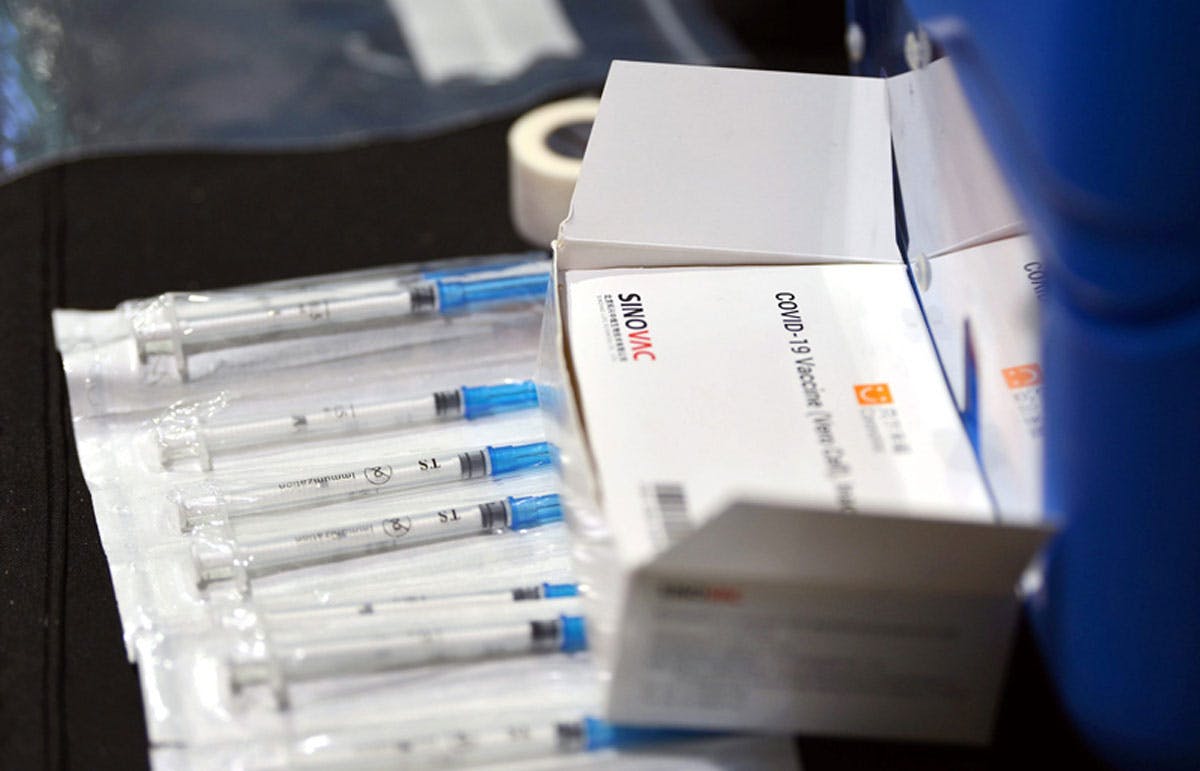
The World Health Organization (WHO) approved on Tuesday, June 2, the COVID-19 vaccine made by China’s Sinovac Biotech for global emergency use listing or EUL.
Malacañang welcomed the approval of CoronaVac, the second Chinese-produced vaccine for COVID-19 to get WHO endorsement after Sinopharm, saying it would boost the confidence of Filipinos in the Chinese-developed jabs.
WHO emergency listing is a signal to national regulators on a product’s safety and efficacy. It would also allow the shot to be included in the COVAX Facility, the global program to provide vaccines for poor countries, which are facing major supply problems due to India’s suspension of vaccine exports.
Presidential spokesman Harry Roque said the government is “happy” with the latest development as the government targeted to vaccinate Metro Manila’s over 12 million population.
He said “it will definitely give a boost of confidence for the vaccine as more institutions recognize that Sinovac is safe and effective,” noting that the Chinese vaccine is widely used in the country.
Apart from the approval of the Food and Drug Administration (FDA), Roque expressed hope that the WHO’s validation of Sinovac would further encourage more Filipinos to get inoculated with the Chinese-made vaccine.
“Not only the FDA has said it is safe and effective but also the WHO,” Roque said. “This will really help us in increasing confidence on Sinovac because no less than the UN agency has given assurance for its safety.”
A panel of WHO experts said it recommended Sinovac’s vaccine for people over 18, with a second dose two to four weeks later.
There was no upper-age limit as data suggested it is likely to have a protective effect on older people.
The WHO’s technical advisory group, which began meeting on May 5, took the decision after reviewing the latest clinical data on the Sinovac vaccine’s safety and efficacy, as well as the company’s manufacturing practices.
Branded CoronaVac in some regions, it is the second Chinese-developed vaccine to receive such WHO listing to combat COVID-19, after the May 7 approval of a shot developed by state-backed Sinopharm. Vaccine efficacy results showed that the vaccine prevented symptomatic disease in 51 percent of those vaccinated and prevented severe COVID-19 and hospitalization in 100 percent of the studied population, the WHO said.
A third Chinese vaccine, produced by CanSino Biologics, has submitted clinical trial data. But no WHO review has been scheduled.
Sinovac said it had supplied more than 600 million doses of vaccine at home and abroad as of the end of last month and over 430 million doses have been administered.
DOH welcomes EUL
The Department of Health (DOH) expressed hope that the EUL of Sinovac by the WHO would be recognized by other countries.
There is the so-called mutual recognition agreement wherein COVID-19 vaccines that get EUL from WHO will be “recognized across countries,” DOH Undersecretary Maria Rosario Vergeire said.
“This should result in swifter recognition by each country of these vaccines… for regulatory processes,” she said at a town hall session of DOH.
Vergeire noted “this development is going to be something of an advantage” for the Philippines whose COVID-19 vaccines are mostly Sinovac.
The issuance of EUL came amid reports that Saudi Arabia and the European Union are biased against China-made vaccines.
In Saudi Arabia, for instance, OFWs inoculated with Sinovac are required to undergo swabbing and quarantine upon arrival there.
DOH Technical Advisory Group member Anna Ong-Lim said with the EUL issuance, Sinovac vaccine can now be included in WHO’s COVAX Facility.
“For us that is very good news because there will be more vaccines in the COVAX. They can also be procured by WHO and, therefore, there will be more doses that they can distribute to countries like the Philippines,” Lim added.
“The world desperately needs multiple COVID-19 vaccines to address the huge access inequity across the globe,” Mariângela Simão, WHO assistant director general for access to health products, said.
Simão has urged manufacturers “to participate in the COVAX Facility, share their knowhow and data and contribute to bringing the pandemic under control.”
The WHO’s separate Strategic Advisory Group of Experts (Sage) had said in a review document that Sinovac vaccine efficacy in multi-country phase three clinical trials ranged from 51 percent to 84 percent.
Indonesia’s health ministry said on May 12 that its study of 120,000 health care workers who had received the vaccine found it was 94 percent effective at preventing symptomatic disease.
In a preliminary evaluation, the Sage panel found that the shot was efficacious in preventing COVID-19 in adults under 60, but that some quality data on the risk of serious adverse effects was lacking.
The Sage experts, who issue policy recommendations to states and dosage guidelines, reviewed Sinovac clinical data last month.
China has deployed hundreds of millions of doses of both Sinopharm and Sinovac vaccines at home and exported them to many countries, particularly in Latin America, Asia and Africa.
Meanwhile, flag carrier Philippine Airlines yesterday transported Sinovac and Sputnik V jabs to Cebu.
“We are committed to serve as a partner of government in bringing these essential supplies to various parts of the country,” PAL said in a statement. – With Sheila Crisostomo, Rudy Santos, Reuters