



Senators Blame Hoarding, Insist There Are Enough Onions
While traders and importers are making a killing, some farmers have reportedly committed suicide after going bankrupt due to smuggling and over-importation of onions, according to a Senate inquiry on Monday, Jan. 16.
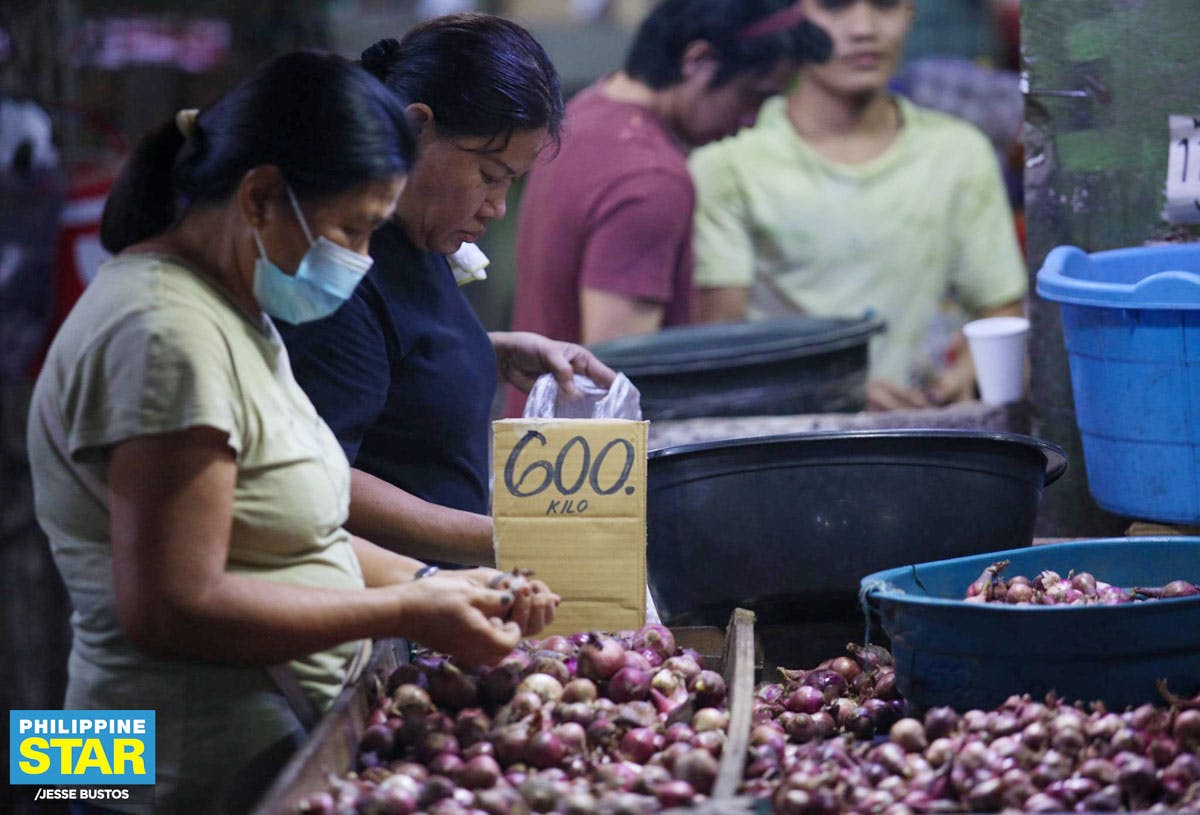
Senators have blamed hoarders and smugglers for the staggering prices of onions in the country that have left many local farmers bankrupt.
While traders and importers are making a killing, some farmers have reportedly committed suicide after going bankrupt due to smuggling and over-importation of onions and other agricultural products as well as neglect and skewed policies of the Department of Agriculture (DA), according to a Senate inquiry on Monday, Jan. 16.
The Senate committee on agriculture and food, chaired by Sen. Cynthia Villar, started its inquiry into the high prices of onions that senators, farmers and non-government organizations attributed to harmful government policies as well as interconnected profiteering and corruption by officials of the DA and the Bureau of Customs (BOC) along with importers and traders.
Villar said there was no real shortage of onions that could cause a drastic increase in prices as data from the Philippine Statistics Authority (PSA) showed the country might have had shortfall of 2,000 metric tons last year but which could have been easily prevented with the 53,202-MT surplus in 2021.
“So we could say that we really don’t have a shortage to cause an increase in price, that is why we’re calling this hearing for the people to be able to explain what is happening… they have to explain to us what is happening in the DA and, of course, in the Bureau of Customs,” Villar said.
PSA data showed that local onion production in 2022 was 238,000 MT while total demand was 270,000 MT or a supply gap of less than 30,000 MT, which was remedied by the importation of 29,707 MT, she said.
However, in 2021, onion production was 218,000 MT and total demand was 266,000 or a shortage of 38,000 MT. But the DA imported 101,000 MT for a surplus of 53,000 MT.
It was a similar situation in 2020, when local production was 229,000 MT while demand was 262,000 for a supply gap of 30,000 MT but the DA authorized the importation of 87,000 MT of onions, the senator said.
Sen. Imee Marcos, whose resolution prompted the inquiry, noted the “rollercoaster ride” of onion prices from P60 per kilo in April last year to P760 per kilo in December that she said was caused, among others, by “an abject lack of planning” from the DA, which allows importation just when farmers are about to harvest and in excessive volume.
“However, there seems to be as well, a level of treachery and manipulation involved. Because these prices are inexplicable,” Marcos said.
She lamented that some onion farmers in Pangasinan, Nueva Ecija and Pampanga committed suicide because the extremely low prices of their produce in March and April last year barely paid for the cost of production.
Reports said at least five farmers committed suicide last year due to financial difficulties.
Suicides
One of those who testified in the hearing was Merlita Gallardo, whose husband committed suicide as their farm went bankrupt with millions of pesos in debt.
She said while the main cause of the bankruptcy was the invasion of army worms, the onion importations did not help them recover from the pestilence.
RiceUp founder Elvin Laceda, who accompanied Gallardo, told the panel that helping onion farmers make profit while maintaining market prices for consumers was not as difficult as DA officials were trying to make it appear.
“Our farmers are committing suicide, have pity on them. We’re all Filipinos. Don’t do this to them,” Villar said.
Also at the hearing were Romel Calingasan, municipal agriculturist of San Jose, Mindoro, and Ramon Silverio, chairman of a farmers cooperative in the province, who both disclosed that traders bought onions from farmers in April at P8 to P15 per kilo so they were shocked to find out that the vegetable was sold as much as P700 per kilo in Metro Manila.
Calingasan said farmers in the province have been looking for cold storage facilities only to be told that the spaces in them have already been reserved for certain traders.
Director Gerald Panganiban, officer-in-charge of the DA’s Bureau of Plant Industry (BPI), said the agency was putting up two cold storage facilities in the province this year.
Villar, however, cited persistent reports that government cold storage facilities are often filled with produce from moneyed traders, not from farmers, while Calingasan and Silverio said the two facilities to be put up in the province are far from farmlands.
Calingasan said it was disheartening to see farmers in the province throw away onions to rot as they could not be stored properly to prolong their freshness and secure the country’s inventory.
Sen. Raffy Tulfo wondered why traders have access to cold storage facilities that should be for farmers and their cooperatives.
He said it was shocking to see the profit margins enjoyed by traders from farmgate prices to consumer prices as well as smugglers who dump the vegetables in markets.
DA still clueless
Upon questioning from Senate Minority Leader Aquilino Pimentel III, DA officials told the panel that they were still finding out the root causes of the price surge as well as the apparent shortage even as they said there appears to be some 11,000 MT of onions in various cold storage facilities across the country as of end 2022.
The officials promised to review the 2022 data again and submit a report to the committee.
Meanwhile, Sen. Joseph Victor Ejercito vowed to push for amendments to the Anti-Agricultural Smuggling Act to include hoarding, cartelization and profiteering as non-bailable offenses with life imprisonment as penalty.
Ejercito, the principal author of the law, lamented that six years since its enactment, not one notorious smuggler has been convicted.
He also lashed out at the BOC for picking on cabin crew of Philippine Airlines, whom agents shamed and apprehended for bringing in a few bags of onions, strawberries and other fruits for their families and loved ones.
The senator said the haul was obviously for personal use or “pasalubong” because of the small volume.
“The BOC wants to show they’re doing something, why don’t they arrest and prosecute big-time smugglers and not prey on ordinary Filipinos?” Ejercito said.
Off target
Meanwhile, DA Undersecretary for policy, planning and regulations Mercedita Sombilla said the government expects to allow the importation of only one-fourth of its planned 21,060-MT onion importation.
Also at the hearing, Sombilla said only one-fourth of the total import plan had been issued sanitary and phytosanitary import clearances.
The DA issued permits to import onions from Jan. 9 to 13.
The clearances issued would only be equivalent to around 5,000 MT of onions, Bureau of Plant Industry (BPI) director Glenn Panganiban said.
However, the BPI official said not the entire volume under the approved application would arrive in the country. “We are expecting less than 5,000 MT,” Panganiban said.
In its latest report, the United States Department of Agriculture (USDA) said the unscheduled quota for the onion importation will not be filled or come close to being filled “due to the extreme conditions contained.”
“Regardless of the limited volume and tight window of opportunity to apply for import permits, several other conditions also apply and reduce the likelihood that the quota will be realized or achieve its intended result of providing price relief to consumers,” the USDA said.
The USDA said the conditions greatly favor Chinese supplies despite China not being importers’ favored supplier.
“Given the time restriction, proximity and shipping lanes, the measure gives strong favor to Chinese exporters over those in Europe and India. A 40 percent tariff is assessed on all imports, regardless of origin,” the USDA said.
“Transfers to other cold stores is strictly prohibited. Red and yellow onions must also be stored in separate rooms. This combination of factors will further impede the ability of imported onions to access and flow through the local supply chain,” the USDA said.
Asked about the prices of onions, Sombilla said the retail price of onion should normalize when peak harvest starts, as promised by farmers.
“Once harvests come in the third or fourth week [of the month] up to April or May, prices will drop, hopefully to P120-150 per kilo as in the past years,” she said. – With Danessa Rivera, Rudy Santos