Senate To Probe Spread Of Text Scams, Spam
Sen. Grace Poe said the unabated surge of text scams must stop as it brought further hardship and distress on the people who are already mired in debt.
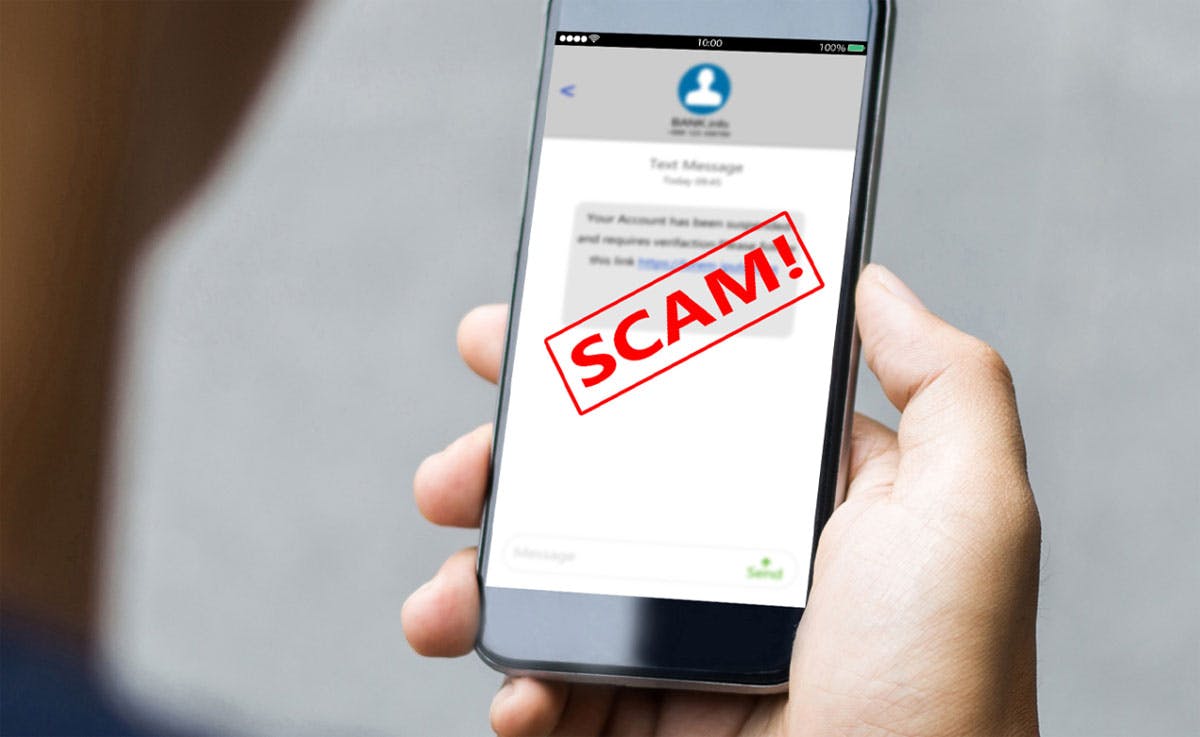
The Senate committee on public services will launch on Thursday, Sept. 8, an inquiry into the proliferation of text scams and spam messages that have victimized thousands of Filipinos.
The panel’s probe was prompted by resolutions filed by Senators Ronald dela Rosa and Sherwin Gatchalian that seek an investigation on the matter as several senators have disclosed receiving such text messages, with one instance leading to the arrest of some individuals last month.
Sen. Grace Poe, who chairs the committee, noted that the latest phishing and spam messages have become “personalized” with the target victims or owners of the phone numbers being addressed by their names in the text messages.
“The unabated surge of text scams has brought further hardship and distress on our people who are already mired in debt. This must stop,” Poe earlier said.
The senator disclosed that she herself has received a number of unwanted text messages from prepaid mobile phone numbers promising jobs, extra income, incentives and freebies.
“As more (people) rely on digital technology to cope with the hard times, so must we intensify all necessary safeguards against heightened risks that can overturn our people’s efforts at recovery,” she said.
The committee will also take up bills seeking the registration of SIM cards that authors said would help minimize text scams.
Sen. Joseph Victor Ejercito said he and other senators are supportive of such a bill.
Senate President Juan Miguel Zubiri yesterday took the floor and lamented that he also continues to receive such messages.
“Why are our telcos allowing this?” Zubiri said after Sen. Jinggoy Estrada delivered a speech citing his own experience in receiving such messages.
Zubiri earlier announced that the Philippine National Police arrested several individuals who, he said, posed as local officials asking him for money for alleged projects.
Senate Majority Leader Joel Villanueva stressed the urgency of combatting text scams as many of the victims are poor and jobless, who in their desperation are duped by such messages.
“The data leak is now on a different level as the names of the subscribers now appear in the text scams,” Villanueva said, adding that he has refiled the proposed Anti-Spam Act.
Gatchalian, who filed a resolution seeking the inquiry, cited the need to protect consumers’ right to privacy and security.
“The government, through relevant agencies, needs to devise an effective intervention to stop the proliferation of spam messages which contain information that appears to come from reputable or reliable sources and attempts to obtain a user’s sensitive information such as username, passwords and credit card details,” he said.
In November last year, an inter-agency group, led by the Cybercrime Investigation and Coordinating Center, was created to address the problem. Included in this group are the Department of Information and Communications Technology, Department of Justice, National Privacy Commission (NPC), National Telecommunications Commission, National Security Council and Anti-Money Laundering Council.
Sen. Nancy Binay is also set to file a Senate resolution urging the Senate to investigate, in aid of legislation, the upsurge of text scams, smishing, text spams and other malicious solicitations and unwanted text messages.
Binay herself recently got the shock of her life when she received a random scam text message with her name in it.
“Honestly, I was surprised – it’s both an unexplained fear and a terrifying surprise. At first, it seemed OK and deadma (feigning ignorance), since every now and then, we actually receive burst SMS marketing promos or weather advisories,” she said.
“Then, there is some kind of job offer or a case where you won a prize. But when I received a text message on my personal phone with my name, I was so shocked because I never use my personal phone for online transactions. My number is not even linked to other social media accounts. So, how did you get my number?” she added.
The senator described the situation as scary, as there seems to be a bigger and more sophisticated scheme among scammers who manage to get other people’s personal information.
“Seriously, it’s a different level because these cybercrime groups are so entrenched in data that is supposedly secured, private and confidential. If there is personal information included in the text scams, it may extend to some bigger and more sophisticated scheme until it reaches where you work, what is your children’s school schedule, where you regularly go for walks, what is the credit card you use, who is your best friend and what you talk about. It’s scary,” Binay said.
She added that she plans to ask government agencies about concrete solutions to put an end to the unrestricted intensification of the aforementioned activities.
“The longer it goes on and we don’t take action, the more credible the scams become and many people can become victims,” Binay said.
Trust issues
A report from Globe Telecom Inc. showed that it blocked an estimated 784 million scam and spam messages from January to July of this year.
The same report showed that the telco had deactivated 14,058 scam-linked mobile numbers and blacklisted an additional 8,973.
Data from PLDT and Smart Communications showed that the firms blocked 23 million smishing text messages in a span of three days, from June 11 to 14 of this year.
“Despite the passage of Republic Act 10173 or the Data Privacy Act of 2012, the personal information of citizens remain vulnerable due to lack of transparency and standards on the pro-cessing, handling and storing of personal data collected by mobile applications,” Binay said.
The senator pointed out how data collected by contact-tracing application Staysafe.ph, which was utilized to help mitigate the spread of COVID-19 disease, was still not in the possession of the Inter-Agency Task Force for the Management of Emerging Infectious Diseases nine months after it requested the files from the mobile application developer, Multisys Technologies Corp.
“The unabated digital scams will erode the trustworthiness of electronic commerce and may reverse our shift to a digital economy. It is the right of our people to have a safe digital ecosystem, and it is the duty of the government to provide and secure such an environment,” Binay said.
Contact tracing data
Local government units (LGUs) that have built up a database of personal information they had collected during the mandatory contact-tracing at the height of COVID-19 pandemic lockdowns should have dismantled this treasure trove by now.
Former privacy commissioner Raymund Liboro, founder and head of think tank Privacy and Security By Design, said LGUs have no reason to retain personal information they had collected from contact-tracing during the height of the pandemic.
“Personal data shall not be retained longer than necessary,” Liboro told The Philippine STAR in a phone interview.
He said this was mandated by a joint memorandum circular (JMC) signed between the Departments of Trade and Industry (DTI) and Labor and Employment (DOLE) in August 2020.
“In a memo issued by the DTI and the DOLE, it was provided that ‘personal data collected through the health declaration form in the visitor contact tracing form shall be stored only for a limited period and shall be disposed of properly after 30 days from the date of accomplishment,’” he added, referring to relevant provisions of JMC 20-04a.
Database referred to were those collected by business establishments that conducted contact-tracing on their customers, according to the former NPC chief.
He said the dismantling of the database would have removed one danger of such private information getting into the wrong hands.
Liboro also reiterated that regulators should effectively address the apparently escalating problem of unsolicited text promos and scams being sent out in huge volumes to telecom consumers that has been the subject of complaints of mobile phone users.
He said effective action would avert a looming trust crisis on short messaging service (SMS) or text messages and speed up the shift of consumers to internet messaging platforms.
He added that there was no need to enact a SIM card registration law to effectively address and put a stop to the persistent sending of unsolicited text promos and scams by unscrupulous groups.
For Liboro, regulators only need to establish large-scale SMS sender identity registry to enable monitoring and effective regulation of the use of this telecom technology. – With Cecille Suerte Felipe, Rainier Allan Ronda