



Safe Or Unsafe? Should Prison Conditions Be Considered In The Release Of Detainees Amid The COVID-19 Outbreak?
The Office of the Solicitor General maintains that jail congestion should not be used as a reason to release inmates amid the coronavirus disease 2019 pandemic, but rights lawyers oppose this.
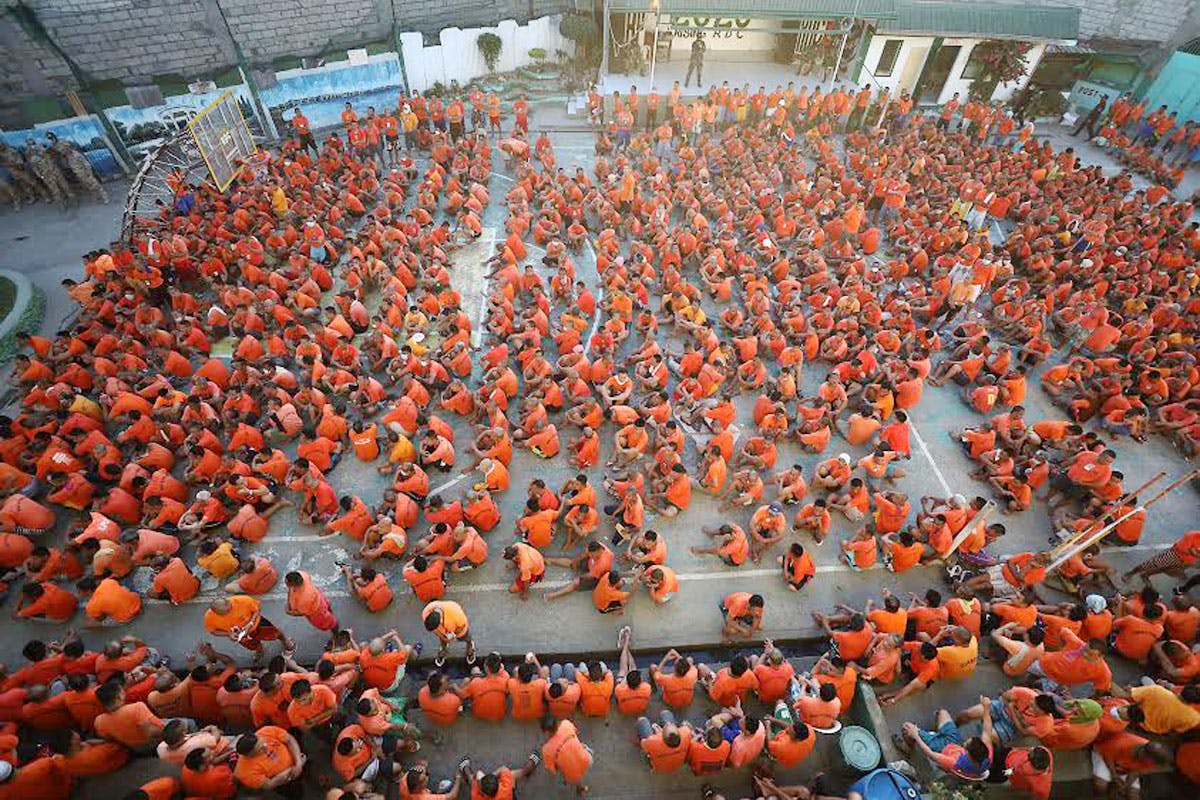
Authorities are now scrambling to contain the spread of coronavirus disease 2019 in the country’s congested local jails and national prisons that they initially touted as the “safest places” from the COVID-19 pandemic.
Hundreds of inmates have already tested positive for COVID-19 in four of the biggest jails and correctional facilities across the country.
The New Bilibid Prison (NBP) and Correctional Institution for Women (CIW), both under the Bureau of Corrections (BuCor), as well as the Quezon City Jail and Cebu City Jail under the Bureau of Jail Management and Penology (BJMP) have recorded COVID-19 cases.
The most affected, the Cebu City Jail under the BJMP Region 7, has 126 infected inmates.
In Quezon City, there are nine confirmed infected persons deprived of liberty (PDLs) under the BJMP National Capital Region office.
There are also 30 BJMP personnel from the NCR and Region 7 infected with the virus, latest data showed.
The BuCor, meanwhile, has recorded 48 COVID-19 cases as of April 25.
The CIW in Mandaluyong City recorded on April 18 the BuCor’s first COVID-19 case, a 72-year-old prisoner. A few days after, 18 more PDLs of the CIW as well as a medical staff member also tested positive for the disease. On April 24, two more were infected. On April 25, the CIW said 27 prisoners had contracted the virus.
The inmates were transported from CIW to an isolation area at the NBP in Muntinlupa City, which drew the ire of the city government, which said it had not been notified about the transfer.
The city council of Muntinlupa passed a resolution opposing the move of the BuCor, saying it posed risks to residents living near the isolation area, which has been set up inside the NBP medium security compound.
The BuCor announced that the 27 inmates from CIW had also been transported to “Site Harry” of the NBP.
Bilibid, the biggest penitentiary in the country, recorded one COVID case last week – an inmate from the medium security compound who died Thursday night, April 23.
Even before the NBP recorded its first COVID case, the BuCor shot down proposals by human rights groups, including the United Nations Human Rights Commission or UNHRC, to release inmates who are vulnerable to the disease.
The BuCor earlier said that inmates regardless of their age could still commit crimes.
It added that BuCor would take guidance only from the Department of Health and the World Health Organization in dealing with the pandemic.
UN High Commissioner for Human Rights Michelle Bachelet has appealed to governments for the quick decongestion of jails, including the release of vulnerable inmates such as older, sick and low-risk offenders.
“Now, more than ever, governments should release every person detained without sufficient legal basis, including political prisoners and others detained simply for expressing critical or dissenting views,” Bachelet said in a statement.
Supreme Court case
On April 8, detainees deemed vulnerable and at risk to COVID-19 sought an order for their temporary release from the Supreme Court, citing that the Philippines would record a staggering number of fatalities in overcrowded prisons.
A group of 22 prisoners filed a petition by way of a special civil action for certiorari and asked the tribunal to order their temporary release during “the duration of the state of public health emergency, national calamity, lockdown and community quarantine due to the threats of the COVID-19.”
On April 24, the Office of the Solicitor General (OSG) said in a comment that the inadequacy of the Philippine prison system against the threat of COVID-19 “does not warrant the release of prisoners.” Although the facilities are crowded, the government’s law firm pointed to the enforcement of measures to prevent contagion, such as suspending visitations, disinfections and setting aside of isolation facilities.
“While it is true that some of the detention and reformatory facilities in the country are highly congested, unfortunately, congestion in prison facilities is not among the grounds to release inmates,” the OSG comment read.
It added that continued detention “affords them ready access to government resources if and when the dreaded virus reaches the doors of their cells, no less different outside their cells.”
The OSG stated that the 22 petitioners were all members of the Communist Party of the Philippines, the New People’s Army and National Democratic Front of the Philippines (NDFP).
But the lawyers of the 22 so-called “political detainees” rejected the OSG’s argument that it would be safer to keep them in crowded detention facilities amid the COVID-19 outbreak, warning that “death, violence and riots can also break out if the pandemic is left unchecked in prisons.”
The Public Interest Law Center (PILC) and the National Union of People’s Lawyers (NUPL) submitted on Monday, April 27, a 71-page reply to the comment of the OSG opposing their petition for release on bail.
NUPL president Edre Olalia said: “It is palpable that the lack of empathy is written all over” the OSG’s comment.
Seventeen of the petitioners, including NDFP consultants Vicente Ladlad and Adelberto Silva, are above 50 years of age. Also among the petitioners are 22-year-old Reina Mae Nasino, a coordinator for the Kalipunan ng Damayang Mahihirap (KADAMAY) who is currently pregnant, and 21-year-old Geann Perez who has leprosy.
Old persons, pregnant women and persons with existing medical conditions are deemed to be the most vulnerable to COVID-19 infection. The government has placed the entire Luzon under enhanced community quarantine (ECQ), enforced social distancing measures, and prohibited mass gatherings to prevent the spread of the disease.
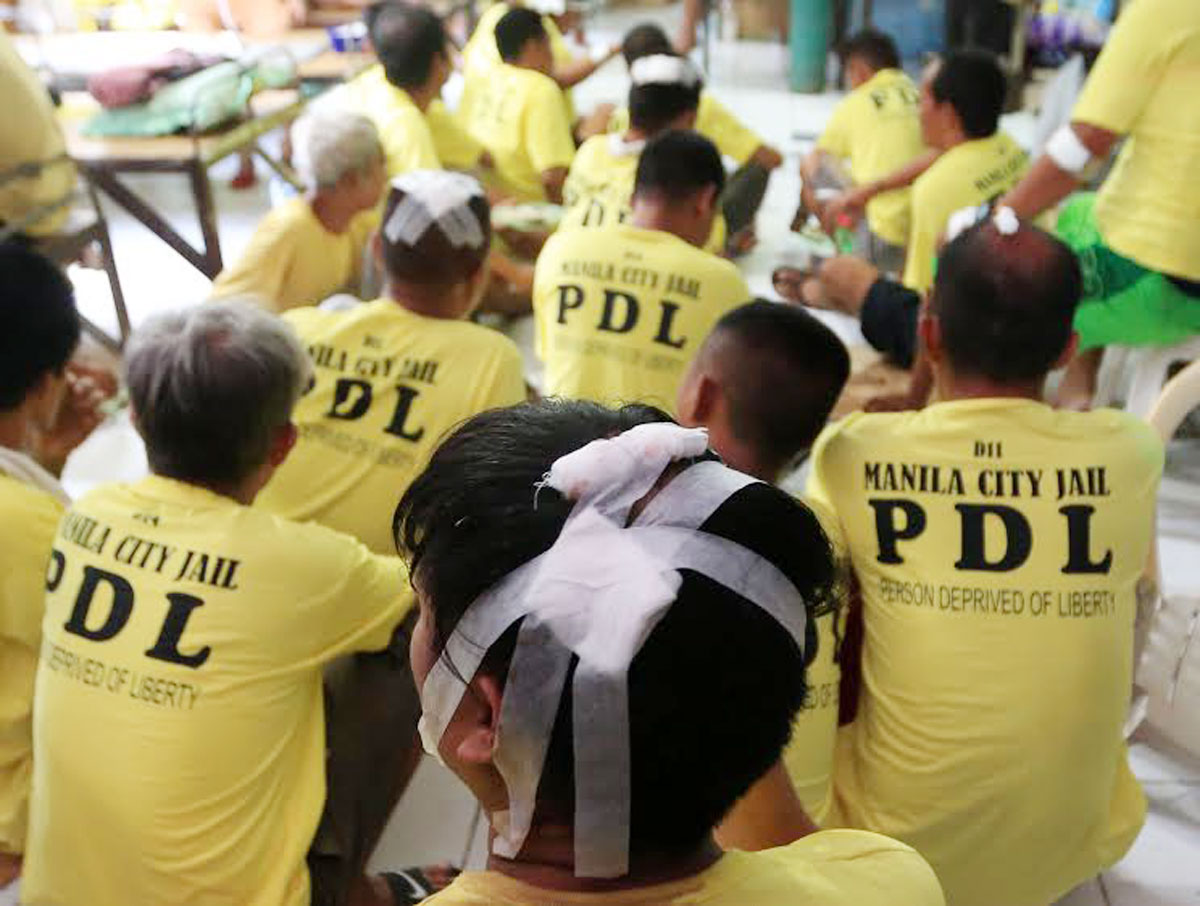
In the case of PDLs, the PILC and the NUPL noted that the facilities of BJMP and BuCor were all overcrowded.
The Manila City Jail Male Dorm, the Metro Manila District Jail Annex 4, the Taguig City Jail Female Dorm, the NBP and CIW have a congestion rate of 224 percent, 115 percent, 800 percent, 353 percent and 240 percent, respectively.
“Incarcerated people occupy shared spaces in which physical distancing is impossible either due to space, overcrowding, or the requirement of constant supervision,” read the petitioners’ reply. “Given these figures, it is impossible for the PDLs to observe physical distancing, a crucial element in the COVID-19 response.”
The petitioners noted that detainees who fall sick of COVID-19 may infect their fellow detainees, health workers, guards and others.
They also noted that other countries have taken measures to prevent such a dire situation: Germany released convicts who had served a large part of their sentence, Ethiopia released those sentenced to imprisonment of less than three years, and the US state of New Jersey released those convicted of low-level crimes.
In this case, 21 of the 22 petitioners have not yet been convicted. They are still awaiting trial for non-bailable offenses such as murder, kidnapping, and illegal possession of firearms and explosives.
The petitioners questioned the OSG’s refusal to apply in the case of detainees the recommendation of the House justice committee to release convicted prisoners on humanitarian grounds.
“The respondents should allow petitioners to avail of the remedy and be qualified or disqualified according to merit and circumstance. And with its pejorative attacks on petitioners, the respondents not only seek to blindsidedly negate the right to presumption of innocence, but to deny petitioners due process as well,” they said.
The petitioners denounced what they described as the OSG’s attempt to “red-tag” them to discredit their plea for temporary release.
“Contrary to the respondents’ portrayal of the petitioners, the nature of their cases and the circumstances of their arrests will show that they are not threats to security and to society but are rather victims of political persecution. They are prisoners of conscience,” the rights lawyers said.
“It is a shame that the respondents resorted to vicious and reckless red-tagging in their very submission before the Honorable Court. Such atrocious audacity reflects on respondents’ disrespect for this Honorable Court and insults their intelligence,” they added.
Both the BuCor, through its spokesman Gabriel Chaclag, and the BJMP declined to comment on the ongoing case.
BJMP spokesperson Chief Inspector Xavier Solda said they were consulted by the OSG for their recommendation, but he declined to divulge more details.
“The petition is now being resolved in the Supreme Court. Let’s wait for the decision of the Court on the matter,” Solda said in a statement.
Solda said they would abide by the ruling of the SC.
DOJ also takes steps
A few days after the petition was filed before the SC, the Department of Justice (DOJ) approved a resolution of the Board of Pardons and Parole, which simplified the requirements and procedure for the processing of applications for parole and executive clemency.
The resolution dispensed with most of the documentary requirements for parole and clemency applications.
The Board was mandated to double the number of cases for review and deliberation, and to speed up the processing of applications.
Parolees and pardonees were exempted from reporting regularly to parole and probation officers while the state of national emergency remains in effect.
Applications for executive clemency of those over 65 years old and who have served at least five years of their sentence, will also be covered by the measure.
Excluded, however, are PDLs convicted of heinous crimes and drug-related offenses as well as those classified as “high risk” by the BuCor.
DOJ Secretary Menardo Guevarra said even before the COVID-19 outbreak, the department had ordered the release of sick and elderly inmates.
Sought for comment earlier in the week, Chaclag said they still had to draft the list of inmates qualified under the DOJ’s resolution.
The Philippine STAR tried to reach Chaclag for updates over the weekend and yesterday, but to no avail.
To say the NBP is overpopulated is an understatement. It has 29,173 inmates – way above its 6,435 capacity – or a 353 percent congestion rate as noted by the rights groups.
The CIW had 3,422 inmates as of January 2020, compared to its 1,008 capacity.
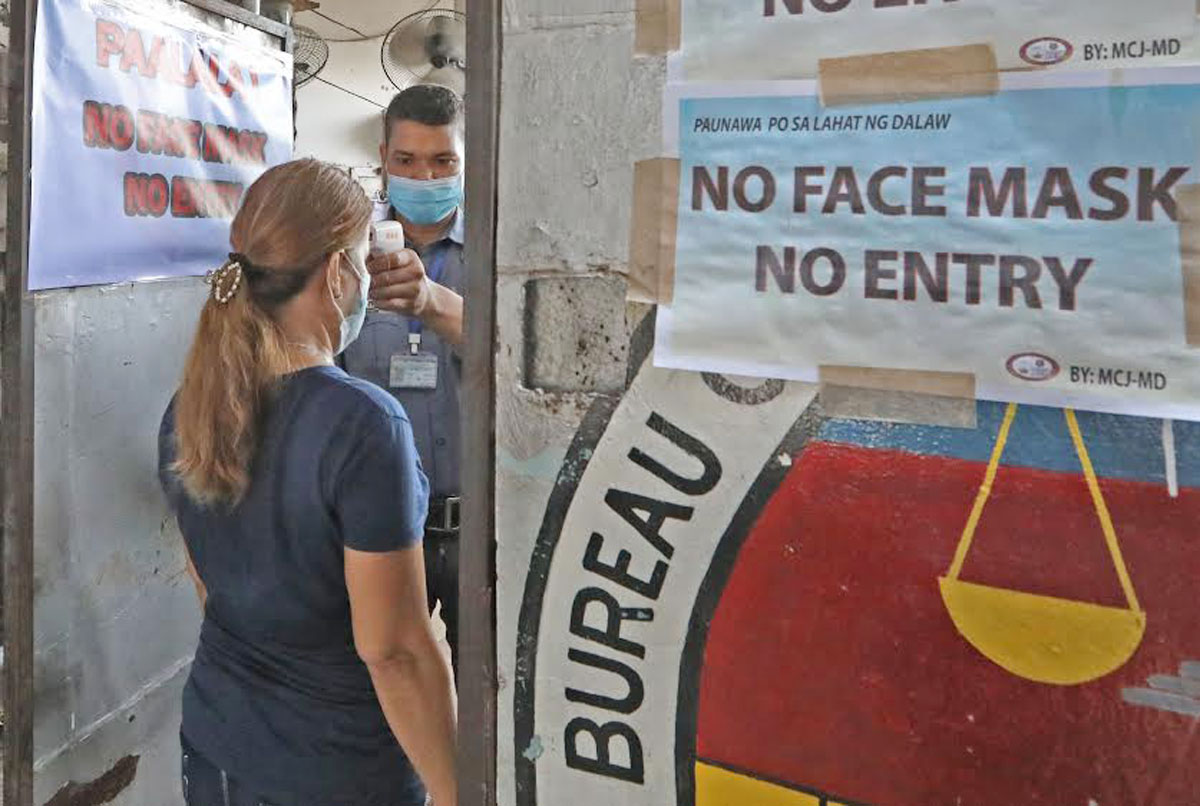
Both the BJMP and the BuCor have implemented measures and protocols to stop the spread of the virus in their facilities.
The two agencies have suspended visitation privileges and isolated suspected and confirmed COVID-19 cases into separate facilities.
Solda said they are implementing stricter measures and protocols in the other 466 jail facilities under the BJMP that have no COVID cases.
He said they are learning more lessons as they face more pressure to protect the inmates.