


Disaster-Weary Philippines Confronts Drowning Risk As WHO Pushes Policy Solutions
The National Disaster Risk Reduction and Management Council said “drowning remains the primary cause of the deaths” amid floodings due to heavy rains brought by the southwest monsoon and tropical cyclones.
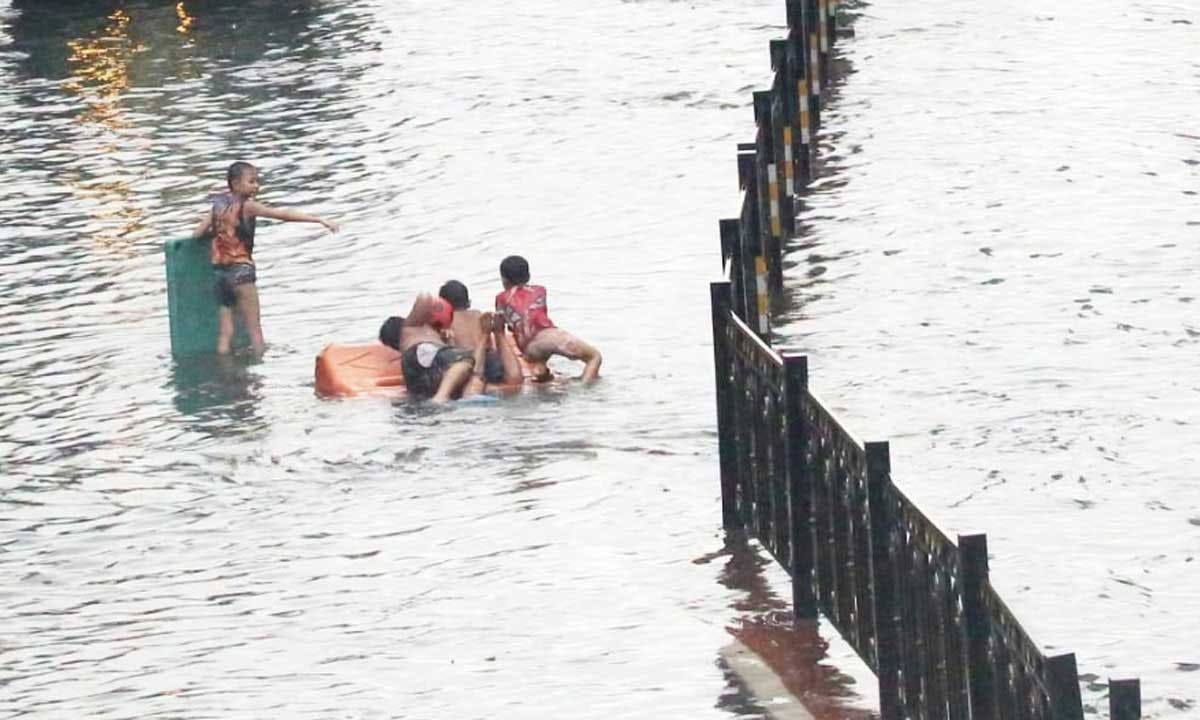
Images and videos are rife on social media platforms showing Filipinos swimming, jet skiing, surfing, and even partying using improvised items along flooded streets.
The oddness of these scenes can provide fleeting relief in the middle of a disaster. But behind the laughter and seemingly harmless fun is the reality of loss, devastation, and the difficulty of starting over after a calamity.
“The sight of the children swimming helps lessen our pain walking in waist-deep floodwaters,” said Minji Santo, a science student of the University of Santo Tomas (UST) along Espana Boulevard, Manila, one of the frequently flooded areas in the university belt.
“Although I was hoping no one would drown or get sick after their activities in the floodwaters,” said Santo, who walked past the children and some adults playing in the floods as she tried to reach higher ground to wait for public transport.
For three weeks from the end of July into August, heavy rains from the southwest monsoon or “habagat,” enhanced by tropical cyclones “Luis” and “Maymay,” placed Metro Manila and multiple regions under high and hazardous waters from flashfloods, overflowing rivers, and rising seas.
As the floods persisted, the death toll was revised to a higher count, with the National Disaster Risk Reduction and Management Council (NDRRMC) and the Philippine National Police reporting nearly 30 fatalities and many others injured and missing.
The recent extreme weather affected more than five million families and caused P3.5 billion in infrastructure damage and P1.42 billion in agricultural losses.
State agencies reported rainfall equivalent to nearly half of the 455 millimeters recorded over 24 hours during Tropical Storm Ondoy (international name Ketsana) in 2009, one of the country’s deadliest flooding disasters.
The NDRRMC said, ““Drowning remains the primary cause of the deaths,” with the remaining fatalities caused by electrocution, fallen trees and landslides.
Time to stop the drowning cycle
As floods receded, UST student Santo, like thousands of commuters, workers, and Filipinos who simply have to go about their lives, was left with a familiar feeling after another calamity.
“We always hope that it shouldn’t be like this next time,” she said. “No wading in high floodwaters. No tragic drowning incidents.”
For Santo, it should not be an unreasonable expectation.
The World Health Organization (WHO) has repeatedly emphasized that drowning is preventable and requires systemic action, including policies that reduce exposure to water hazards and strengthen people's ability to stay safe around water.
In 2024, the WHO conducted a global assessment of drowning and drowning-prevention efforts across around 140 countries, including the Philippines.
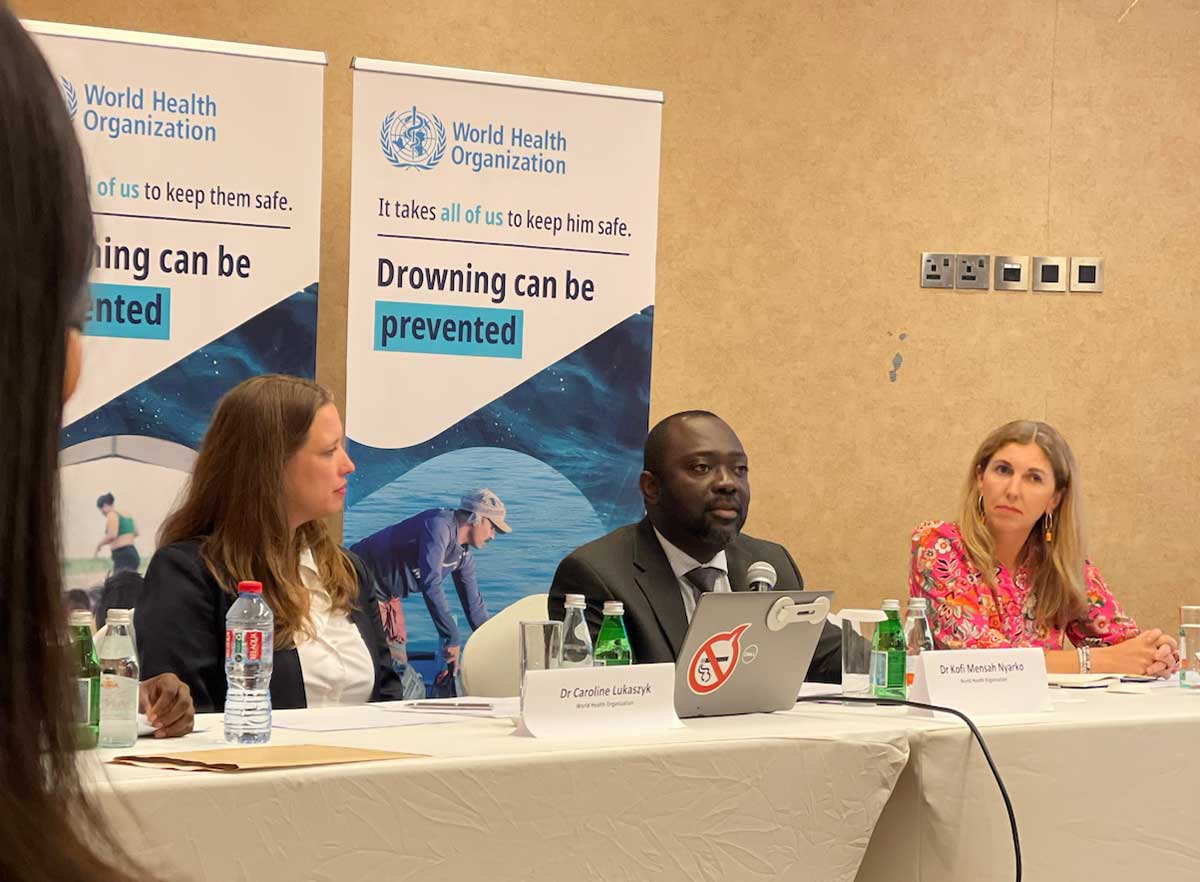
“Interventions to prevent drowning, such as swimming safety skills and localized maritime safety interventions, are relatively well-covered in most countries. But what is missing most is policy legislation,” said Dr. Caroline Lukaszyk, WHO drowning and injury prevention expert.
“Policy legislation is so critical to sustainability and large-scale implementations. It is critical for accountability and for ensuring commitment [from decision-makers and all stakeholders],” she added.
Lukaszyk made the remarks during the media launch of the PROTECT policy framework for drowning prevention in Accra, Ghana on July 23, timed with the commemoration of World Drowning Prevention Day. OneNews.PH was among the media organizations invited during the launch.
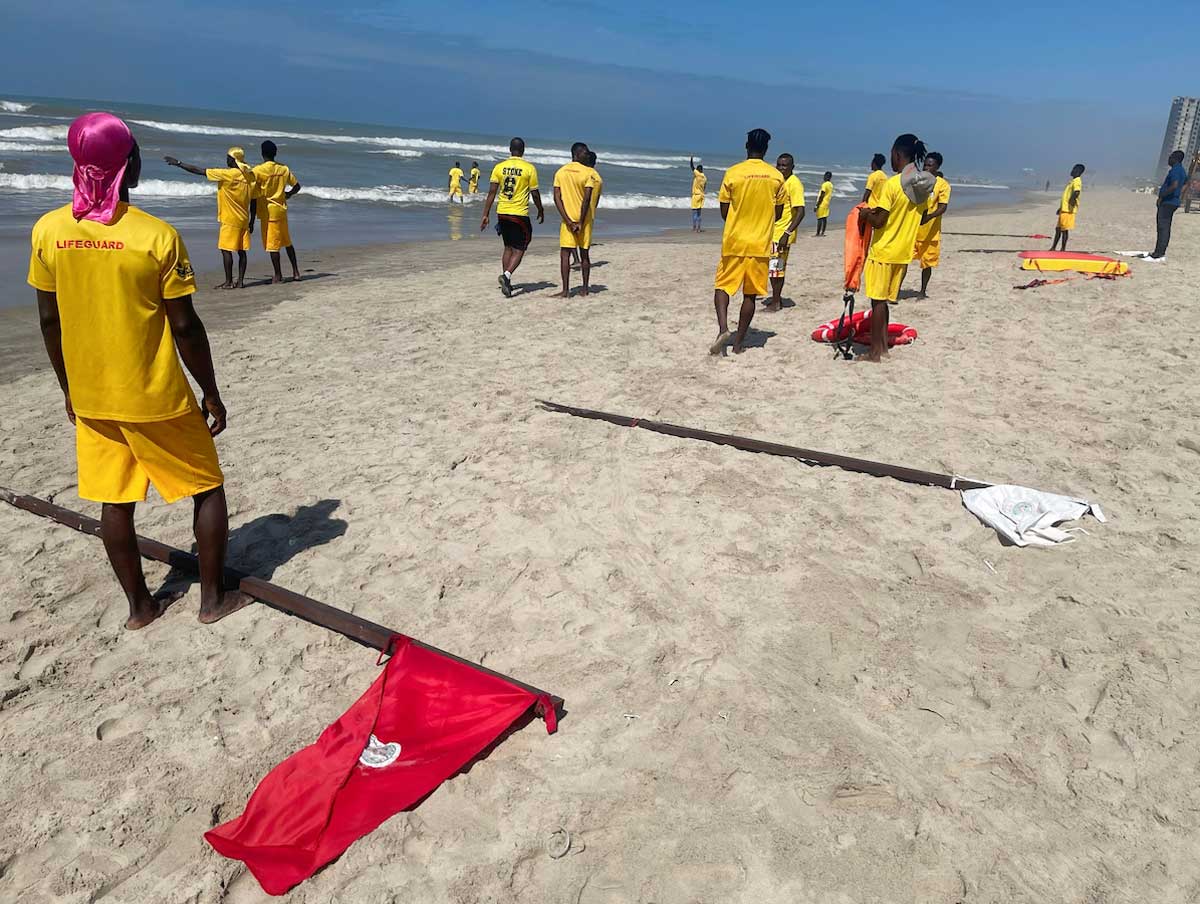
The launch showcased best practices from countries such as Bangladesh, where childcare systems and the integration of water rescue into the fire service have been used as drowning prevention strategies; Vietnam, where millions of children benefited from survival swimming and basic water safety education; and Ghana, which has developed a community-based lifeguard program for its ocean beaches.
These experiences helped demonstrate how different countries are adapting drowning prevention strategies to their own contexts, and what governments can do to reduce drowning mortality.
“The PROTECT package brings together seven strategies that governments can adopt to develop effective policies, laws, regulations, and systems to strengthen drowning prevention at scale and in a sustainable and well-resourced way,” Lukaszyk said.
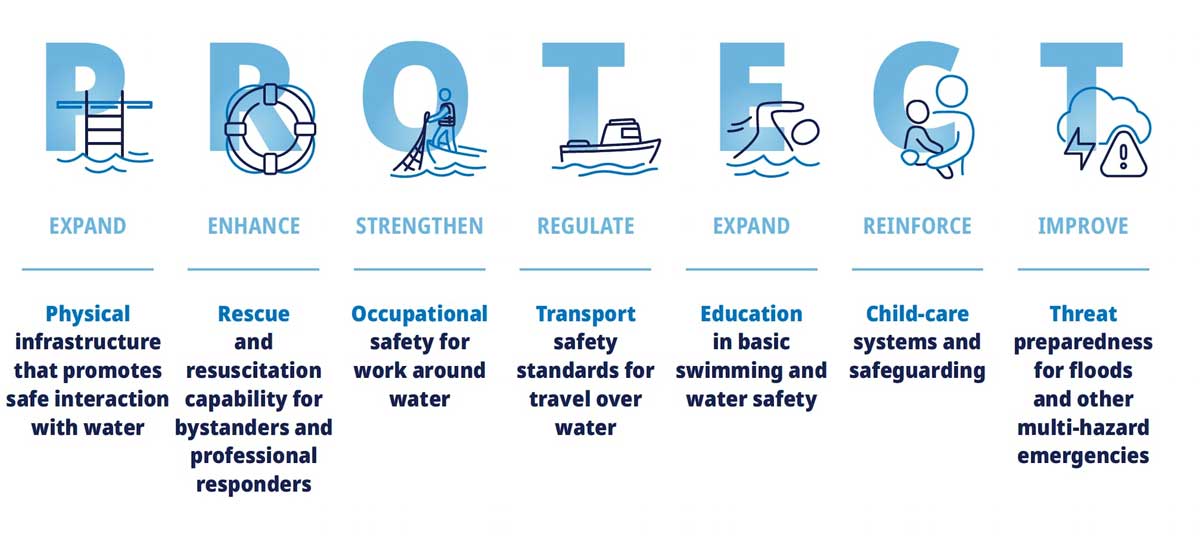
“Drowning is really a global issue. We hope that governments see where they fit within these strategies and understand how all these areas are interconnected. We hope they ask questions such as: What is our responsibility as a ministry of transport, of education, or of urban and rural development? What role can we play in preventing drowning? And, most importantly, what policies can we put in place to protect lives around water?” Lukaszyk said.
Lifesavers chime in
In recent weeks, President Marcos directed state agencies, civic organizations, and local governments to strengthen lifesaver training and water safety programs.
Coach Danilo Salonga Jr., secretary-general of the Philippine Life Saving Society (PLS), said, “Anyone can drown, but anyone can also be a lifesaver.”
PLS is a 20-year-old volunteer organization of swim coaches and lifesavers who work on reducing drowning incidents and preventing injuries in the aquatic environment.
Salonga said while investigations are ongoing about the flood control projects and pending a law on drowning prevention, Filipinos must have the knowledge and skills to stay safe around water.
“Knowing how to swim is an important aspect of safety,” he said. “But what all Filipinos need is to be smart in and around water, and especially out of the water.”
Salonga cited the situation of children in rural areas who walk to school for hours along rivers and streams.
“Accidents happen – a child dropped his slippers in the water. How will he pick it up without drowning?” he said.
“We must aspire to a level where a child knows how to troubleshoot and how to be safe,” he said, adding that the country’s public schools and teachers have yet to be equipped with teaching water safety.
The PLS modules share many of the same principles promoted by the NDRRMC and other agencies, including the Department of Health: supervising children around water, installing physical barriers around water sources, avoiding alcohol during swimming, and building basic life-support skills.
A common emergency bystander protocol is “Reach, Throw, Don’t Go,” which emphasizes that people who witness a drowning should not immediately enter the water unless they are trained to perform a rescue.
Instead, they can extend a pole or branch, throw a rope or flotation device, or use a boat or other appropriate craft if the person in distress is out of arm’s reach.
The principle is simple: a rescue should not create another victim.
The Philippines, through the Philippine Bureau of Fire Protection, already has a mandate to conduct rescue operations, including protocols for water rescue. Public health advocates and lifesavers, however, point out that the policy challenge is ensuring that this capability is adequately trained, equipped, standardized, and available where and when communities need it.
Making drowning prevention part of policy
The PROTECT framework also calls on governments to integrate water-safety standards into zoning and land-use planning. For a flood-prone country like the Philippines, some of these recommendations are particularly relevant.
This includes establishing safe areas for recreation around water, requiring protective measures for construction near high-risk waterways, installing barriers around dangerous water bodies, and incorporating flood-risk reduction into land-use planning.
It also recommends applying universal design principles to make water environments safer and more accessible for children, senior citizens, and persons with disabilities, including the simple principle of making water “easy to get into, easy to get out of.”
Regular inspection and repair of barriers, handrails, steps, decking, and other infrastructure are also important, particularly after storms and flooding.
For Dr. Kofi Mensah Nyarko from the WHO Regional Office for Africa, who was one of the panelists during the launch of PROTECT, the responsibility extends beyond any single agency.
“Coordination mechanisms should be there for intervention programs to work. Children are most affected, and they need to know how to manage themselves with water bodies. Swimming is something we don’t teach in our schools. Childcare systems should also be prioritized,” Nyarko said. “When it rains, we all know what happens.”
The Philippines has set a goal of reducing drowning mortality by 50 percent by 2030.
The floods will come again. The question is whether the country will be better prepared when they do, and whether that preparation will save lives.