



QC School’s ‘Surprise’ Closure Probed
Parents and students were caught off-guard when Colegio de San Lorenzo representatives announced the decision to close during a general assembly last Monday, Aug. 15, which would have been the first day of the school year.
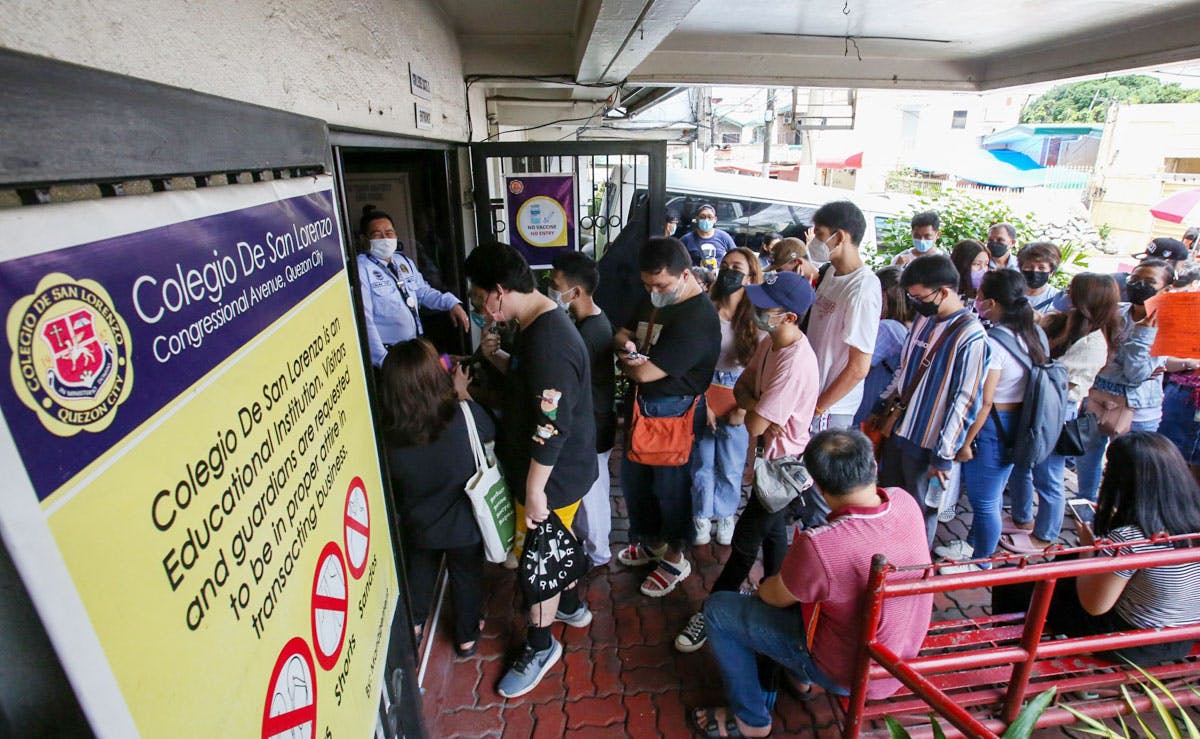
Administrators of the Colegio de San Lorenzo (CDSL) in Quezon City may face “legal issues” over their sudden decision to end operations this week, an official of the Quezon City government said on Wednesday, Aug. 17.
City Attorney Orlando Paolo Casimiro said they are investigating if the school’s closure and the way it was announced to stakeholders violated local ordinances and other existing laws, as well as provisions of operating permits issued by the local government.
Parents and students were caught off-guard when CDSL representatives announced the decision to close during a general assembly last Monday, which would have been the first day of the school year. Some 1,400 students in basic and higher education and over 100 employees, including faculty members, were affected by the decision.
“Even non-lawyers would agree that there was something wrong,” Casimiro told The Philippine STAR in Filipino.
He said affected parties may also file civil and criminal cases before local courts or pursue administrative cases with the Department of Education (DepEd) and the Commission on Higher Education (CHED).
“In all cases, the QC LGU, through the legal department and also the public assistance and legal aid office, will provide the legal assistance to those who were affected,” he added.
CHED probe
As this developed, CHED chairman J. Prospero de Vera III said they have initiated an investigation into the matter, adding that school representatives have already met with their officials to explain the decision.
“We talked about how to help the affected students transfer to other schools. That will be the focus of CHED,” De Vera told The STAR in English and Filipino on Wednesday.
During a hearing of the House committee on higher education last Tuesday, Aug. 16, De Vera cited possible violations committed by CDSL after it abruptly announced its closure.
“We have existing requirements for closure and suspension of programs, and there are potential violations to the process that they observed,” he said, referring to a memorandum issued in 2020.
“Under existing CHED rules… you need to inform the commission 60 days before you close or suspend programs,” he added.
The policy specifically prohibits higher education institutions from implementing a voluntary suspension of operations without informing the commission.
It also requires the submission of various documents to justify the decision, including an audited financial report for those citing financial loss as a reason for the closure.
“I think it was the first time that a school rather arbitrarily closed without informing the commission ahead of time. Other private universities that closed before put advanced notice and sat down with CHED so that the procedure for closure would be observed,” De Vera said.
The CHED chief also cited possible “deceit” due to the collection of tuition and other fees and then “arbitrarily” deciding not to open.
“There is a certain element of maybe deceit because as far as the commission is concerned, once you accept tuition fees, there is already a contractual agreement between you and the student that you will provide education in exchange for the fees that are paid,” he said.
“The fees have been paid and arbitrarily you just say, ‘we are not going to provide you education anymore.’ This is rather alarming,” he added.
The CDSL administration, which committed to provide refunds and help students transfer to other schools, has yet to issue a statement regarding the ongoing investigation.
The school said no fees shall be charged for the release of transfer credentials and that students with outstanding fees are no longer required to pay.
Schools offer slots
Quezon City Mayor Joy Belmonte earlier directed Casimiro and other local offices to provide assistance to students, teachers and other stakeholders affected by CDSL’s closure.
The local government noted that several basic and higher education institutions, including the Quezon City University (QCU), have expressed willingness to accept affected students.
“The QCU will welcome the college students of CDSL, and we will help in crediting their classes and helping them have a smooth transition to our university,” the university’s president Theresita Atienza said.
Other schools that announced willingness to accept affected CDSL students include the University of the East, Thames International, Grace Montessori School of Novaliches, National University Nazareth School, Philippine Women’s University-Jose Abad Santos Memorial Schools, Acelina School, St. Mark Integrated School, Colegio de San Bartolome Novaliches and St. Theresa’s College.
The DepEd said it only received the notice regarding the school’s closure last Tuesday. In an interview with One PH yesterday, DepEd spokesman Michael Poa said they have requested CDSL to meet with them to discuss their plans to support the students.
“We’re trying to be more proactive… Our interest is for the learners to be able to go back to school,” he said. – With Mayen Jaymalin


