



Public School Teachers Back Face-To-Face Classes By November
Teachers’ Dignity Coalition national chairman Benjo Basas said they support the thrust of the Department of Education for full face-to-face classes in schools but “we need to ensure that our learners and teachers are safe.”
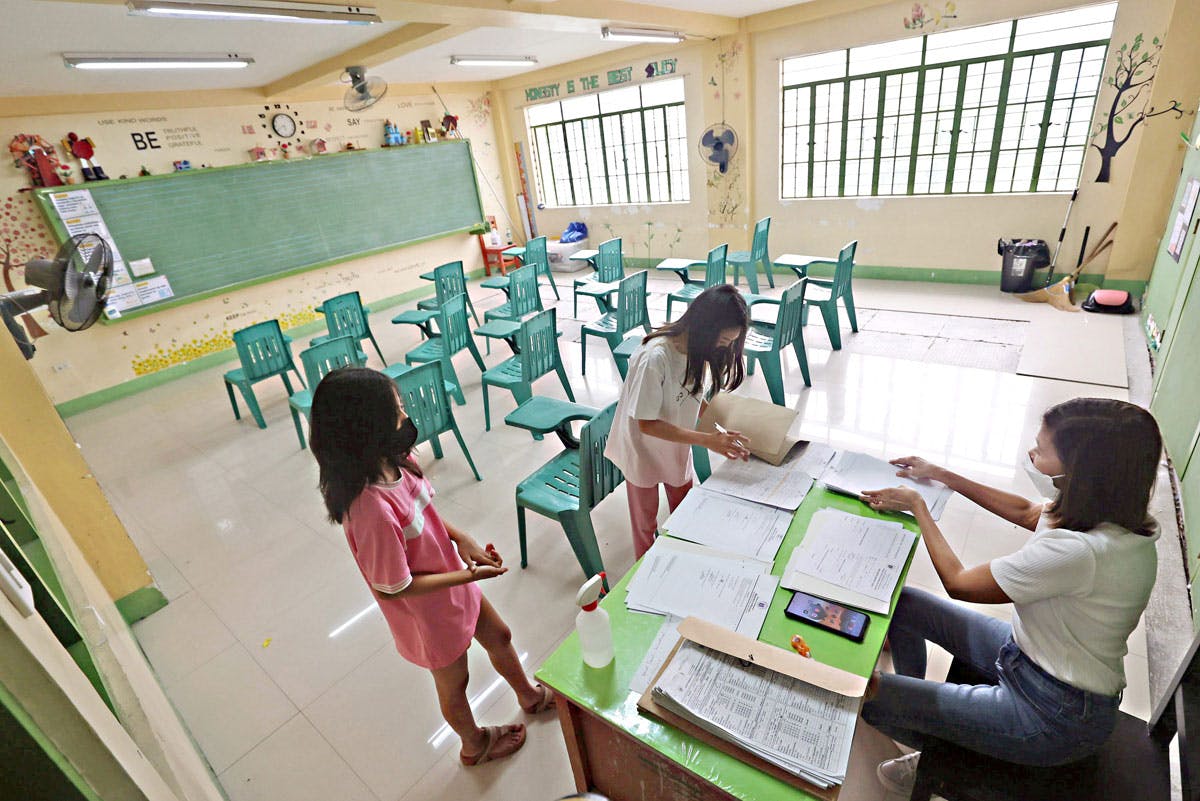
Public school teachers agree with the government’s push to fully implement face-to-face classes in public schools by November, but reiterated their position that schools and mentors should be properly prepared for in-person sessions.
Teachers’ Dignity Coalition (TDC) national chairman Benjo Basas said they support the thrust of the Department of Education (DepEd) for full face-to-face classes in schools.
“As we mentioned earlier, we agree to return to in-person classes by next school year. Our children have already suffered terribly under a distance learning setup,” Basas said in a statement.
“But still, we need to prepare our schools if we project a 100-percent resumption. We need to ensure that our learners and teachers are safe and it would require several adjustments, especially in class size and physical facilities,” he added.
Basas pointed out that the education sector would be needing more classrooms and more teachers “to effectively handle the delivery of education service, post pandemic.”
The TDC, a federation of public school teachers’ associations nationwide, issued the statement in reaction to a statement by President Marcos that the DepEd was targeting to fully implement face-to-face classes by November.
Accelerated vax drive
Sen. Joel Villanueva also backed the move to hold face-to-face classes starting November, but he said the government must accelerate its vaccination drive and find ways to help students and teachers as well as the transport sector cope with high commuting and fuel costs.
Villanueva said it is urgent for the country to recover from the “learning loss,” citing the findings of the National Economic and Development Authority (NEDA) that online or modular learning was only 37 percent effective compared with face-to-face classes.
He also referred to the NEDA’s warning that the country will sustain some P11 trillion in economic losses in the next 40 years due to the suspension of face-to-face classes.
For the senator, it is imperative that COVID-19 boosters be given to children aged 12 to 17 years before the start of physical classes, as public and private schools must implement protocols, like proper ventilation, to minimize the spread of the disease.
Aid to students
Meanwhile, Makabayan party-list groups Kabataan, ACT Teachers and Gabriela have proposed a law that will provide financial assistance and other forms of relief to students in times of national emergencies and crises.
A house bill co-authored by Representatives Raoul Danniel Manuel of Kabataan, France Castro of ACT Teachers and Arlene Brosas of Gabriela intends to institutionalize an “emergency student aid and relief system” to assist Filipino students and youth during this period.
Manuel, Castro and Brosas said the assistance shall support students “in their expenses related to alternative modes of learning, including tuition, other school fees, gadgets and internet connectivity.”
The aid aims to help “facilitate the return of students to face-to-face classes” and will also include a one-time distribution of P10,000.
In the explanatory note, the lawmakers cited Article 14, Section 1 of the 1987 Constitution, which mandates the State to “protect and promote the right of all citizens to quality education at all levels.”
The Constitution mandates the establishment and maintenance of “a system of scholarship grants, student loan programs, subsidies and other incentives, which shall be available to deserving students in both public and private schools, especially to the underprivileged.”
“The COVID-19 pandemic has unmasked the already weak economic fundamentals, poor job generation strategy and fragile health care and social protection systems that have been in place for so long as part of the neoliberal orientation of the Philippine economy,” the bill stated.
The measure underscored that the high dropout rates and surge in mental health concerns among students “while government agencies are implementing distance learning modes” were reaching alarming levels.
“Students are experiencing difficulties as to how they can continue to fund their education because their parents are unemployed, underemployed or receiving meager wages,” the bill read.
The lawmakers said that while the country is in an economic crisis, public funds must be used primarily for basic social services, including education.
They added that students would need assistance for food, transportation, accommodations and even gadgets during the transition from distance learning to hybrid modalities. – With Paolo Romero, Sheila Crisostomo


