



PSA Reviews Poverty, Food Thresholds
As of 2023, the food threshold or the minimum income needed by a family of five to meet basic food needs per month was at P9,581 or about P64 per person per day.
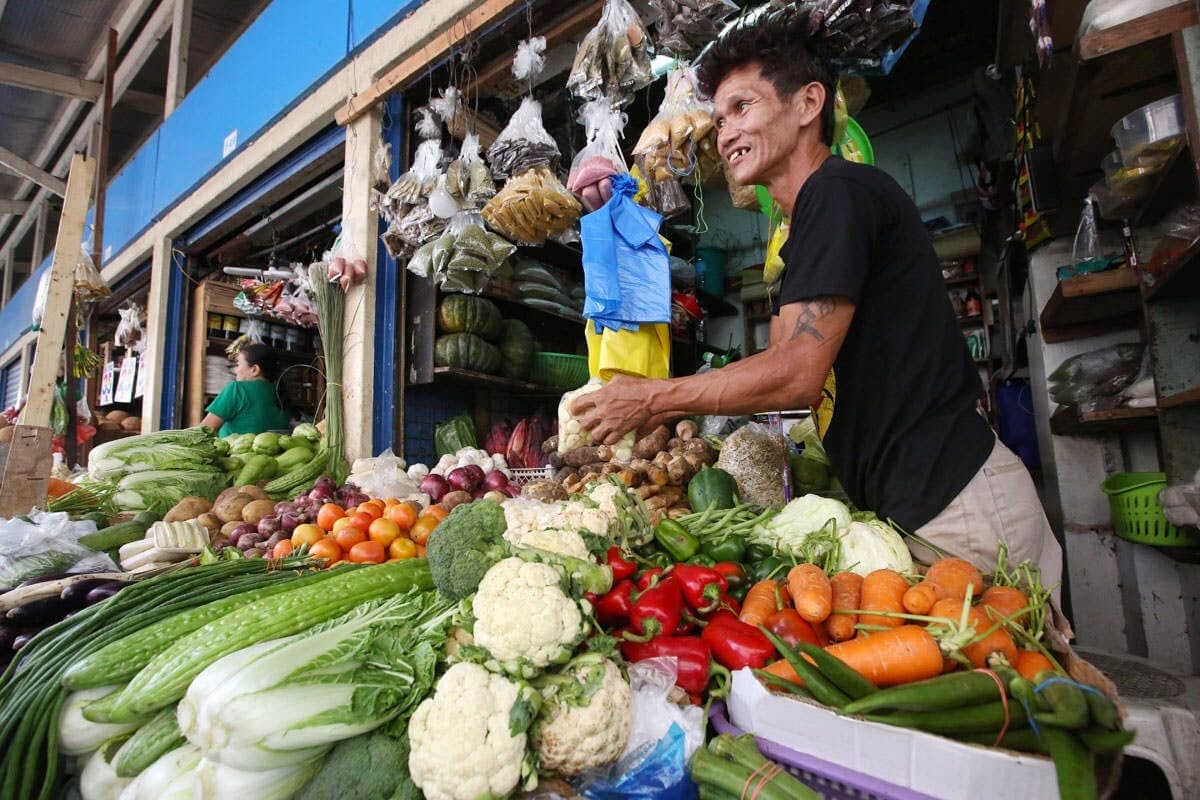
The methodology for coming up with thresholds used by the government to determine poverty will be adjusted in 2025, the Philippine Statistics Authority (PSA) said, with the current food threshold deemed insufficient.
As of 2023, the poverty threshold or the minimum income required to meet the basic food and non-food needs of a family of five was pegged at P13,873 per month.
Meanwhile, the food threshold or the minimum income needed by a family of five to meet basic food needs per month was at P9,581 or about P64 per person per day.
The latest poverty data released last month showed the poverty incidence among the population was at 15.5 percent last year, lower than the 18.1 percent poverty incidence in 2021.
National Statistician Dennis Mapa said he agrees “that the food threshold might be insufficient.”
He added that the PSA is now preparing to make adjustments to the menu and methodology for thresholds being used for the country’s poverty estimates in 2025.
The food threshold is based on a sample menu or food bundle for breakfast, lunch, dinner and snacks that satisfy energy and nutrient requirements.
Mapa said the sample national food bundle for breakfast is composed of scrambled egg, coffee with milk and boiled rice or rice-corn mix for breakfast, while lunch is composed of boiled monggo with malunggay and dried dilis, banana and boiled rice or corn mix.
For dinner, the menu is composed of fried fish or boiled pork, vegetable fish and boiled rice or rice-corn mix, while snacks cover bread or boiled rootcrop.
For the adjustments, Mapa said the PSA is proposing changes in the menu and cost and ratio of food and non-food expenses.
He said there will also be adjustments to the inflation base year from the current 2018 to 2023 to take into account changes in families’ consumption patterns.
“Of course if income is increasing, the component allotted to food is becoming smaller, while those for others are becoming bigger. We need to capture that so we’re really updating consumption components,” he said.
PSA data released on Thursday, Aug. 15, showed the average annual income of Filipino families in 2023 was estimated at P353,230, up 15 percent from the P307,190 average family income in 2021.
Meanwhile, Filipino families spent an average of P258,050 in 2023, 12.8 percent higher than P228,800 in 2021.
Mapa attributed the increase in income to improvement in employment and wages in 2023 as the economy bounced back from the pandemic in 2021.
Earlier, National Economic and Development Authority (NEDA) Secretary Arsenio Balisacan said it is time to revisit the thresholds being used to determine those who are poor to consider changes in the economy, preferences and prices of goods.
Balisacan came under fire for saying that Filipinos who spend a little more than P21.3 per meal are not considered food poor.
During the Development Budget Coordination Committee’s briefing at the Senate on Tuesday, Aug. 13, Sen. Nancy Binay asked Balisacan what the threshold was for food poverty.
Balisacan said that accounting for inflation, the threshold is P64 a day for three meals, or roughly P21.3 per meal per person. The amount has already increased since 2021, which was then at P55 a day.
“The basket has not been changed for some time, your honor,” Balisacan said.
"When you compute poverty thresholds with an old number which is not, obviously not workable anymore, P20 per meal, hindi totoo ‘yung poverty forecast niyo (your poverty forecast is not true),” Sen. Grace Poe said.
The NEDA secretary admitted that the number was outdated, as it was set more than a decade ago. However, he explained that it was not NEDA that determined the basket.
According to Balisacan, the computation for the basket was from the recommended food items from the Department of Health and the Food and Nutrition Research Institute. NEDA merely gave the numbers.
However, the NEDA chief acknowledged that high rice inflation alone exceeds the meal budget.
Binay said the numbers do not match with what is needed for people to live beyond the minimum necessities. Balisacan agreed with this, saying that the numbers need to be revisited.
Balisacan, however, maintained that the threshold needed to be set as a metric. He likened it to a ruler that should remain at a constant length.
“Our interest, insofar as monitoring is concerned is to answer the question: are our policies, programs, strategies working insofar as reducing poverty is concerned?” he said.
The NEDA chief said that even if the poverty threshold was adjusted by 20 percent, the trend of poverty reduction would still be the same.
“So far as 2021, 2023 is concerned, yes the conclusion is the same, that poverty indeed decreased regardless of whatever reasonable poverty lines you employed,” Balisacan said.
However, Balisacan said the poverty threshold does not necessarily determine how much aid the government doles out to the public. He cited the Department of Social Welfare and Development’s monitoring.
“The numbers there that they use is different from what we use for poverty monitoring. The use of these lines is only for poverty monitoring so that we can guarantee that the programs, projects and policies that we deployed are getting the results that are expected,” Balisacan said.
At the Senate on Wednesday, Minority Leader Aquilino Pimentel III meanwhile maintained that the P64 daily meal allowance for each Filipino is unrealistic.
He also asked Balisacan about the poverty threshold of P92.50 per person per day.
He suggested that NEDA researchers should do immersion and stay at least a week on the ground so that they would know the real situation.
“It’s too theoretical, theories are OK but they should leave their house, do one week of immersion so they can address poverty,” he pointed out.
He said President Marcos was in a pitiful situation. “So if he wants to succeed, the President should crack the whip a bit. I know the President has a background in math and science, he said evidence-based decision making, he should demand from his Cabinet secretary not only theoretical figures but actual figures confirmed on the ground.” – With Cecille Suerte Felipe


