PNP: 46 Killed In Drug War Under Marcos
Of the more than 18,500 anti-drug operations so far, about 46 fatalities were recorded with a majority coming from Region 11 (Davao), Philippine National Police chief Gen. Rodolfo Azurin revealed.
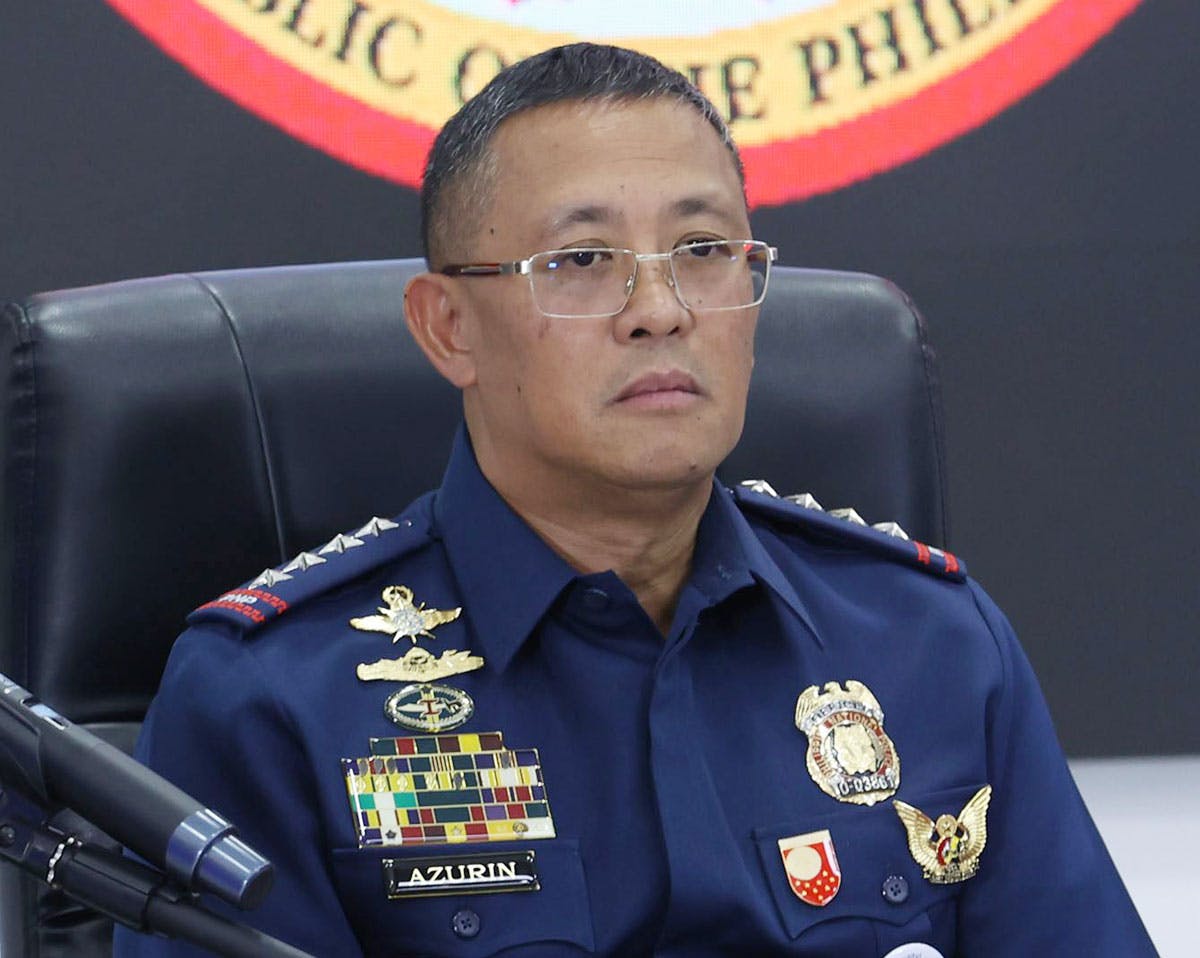
At least 46 suspects were killed in anti-drug operations led by the Philippine National Police and Philippine Drug Enforcement Agency (PDEA) since the start of the term of President Marcos, PNP chief Gen. Rodolfo Azurin said in a press conference at Camp Bagong Diwa in Taguig on Monday, Nov. 14.
Of the more than 18,500 anti-drug operations so far, about 46 fatalities were recorded with a majority coming from Region 11 (Davao), the PNP chief revealed.
Asked how the police are maintaining the low casualty count, Azurin said he had been stressing that the PNP is “for the preservation of life.”
“So, with all the minimum caution, we advise our policemen not to endanger lives, but definitely, if they see themselves in danger, they have to defend themselves,” he added.
During the signing of a memorandum of agreement on the campaign against drugs, the PNP chief said they had recovered about P9.7 billion worth of illegal drugs since the start of the administration in 18,505 operations, resulting in 22,646 arrests of drug suspects.
“Our present administration, under the leadership of President Ferdinand Romualdez Marcos Jr., fully supports our more focused holistic approach on putting stop to drugs and criminal-ity. This signifies government’s commitment to shape mechanisms in terms of improving the country’s peace and order and safety environment for the Filipino people,” he said.
“In the same way, entire police force remains steadfast to the anti-illegal drugs programs of the government with the aim that Filipinos everywhere could enjoy peaceful society and embrace greater sense of security by sustaining vigilant trust and confidence to our law enforcers,” he added.
For his part, Interior Secretary Benhur Abalos said on Monday the war on drugs under the Marcos administration “will be guided by legalities” as police go after the “big fish” in the illegal drug trade and rehabilitate drug dependents.
“This war on drugs will be based on the Constitution, on the oaths we have taken as public officials. Everything will be in accordance with procedure. We will be guided by legalities here,” Abalos said.
While the war on drugs will have the “same intensity” as the brutal narcotics crackdown during the administration of former president Rodrigo Duterte, Abalos said the “difference” is the support of different stakeholders in order to make the war on drugs an inter-agency effort.
According to Dahas PH, a database on drug-related killings set up by the Third World Studies Center in UP Diliman, there were 127 “reported drug-related killings” from June 30 to Nov. 7. About 20 of these were recorded in Davao del Sur, where Duterte’s turf Davao City is geographically located.
This figure represents the fourth most number of killings this year.
Probe drug war
Human rights advocate group Karapatan has urged the United Nations to push through with an independent investigation on human rights violations in connection with the government’s war on drugs.
“We expect the tall tales and big words – ‘transformational reform, real justice in real time’ – which are empty rhetoric. The same words were used during diplomatic briefings, statements and reports to the UN Human Rights Committee. But facts, experiences and implementation of policies on the ground reveal the realities,” Karapatan secretary-general Cristina Palabay said.
The group issued the statement hours before the government delegation led by Justice Secretary Jesus Crispin Remulla on Monday presented its report on the human rights situation in the Philippines, as the country was subjected to the 4th cycle of the Universal Periodic Review at the UN Human Rights Council based in Geneva, Switzerland.
Karapatan’s data showed there are 842 political prisoners in the Philippines, 15 of them arrested and detained under the current administration.
The group lamented the prevailing practice of red-tagging of progressive groups and personalities critical of the government.
Human rights issues
The Philippine government has assured the European Union (EU) that it is addressing human rights issues and other concerns of the EU in seeking to reapply for Generalized Scheme of Preferences Plus (GSP+), which grants developing countries special trade incentives to pursue sustainable development and good governance, Senate President Pro Tempore Loren Legarda said on Monday.
Legarda said this was the highlight of the meeting with Othmar Karas, first vice president of the European Parliament and head of delegation of the Austrian Peoples’ Party in the European Parliament and Philippine lawmakers last Oct. 27 in Brussels, Belgium.
Along with Senate President Juan Miguel Zubiri and Sen. Sonny Angara, who led the Philippine delegations to France and Belgium, respectively, Legarda assured the EU the Philippines addresses such matters, especially human rights issues.
“The Philippines has been benefitting from the GSP+ since 1994, and it has helped improve our country’s socio-economic development. During our meeting in Belgium, we requested the EU to allow us to reapply for GSP+. We appealed to continue including the Philippines in the scheme because we are a good ally in ASEAN, we have a young and skilled workforce and our country is an ideal destination for investment,” she said.
The Philippines’ participation in the GSP+ will expire in December 2023. Countries that wish to apply must uphold 27 international conventions on human rights, labor, environment and climate protection and good governance. – With Marc Jayson Cayabyab, Paolo Romero, Elizabeth Marcelo