



Phl Retains Tier 1 Status In US Trafficking In Persons Report
“Although the government meets the minimum standards, it did not vigorously investigate or prosecute labor trafficking crimes that occurred within the Philippines,” the US State Department said in its report.
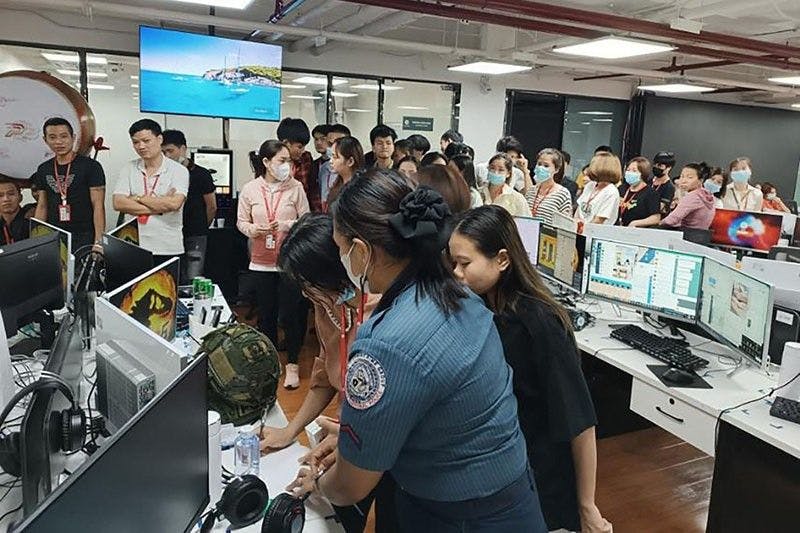
Although it failed to “vigorously investigate or prosecute” labor trafficking crimes, the Philippines was able to retain its Tier 1 status in the Trafficking in Persons report released by the US State Department.
The report released on Friday, June 16, said the Philippines fully meets the minimum standards for the elimination of trafficking, with the government able to “demonstrate serious and sustained efforts during the reporting period, considering the impact of the COVID-19 pandemic, if any.”
“These efforts included investigating more trafficking crimes, convicting more traffickers, amending its anti-trafficking law, increasing funding to the Inter-Agency Council Against Trafficking (IACAT), and sentencing nearly all traffickers to significant prison terms,” read the report.
“The government approved a new NAP (National Action Plan) and consulted survivors during its development. Although the government meets the minimum standards, it did not vigorously investigate or prosecute labor trafficking crimes that occurred within the Philippines,” it added.
According to the US State Department, the government identified fewer victims and prosecuted fewer traffickers over the past year.
Corruption and official complicity in trafficking crimes also remained significant concerns, which inhibited law enforcement action.
Every year, the US classifies countries into four groups based on efforts to address human trafficking using standards set by its Trafficking Victims Protection Act.
Tier 1 includes countries whose governments fully meet the minimum standards for the elimination of trafficking, while Tier 2 are those whose governments do not fully meet the standards, but are making significant efforts to comply.
Some countries are placed on Tier 2 Watchlist if the estimated number of victims of severe forms of trafficking is very significant or is significantly increasing and there is a failure to provide evidence of increasing efforts to combat severe forms of trafficking in persons from the previous year.
Tier 3 includes countries whose governments do not fully meet the minimum standards and are not making significant efforts to do so. Countries on this tier may be subjected to certain restrictions on foreign assistance.
The report is prepared using information from US embassies, government officials, non-governmental and international organizations, published reports, news articles, academic studies, consultations with authorities and organizations in every region of the world and information submitted to [email protected].
Recommendations
In its latest report, the US State Department recommended to the Philippines to investigate and prosecute traffickers, including labor traffickers and complicit officials, and seek adequate penalties for convicted traffickers.
It also recommended increase efforts to proactively identify and assist labor trafficking victims, including by providing training to law enforcement, social service providers and labor inspectors on indicators of trafficking.
The US State Department said the government must also strengthen the capacity of local government units to provide reintegration services for trafficking survivors, including trauma-informed care, job training and in-country employment.
Other recommendations included increasing support to survivor engagement and programs that provide specialized care for trafficking victims, including child victims of online sexual exploitation, as well as ensure that victims receive court-ordered restitution and compensation ordered through civil judgments.
“Increase resources for anti-trafficking task forces and law enforcement units to conduct timely investigations, coordinated operations and prosecutions while providing robust victim and witness assistance services,” read the recommendations.
“Consistently implement the coordinated interagency response to providing services to returning Filipinos exploited in sex and labor trafficking overseas (and) create a central database for information on illegal recruiters and human trafficking cases to facilitate interagency coordination in detecting, investigating, and prosecuting traffickers,” it added.
The report found that while the government slightly increased law enforcement and efforts to prevent trafficking, efforts to protect victims have slightly decreased.
“As reported over the past five years, human traffickers exploit domestic and foreign victims in the Philippines, and traffickers exploit victims from the Philippines abroad,” read the report.
“Traffickers exploit Filipino nationals in forced labor in cyber scam operations located primarily in Burma, Cambodia and Laos. Traffickers also exploit victims from Southeast Asia, in forced labor in cyber scam operations at POGOs (Philippine offshore gaming operations),” it added.


