



DepEd Seeks P8 Billion For Hiring Of School Guards; Launches Shooter Drills
Education Secretary Sonny Angara said more school guards are needed as he announced that active shooting drills will be simultaneously held in various schools nationwide.
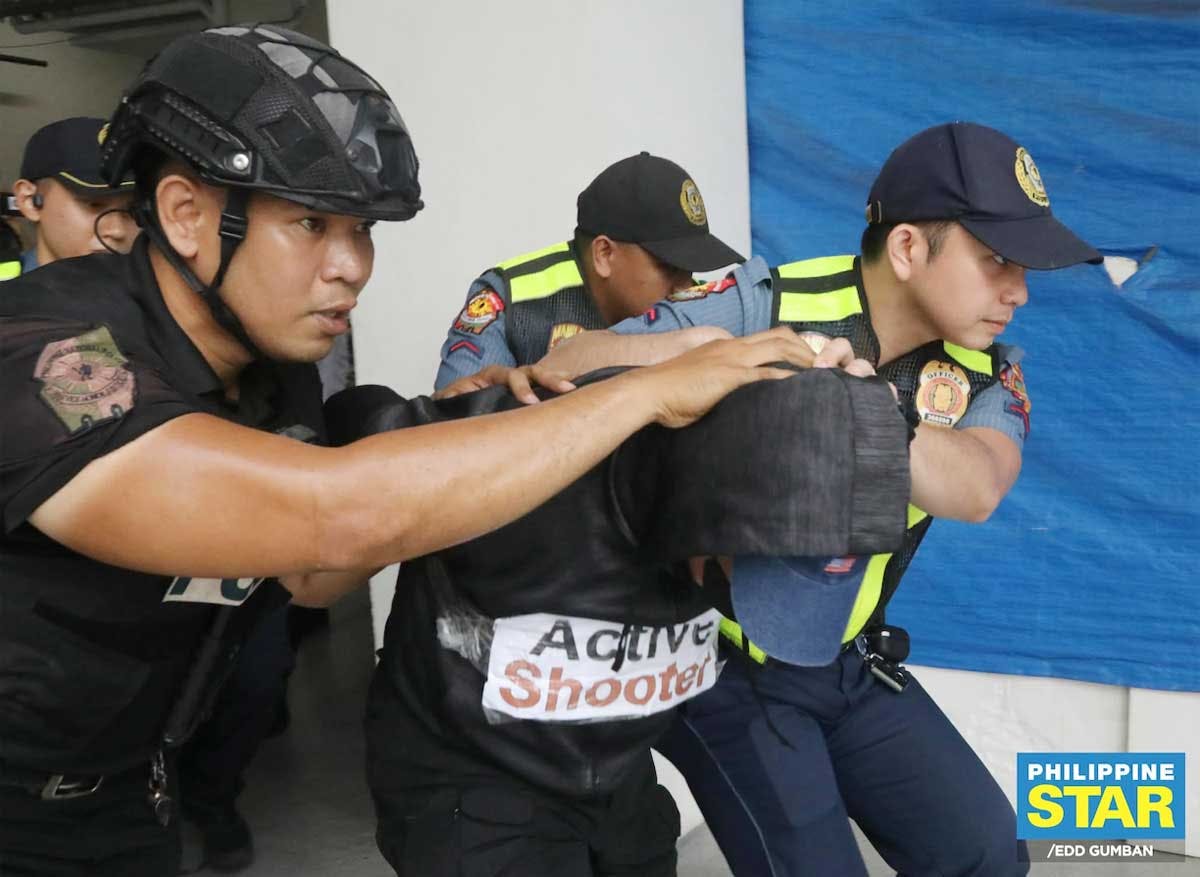
The Department of Education will ask Congress to approve the allocation of P8 billion to fund the hiring of security guards amid the latest data from the DepEd that only 2,494 security guards are manning at least 48,000 public schools.
“We are proposing funds for hiring security guards. We are proposing funds for metal detectors, ideally P8 billion for the entire schools,” Education Secretary Sonny Angara said on Wednesday, July 15, in a chance interview following the launch of the National Safety Schools Summit and Safety Drill at the Manila Science High School.
Angara said it is up to Congress to decide on the proposal to lower the age of criminal liability to 12 years old from the current 15.
“On the part of the DepEd, we are really trying to improve our protocols. We have bag searches, we have metal detectors. Schools have security guards, and yet there are still incidents where knives are hidden in shoes, in underwear, so they still get in. So we really have to be very creative and adjust to what the perpetrators are doing,” he said.
Angara added that active shooting drills will be simultaneously held in various schools nationwide following the rollout on Wednesday.
“We need to do it as often as we can. That’s ongoing, the regional officials are here to let them know how long it will take, the logistical requirements, etc.,” he noted.
He said that police visibility is very important.
“Gangs are increasing. Some started during the pandemic so police visibility is very important because when they see the police, they will not assemble,” he said.
The first-ever active shooter drill was postponed last week due to class suspensions brought by Typhoon Inday.
“This fight is not DepEd’s fight alone. It is a challenge we must face together, especially given the complexities we have seen in recent weeks,” Angara said. “We rely on the support of our parents, families, communities, local governments and our partners across all levels of government to ensure that schools remain safe havens.”
Angara directed all public schools to develop active threat response plans tailored to their specific environments, moving away from a one-size-fits-all approach in favor of localized immediate action.
“Our focus is on proactive prevention and readiness because adhering to safety protocols is a vital step in saving lives,” he said.
During the drill, learners, school staff and local authorities participated in synchronized lockout, lockdown and evacuation simulations to ensure a swift and organized reaction to potential active threats.
“The policy is preparation and prevention. Experts said time and action are important as these incidents happen quickly,” Angara told reporters. “We can no longer allow security threats to place the lives of our learners in harm’s way. No family should have to mourn a school tragedy again.”
Angara said DepEd is also limiting the exposure of students to damaging social media sites, bad influence, groomers and active terrorist recruiters as cases of school violence increased.
He assured parents that such cases are relatively few, considering that there are over 48,000 schools nationwide.
“Our community is playing its part. The police and local governments are active because we want prevention,” Angara said.
Angara thanked the DepEd’s partner agencies, such as the Philippine National Police and Bureau of Fire Protection, for ensuring police visibility in schools.
He also lauded the Department of the Interior and Local Government for its 911 hotline, providing emergency response around the clock.
Aside from simulation of the logistics of the active shooter incidents, the safety drill also includes psychological first aid workshops and discussions on cyber-related concerns.
Angara said school safety drills would be regularly implemented nationwide.
To boost security in Quezon City schools, the police and the city government will hold simulation drills so students can respond to shooting and other threats.
As Mayor Joy Belmonte wants to keep schools safe spaces for learners, Quezon City Police District director Brig. Gen. Randy Glenn Silvio tentatively set an active shooter drill tomorrow, July 17.
The simulation exercise will also cover stabbing, bomb threats and riots, according to Silvio.
At the same time, Angara said violent games should be banned or regulated in the country.
“Some games are very violent because like Roblox, which is about organizing a gang, so I think those things should be banned, or regulated,” he said.
He said that DepEd is coordinating with church and community to ensure violence in schools is addressed.
Isolated schools
The proposed Last Mile and Geographically Isolated and Disadvantaged and Conflict Affected Areas Schools Act, a priority bill of the administration, has been transmitted to Malacañang, according to Palace press officer Claire Castro.
The enrolled copy of the measure was sent to the Palace last June 25.
The bill aims to address educational inequities by building basic education schools and access roads leading to geographically isolated, disadvantaged and conflict-affected areas.
In his explanatory note for the bill, Batangas 6th district Rep. Ryan Recto noted that a significant number of identified last mile schools continue to operate without basic amenities or utilities.
The schools that often serve indigenous communities have fewer than four classrooms and makeshift rooms, lack funding for repairs or construction and have irregular or no access to electricity, he said.
According to Recto, around 1,500 last mile schools operate without electricity and 1,000 without toilets.
In an earlier statement, Sen. Loren Legarda, principal author of the Senate version of the bill, said the access to quality education of Filipino children living in geographically isolated and disadvantaged areas remains constrained by distance, inadequate infrastructure and limited public services.
Her bill directs the education department to adopt a three-kilometer walkable distance or safe transport access standard and to publish a national map of schools in geographically isolated and disadvantaged areas within a year.
President Marcos is hopeful that Congress will pass the measures included in the administration’s legislative agenda. – With Alexis Romero, Emmanuel Tupas


