



Phl Economy Exceeds 2022 target, Grows 7.6%
The full-year 2022 gross domestic product growth is above the government’s 6.5 to 7.5 percent target, and faster than the 5.7 percent growth in 2021.
The Philippine economy finished strong in 2022, posting its fastest growth in over 40 years and beating the government’s growth target, supported largely by so-called revenge spending.
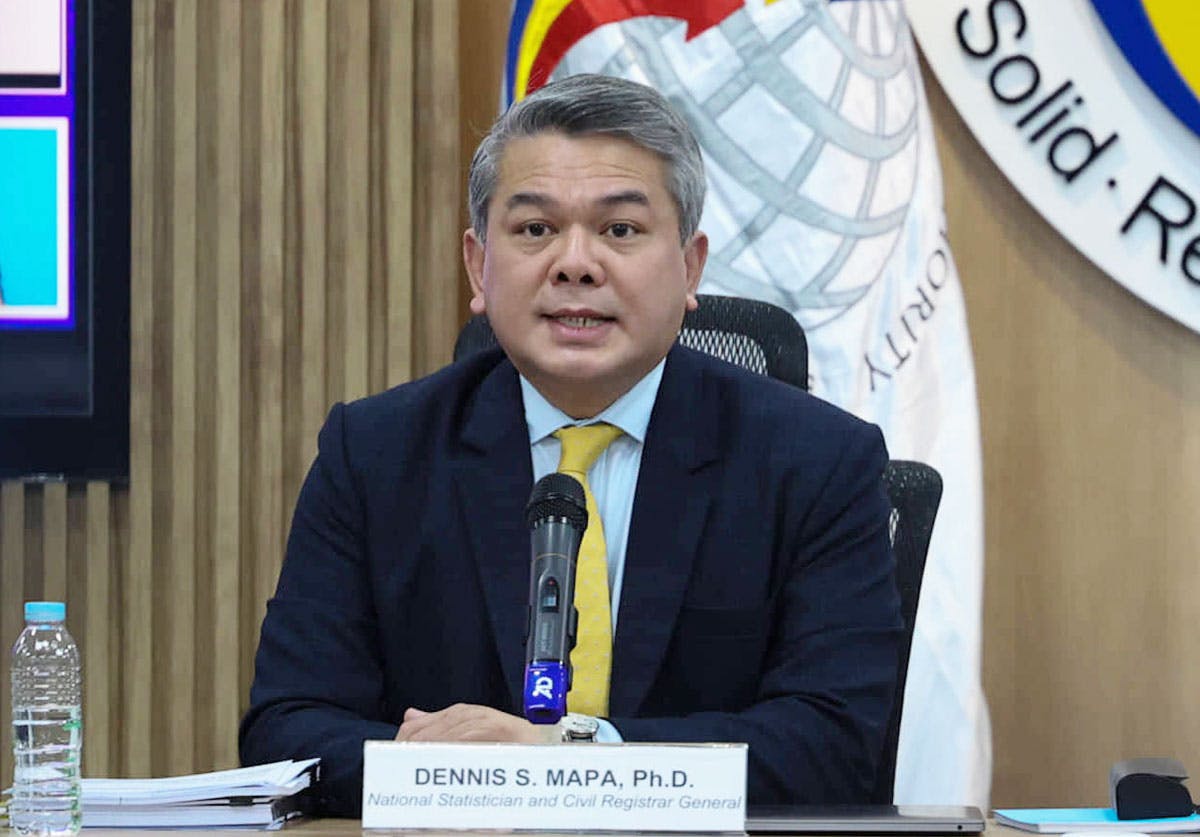
National statistician Dennis Mapa at a briefing on Thursday, Jan. 26, said the country’s gross domestic product grew by 7.6 percent in 2022, the highest GDP growth rate since the 8.8 percent reported in 1976.
Headline inflation rate, however, hit 8.1 percent in December, the highest in 14 years, due mainly to faster food price increases. Average inflation for full-year 2022 was at 5.8 percent.
Malacañang attributed last year’s record economic growth to “good economic stewardship” of the Marcos administration.
The full-year 2022 GDP growth is above the government’s 6.5 to 7.5 percent growth target for that year, and faster than the 5.7 percent growth in 2021.
In the fourth quarter of last year, the economy grew by 7.2 percent, the seventh consecutive quarter of growth, but slower than the 7.8 percent in the same quarter in 2021 and the 7.6 percent in the third quarter of last year.
National Economic and Development Authority (NEDA) director general Arsenio Balisacan said the growth in the fourth quarter of 2022, however, exceeded the median analyst forecast of 6.8 percent, and was also highest in the region.
“Among the major emerging economies in the region that have released their Q4 (fourth quarter) 2022 real GDP growth, the Philippines grew the fastest, followed by Vietnam at 5.9 percent and China at 2.9 percent,” he said.
On a quarter-on-quarter basis, he said the Philippine economy expanded by 2.4 percent in the fourth quarter due to greater economic activity as the full reopening of the economy unleashed pent-up demand.
“Our robust performance in the fourth quarter reflected strong domestic demand, with three-fourths contributed by household consumption and almost a fifth by investment. The improvements in labor market conditions, increased tourism, ‘revenge’ and holiday spending, and resumption of face-to-face classes supported growth in the quarter, further reflecting a solid rebound in consumer and investor confidence in the economy,” he said.
If not for the surging prices during this period, he said growth could have been higher by around one to two percentage points.
Higher consumption
Household consumption grew by seven percent in the fourth quarter, and rose by 8.3 percent in the whole of 2022.
Among the major economic sectors, industry and services grew by 4.8 percent and 9.8 percent, respectively in the fourth quarter, while agriculture, forestry and fishing contracted by 0.3 percent.
On an annual basis, all sectors posted positive growth with agriculture, forestry and fishing rising by 0.5 percent, industry up by 6.7 percent, and services expanding by 9.2 percent.
For this year, Balisacan said the government is keeping its six to seven percent GDP growth target.
The government trimmed the GDP growth target from the previous goal of 6.5 to eight percent.
With high inflation expected to remain a challenge for this year, Balisacan said addressing elevated prices remains a top priority for the government.
“We are working very hard to get that inflation level lower, such that by the second half or by the end of the year, the full inflation should be in the order of 4.5 percent from where it is now,” he said.
He said the government would continue to support consumers and affected sectors through the extension of reduced tariffs on various products, facilitation of accessible food supply chain, and reduction of transport and logistics costs.
Stellar performance
Speaker Martin Romualdez said the country can build on its “stellar performance” by continuing to implement the Marcos administration’s Agenda for Prosperity.
“With the right policies that will continue to implement President Marcos’ Agenda for Prosperity roadmap, and with the existing close cooperation between the executive and legislative branches, we can build on our stellar economic performance,” Romualdez said.
“Under the able leadership of the President, the nation’s GDP has been above seven percent for the first six months of his term. His decision to reopen the economy despite the pandemic boosted growth,” he said.
He called on Congress to continue supporting the Agenda for Prosperity with the needed legislation, including the Maharlika Investment Fund bill and measures to speed up the country’s digital transformation.
“The enactment of these proposed pieces of legislation will further enhance our economic performance,” he stressed.
In one of his engagements during the World Economic Forum this month, Marcos said the Philippines is striving to achieve high economic growth to address its debt problem.
He said while the country is performing better than its neighbors in terms of economic performance, its debt-to-GDP ratio remains “alarming.”
“When we look at the alarming numbers such as debt-to-GDP ratios in the Philippines, although I always say we are doing better than our neighbors, the number is 62 percent... It’s still very high for us,” the President said in a dialogue with WEF president Børge Brende last Jan. 18.
“The strategy is to have high growth rates and to pull us out of that situation. And so we’ve done everything,” he added.
Marcos has also emphasized the importance of supporting micro, small and medium enterprises, the sector that contributes the most to employment in the country, and of enhancing partnerships with the private sector in achieving the Philippines’ development goals.
At the Senate, Sen. Sonny Angara said the better-than-expected GDP for 2022 is a welcome development, and “clearly shows that the economy has bounced back after the historic slump brought about by the pandemic.”
He however noted the 2022 growth data showed that it was buoyed by consumer spending. “This is not ideal and sustainable. Prices of goods remain high and this, coupled with the hit on household savings, will have an impact on spending in the first quarter,” he said.
On the other hand, Sen. Aquilino Pimentel III said GDP and other economic figures are simply “numbers” to the majority of Filipinos.
“What is more important is the distribution of the benefits of economic growth to the people, especially the poor,” he said. “The improved economy should lead to more taxes paid by the rich and then we should use this increase in tax revenue to invest in our people’s education, skills, and welfare…”
Senate President Juan Miguel Zubiri described as a “remarkable success” the news of Philippines’ GDP growth.
“I am hopeful that we will continue on an upward trajectory this 2023, and with the coordination between the executive and the legislative, we are committed to strengthening our economic measures and building on the gains that we have made so far,” he said.
Power of consumption
Commenting on the GDP result, Asian Institute of Management economist John Paolo Rivera said the growth was driven by the power of consumption during the holiday season.
He said the continuous reopening of the economy also facilitated sustained or uninterrupted growth.
“This is expected to be sustained for 2023 as inflation is expected to slow down, currency movements stabilize, and the monetary authority also slowing down on policy rates,” he said.
For his part, Nicholas Mapa, senior economist at ING Bank in Manila said that while the fourth quarter growth was impressive, “the momentum is starting to show signs of moderating amidst a challenging environment of still high inflation, elevated borrowing costs and tight fiscal space.”
Meanwhile, Balisacan told reporters the country is expected to achieve upper middle-income status by late next year or by early 2025.
“With the growth we are seeing, we should be able to achieve the upper middle-income status by late 2024 or early 2025,” he said.
Currently, the World Bank classifies the Philippines as a lower middle-income economy.
Data belittled
The militant Bagong Alyansang Makabayan (Bayan), however, downplayed the 2022 growth data.
“The GDP growth was driven by the easing of economic restrictions related to the pandemic. Thus, the economy was just rebounding from the 2020 slump at the height of the pandemic. It is also important to remember that 2022 was the election year, thus there was an increase in spending,” Bayan secretary general Renato Reyes said in Filipino.
“While the government is saying that the unemployment rate decreased by four percent, most of the jobs are in the informal sector,” he added.
He also maintained the ordinary citizens do not feel the supposed economic growth due to the rising prices of basic commodities.
“The more important question is whether the supposed economic growth trickles down to the ordinary people and can the administration sustain this growth in the succeeding year? With the rising prices of commodities and low wages, this supposed economic growth is not being felt by the ordinary people. Malayo sa sikmura (It’s far from the gut),” Reyes said.
Reyes added that it also important to monitor this year’s anticipated effects on the country of the prevailing economic recessions in progressive, capitalist nations.
“Because of this, it is unclear whether we can see a repeat of the GDP growth rate,” he said.
The Trade Union Congress of the Philippines (TUCP) noted the country’s economic growth is yet to be felt by the poor, including minimum wage earners.
“Growth to be genuinely felt by all must also trickle down more quickly. As it is, what is still being felt by the poor is the surge in the prices of basic goods and services,” TUCP said in a statement. – With Alexis Romero, Elizabeth Marcelo, Cecille Suerte Felipe, Mayen Jaymalin


