



Peso Crashes To New Record-Low 63.95:$1
Chinabank chief economist Domini Velasquez said the peso’s weakness reflects eroding investor confidence amid growing concerns that the Philippines could face a period of stagflation.
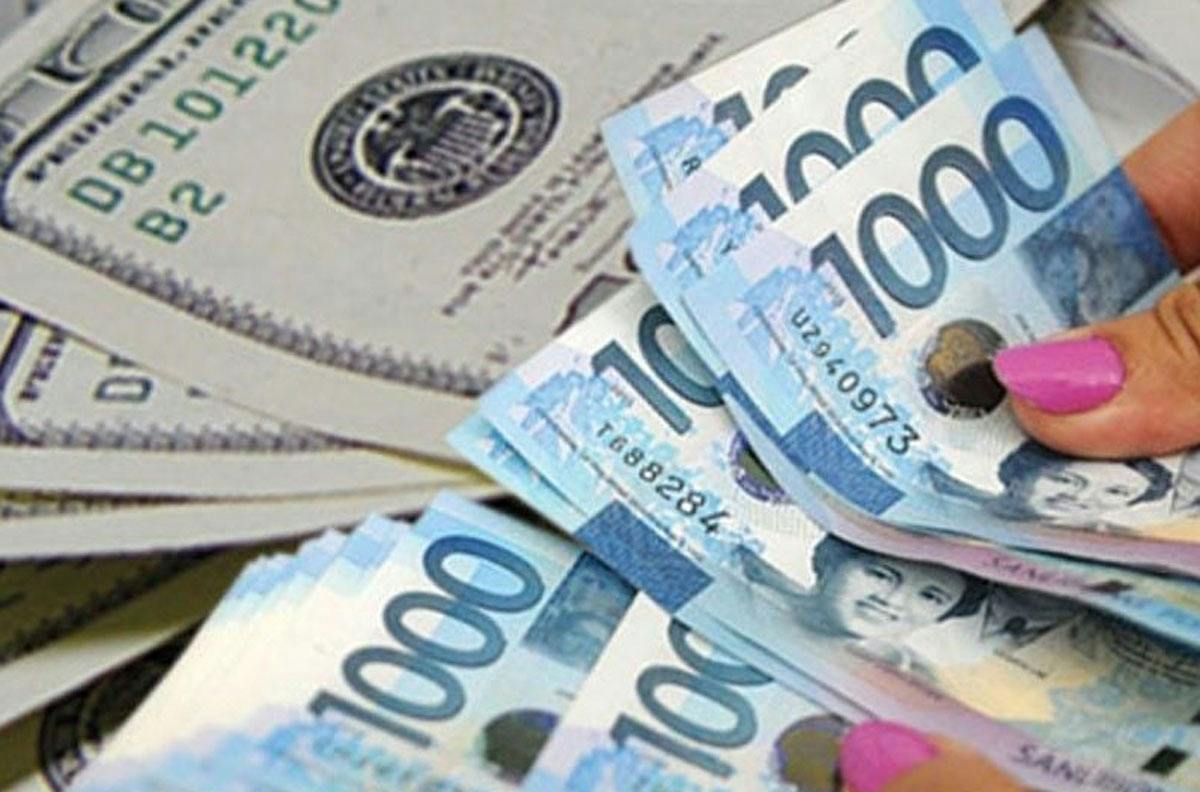
The peso weakened to another record low, flirting with the 64-per-dollar mark despite the Bangko Sentral ng Pilipinas (BSP)’s recent interest rate hikes, as external pressures and eroding investor confidence weighed on the local currency.
Data from the Bankers Association of the Philippines showed the local currency closed at 63.95 against the greenback on Monday, Oct. 26, weakening by a substantial 33.5 centavos from its previous record low of 63.615 on Oct. 23.
Chinabank chief economist Domini Velasquez said the increase in oil prices over the weekend and US President Donald Trump’s remarks on the possibility of renewed military action against Iran strengthened the dollar, adding to the downward pressure on the peso.
“However, the peso’s weakness also reflects eroding investor confidence amid growing concerns that the Philippines could face a period of stagflation,” she said, referring to an economic condition where slow economic growth, high unemployment and rising prices occur simultaneously.
Velasquez noted that the local currency’s weakness despite the BSP rate hikes suggested that higher borrowing costs alone are not likely to be enough to support the peso.
The BSP’s Monetary Board surprised with a larger-than-expected 50-basis-point hike on Oct. 22, with Governor Eli Remolona Jr. signaling that policy may not yet be sufficiently restrictive and suggesting that additional tightening remains a possibility.
This marked the fourth consecutive rate increase this year, bringing cumulative hikes since April to 125 bps.
“The peso’s trajectory over the past few days suggests that the peso-dollar exchange rate could breach the 64 level in the near term if current pressures persist,” Velasquez said.
“While interest rate differentials remain a factor, we believe the peso’s sustained recovery will depend more on stronger economic fundamentals, improved growth prospects and renewed investor confidence,” she added.
A forex trader likewise said the peso had reached new lows amid prospects of a US Federal Reserve rate hike this week, alongside domestic economic challenges.
“The risk to 64 remains intact should the Fed adopt a more hawkish tone from their September meeting,” the trader said.
Philippine Institute for Development Studies senior research fellow John Paolo Rivera said the peso’s weakness reflects persistent demand for dollars, elevated oil prices, global uncertainty and pressures from the widening balance of payments deficit.
“Its weakness despite the BSP’s tighter policy stance suggests that external pressures continue to outweigh the support from higher interest rates. While monetary tightening can help stabilize expectations and moderate depreciation, it cannot fully offset these pressures,” he said.
Rivera said the concern extends beyond the peso breaching the 64-per-dollar level to the inflationary consequences of sustained peso weakness.
Meanwhile, Jonathan Ravelas, senior adviser at Reyes Tacandong & Co., said as long as geopolitical risks persist, the peso-dollar exchange rate would remain vulnerable, risking the 65-per-dollar level.
“Unless we address issues on food security, transport and electricity, we need conservation. Conserve water, save electricity, do not waste food; this can also translate to planting in your backyard,” he said.