



Palace Challenges Kaufman: Show Drug Killings Under Marcos
The Dahas Project of the University of the Philippines Third World Studies Center monitored 1,183 drug-related killings during the Marcos administration as of Feb. 23.
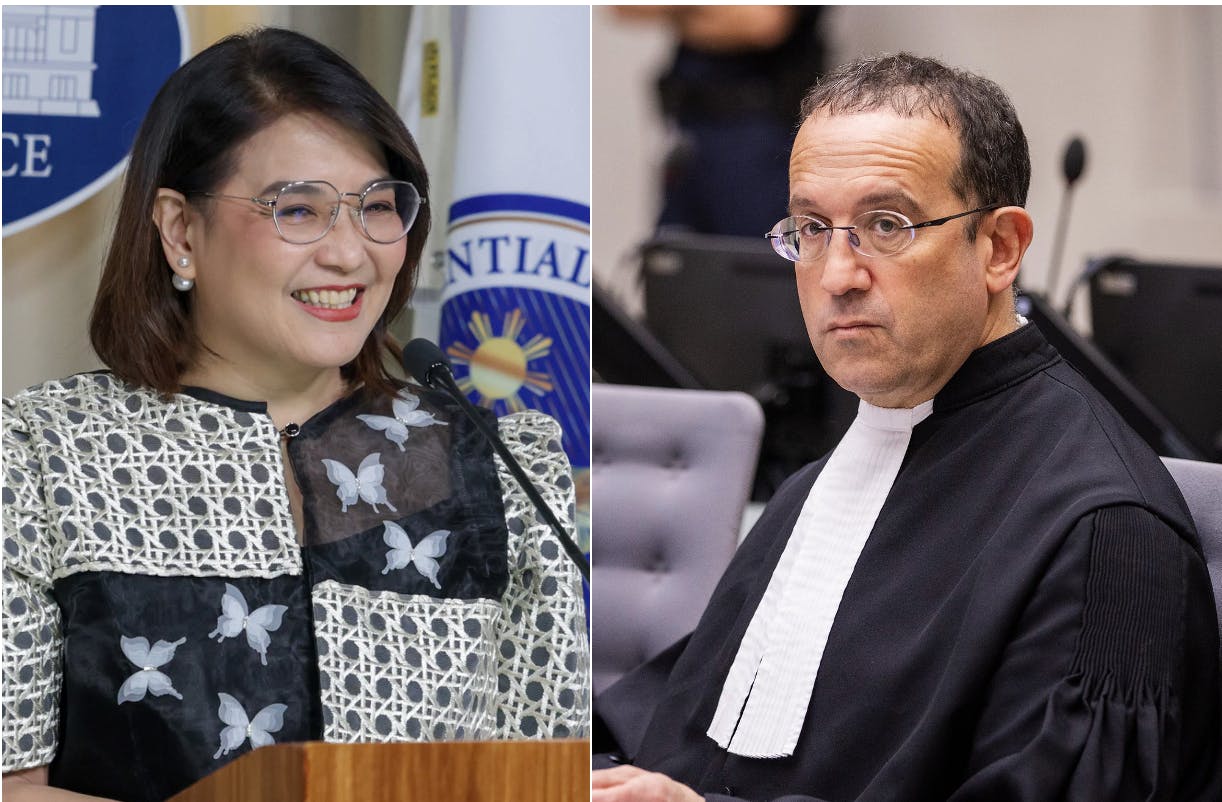
Those who are accusing the Marcos government of drug-related killings should present solid evidence so authorities can investigate the allegations, a Palace official said Friday, Feb. 27, stressing that President Marcos would not tolerate those who abuse their power.
Presidential Communications Undersecretary Claire Castro made the remarks in response to claims of former president Rodrigo Duterte’s defense team that drug-related killings increased during the first two years of Marcos, citing the so-called Dahas Project.
“Whoever is saying this, whoever is providing this kind of information, they should complete it, not just numbers, but where it happened, who was involved,” the Palace press officer said.
“The President would not want those who abuse their power to go unpunished,” she added.
The Dahas Project of the University of the Philippines Third World Studies Center claimed there have been 1,183 drug-related killings during the Marcos administration as of Feb. 23.
Its database is based on reports from media organizations nationwide and covers killings involving police and other suspects.
“That’s why, what I have said, if there are pieces of evidence that can be submitted, then that’s the right time to investigate this matter,” Castro said.
“The President would not want this administration to be tainted by bloody extrajudicial killings because that is not his legacy,” she stressed.
Castro said it is the job of the Philippine National Police, Criminal Investigation and Detection Group and the National Bureau of Investigation to probe the matter even without the President’s order.
Probe drug killings under Marcos
Kaufman again took a swipe at the Marcos administration during the confirmation of charges hearing of his client at the ICC on Thursday, Feb. 26.
Trying to establish that there is no basis for the case against Duterte to continue to trial, Kaufman cited the reported continuation of killings during police operation under the present government.
“The report for the first year of the Marcos administration showed that out of 342 killings, 160 were at the hands of state agents and the figures and the statistics just kept on rising with the second year of the Marcos administration,” Kaufman said, citing the Dahas project.
“With all the prosecution’s fancy bar charts, I’m pretty sure that if they were to recreate them for the period of two years after Duterte left power, they wouldn’t have room left on their computer screen. The numbers would be so sky-high,” he claimed.
The conclusion, Kaufman said, “is that there is no reason to believe that Duterte’s disappearance from the political scene would have frustrated the ongoing incidents of murder at the hands of state agents or vigilantes.”
“Clearly, I’m forced to ask myself whether anyone on the other side of this room has thought of investigating the Marcos regime and the related phenomenon and holding someone accountable,” he added.
Several groups including the Human Rights Watch have repeatedly called for an investigation into the killings under the Marcos administration.
The ICC cannot investigate the killings because the country is no longer a signatory to the Rome Statute, the treaty that established the tribunal.
Under its rules, it can only investigate, prosecute and try cases involving incidents that happened when a state is a party to the treaty.
This is why Duterte’s case only covers those that happened between Nov. 1, 2011 to March 16, 2019, when the Philippines formally left the tribunal.
It was Duterte who initiated the withdrawal process, which began in March 2018 after the then ICC prosecutor announced that she will initiate a preliminary examination into the situation in the Philippines.
This was pointed out by the ICC prosecution’s senior trial lawyer Julian Nicholls in his closing argument.
‘Kwek-kwek’ treat for Kaufman
In case Duterte’s lawyer Nicholas Kaufman visits the Philippines, Castro said she is more than willing to treat him to street food like balut, kwek-kwek and adidas – but there will be no debate on the former president’s interim release because that was already struck down by the International Criminal Court.
“First of all, I am not inviting him. If ever, everybody is welcome to see the beauty of our country, all tourists are welcome – all tourists, including their families,” the Palace official said.
For Neri Colmenares, legal counsel for families of drug war victims, Duterte’s defense team has so far presented weak arguments – none of which will absolve the former president from the crimes against humanity he is being charged with.
“It’s good that they are somewhat using legal arguments and no longer political propaganda, but he (Kaufman) still mentioned weak points and evidence. As predicted, we said before, when there is a trial, they will have a really hard time because they have no evidence to prove that he (Duterte) has nothing to do with the drug war and we saw that earlier in the defense presentation,” Colmenares said in an interview in The Hague. – With additional reports from Bella Cariaso and Janvic Mateo


