



No Epal, No Politics, No Corruption In Relief Distribution, LGUs Warned
Local officials are told to faithfully attend to the needs of millions of Filipinos affected by the enhanced community quarantine in Luzon due to the coronavirus disease 2019 pandemic.
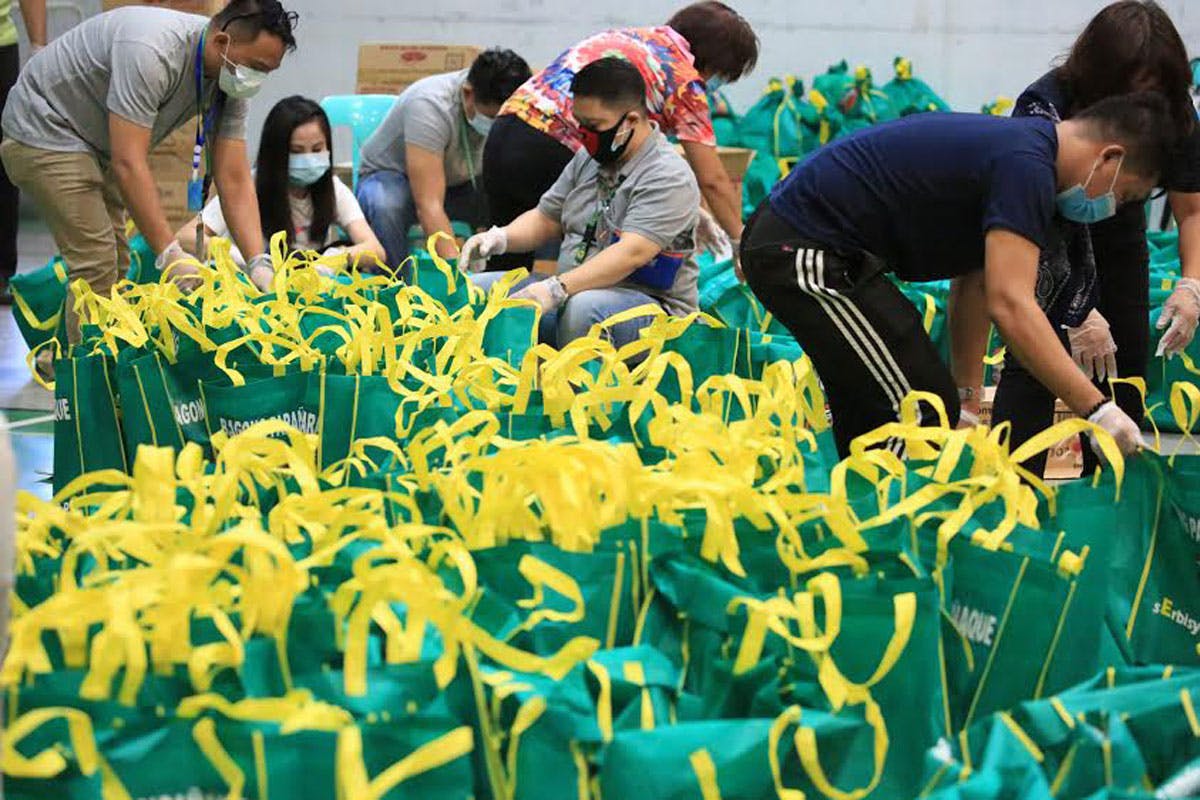
With billions of pesos allotted for the government’s social amelioration program, will politics, “epal” politicians and corruption come into play even amid the coronavirus 2019 (COVID-19) crisis?
“Epal” is short for “mapapel” – the Filipino term for scene-stealer or credit-grabber – used to describe politicians who put their names on relief packs, for instance, and use programs and projects funded by the people’s taxes to aggrandize themselves.
Local government units (LGUs) have been placed in the forefront of the battle against the pandemic as they attend to the needs of millions of Filipinos affected by the enhanced community quarantine in Luzon and total lockdowns in some areas.
The national government, which is facing criticism for its supposedly slow response to the public health crisis, has three reminders to LGUs that will row the boat: no politics, no “epal” and no corruption.
Based on the directives from Malacañang, LGUs have the authority to identify the 18 million families who will receive the P5,000 to P8,000 cash aid from the Department of Social Welfare and Development (DSWD) along with other forms of assistance from the LGUs themselves and other agencies.
The 5,000 to P8,000 monthly subsidy for two months is part of the emergency measures under Republic Act No. 11469 or the “Bayanihan to Heal As One Act” passed by Congress in a special session on March 24.
Among the target beneficiaries of the social amelioration package, as per Joint Memorandum Circular No. 1, are “families that belong to either the poor or informal sector” who are at risk of not earning a living during the enhanced community quarantine.
Other beneficiaries may include those from the vulnerable sectors such as senior citizens, persons with disability, pregnant and lactating women, solo parents, indigent indigenous peoples, overseas Filipinos in distress and homeless citizens.
LGUs will identify target beneficiaries for the program within their jurisdiction and will provide the list to the implementing national government agencies, particularly the DSWD.
This master list of beneficiaries should be submitted to national agencies not later than Friday, April 3, according to Memorandum Circular 2020-65 issued by the Department of the Interior and Local Government (DILG).
LGUs will not only identify but will also be the ones to distribute social amelioration cards to the constituents.
This power to choose, however, comes with great responsibility for LGUs, especially the barangays.
No politics
There should be no politics involved in the selection of beneficiaries for the amelioration package, the DILG has warned.
Under the memorandum, LGUs may not limit social assistance beneficiaries to only voting residents in their area of jurisdiction.
A voter’s identification card will not be a requirement for inclusion in the master list of beneficiaries, according to the DILG.
Non-residents who were stranded due to the enhanced community quarantine may also be listed as beneficiaries if they meet the qualifications.
Similar to quarantine passes issued by the barangay, social amelioration forms cannot be sold by any local government official.
“Huwag na po sana nating gamitin ang krisis na ito pa sa politika. Malayo pa po ang eleksyon, let’s devote our time and efforts in helping the people,” Interior Secretary Eduardo Año said in a statement.
Even Cabinet Secretary Karlo Nograles warned that LGUs should not abuse the discretion given to them by the national government and should treat residents equally.

No ‘epal’
Credit-grabbing or being epal, another form of politicking, is also not allowed, the DILG stated.
Guidelines released by the DILG took pains to highlight this particular provision – that local officials may not in any way use the amelioration program to their personal advantage.
“LGUs shall not install or cause to install any form of signage or appendage crediting any local government official, or baring his or her image, for the distribution of any of the social amelioration measures,” the DILG memorandum read.
DILG spokesperson Undersecretary Jonathan Malaya said that the provision was placed in the memorandum exactly as a warning against epal politicians.
Several “anti-epal” bills that aim to prohibit government officials from using projects to advertise their names and photographs have been filed in Congress, but none has been passed so far.
No corruption
Far worse than being a trapo or traditional politician and epal is being corrupt.
President Duterte himself threatened to send to jail public officials who will engage in corruption amid the COVID-19 crisis.
Duterte said that while he is not a cruel man, he would personally order the detention of corrupt politicians until the crisis is over and have them suspended.
“People tasked with distributing the money, distributing the food, distributing the relief goods, kindly do it. I use the word ‘to a T.’ Kung hindi ninyo naintindihan ’yan, mag-research kayo,” Duterte said in a televised speech late Monday night, March 30.
“Sabi ko huwag ngayon. Huwag na huwag kayong mandaya, mangurakot at taguin ’yung mga pagkain at ’yung iba hindi bigyan, kasi… You know, people sometimes think that they own whatever they receive from government. This is not yours, neither is it mine,” Duterte stressed.
“Pero talagang ’pag nagkamali kayo dito, hindi ko kayo palusutin. I will see to it even tomorrow, if I discover some embezzlements, some hoarding there, at dina-divert ’yung pagkain sa mga tao na dapat hindi sa kanila, you better think… Kung mamulitika ka tapos mabalitaan ko na ’yan ang nagawa mo, I will suspend you ora mismo. And for those who are really absconding the money, I will detain you, I said, and maybe I will release you pagkatapos ng (COVID-19 crisis).”
Politicking, epal and corrupt politicians face a slew of charges, including one for violation of the Bayanihan Act.
LGU officials who disobey national government policies or directives in imposing quarantines face imprisonment of two months or a fine ranging from P10,000 to P1 million.
Read more: ‘Unhelpful’ fake news, LGU disobedience to be punished under ‘standby powers’ bill


