



New Nationwide Alert Levels Out; NCR Still Under Alert Level 2 Until Nov. 30
President Duterte earlier approved the nationwide implementation of the COVID-19 alert system to reopen more economic sectors while safeguarding public health.
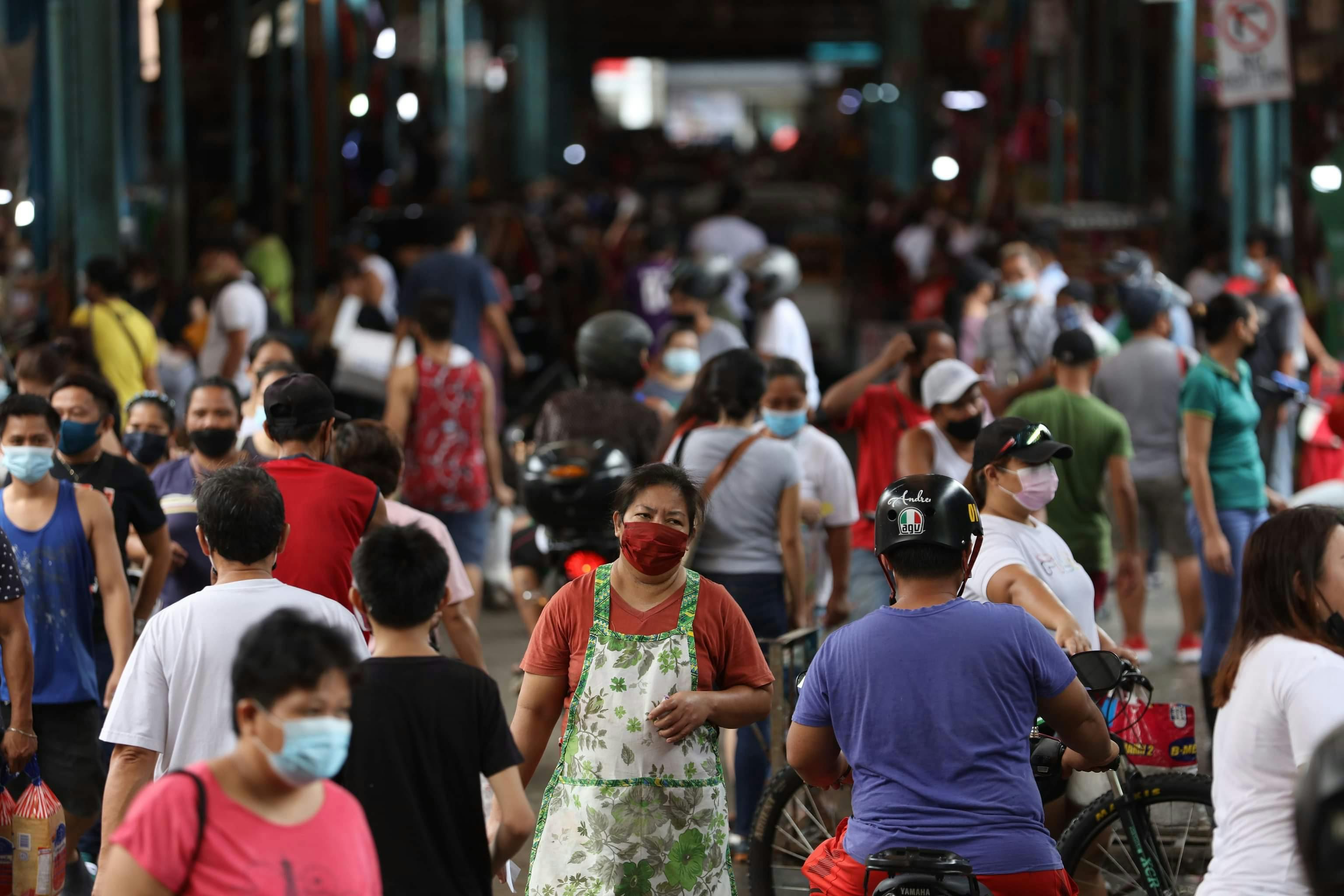
The government approved on Saturday, Nov. 13, the new COVID-19 alert levels that will be implemented in different parts of the country until the end of the month.
Presidential spokesman Harry Roque said the National Capital Region (NCR) will remain under Alert Level 2 from Nov. 15 to 30.
President Duterte on Thursday, Nov. 11, approved the nationwide implementation of the COVID-19 alert system to reopen more economic sectors while safeguarding public health.
Read more: Duterte OKs Nationwide Rollout Of COVID Alert System
Roque said Interagency Task Force for the Management of Emerging Infectious Disease placed Catanduanes under Alert Level 4 from Nov. 17 to 30.
Baguio City and Siquijor will be under Alert Level 3 from Nov. 15 to 30.
Also placed under Alert Level 3 are Batanes, Quirino and Nueva Vizcaya in Region II and the City of Isabela and Zamboanga City from Nov. 17 to 30.
Meanwhile, Ilocos Sur, La Union, Pangasinan, Dagupan and Ilocos Norte; Tacloban, Southern Leyte, Samar (Western Samar), Ormoc City, Eastern Samar, Northern Samar, Leyte and Biliran in; South Cotabato, Sarangani, General Santos City, Sultan Kudarat, and Cotabato (North Cotabato) will be under Alert Level 2, effective immediately until Nov. 30.
Under Alert Level 2, effective Nov. 15 until Nov. 30, are Nueva Ecija, Bataan, Aurora, Pampanga, Bulacan, Tarlac, Zambales, Olongapo and Angeles City, Rizal, Cavite, Laguna, Batangas, Quezon and Lucena City, Bacolod City, Iloilo City, Negros Occidental, Capiz, Antique, Aklan, Iloilo Province and Guimaras, Negros Oriental, Lapu-Lapu City, Cebu City, Mandaue City, Cebu, Bohol, Cagayan de Oro City, Misamis Occidental, Lanao del Norte, Bukidnon, Camiguin, Misamis Oriental and Iligan City, Davao del Norte, Davao de Oro, Davao Occidental, Davao City, Davao del Sur and Davao Oriental.
Under Alert Level 2 from Nov. 17 until Nov. 30 are City of Santiago, Cagayan, Isabela, Albay, Sorsogon, Naga City, Camarines Sur, Camarines Norte, Masbate, Zamboanga del Norte, Zamboanga Sibugay and Zamboanga del Sur.
The alert levels are based on the virus transmission rate, hospital bed utilization rate and intensive care utilization rate of a city or municipality.
Sustained low risk
For the NCR to de-escalate to Alert Level 1, its low risk classification for COVID-19 must be sustained for almost a month, the Department of Health (DOH) said on Saturday, Nov. 13.
At a public briefing, DOH Undersecretary Maria Rosario Vergeire noted that it is possible for NCR to downgrade from the current Alert Level 2 to Alert Level 1.
But she pointed out that the government does not relax the community restrictions easily.
The government looks at various “metrics“ which include sustaining the region‘s low risk classification for COVID-19 for almost one month.
“The metrics will have to be observed closely. The low risk classification, for example, should be sustained for two incubation periods,” she said.
The incubation period for COVID-19 can take up to 14 days. This pertains to the period when an infected individual manifests symptoms.
Vergeire underscored that they also look at the two-week growth rate and average daily attack rate (ADAR) for case classification in a place.
In determining the two-week growth rate, the number of cases for the last 14 days is tallied and compared to the average daily cases two weeks prior per location.
On the other hand, ADAR refers to the percentage of an at-risk population that gets infected during a specific time interval.
Vergeire added the health system capacity is also being factored in when they determine the alert level status of an area.
Aside from this, the vaccination coverage for senior citizens and people with comorbidities should be at 70%.
“The government studies it thoroughly before downgrading the alert level in an area… Our alert level metrics, when we determine that is non-appealable, non-debatable,” she said.
Negros Oriental still ‘high risk’
Meanwhile, the OCTA Research Group said that the province of Negros Oriental may still be considered as “high risk” due to increasing number of COVID-19 cases and high hospitalization rate.
While most parts of the country have reported fewer number of new cases, Negros Oriental saw a 14% increase to an average of 89 daily new cases from Nov. 6 to 12.
It also has high hospital bed and intensive care unit utilization rate of 74% and 81%, respectively, as well as “critical” positivity rate of 28%.
Positivity rate refers to the number of positives out of the total tests conducted.
Among the provinces with the highest average number of new COVID cases during the past week, OCTA said nine may be considered as “moderate” risk: Isabela, Negros Occidental, Benguet, Cagayan, Nueva Vizcaya, Camarines Sur, South Cotabato, Mountain Province and Palawan.
The provinces of Rizal, Zamboanga Del Sur and Pangasinan were tagged as “low: risk, while six others were considered as “very low” risk: Cavite , Bulacan, Davao Del Sur, Laguna, Pampanga and Cebu.
Aside from Negros Oriental, only South Cotabato and Mountain Province have recorded spikes in average daily new cases among the provinces in the list.
NCR, which recorded an average of 426 daily new cases, was also tagged as low risk. – With Janvic Mateo