



Marcos Reorganizes Office Of The President
The Presidential Anti-Corruption Commission, Office of the Cabinet Secretary and the Office of the Presidential Spokesperson are now abolished while the Presidential Communications Operations Office was reorganized.
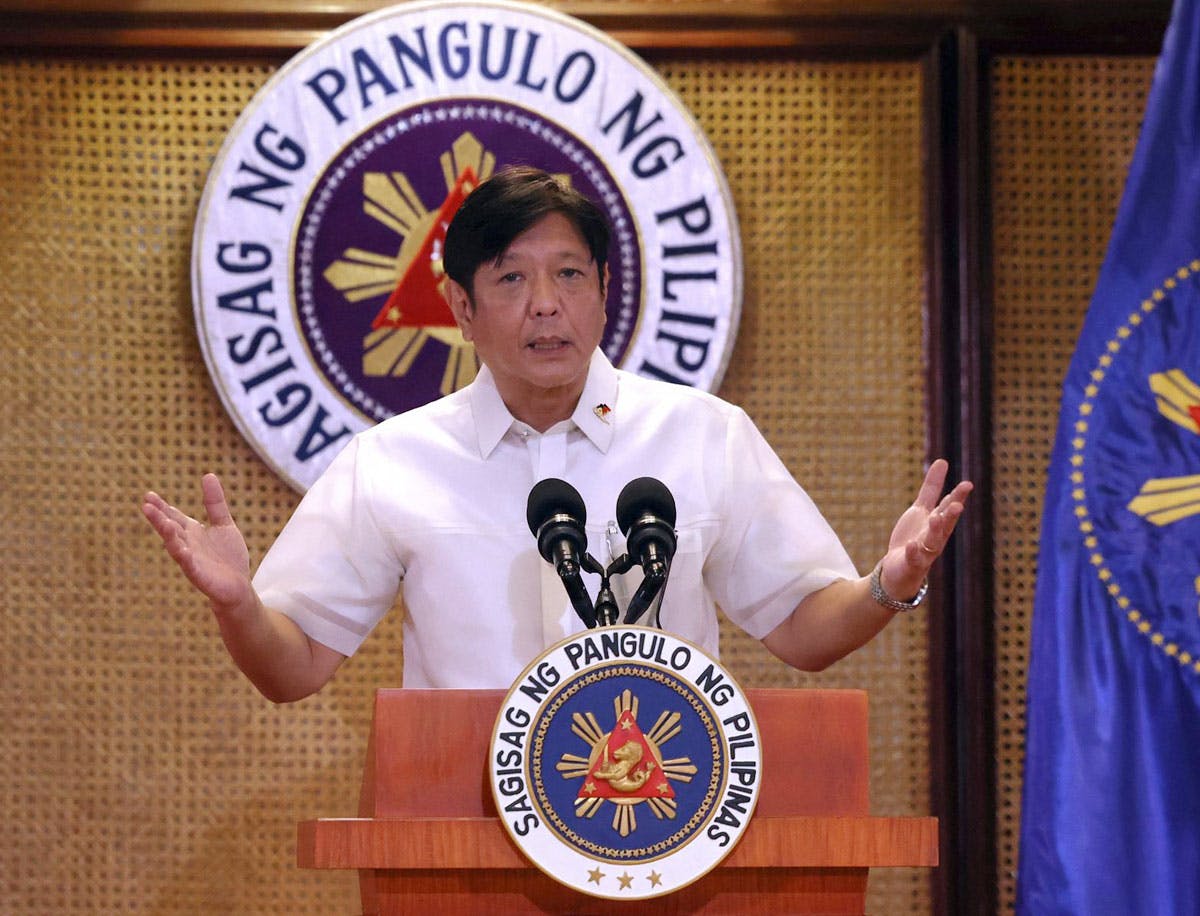
President Marcos has abolished the anti-corruption body created by his predecessor as well as the Office of the Cabinet Secretary conceived during the first Aquino administration, in his first executive order that reorganized his office and its attached agencies.
The reorganization of the Office of the President (OP), its immediate offices, attached agencies and common staff support system is contained in Executive Order No. 1 signed by Marcos on June 30, the day he took his oath as the 17th Philippine president.
On the same day, the President also issued his second EO restoring the old name of the government’s lead communication arm and transferring the supervision of the Radio Television Malacañang (RTVM) and the Freedom of Information (FOI) office to other agencies.
Marcos said in the face of current health and fiscal crises, his administration aims to achieve a comprehensive and meaningful recovery through a “just allocation of resources” and a “simplified management and governance” of the Office of the President and its immediate offices and common staff support system.
“In order to achieve simplicity, economy and efficiency in the bureaucracy without effecting disruptions in internal management and general governance, the administration shall streamline official processes and procedures by reorganizing the Office of the President proper and the various attached agencies and offices, and by abolishing duplicated and overlapping official functions,” the President said.
The order abolished the Presidential Anti-Corruption Commission (PACC) created by former president Rodrigo Duterte in 2017 through EO No. 43.
The jurisdiction, powers and functions of the body were transferred to the Office of the Deputy Executive Secretary for Legal Affairs. The deputy executive secretary for legal affairs shall make recommendations to the executive secretary for approval, adoption or modification by the President and promulgate rules of procedure in administrative cases under its jurisdiction.
The order also abolished the Office of the Cabinet Secretary, a post created during the time of the late former president Corazon Aquino, who assumed power after Marcos’ father and namesake was ousted through a popular revolt in 1986.
Cory-era body dissolved
Under EO No. 237 issued by Aquino in 1987, the Cabinet secretary heads the Cabinet secretariat, which provides technical support to the official family.
With the abolition of the Office of the Cabinet Secretary (OCS), the Cabinet secretariat is now under the direct control and supervision of the Presidential Management Staff.
The Cabinet secretariat was tasked to coordinate with the executive secretary in assisting the President in establishing the agenda and facilitating discussions during Cabinet meetings. Personnel affected by the abolition of the PACC and the OCS may avail themselves of the benefits provided under existing laws if applicable.
Marcos’ first EO also granted the executive secretary the authority to exercise supervision, control and oversight functions over all agencies and offices under and attached to the OP.
The Office of the Special Assistant to the President, the presidential advisers and assistants and the PMS shall coordinate with the executive secretary in providing staff support to the President.
The Office of the Special Assistant to the President and the PMS shall provide support and assistance to the executive secretary in the “overall management of the development process.”
While the EO abolished two Palace entities, it created the Office of the Presidential Adviser on Military and Police Affairs, which will be under the administration of the Office of the Special Assistant to the President.
Under previous presidents, there were separate advisers for police and military affairs. The two positions have been in existence since the administration of Fidel Ramos, a former military chief.
Senators welcome move
Senators, meanwhile, are generally amenable to the abolition of the PACC and the Office of the Cabinet Secretary.
“Less bureaucracy is always better so we can have more money for projects and programs that directly benefit our people instead of just being spent on salaries and wages of government officials and employees,” Sen. Francis Escudero said.
Sen. Jinggoy Estrada said it’s the prerogative of Marcos as president to reorganize his office.
“It is within the powers of the President to create, abolish and rationalize offices under its control and administration,” Estrada said.
“I believe that (President Marcos’) action falls within the presidential prerogative to reorganize executive offices in pursuit of efficient public service and effective governance,” he said.
“With regard to the abolition of PACC, there are already existing government bodies, such as the Ombudsman, which can investigate and hear cases and complaints concerning presidential appointees and all other public officials,” he added.
Sen. Aquilino Pimentel III said Malacañang should be transparent in how it would go about saving money with the abolition of PACC and OCS.
“Streamlining is a good development for me as I am for eliminating duplication of functions, maximizing the time of everyone in government to be as busy and productive as humanly possible,” Pimentel said.
“I hope these lead to some form of savings. Malacañang should announce how much of the people’s money is going to be saved by their reorganization efforts,” he added.
Through EO No. 2, Marcos reorganized the Presidential Communications Operations Office (PCOO) and restored its old name, Office of the Press Secretary. EO 2 also abolished the Office of the Presidential Spokesperson.
“It is the policy of the administration to provide true, accurate and relevant information through effective utilization of communications assets and resources,” Marcos added.
The press secretary was the head of the government communication arm until the OPS was reorganized and renamed to PCOO by the late former president Benigno Aquino III in 2010. Under Aquino, some of the functions of the OPS were transferred to a new agency called the Presidential Communications Development and Strategic Planning Office (PCDSPO).
PCOO was tasked to disseminate government messages and to manage state-run media entities while PCDSP handled messaging. The PCDSPO was abolished during the Duterte administration.
Under Marcos’ order, the press secretary’s office will have an assistant secretary with support staff of not more than 20 personnel to be designated by the press secretary and approved by the executive secretary.
Eight undersecretaries
The OPS will have eight undersecretaries that will handle operations, plans and policies; administration, finance and procurement; legal affairs; media accreditation and relations; digital media services; print media services and related government-owned and controlled corporations and attached agencies; and special concerns. Each undersecretary will have assistant secretaries and support staff.
With the abolition of the Office of the Presidential Spokesperson, its permanent personnel, equipment and functions were transferred to the OPS. Marcos previously said he won’t appoint a spokesman and that he prefers to face the media to relay his messages.
Entities attached to the OPS are the APO Production Unit, Bureau of Broadcast Services, Intercontinental Broadcasting Corp., National Printing Office, the News and Information Bureau and People’s Television Network Inc.
Supervision of the RTVM was transferred to the Presidential Management Staff. The unit, which documents the activities of the President, used to be under the PCOO.
The Philippine Information Agency, the official public information arm of the government, is now under direct supervision of the Office of the President. The PIA will absorb the Bureau of Communications Services, the FOI Program Management Office, and Good Governance Office, entities that used to be under the control of PCOO. Launched under Duterte, the FOI program allows citizens to request documents and information about the government’s activities.
The PIA shall continue to be headed by a director-general with a rank of undersecretary and shall be assisted by four deputy directors-general with the rank of assistant secretary, and four assistant directors-general with the rank of director 4.
The divisions and regional offices of the agency shall each be headed by a director II to be appointed by the director-general. The director-general, deputy directors-general, assistant directors-general and directors II posts shall be included in the plantilla posts and be considered for eligibility and ranking under the career executive service regulations. – With Cecille Suerte Felipe


