



Maharlika Eyeing NGCP Shares Of State Grid Of China
China’s State Grid has a 40-percent stake in the National Grid Corp. of the Philippines, and the remaining 60 percent is effectively controlled by Synergy Grid and Development Philippines Inc.
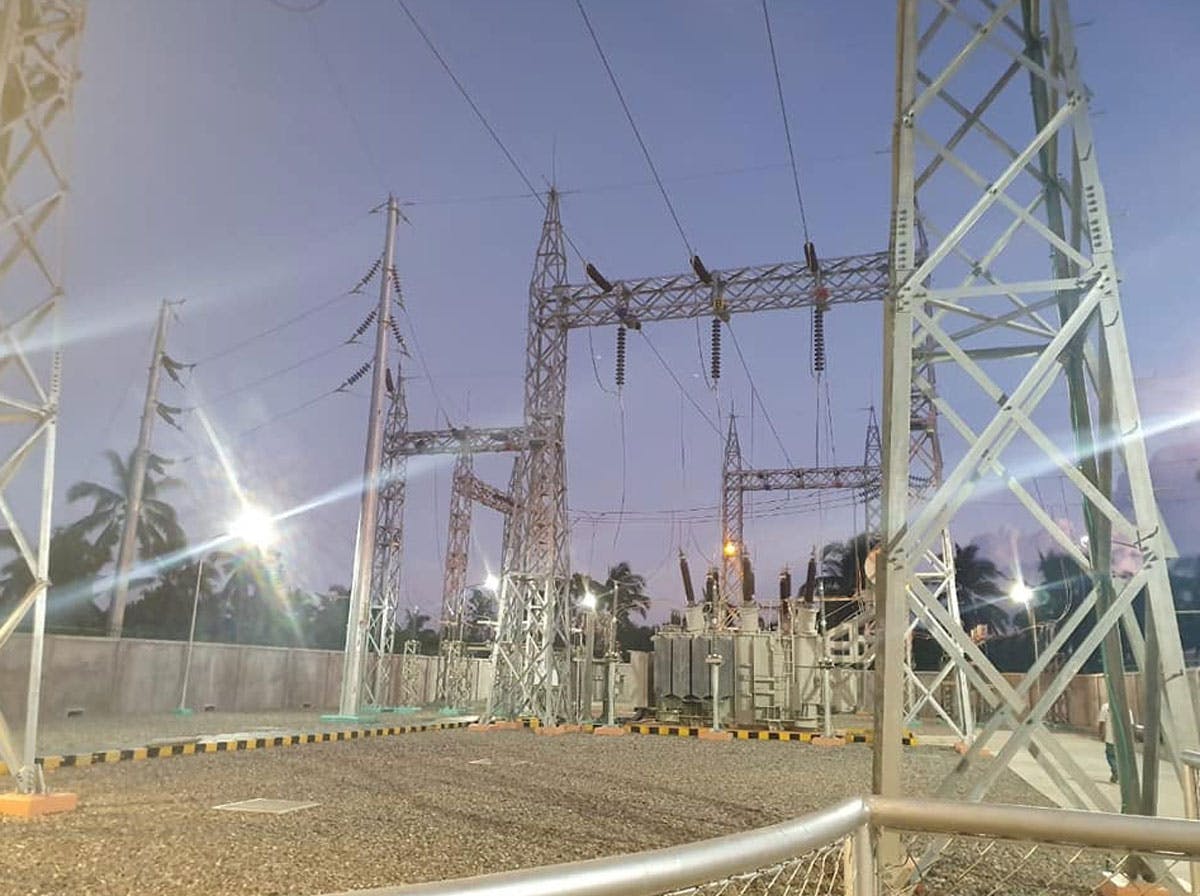
The Maharlika Investment Corp. (MIC) is open to acquiring shares of the State Grid Corp. of China (SGCC), which owns 40 percent of the National Grid Corp. of the Philippines (NGCP).
“If it becomes available, I think so, yes,” MIC president and CEO Rafael Consing Jr. said during a press briefing on Tuesday, Jan. 28, when asked whether the MIC considers getting shares of the SGCC amid concerns regarding the influence of Beijing in the operation of the country’s power grid.
But Consing clarified that MIC is “not having any discussions with SGCC at this point in time.”
Consing noted that taking control of NGCP was not the fund’s motivation when it decided to buy into it.
“The objective was not to take control, but rather just to be able to achieve some level of influence, and you achieve that by way of your board seats,” Consing said.
Some Philippine legislators have in recent years warned about potential security risks from a Chinese state firm’s involvement in the power grid, as well as Chinese-backed players in the telecoms market.
China's State Grid has a 40-percent stake in NGCP, and the remaining 60 percent is effectively controlled by Synergy Grid and Development Philippines Inc. through a common corporate structure of the latter's two largest Filipino shareholders, tycoons Henry Sy Jr. and Roberto Coyiuto Jr.
Maharlika’s interest comes at a time of heated maritime rivalry and deepening mistrust of China, which has opposed some recent moves by the Philippines to boost its defense collaboration with ally the United States, including use of its Typhon missile system.
NGCP is also currently the subject of a congressional probe into its compliance with franchise obligations and its ownership.
With a 20-percent stake, Maharlika will be able to subscribe to preferred shares offered by SGP, which would give the wealth fund two seats each at NGCP and SGP.
Consing said Maharlika’s presence in NGCP would also allow the government to monitor external threats “if such threats indeed arise.”
Energy Secretary Raphael Lotilla at the same press conference said the investment would allow “greater transparency” in the operation of NGCP.
“As NGCP is stating that there is nothing to fear from the presence (of Chinese in the board), then we will be in a better position to confirm or affirm that,” Lotilla stressed.
“On the other hand, if there are other things that need to be strengthened, for example the cyber security of the transmission lines of the country and the transmission facilities, then we would also be able to – government would also be better able to contribute to addressing those issues,” he said.
P1.28 billion per year projected
The MIC is expected to generate P1.28 billion per year in the next three years with its P19.7-billion investment in the NGCP, its first since its establishment in 2023.
Its exposure in NGCP is also expected to help significantly reduce the cost of electricity in the country, officials said on Tuesday.
At Malacañang, Consing said the P19.7-billion investment represents the 20 percent share of the MIC – the country’s first sovereign wealth fund – in the NGCP through the SGP, at P15 per preferred share.
SGP has accepted the binding offer from the Marcos administration, granting MIC two board seats each in SGP and NGCP.
“The preferred share will guarantee us with a six and a half percent dividend yield over the first three years wherein following which within those three years, we would then need to convert or we’ve got the option rather to convert to common shares. Filling which, the dividend rate would then rise to eight percent,” Consing said.
“Six and a half percent cash dividends. Six and a half percent multiplied by 19.7 billion – just kindly calculate that,” he added.
If MIC decides to convert the shares, they will then be valued at P22.50 apiece, The Philippine STAR has learned.
“Since P15 divided by P22.50 is equal to 66.67 percent, that means around two-thirds of the 1.3 billion shares will be converted into common shares,” Peter Garnace of Unicapital Inc. said.
“While MIC will not actually pay for the price difference, this is beneficial to MIC since they are able to convert preferred shares into common shares that are worth more than the effective cost of conversion,” Garnace added.
In a regulatory filing on Tuesday, SGP said convertible preferred shares would be created and issued out of the increase in its authorized capital stock.
The company said the binding term sheet is subject to the completion of due diligence on SGP and its subsidiaries, the negotiation and execution of the definitive agreements, the mandatory corporate approvals of the concerned parties, and the compliance with relevant agencies.
Following the news of MIC’s investment, SGP shares rose by 4.74 percent to P11.50 each on Tuesday.
President Marcos witnessed the signing of the binding term sheet between Consing and SGP chairman Henry Sy Jr. at Malacañang on Monday, Jan. 27.
Consing said they expect the acquisition to be finalized within the next 90 days. “As to who will represent us, at the moment that’s not been decided yet so we’ll defer to the wisdom of the board as to who will be appointed,” he added.
Lower power costs
On the potential of MIC’s investment in the NGCP to bring down electricity costs, Lotilla said the exposure would improve transmission infrastructure, resulting in reduced electricity bills.
“After a transmission project is finished, it can actually contribute to lowering prices because it addresses the constraints, the transmission constraints that drive prices up,” Lotilla said.
Consing said the NGCP’s transmission grid rollout would allow more power players to supply electricity, which could ultimately lower electricity prices.
“The way NGCP contributes to lower electricity is by ensuring that the rollout indeed happens because once you have that transmission grid infrastructure rolled out successfully, then you have more power players that can provide supply to the grid,” Consing said.
“Just like any commodity, with more supply coming into the grid, the price of power will, at some point, come down,” he explained.
Lotilla cited the Mindanao-Visayas Interconnection Project – completed in 2024 – as an example of how improved transmission infrastructure can reduce power costs.
He noted specific decreases in spot market prices: P1.99 per kilowatt-hour in Luzon, P1.77 in the Visayas, and P1.30 in Mindanao. – With Helen Flores, Cecille Suerte Felipe, Jose Rodel Clapano