



LPG Prices Also Going Up
Liquefied petroleum gas trader Regasco is set to raise the price of its products by P4 per kilo on Monday.
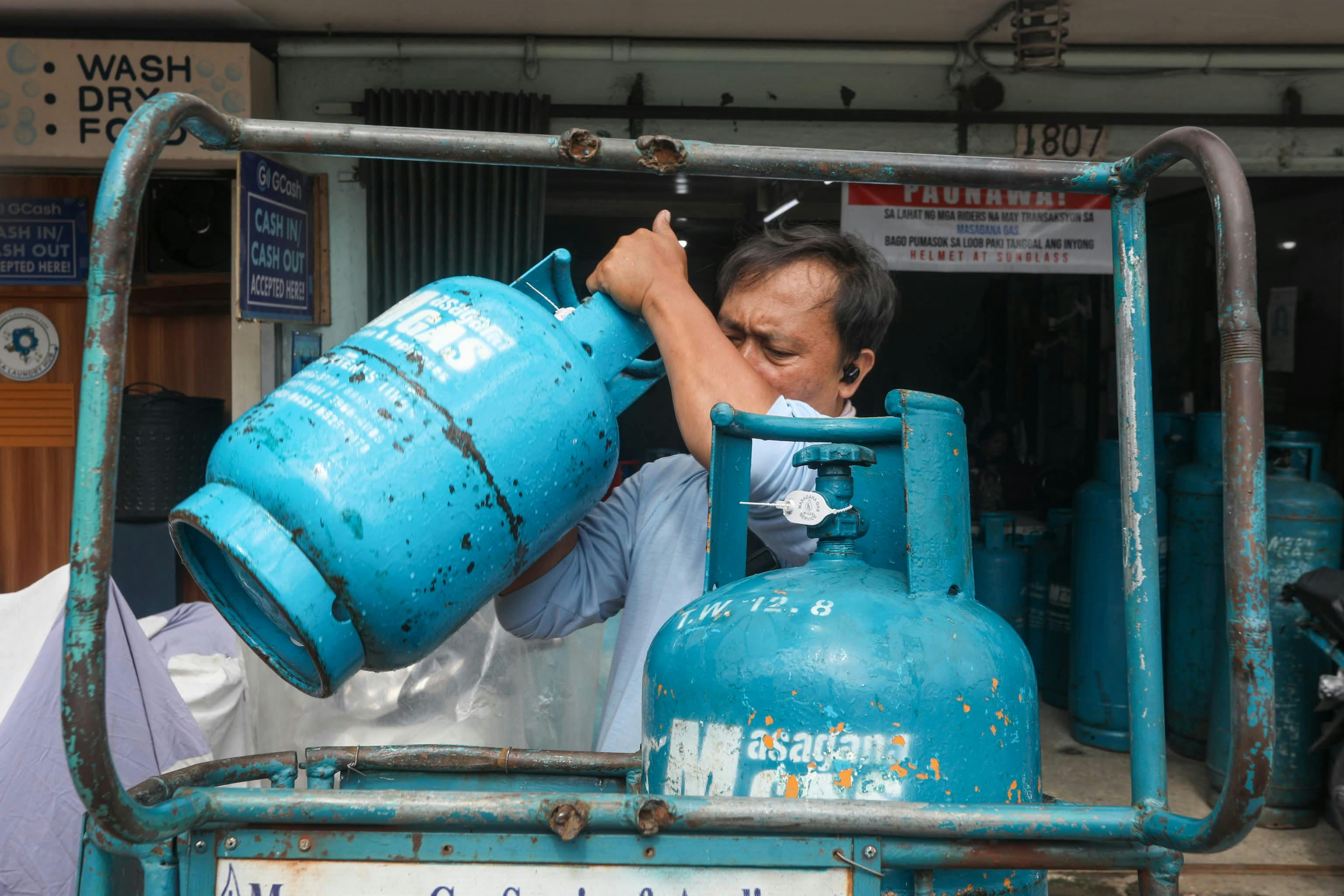
Consumers can expect higher prices for liquefied petroleum gas (LPG) and fuel next week, due to ongoing Mideast tensions and the rise in prices of petroleum products in the international market.
Liquefied petroleum gas trader Regasco is set to raise the price of its products by P4 per kilo on Monday, Sept. 21.
In a video message, Regasco president Arnel Ty said the firm got the Department of Energy (DOE)’s approval to increase prices.
“The increase is brought about by the rise of petroleum products in the international market, which includes LPG,” Ty said in a video posted on the Regasco Facebook page on Saturday.
Contrary to industry estimates, the DOE ordered a P0.40-per-kilo cut in LPG prices this month, citing lower freight costs.
Regasco deferred any price increases, as many provinces in the country declared a state of calamity due to the effects of the monsoon rains.
“But we will not bear the costs anymore if we won’t make any adjustments,” Ty said. “Incoming stocks to replenish our inventories are becoming more expensive.”
Sharp rise
In an interview with One PH’s “One Balita Pilipinas Weekend,” DOE-Oil Industry Management Bureau director Rino Abad said the agency-mandated increases for Sept. 22 are P8.82 per liter for diesel, P4.88 for gasoline and P6.47 for kerosene.
“There was a downward trend in the international market, so the increase would not reach P11 per liter,” Abad said.
Jetti Petroleum president Leo Bellas estimated diesel prices would skyrocket by nearly P11 per liter next week, but the figure was only based on four days of trading at the benchmark Mean of Platts Singapore.
Pump prices have been rising after an Iran-backed militia in Iraq struck Saudi Arabia’s East-West Oil Pipeline, a 1,200-kilometer alternative route Aramco uses to bypass the still-closed Strait of Hormuz to ship out oil to international markets.
According to Reuters, industry sources estimate repairing three damaged pumping stations serving the vital pipeline would take about five to six weeks.
The pipeline moves about four to five million barrels per day, representing four to five percent of the global supply, and is being serviced by 11 pumping stations and two separate pressure relief stations.
Traders are forced to rely on other countries like the United States, Canada and Brazil, “but that entails an increase in transport costs because of their distance, and these countries put higher premiums because we’re fighting for supply in areas that we don’t normally rely upon,” Abad said.
The DOE official said the government continues to implement its fuel subsidy program, shelling out P750 million to date to provide a P12-per-liter discount to jeepney and UV Express drivers, capped at 150 liters per week, for total savings of P1,800.
Oil companies, Abad added, continue to offer separate discounts for public utility drivers ranging from P1 to P5 per liter.
Fare hike suspension
Transport group Provincial Bus Operators Association (PBOA) urged President Marcos to lift the suspension of fare hike adjustments amid rising pump prices.
The PBOA said fuel costs had reached levels that the industry could no longer absorb.
“Fuel already accounts for approximately 45 to 60 percent of our operating costs, yet the fares we are authorized to collect have not kept pace with the actual cost of providing safe and reliable transportation,” the group said.
The PBOA also slammed the fleet modernization and value-added tax on fuel as it becomes part of the operational costs.
“Today, we must carry the combined costs of fuel, modernization loans, spare parts, tires, maintenance, insurance, toll fees and regulatory compliance,” the group added.
It emphasized that the industry could not survive when its regulated revenue is lower than the actual cost of delivering service.
“Keeping fares artificially below the actual cost of service does not protect the public in the long term. It merely delays the crisis until operators can no longer deploy enough safe and roadworthy buses,” PBOA said.
If operators are pushed into insolvency, PBOA said commuters will suffer, as there would be fewer trips, longer waiting times and loss of vital connections between cities and provinces.
For its part, the Department of Transportation (DOTr) said it has ongoing discussions with other member agencies of the Unified Package for Livelihoods, Industry, Food and Transport (UPLIFT) committee to address the transportation woes.
“The proposed fare adjustment for public utility vehicles was among the matters discussed, and we hope to arrive at a positive decision in the coming days,” the DOTr said.
Another round of targeted assistance, through the Assistance to Individuals in Crisis Situation program, will be carried out for qualified transport operators and drivers, it added.
The PBOA said the provincial and city bus industry is not asking for cash assistance, but a fair and sustainable fare that reflects the real cost of operating public transportation.
The DOTr said the government is exploring other UPLIFT initiatives to ease the costs of public transportation, including toll exemptions and terminal fee and monthly membership waivers.
Service contracting
Meanwhile, DOTr Secretary Giovanni Lopez stressed the importance of the P5-billion allocation for the Service Contracting Program (SCP) for public transportation.
“When we have service contracting, the government pays for the transport groups, not the commuters. In the same way, we can be assured of transportation,” Lopez said.
Despite limited funding of P1 billion this year, the transportation chief said it has optimized its budget to allocate at least P800 million for land transportation between May and June.
Lopez is requesting the P5-billion budget to further expand the coverage of the program beyond Metro Manila.
“The problems we are facing here due to oil prices are also felt in other provinces of the country. We want to apply the SCP nationwide, and to cover as many transport groups and commuters as possible,” said Lopez.
The DOTr said it will continue to appeal to Congress to restore its budget for the program as deliberations continue. – With an additional report from Andrew Ronquillo