



Lawmakers Withdraw Support For ‘Watered Down’ Anti-Dynasty Bill
The minority lawmakers said the substitute bill “fails to reflect a genuine consolidation of the various versions of the proposed measure.”
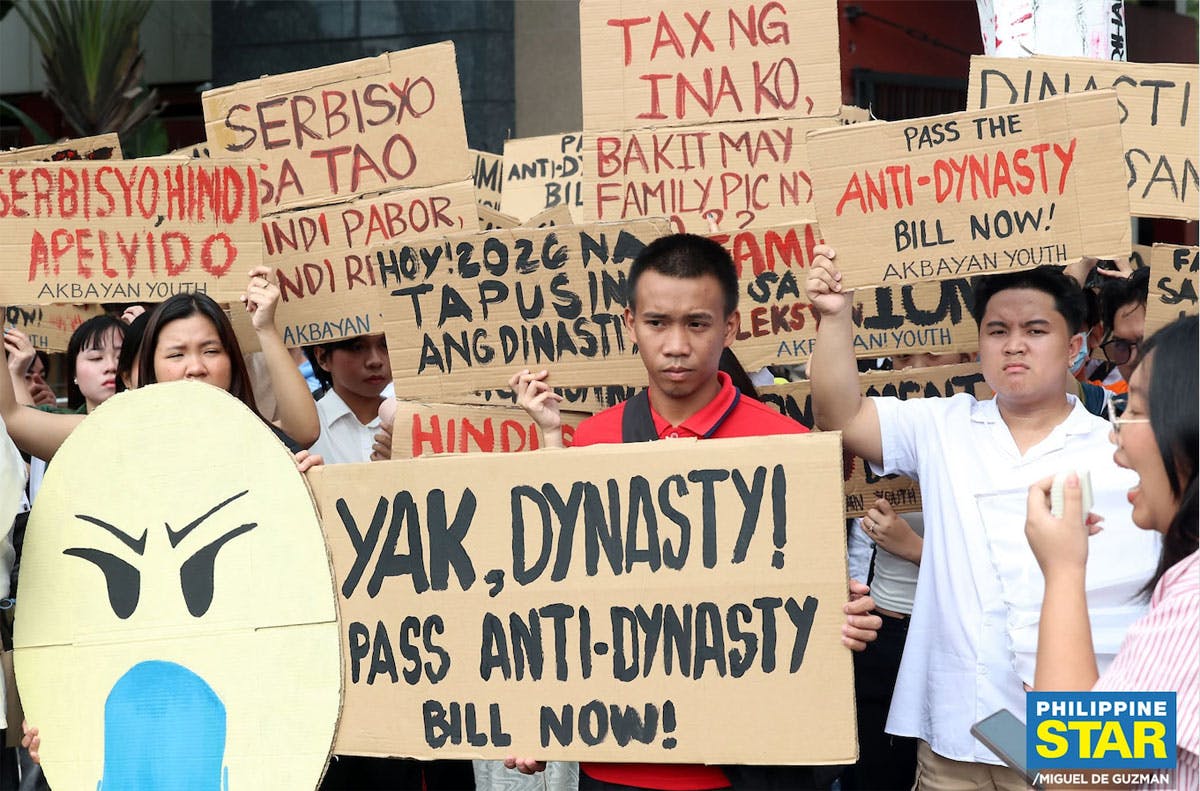
Five opposition lawmakers decided to withdraw on Wednesday, March 4, their authorship in what they touted as the “watered-down” version of the consolidated anti-dynasty bill that a committee of the House of Representatives approved.
Reps. Chel Diokno, Perci Cendaña and Dadah Kiram Ismulah of the Akbayan party-list, Kaka Bag-ao of Dinagat Islands and Leila de Lima of Mamamayang Liberal expressed their disappointment over the decision of the House committee on suffrage and electoral reforms to adopt a substitute bill on Tuesday, March 3.
They said the bill “fails to reflect a genuine consolidation of the various versions of the proposed measure.”
“The adopted committee report falls short of the fair and democratic legislative process expected of Congress,” the Akbayan legislators reiterated.
In a statement, Akbayan lawmakers said the substitute disregards key proposals put forward by fellow legislators, resource persons and citizens who actively participated in committee hearings and consultations, including provisions prohibiting political dynasties within the party-list system and banning succession among family members in elective posts.
“We call on the committee to return the measure to the committee level for further deliberation and to truly consolidate the various bills filed in the House,” they said, suggesting that the panel led by Rep. Zia Alonto Adiong deliberate once again the measures submitted by fellow legislators.
“A genuine anti-political dynasty law must faithfully incorporate the substantive proposals raised during consultations and reflect the collective intent to strengthen democratic representation,” the statement said.
De Lima, for her part, said she decided to withdraw her co-authorship of the substitute bill as she refused to be part of a measure institutionalizing dynasties.
“It has been four decades that we have been pushing for this in our Constitution, that is why this should never be a mere lip service, or just for the sake of passing a law – but the existence of political dynasties will still prevail with only a handful families controlling the government,” she said.
‘Don’t blame the President’
Caloocan 2nd district Rep. Edgar Erice should not blame President Marcos if he is not happy with the present draft of the anti-dynasty bill, Malacañang said on Wednesday, as it advised the lawmaker to work on the version he prefers.
Erice has withdrawn his co-authorship of the anti-dynasty bill approved by the House suffrage committee, saying it is not in line with the Constitution framers’ intent to provide ordinary citizens equal opportunities for public office and may even allow “obese” dynasties.
He also claimed that Marcos was just deceiving the Filipinos when the administration certified the bill banning political dynasties as a priority.
Asked to react to Erice’s statement, Presidential Communications Undersecretary Claire Castro said the legislator should just participate in succeeding deliberations on the measure.
“Why put the blame on the President? If he (Erice) does not want the version of the House of Representatives, then he should do well in the debates and display his entire intelligence. He is not the only one who will decide on the outcome of that,” the Palace press officer said at a briefing.
Erice had opposed the House suffrage committee’s approval of the bill that barred relatives at the second degree of consanguinity and affinity from running or holding posts in the same area simultaneously instead of the stricter draft that covered the fourth degree. According to him, the approved bill would permit 10 persons from a political clan to run for different positions.
Possible loophole
Senate President Vicente Sotto III warned that the prohibitions under the current version of the Anti-Political Dynasty Bill could fail to stop “transfer of influence” to extramarital partners and their relatives.
During floor interpellations, Sotto argued that the bill focuses heavily on legal marital ties and blood relations but remains vulnerable to “partnerships” that carry the same political weight as a spouse.
“I’m bringing this out because it could be a loophole. You will be preventing the [legal wife] from running, but you’re allowing the mistress to run,” Sotto said.
“Because that is the same. Sometimes mistresses are even more daring than wives,” he added.
Sotto raised the scenario of a mayor whose term is ending and instead of a spouse or child, a “girlfriend,” her father, siblings or even her children from another relationship seek to run for office.
He noted that even if the bill were expanded to the fourth degree of consanguinity, these individuals would still fall outside the law’s reach.
“But the mayor’s influence is still great. In fact, maybe the girlfriend is the one he is with at home, not the wife,” he added.
Senate Electoral Reforms chair Sen. Risa Hontiveros, however, said these relationships are not covered under the first nor second degree of consanguinity or affinity under the proposed prohibitions in the bill.
She committed to further scrutinizing dynastic transfers as extramarital partners and their relatives are concerned.
However, Sotto remained skeptical about the Commission on Elections’ ability to verify the personal lives and relationships of thousands of candidates nationwide.
Hontiveros explained that the Comelec itself recommended limiting the bill’s scope to the second degree of consanguinity and affinity to ensure it remains manageable––the current scope of the bill.
Sotto said the Senate must find a way to address these non-traditional power structures in the bill nonetheless. – With additional reports from Alexis Romero and Neil Jayson Servallos