



Grounding Of Planes A Distinct Possibility – Marcos
“When our airlines fly out, several countries have already told our airlines they cannot fuel their aircraft, so they have to carry fuel there and back. Long-haul is going to be a much more serious problem,” President Marcos said.
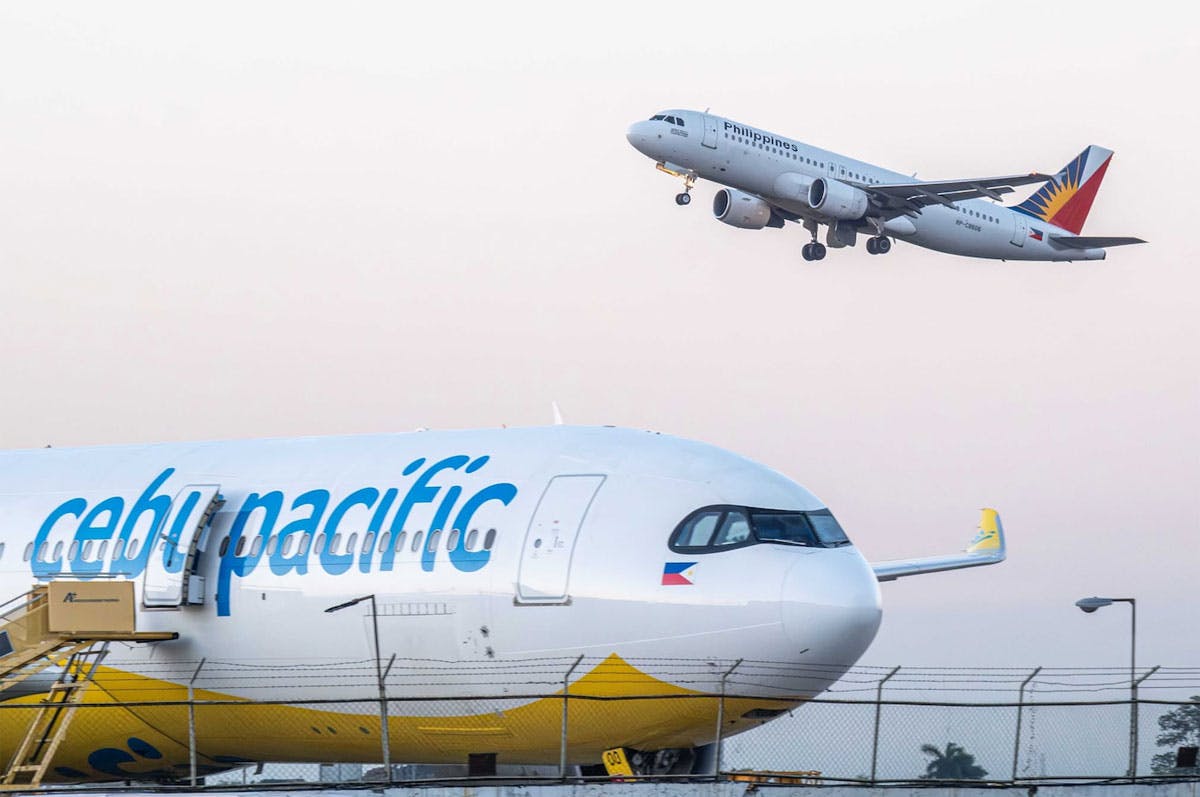
President Marcos described as a “distinct possibility” the grounding of planes as a number of airlines announced plans to reduce flights due to higher jet fuel prices caused by the Middle East conflict.
Speaking to Bloomberg News on Tuesday, March 24, Marcos noted that with the crude supply limitations, the refining of jet fuel takes a longer time and the Philippines — a country heavily reliant on imported crude — has to depend on what is readily available.
“When our airlines fly out, several countries have already told our airlines they cannot fuel their aircraft, so they have to carry fuel there and back. Long-haul is going to be a much more serious problem,” the President said.
Asked if inevitably, planes would have to be grounded, Marcos replied: “We’re hoping not, but it’s a distinct possibility.”
Some airlines in the region, including Philippine budget carrier Cebu Pacific, have decided to cut or suspend flights to lessen the consumption of fuel, whose prices have more than doubled compared with their averages last year.
The energy department has clarified that the flight reductions were caused by higher jet fuel prices, not by a lack of supply.
Marcos said the Philippines is “doing better than a month in terms of fuel supply.”
“Maybe 45 days more or less, depends on diesel or gasoline,” he added.
Phl-China reset?
In the same interview, Marcos raised the possibility that the US and Israeli war against Iran could provide an impetus for the Philippines and China to reach a deal in developing gas resources in disputed areas in the South China Sea.
The Philippines and China are embroiled in a longstanding row over South China Sea areas that are within Manila's exclusive economic zone (EEZ) and continental shelf. In 2016, a Hague-based arbitral court voided China's expansive claim in the South China Sea and affirmed the Philippines' sovereign rights over its EEZ. The Chinese government refused to recognize what it described as an "illegal" ruling.
Despite the dispute, Marcos and Chinese President Xi Jinping agreed to resume discussions on oil and gas exploration in the South China Sea during a bilateral summit in 2023.
“That’s something we’ve been talking about for a great deal, but territorial disputes are getting in the way of that. Maybe this provides impetus for both sides to come to an agreement. That’s something we are exploring. Everything that might be of help we are certainly pursuing,” Marcos said.
When asked whether there is a reason to think that a reset in relations with China is needed given the geopolitical chaos, Marcos said: “I think it’s certainly going to happen; it’s happening now. There’s going to be a very, very serious restructuring.”
“I was watching Prime Minister (Lawrence) Wong from Singapore saying we will have to redraw all, even our legal relationships and international law. There will have to be a new normal,” he added.
Marcos said he sees a “realignment” taking place “at first in the Middle East” and its effect would be on trade relations.
“We also have to remember we have an enormous population in the Middle East. We have over two million Filipinos working in the Gulf countries and very seriously affected as well. One of our biggest sources of income is remittances we get not only from OFWs (overseas Filipino workers) in the Middle East but also around the world,” he added.
Marcos said other countries are honoring their contracts with the Philippines, citing its importation of fertilizer from Indonesia and China, refined fuel from Japan and South Korea and oil from Malaysia. The Philippines is also exploring possible fuel supply deals with China or Russia.
“China, we always had a trading relationship with and that’s ongoing, and we are trying to increase that supply. Russia is not a traditional supplier of crude oil to the Philippines or any energy supply, but we are exploring that as well,” the President said.
“Basically, we are trying anything, everything to secure supply because that’s the one thing that we can do about. The pricing is going to be a much more difficult challenge because everyone is a price taker when it comes to oil,” he added.