



Gov’t Urged To Remove Cap On Healthcare Workers Who Can Go Abroad; 320,000 OFWs Back In Provinces
Recruitment leader Lito Soriano said aside from the 5,000 cap, the slow processing of job orders and employment contracts is expected to hamper deployment of healthcare workers, particularly nurses.
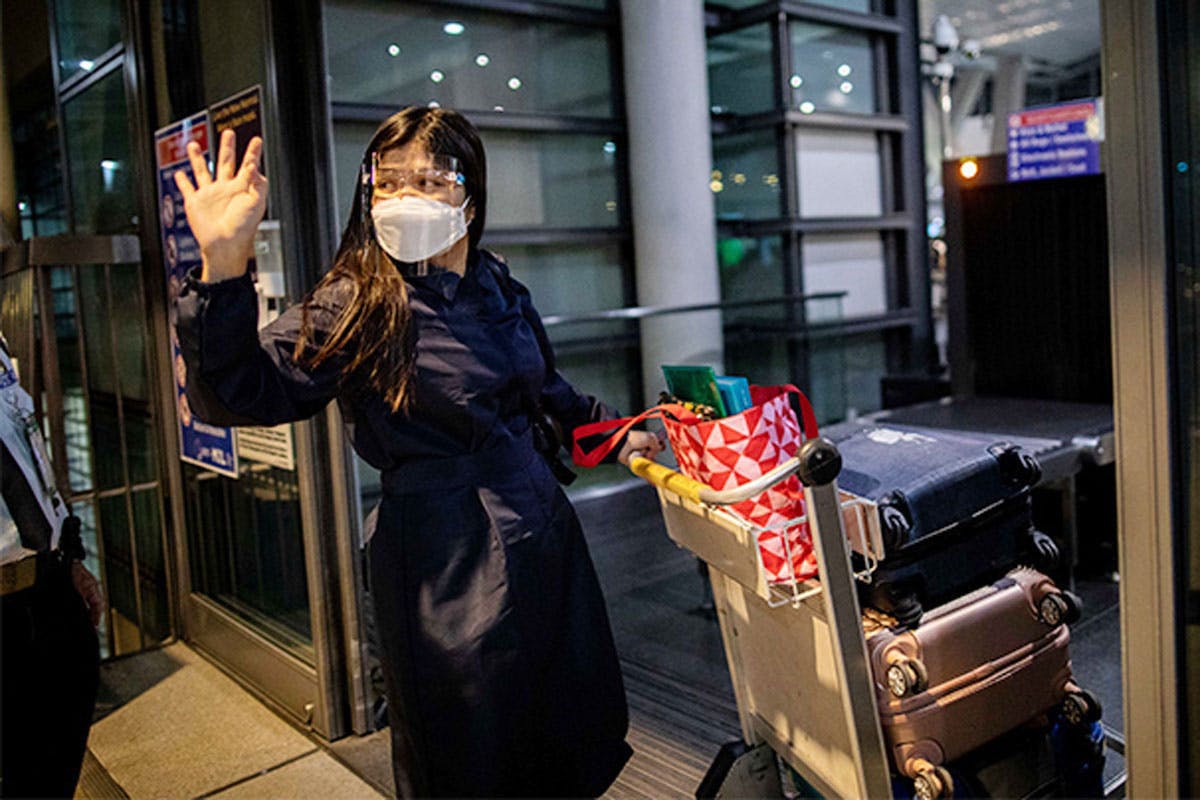
Few Filipino healthcare workers (HWCs) may be able to leave the country and work abroad despite the lifting of the ban on the deployment of medical personnel.
Philippine Overseas Employment Administration (POEA) chief Bernard Olalia said on Sunday, Nov, 22, the full deployment of HCWs overseas will resume upon the issuance of the resolution on the lifting of the ban.
“Immediately, this will take effect upon the approval of the governing board of the POEA,” Olalia announced.
But private recruitment agencies (PRAs) pointed out that not many Filipino HCWs will be able to leave for abroad because of the 5,000 cap imposed by the government.
Recruitment leader Lito Soriano said aside from the cap, the slow processing of job orders and employment contracts is expected to hamper deployment of HCWs, particularly nurses.
“There are too many unnecessary requirements being imposed by POEA – as if they don’t want Filipinos to work abroad,” Soriano lamented in an interview.
The 5,000 limit, Soriano said, would also effectively prohibit HCWs and recruitment agencies from complying with their contractual obligations with foreign principals.
Soriano noted there is a misconception that the country is deploying large numbers of HCWs overseas.
Before the coronavirus disease 2019 (COVID-19) pandemic, Soriano said the country was deploying about 17,000 nurses abroad annually. Of the figure, 60 percent were rehires or those who have long been working abroad.
He stressed that many nurses are losing jobs in the Philippines so there is no need to impose a cap on the deployment. There are also over 200,000 unemployed licensed nurses nationwide, Soriano bared.
“The cap should be removed, but if they would insist on setting a limit, this should not cover those who have already worked abroad. They should not be stopped from seeking work abroad again,” Soriano said.
The Inter-Agency Task Force (IATF) for the Management of Emerging Infectious Diseases recommended the lifting of the deployment ban on HCWs amid the COVID-19 pandemic, Labor Secretary Silvestre Bello III said on Nov. 11.
On Saturday, Nov. 21, Bello said President Duterte has approved the lifting of the temporary suspension of deployment of nurses and other medical workers.
He explained COVID transmission was slowing down in the country and conditions were improving, so the government could afford to let its healthcare workers leave.
The Philippines has the second-highest number of COVID-19 cases and deaths in Southeast Asia, but daily case numbers and death rates have gone down.
To ensure that the Philippines has enough medical professionals to fight the pandemic, only 5,000 healthcare workers will be allowed to leave every year, Bello said.
“We are starting only with a cap of 5,000 so we will not run out (of medical workers), but this may increase eventually,” Bello added.
Last year, almost 17,000 nurses signed overseas work contracts, data from the Commission on Higher Education and the POEA showed.
The government in April barred nurses, doctors and other medical workers from leaving, saying they were needed to fight the coronavirus crisis at home.
The travel restriction was eased when the cut-off for the ban was moved from March 8 to Aug. 31. Allowed to leave were those who already had “perfected contracts” with their employers by that date.
Bello said around 600 frontliners have since left.
Thousands of health workers, who call themselves “priso-nurses,” had appealed to the government to let them take jobs abroad. The nurses say they feel underpaid, under-appreciated and unprotected in the Philippines.
While the lifting of the travel ban was a “welcome development,” Maristela Abenojar, president of the Filipino Nurses United, challenged the government to honor its commitment to give public nurses better pay and benefits if it wants them to stay.
Filipino health workers are on the front lines of the pandemic at hospitals in the United States, Europe and the Middle East as well as at home.
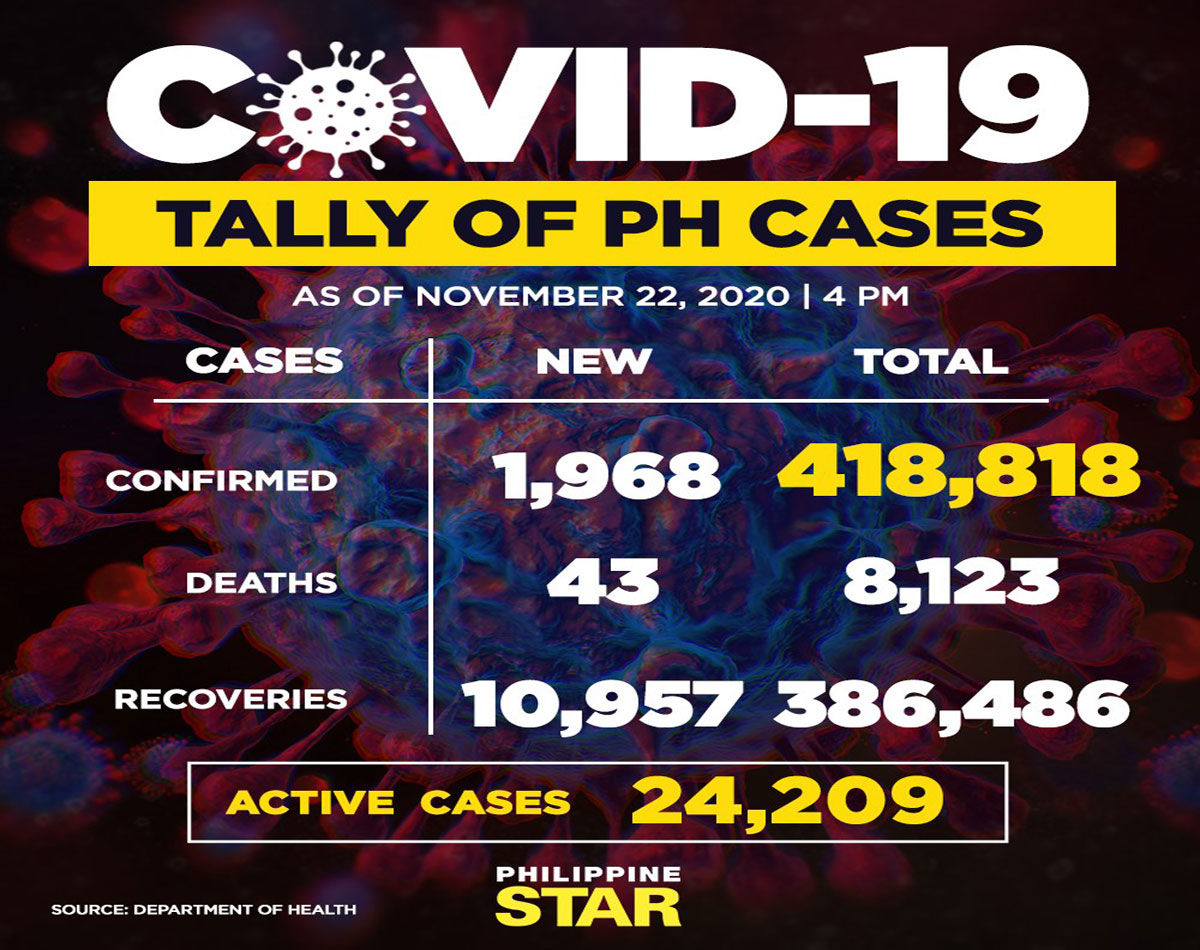
New coronavirus cases in the Philippines have remained below 2,000 daily since Nov. 10. Deaths, which totaled 8,025 as of Nov. 20, constituted 1.93 percent of the country’s 415,067 cases.
Hospital bed occupancy has also eased from critical levels, and the government has been gradually easing quarantine restrictions to jumpstart the coronavirus-battered economy.
Thousands of OFWs back
Meanwhile, almost 320,000 returning overseas Filipino workers (OFWs) are now safely back in their home provinces, the DOLE said on Sunday.
According to Bello, the Overseas Workers Welfare Administration (OWWA) extended transport assistance to a total of 319,333 returning OFWs as of Nov. 21.
“For the month of November alone, 38,516 OFWs were flown and bused to their destinations,” Bello said, citing an OWWA report.
He added OWWA also took care of hotel accommodations and food while the returning OFWs waited for the results of their COVID tests that were taken upon arrival in Manila.
OWWA facilitated transport back to the provinces as soon as the OFWs tested negative for COVID.
“There is no stopping the government from extending the assistance to our dear OFWs. We have also enhanced our livelihood programs for the reintegration of our returning heroes,” Bello noted.
Bello said DOLE’s different foreign posts continue to monitor the situation of OFWs and provide assistance in their respective jurisdictions.
Reports from the Philippine Overseas Labor Offices indicated that a good number of OFWs who contracted COVID have recovered from the disease.
“We are glad to note that we have a very good recovery rate among our COVID-stricken OFWs,” he said.
Among the 111 infected Filipinos in Israel, 103 have recovered, while there was no fresh report of mortality among the 3,577 afflicted OFWs in Qatar.
Bello said a total of 218 Filipinos in European countries including Spain and Germany have recuperated from the infection. Twenty-nine COVID-positive Filipinos in Russia have also recovered.
The Department of Health (DOH) reported that as of Nov. 20, a total of 10,457 of the 611,910 Filipinos who returned from abroad were confirmed positive for COVID.
Most or 6,564 of the COVID-infected returning overseas Filipinos (ROFs) were land-based while 3,893 were sea-based. A total of 608,099 have been released from facility quarantine.
The DOH said 10,069 of the ROFs have recovered, 342 are still confined in hospitals and six have died.
A total of 510 foreign nationals staying in the country also tested positive for COVID-19. – With Sheila Crisostomo, Reuters


