



FDA Suspends AstraZeneca Jabs For People Under 60; Allows Use Of Sinovac For Senior Citizens
“I want to emphasize that this temporary suspension does not mean that the vaccine is unsafe or ineffective. We are just taking precautionary measures,” Food and Drug Administration director general Eric Domingo said.
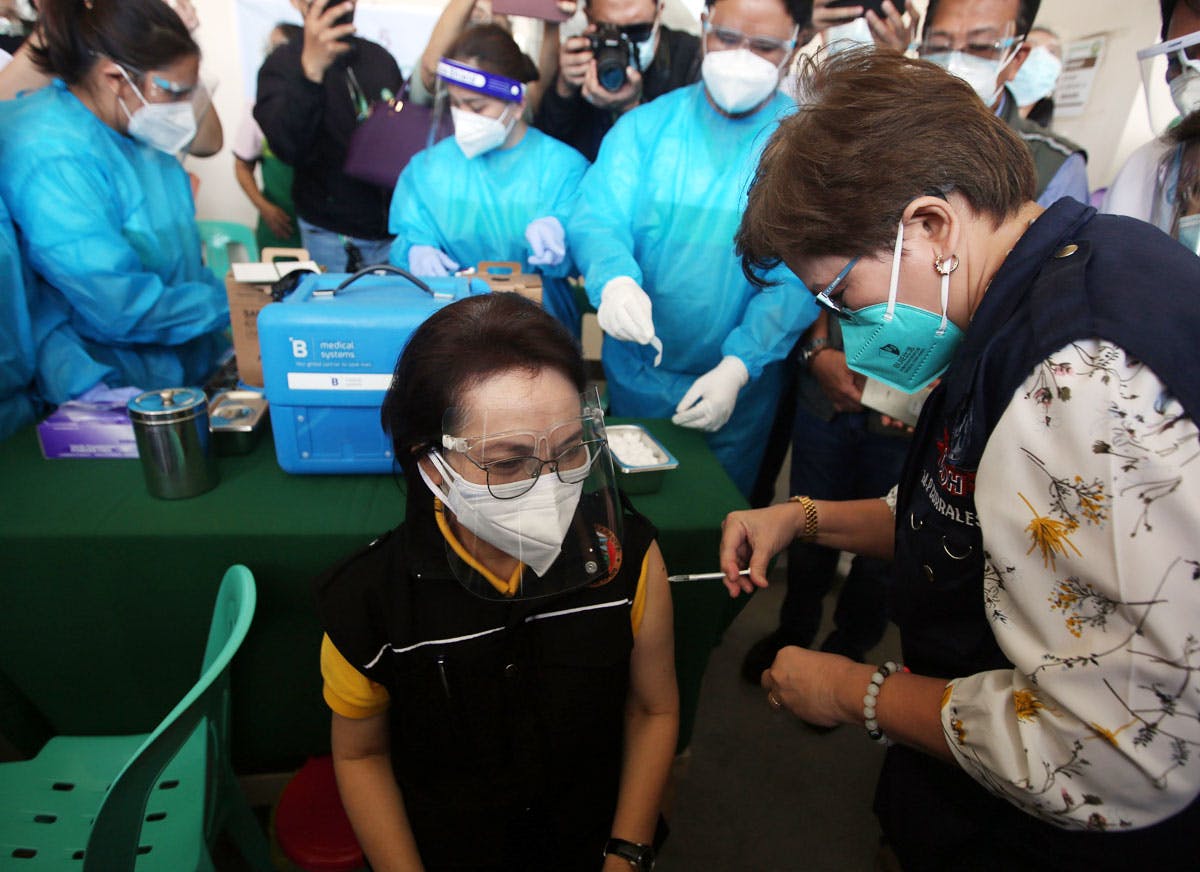
The Food and Drug Administration (FDA) has stopped the use of AstraZeneca vaccine in the ongoing immunization program following reports of blood clotting among vaccinees in Europe.
Speaking at the “Laging Handa” public briefing on Thursday, April 8, FDA director general Eric Domingo said he asked the Department of Health (DOH) not to administer AstraZeneca to people below 60 years old.
“We asked the DOH if there are still remaining doses of the AstraZeneca vaccine. If there is any, maybe we should not use this to people below 60 years old until we get a clearer evidence and guidance from WHO and our experts,” Domingo said, referring to the World Health Organization.
The DOH announced that it adopted the recommendation of the FDA to stop the use of AstraZeneca.
Although the use of AstraZeneca has been suspended, both the FDA and the DOH maintained that the vaccine is safe.
“I want to emphasize that this temporary suspension does not mean that the vaccine is unsafe or ineffective. We are just taking precautionary measures to ensure safety of every Filipino,” Domingo said.
The DOH and the FDA urged the elderly and those with comorbidities to avail themselves of the vaccines offered by the their local government units (LGUs).
At this time, Domingo said, there are only a few doses of AstraZeneca vaccine left and the next batch is expected to arrive next month. The first batch of AstraZeneca shots arrived in March and had been administered to healthcare workers and others in the priority list.
“That gives us time to study the evidence and to see if there will be a new guidance on the use of the AstraZeneca,” he noted.
Domingo said the European Medicines Agency reported incidences of blood clotting among those inoculated with the British-Swedish made vaccine.
The European Medicines Agency sees this as “very rare cases, noting of the 200 million people who received AstraZeneca, there were 16 cases possibly connected with blood clotting as well as in the drop in platelet count,” he said.
The cases of thrombosis and drop in platelet are reportedly common among women below 60 years old.
But Domingo said the National Adverse Events Following Immunization Committee has not recorded any report of platelet drop among those given AstraZeneca jabs.
Domingo and Dr. Rontgene Solante, head of the Adult Infectious Diseases and Tropical Medicine unit of the San Lazaro Hospital, said based on data, the occurrence of the blood clots happened after the first dose was administered.
Domingo noted that those who did not experience any adverse side effects would receive the second dose. He said the review would be completed before the arrival of the AstraZeneca shots next month.
Based on his understanding, Solante also told "The Chiefs" on One News / TV 5 on Thursday night that those who were given first dose would be receiving the second dose if nothing happened to them.
Second dose delayed?
The 525,600 Filipinos who received their first dose of AstraZeneca vaccine face the risk of going back to square one as the vaccine’s second shipment will be delayed either next month or in June.
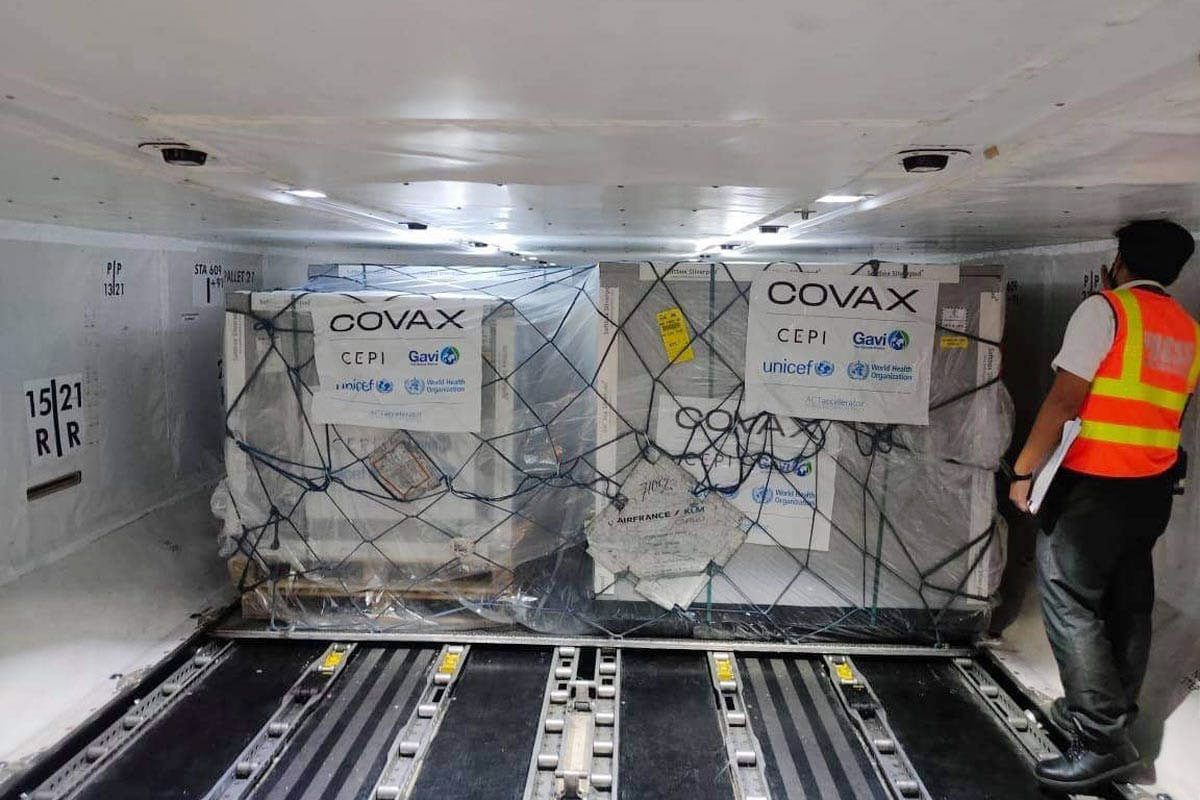
The country received 487,200 doses of AstraZeneca on March 4 and an additional 38,400 on March 7, or a total of 525,600 doses.
The initial plan was to give the vaccine to 262,800 health workers and senior citizens at two shots each.
But due to rising infection cases, President Duterte authorized the use of the vaccine as a first dose shot to protect some 525,600 citizens.
The WHO representative in Manila, Dr. Rabindra Abeyasinghe, announced this week that delivery of the second shipment would be delayed and the promised number of doses scaled down.
The supply is part of the country’s share from the WHO’s vaccine-sharing COVAX Facility.
Sinovac OK’d
Domingo also announced on Wednesday, April 7, that the FDA approved the use for the elderly of China-made CoronaVac vaccine as it was proven to be safe.
He said over 700 healthcare workers above 60 years old were given the vaccine developed by Chinese pharmaceutical Sinovac and none reported severe side effects.
Hundreds of senior citizens and persons with co-morbidities were inoculated with AstraZeneca as the FDA initially said CoronaVac was not suited for them.
A study conducted in Brazil involving 400 elderly showed a efficacy rate of 51 to 52 percent, which Domingo said is acceptable under the WHO standards.
The shortage of vaccines at a time when cases of COVID-19 are soaring was also considered in the decision to give Sinovac to the elderly.
“We could say that the benefit outweighs the risks because many elderly have died from COVID, but none from the vaccine and they were protected,” Domingo said.
He pointed out elderly people with uncontrolled hypertension or suffering from illnesses are prohibited from getting Sinovac.
Qualified senior citizens will be screened and asked to sign an informed consent prior to vaccination.
Reports of severe adverse events among those who received Sinovac and other vaccines are closely being looked into, Domingo said.
As for the application of the Janssen of Johnson & Johnson for emergency use authorization (EUA), Domingo said the FDA expects to receive the recommendation from the vaccine expert panel next week.
FDA received Janssen’s application last March 31 for its single-dose vaccine against COVID-19.
He said another Chinese drugmaker – Sinopharm – has yet to submit any of the requirements for EUA.
“Technically, there is no Sinopharm application under evaluation at the FDA,” he clarified. Last month, presidential spokesman Harry Roque said Sinopharm has applied for an EUA with the FDA.
Domingo cautioned the public against securing vaccine outside the government system.
Vaccines obtained other than through the government are fake, he said.
The DOH reported that 992,898 people have been given vaccines. Of the figure, 872,213 received the first dose while 50,685 were fully vaccinated.
The DOH reported that 77 percent of over 2.5 million available vaccine doses have been distributed nationwide.
An average of 22,000 people are vaccinated daily.
The National Capital Region has the largest number of vaccinees with 735,970, followed by Calabarzon (Cavite, Laguna, Batangas, Rizal and Quezon) with 159,360 and Central Visayas with 132,360. – With Delon Porcalla


