



Fare Hike For Public Utility Vehicles Approved; P12 Minimum For Jeepneys
The increase in minimum fare for traditional and modern jeepneys, public utility buses, taxis and transport network vehicle service units will take effect on Oct. 4.
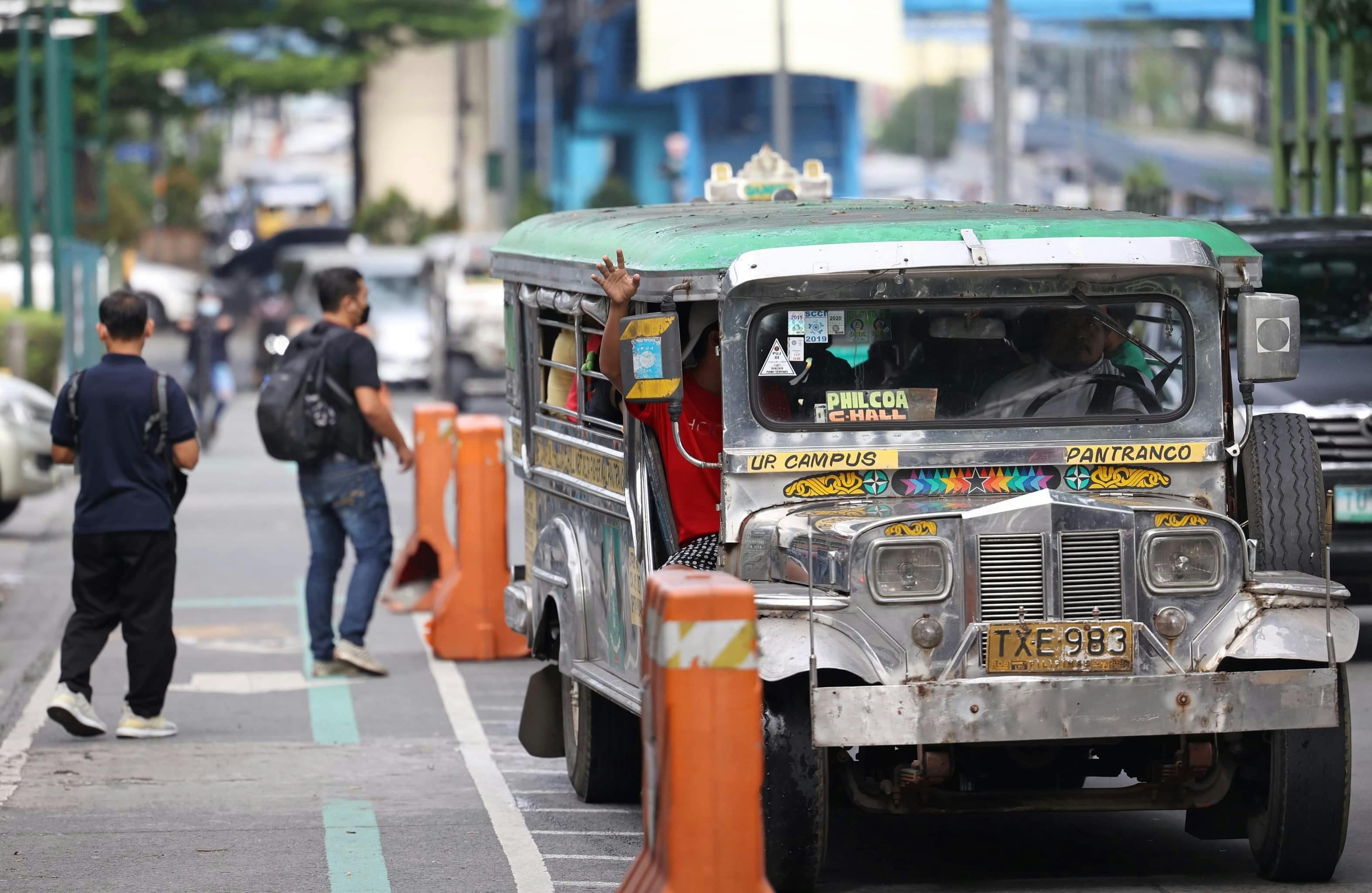
The public should brace for higher fares in October after the Land Transportation Franchising and Regulatory Board (LTFRB) approved Friday, Sept. 16, petitions for fare hikes for public utility vehicles.
LTFRB Chairperson Cheloy Garafil announced an increase in fares for both traditional and modern public utility jeepneys, public utility buses, taxis and transport network vehicle service (TNVS) units effective on Oct. 4.
The LTFRB is still hearing the petition for fare hike for UV Express Service units. The board said the 20 percent discount for senior citizens, persons with disability and students will still apply.
For jeepneys, the base fares for traditional and modern units have been provisionally increased to P12 and P14, respectively, from the current P11 and P13.
The per-kilometer rate will also increase to P1.80 from the current P1.50 for traditional PUJs and P2.20 from P1.80 for modern jeepneys.
A P1 fare increase became effective last July.
For buses, LTFRB approved a uniform base fare increase of P2 for both city and provincial buses, to P13 and P15, respectively.
The board also granted higher per kilometer rates: P2.25 per km for ordinary city buses, P2.65 for aircon city buses, P2.10 for provincial deluxe, P2.35 for special deluxe and P2.90 for luxury buses.
As for taxis and TNVS units, it granted P5 increase in the flag-down rate.
This effectively increases the flag-down for taxis and sedan TNVS to P45, P55 for AUV/SUV units and P35 for hatchback TNVS.
The board said it recognizes the need for fare increase in view of rising oil prices. The adjustments were approved in consultation with the National Economic and Development Authority and the Department of Energy.
Garafil said they allowed only P1 to P5 increase, as against the P3 to P20 increase sought by transport groups in their petitions, in consideration of the plight of the commuting public.
“We did not entirely grant their petition because we also need to consider the biggest factor of our decision, the commuter and their ability to bear this burden. It is the commuters who will bear the burden,” she said in an interview.
The LTFRB chair added that any fare increase would have an impact on inflation and on the country’s overall effort to recover from the effects of the COVID-19 pandemic.
“We tried to get the right balance in our resolution and we hope that with the decision we addressed the need of our operators and at the same time eased the impact on the commuters and on the economy,” she explained.


