



Duterte Vetoes SIM Card Registration Bill
President Duterte noted that the inclusion of social media providers in the registration requirement was not part of the original version of the bill and needs a more thorough study.
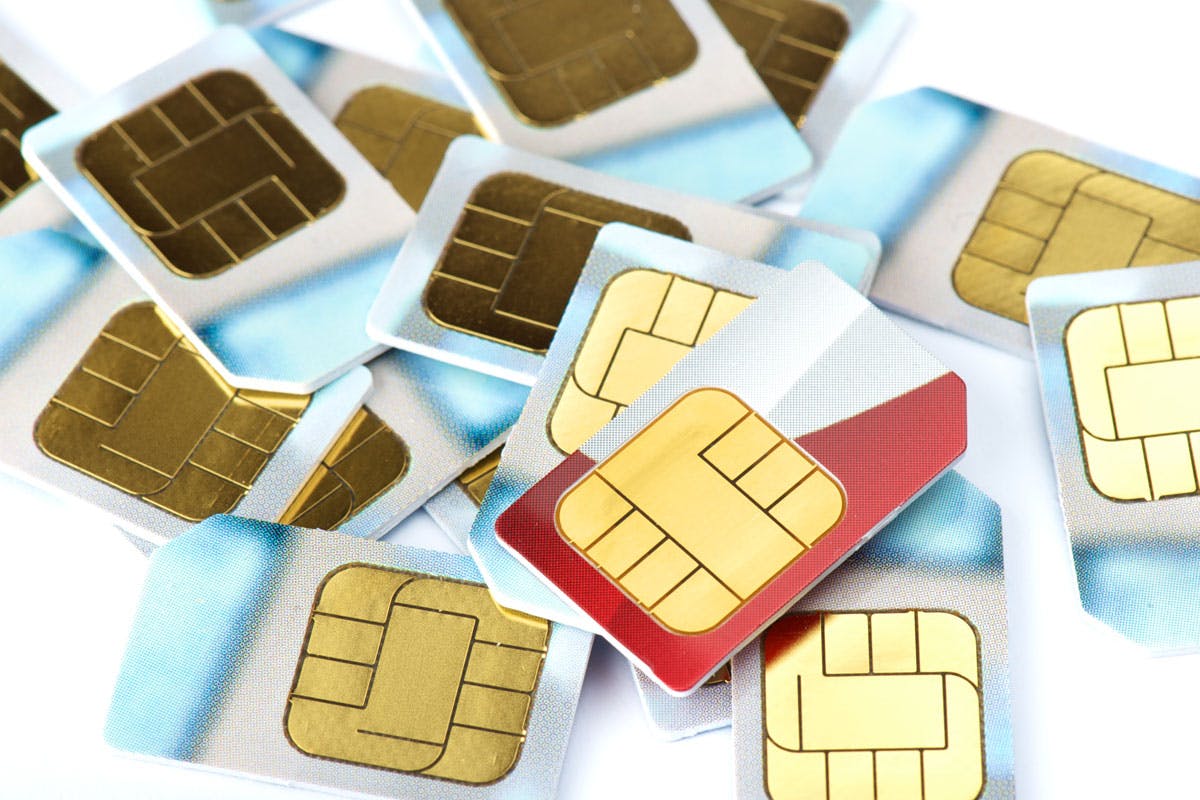
President Duterte has vetoed the measure seeking mandatory registration of subscriber identity module (SIM) cards and social media accounts aimed at deterring electronic communication-aided crimes.
Duterte has decided to veto the consolidated Senate Bill 2395/House Bill 5793, Presidential Communications Secretary and acting presidential spokesman Martin Andanar said in a statement on Friday, April 15.
The President noted that the inclusion of social media providers in the registration requirement was not part of the original version of the bill and needs a more thorough study, according to Andanar, as he noted that prior versions only mandated the registration of SIM cards.
“The President similarly found that certain aspects of state intrusion, or the regulation thereof, have not been duly defined, discussed or threshed out in the enrolled bill, with regard to social media registration,” Andanar said.
The presidential spokesman said that while the President lauded the efforts of Congress in finding ways to address the increasing incidence of cybercrimes and information and communications technology (ICT)-related offenses, the latter was constrained to disagree with the inclusion of social media in the measure, without providing proper guidelines and definitions to it, as the same may give rise to a situation of dangerous state intrusion and surveillance threatening many constitutionally protected rights.
“It is incumbent upon the Office of the President to ensure that any statute is consistent with the demands of the Constitution, such as those which guarantee individual privacy and free speech,” Andanar said.
“This notwithstanding, we ask Congress not to lose heart in passing effective and strengthened measures that offer our citizens a safe and secure online environment, provided that the same would stand judicial scrutiny,” he added.
Mixed reactions
Senators have mixed reactions to the Duterte’s decision to veto the SIM Card Registration Bill, which Senate Minority Leader Franklin Drilon said could have helped fight trolls and fake news.
Drilon “congratulated” troll farm operators, online bullies and fake news spreaders, who hide behind the anonymity on social media in spreading lies and discord, for the President’s veto of the bill seeking to mandate the registration of all SIM cards and social media accounts that would have unmasked them.
Drilon noted that by vetoing this bill, “the President lets trolls thrive, spread lies and hate and fuel discord and division.”
“Political trolling, as we’ve seen these days, is a thriving business. This veto is a big win for troll farms,” Drilon said.
“This veto is meant to protect trolls. Is it a parting gift? The trolling industry will continue,” he added in English and Filipino, as he expressed extreme disappointment.
“We count on Congress to act in a timely manner in reconsidering the bill for approval in accordance with the legislative process,” Sen. Grace Poe said.
“Each day without the safeguards from the measure makes our people vulnerable to rip-offs that take away their money and cause them anxiety; the onslaught of cybercrimes and fake news that tear away the fabric of our democracy,” Poe added.
Presidential candidate Sen. Panfilo Lacson, however, stressed that he may have to agree with the presidential veto.
“Mandating social media registration could be violative of the ‘one subject, one-title’ rule as defined under the 1987 Constitution, not to mention the absence of safeguards or guidelines in the said provision not even covered by the title of the measure itself,” Lacson said.
“That being said, my version of the bill simply calls for the mandatory registration of all SIM cards with service providers as practiced in other jurisdictions,” he added.
To say that he is disappointed by Duterte’s veto is an understatement, according to Drilon.
“I authored this particular provision of the measure in order to address the anonymity on the internet and the social media that allowed an environment for troll accounts and fake news,” Drilon said.
The senator cited as an example of trolls’ works the attack against Vice President Leni Robredo’s eldest daughter Aika, who is the latest victim of disinformation and harassment by online trolls and troll armies.
“She is only one of the thousands of victims of trolls and fake news. Some of them are children who may bear the scars of bullying and trolling for life. The bill could have helped in pre-venting trolls and fake news,” Drilon said.
He added that concerns that the measure could affect individual privacy and free speech cited in the veto message are unfounded.
Drilon explained that Section 9 of the bill provides for the confidentiality clause which mandates that “any information obtained in the registration process described under this act cannot be disclosed to any person.”
He elaborated that the disclosure may only be done in compliance with any law obligating the public telecommunications entities or social media providers to disclose such information in accordance with the provisions of the Republic Act. 10173 or the Data Privacy Act of 2012; in compliance with a court order, legal process or other government regulatory or enforceable ad-ministrative request for information; in compliance with Section 10 of the bill; or with the written consent of the subscriber.
“There were enough safeguards. Unfortunately, the veto is nothing but to protect troll operators and troll armies, some of them are in Malacañang,” Drilon said, citing thousands of contractual employees at the Presidential Communications Operations Office (PCOO) suspected of running troll accounts.
The Commission on Audit (COA) flagged the PCOO for hiring too many alleged consultants.
Drilon also disputed claims that the provision that he introduced in the proposed SIM Card Registration Act was an out-of-topic provision.
“It’s not a last-minute insertion. We studied it and introduced it in the Senate plenary as part of our humble contribution to the fight against trolls, fake news and other internet-related criminal activities. Twenty-two senators voted in favor of the measure on the third reading last December. The House of Representatives adopted our version with little modification,” he said.
The Senate minority leader explained that the title of the bill clearly set out the overarching objective of the measure, which is to eradicate mobile phone, internet or electronic communication-aided criminal activities, including terrorism, text scams, bank fraud anonymous online defamation, trolling and fake news, among others.
“Our laws and jurisprudence confirm that freedom of expression is not absolute, as in the cases of obscenity, libel or when public safety and order are at stake,” Poe said.
Being a content-neutral regulation, Poe added that the bill upholds the Supreme Court ruling in Chavez vs. Gonzales (2008) where “only a substantial governmental interest is required for its validity. Because regulations of this type are not designed to suppress any particular message, they are not subject to the strictest form of judicial scrutiny but an intermediate approach.”
The SIM Card Registration Bill passes the test of constitutionality based on such criteria.
The presidential veto highlights the need for ongoing efforts, both public and private, to find effective ways to protect Filipinos and the democracy.
“We shall remain firm and committed in our pursuit to end electronic and mobile phone-aided criminal activities and guarantee a safer and more secure mobile phone and cyberspace use in the country,” Poe said.
“I admit that I and my legislative staff overlooked it. Normally, as in the other measures being deliberated and amended on the floor, I would rise to question it upon consultation with my staff,” Lacson said in his Twitter account.
Gatchalian blames Drilon
Deputy Speaker for trade and industry Wes Gatchalian has pinned the blame on Drilon for Duterte’s veto of the SIM Card Registration Bill.
Gatchalian, principal author of the House version of the bill, revealed that the provision cited in the President’s veto was a “last-minute insertion” by Drilon.
The Valenzuela representative explained that while he wants the measure to become a law, he agrees with Duterte’s decision to veto it.
“Unfortunately, the last-minute insertion of Sen. Drilon to include the registration of social media providers is totally not in line with the essence of this bill,” Gatchalian said in a statement on Saturday, April 16.
“There is nothing in the bill specifying how to register such a broad environment (internet). Though equally important, that provision should have been studied further and filed as a separate bill,” he added.
Gatchalian was referring to a provision that requires all social media networks to ask for the real name and phone number of users upon the creation of their accounts.
“Today, Filipinos will continue to experience fraud, scams, threats, unwanted messages, cybercrimes and terrorism without this law,” he lamented.
Another congressman, Muntinlupa Rep. Ruffy Biazon, lamented the veto of the measure that he has been pushing for since the 13th Congress.
“The SIM Card Registration Bill veto highlights the need to put clarity in the rules of the bicam conference that it should only reconcile differences between the Senate and the House versions of a bill and not introduce new provisions,” Biazon, the House national security and defense vice chair, said in a Twitter post.
“I first pushed for the SIM Card Registration Bill in the 13th Congress, refiled it again and again, until the 18th Congress approved it. Frustrating for it to be vetoed because of a rider inserted by the bicam,” he added. – With Cecille Suerte Felipe, Edu Punay


