



DA: P20 Per Kilo Rice Market Price Now Out Of Reach
DA Secretary Francisco Tiu Laurel Jr. said government subsidies would be needed to make rice at P20 a kilo available.
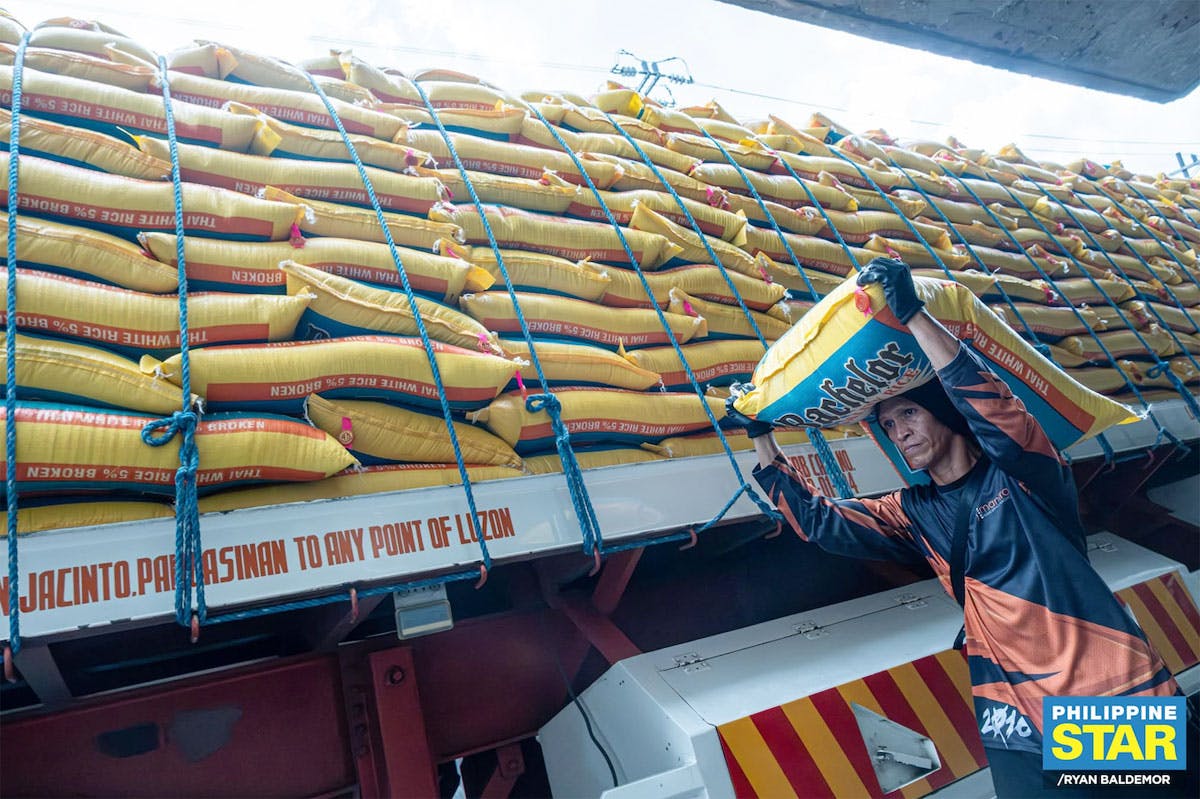
The P20-per-kilo market price for rice promised by President Marcos during his 2022 campaign is now out of reach as rising fertilizer, transport and fuel costs continue to drive up rice production expenses, according to the Department of Agriculture.
DA Secretary Francisco Tiu Laurel Jr. said Thursday, Sept. 3, that government subsidies would be needed to make rice at P20 a kilo available.
“We really can’t reach P20 per kilo for rice, we will have to subsidize it,” Tiu Laurel said over One News’ “Storycon.”
He said urea prices, which were around P700 per sack when Marcos made the promise, have risen to almost P2,600.
“In today’s global situation, I don’t really think so because everything has gone up,” Tiu Laurel said. “Now, it’s almost P2,600, so it’s the fertilizer that’s actually the problem, and we cannot control it.”
Urea prices had reached as high as P3,000 per 50-kilogram bag before Marcos took office in June 2022 amid the Russia-Ukraine war. Fertilizer prices have since risen again due to the Middle East crisis.
The price of locally produced regular-milled rice averaged P44.94 per kilo from Aug. 24 to 30, based on DA data. Well-milled rice averaged P47.73 per kilo while premium rice averaged P52.76 per kilo.
Tiu Laurel said Marcos is aware that rice market prices are unlikely to reach P20 per kilo. The Marcos administration has instead implemented the subsidized “Benteng Bigas, Meron Na!” program through Kadiwa outlets.
The DA said 800 outlets nationwide were participating, with more than 12 million Filipinos benefiting as of July.
The agency distributes 10,000 to 20,000 metric tons of P20 rice monthly, with the volume expected to reach 40,000 metric tons by the end of the year.
He said the program uses the P9 billion allocated to the National Food Authority (NFA) to procure rice from local farmers, along with funds specifically set aside for the program.
The subsidy program is scheduled to run until June 30, 2028.
Tiu Laurel said the country is not facing a rice supply shortage.
Of the 75,000 hectares of farmland affected by the southwest monsoon, about 67,000 hectares were planted with rice.
Tiu Laurel assured the public that the government had frontloaded sufficient rice stocks in NFA warehouses and expects to replenish them by the end of the year.
He said the government would import rice after the harvest season to prepare for the expected severe El Niño.
The DA expects El Niño to reduce local rice production by about 700,000 metric tons. – With an additional report from Adrian Kenneth Halili


