



DA Chief: NFA Needs P170 Billion For P27.50/Kilo Rice
Agriculture Secretary William Dar reiterated that to bring down the price of rice, the National Food Authority’s budget must be increased to improve its buffer stock capacity.
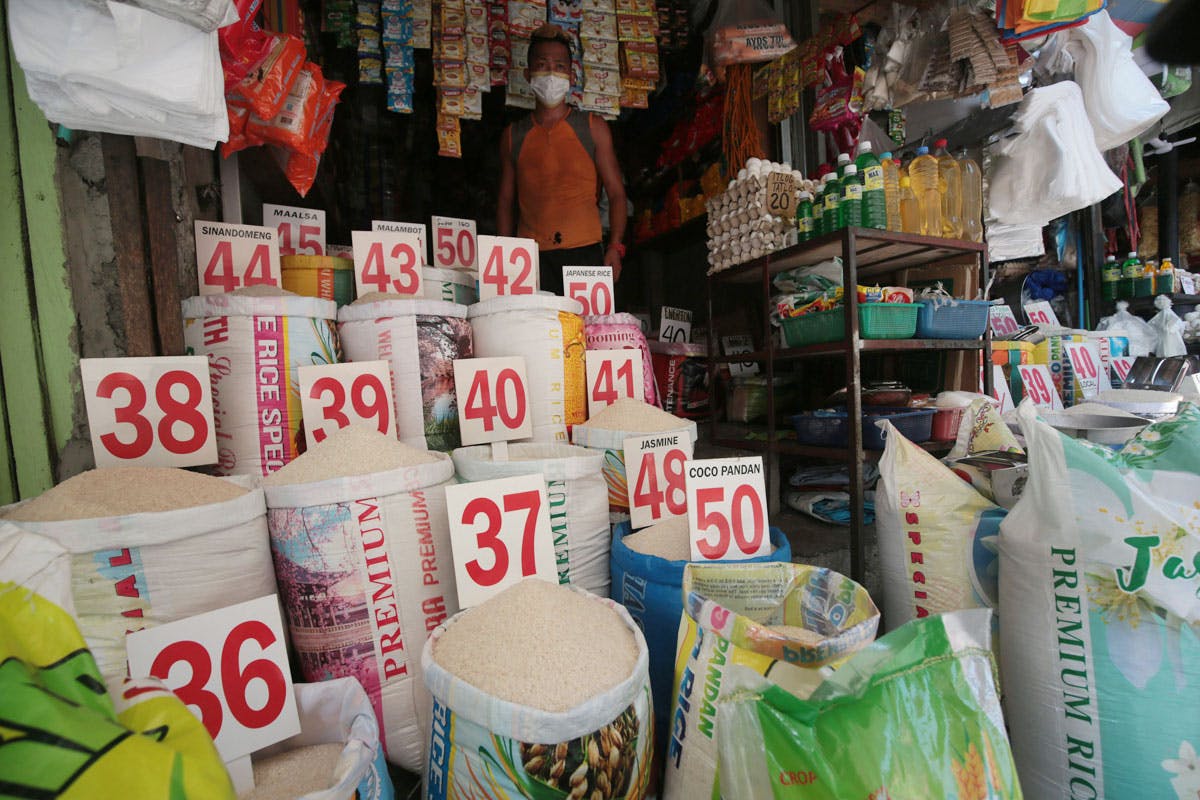
A budget of over P170 billion will be needed until 2027 to allow the National Food Authority (NFA) to boost its buffer-stocking capacity, which will work toward the incoming administration’s goal of having cheaper rice in the country, Agriculture Secretary William Dar said on Tuesday, June 21.
Dar explained that doing so, along with the simultaneous implementation of the proposed rice programs “Masagana 150” and “Masagana 200,” should bring down the price of rice to P27.50.
In an interview with “The Chiefs” on Cignal TV’s One News channel, Dar expressed hope that within the first 100 days of the next administration, an executive order will be issued by the president mandating the NFA to increase buffer stock capacity from the present level good only for seven days.
He added that the NFA’s short buffer-stocking capacity is due to its limited budget of P7 billion.
Dar said he is proposing that the NFA be given an additional budget of P4 billion this year, for it to be able to prop up its palay or unhusked rice procurement and increase its buffer stock to around nine days.
“So this on top of the P7 billion [current budget], so there will now be P11 billion to procure palay that will bring them up to the level of about a nine-day buffer stock,” Dar said.
“Now while beefing up the capacity, if there is a stimulus bill this year, for example, that P4 billion must be charged there plus the capital expenditure necessary to improve the various facilities of NFA so you enhance their capacity to go beyond,” he added.
The agriculture chief explained the need to gradually increase the buffer-stocking capacity of the NFA. As an example, he said, this year the buffer stock should be increased to nine days, while it should reach 15 days by mid-2023.
“And by the end of next year, a 30-day buffer stock will be managed by NFA,” Dar said.
He emphasized that there is a need to increase the budget of the NFA annually to achieve this increased buffer-stocking capacity.
Aside from the P11-billion budget for this year, Dar is proposing that the NFA be given a budget of P14.6 billion next year, P33.5 billion for 2024, P35.5 billion for 2025, P37 billion for 2026 and P37.5 billion for 2027.
“This is to capacitate NFA over time to have a buffer stock of 30 days and the NFA rice goes out to the market after three months, roll it over and sell it at P20 per kilo to the poorest segment of society,” Dar said, emphasizing that this can be sold to Filipinos as part of the Pantawid Pamilyang Pilipino Program (4Ps).
Last Tuesday, Dar explained that for inbred rice, the Masagana 150 program aims to bring the current yield level of 90 cavans per hectare to 150 cavans.
“Let’s be practical, if this is done for six years, starting next year, that would be a good target already. Over six years, you have Masagana 150, which is an average of 7.5 metric tons per hectare, with all components including credit,” he said.
In contrast, Masagana 200 for hybrid rice aims to boost the yield to as much as 220 to 300 cavans.
Higher budget
As Dar earlier expressed hope for an increased budget for the agriculture sector with president-elect Ferdinand Marcos Jr. taking over the Department of Agriculture (DA), he said the rice and high value crops sectors should get a chunk of the budget, if it is increased.
“High value crops are the low hanging fruit of the Philippines, not only for ourselves but for exports. That is where we can generate wealth for the country,” Dar said at the “Kapihan sa Manila Bay forum on Wednesday, June 22.
He also stressed that a budget must be given for efforts to consolidate small landholdings into bigger ones.
Dar said the decision of the president to take helm of the DA is a strategic decision as it shows the incoming administration’s prioritization of the agriculture sector.
Raw sugar shortage?Meanwhile, the country is expecting to see a shortage of raw sugar as the lack of refined sugar is driving manufacturers that normally use refined sugar to buy raw sugar instead, the head of the Sugar Regulatory Administration (SRA) said.
“Manufacturers who didn’t buy raw sugar historically are now buying even raw sugar to have the raw sugar processed as refined sugar for their consumption,” SRA administrator Hermenegildo Serafica said in a statement.
“So now there is also going to be a shortage in raw sugar,” he added.
Serafica said that if Sugar Order No. 3, which allowed the importation of 200,000 metric tons of refined sugar, was implemented on schedule, the country would have been able to address the demand of manufacturers early on.
While SO 3 was issued in February, temporary restraining orders (TROs) were issued against its implementation by two regional trial courts in Negros Occidental as a result of petitions filed by some sugar groups.
In May, the SRA began processing applications from Luzon, the Visayas and Mindanao traders for the sugar importation program, with the exception of Region 6, where the TROs were issued.
Earlier, Dar said legal opinions from the government suggested that the sugar order may be implemented in areas where the TROs were issued.
Serafica explained that the sugar order was geared toward industrial users or manufacturers since they purchase the majority of the country’s local production.
“By addressing the need of the manufacturers, we would have alleviated the demand and the retail market would have stable sugar supply and prices,” Serafica said.
Latest available SRA data showed that millsite prices of sugar grew by 44.41 percent to P2,313 for a 50-kilo bag from P1,601.96 per bag in the same period last year.
Due to the delays, Serafica said sugar imports are only starting to trickle in now, adding that it will take some time before the total volume of 200,000 MT of imported sugar would have arrived in the country due to logistical concerns.
Read More: DA Chief: Price Of Rice Can Be Lowered To P27 Not P20 Per Kilo, But…
Marcos To Assume Post Of Agri Chief
BBM as DA chief
Meanwhile, sugar planters and Negros Occidental officials lauded the decision of Marcos to temporarily take over the DA portfolio and vowed to cooperate with his administration to ensure a “successful transformation, that is long overdue.”
Amidst a looming food crisis, Gov. Eugenio Jose Lacson said it is good for the incoming president to personally give priority to and make immediate decisions for the agricultural sector.
Vice Gov. Jeffrey Ferrer, who also chaired the BBM Negros campaign, said this only shows “he is serious in working on his campaign promise that agriculture will be a priority agenda in his administration.”
“We are hopeful that the much awaited reforms in the sugar industry, including the full implementation of the sugar road map and full utilization of the Sugar Industry Development Act fund, will be realized,” Ferrer said.
His sentiments were echoed by David Alba, representative of the Asociacion de Agricultores de La Carlota y Pontevedra Inc., the biggest independent sugar producers’ group in the country who said Marcos’ decision “speaks highly of the importance he gives on food security and poverty alleviation.”
Agriculture groups like the Pork Producers Federation of the Philippines Inc., Federation of Free Farmers, Philippine Chamber of Agriculture and Food Inc. and the Philippine Association of Meat Processors Inc. have also lauded his move to head the DA.
“PBBM is showing decisiveness by taking the bull (short and long term problems in agriculture) by its horns. He intends to marshal the full force and powers of his presidency and bring them to bear on the longstanding neglect of our farmers and fisherfolk,” chairman Leonardo Montemayor said in a message sent to The Philippine STAR. – With Gilbert Bayoran


