



Marcos To Assume Post Of Agri Chief
The Department of Agriculture is facing reorganization as president-elect Ferdinand Marcos Jr. decided to head “at least for now” to address its “severe” problem.
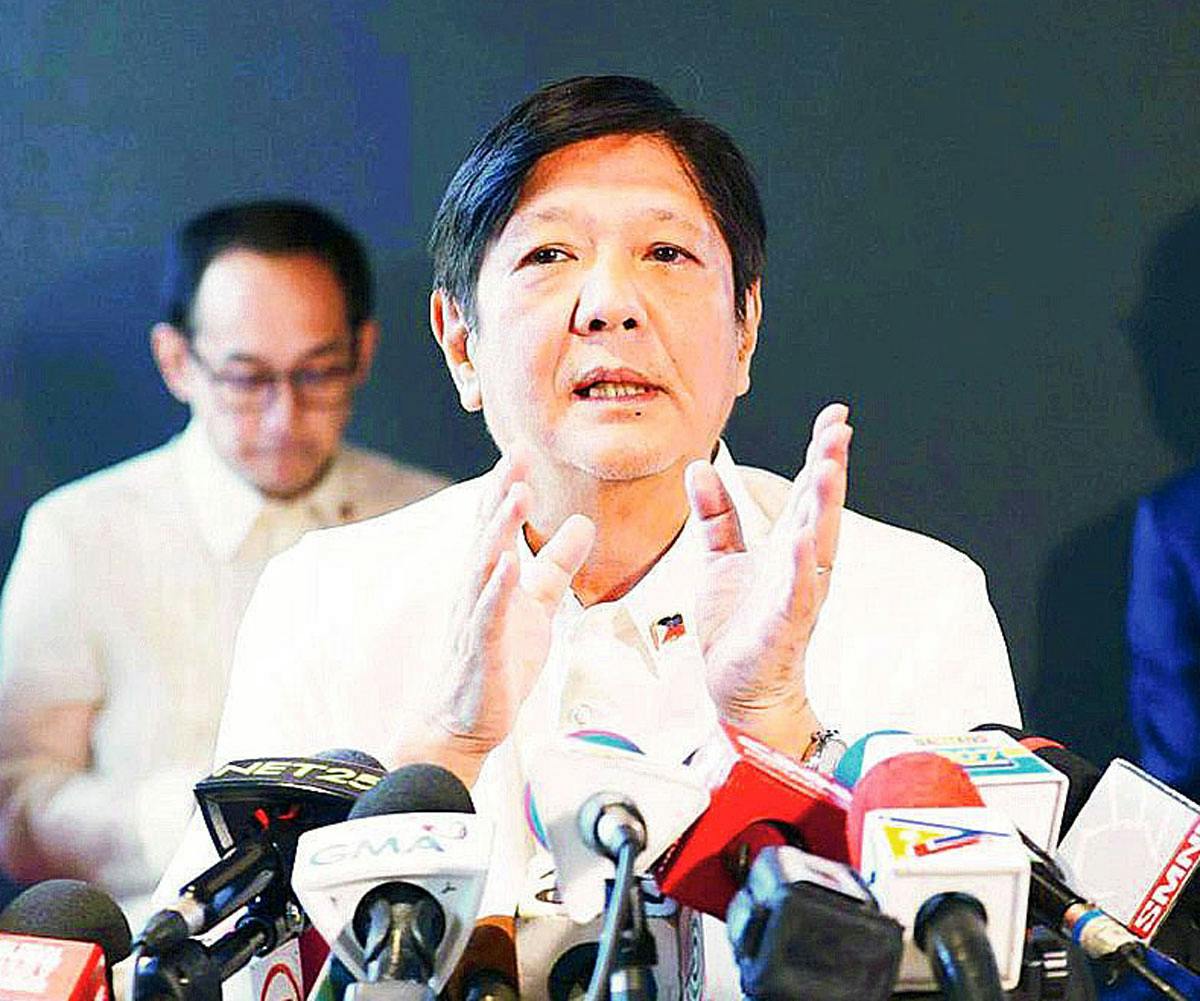
With the country’s food security on shaky ground due to soaring fuel prices, president-elect Ferdinand Marcos Jr. said he has decided to take the helm of the Department of Agriculture (DA) “at least for now” and set into motion a reorganization.
“As to agriculture, I think the problem is severe enough that I have decided to take on the portfolio of the secretary of agriculture at least for now. At least until we can reorganize the department in a way that will make it ready for the years to come,” Marcos said at a press briefing in his headquarters in Mandaluyong City on Monday, June 20.
Global oil prices have skyrocketed since Russia’s invasion of Ukraine in February. The conflict has disrupted global supply chains and caused prices of commodities to rise dramatically.
Before facing the media, Marcos had a meeting with his economic team led by Bangko Sentral ng Pilipinas (BSP) Governor Benjamin Diokno, the finance secretary-designate, to map out his administration’s economic strategy for this year.
“I have asked them all to make an economic forecast on what it is we think we will have to face for the rest of this year, so that we can prepare. So that despite the fact that there would be some emergency situations, especially when it comes to food supply, we can try to continue fundamental developments when it comes to the economy,” Marcos said.
As for the agriculture sector, the president-elect said that there are so many things that need to be done, among them increasing rice production and restructuring some non-responsive offices in the DA.
“There are various offices that are non-responsive that need to be retooled for post pandemic [operations]. We are going back to basics and we will rebuild the value chain of agriculture,” Marcos said in English and Filipino.
“And that is why I thought it is important that the president take that portfolio, so that not only to make it clear to everyone what a high priority we put on the agricultural sector but also, as a practical matter, so that things move quickly,” he stressed.
“Because the events of the global economy are moving very quickly, we have to be able to be agile, we have to be able to respond properly in a measured way as soon as there is a situation that needs to be addressed,” Marcos added.
Boost rice production
The president-elect said that first on his list of priorities as agriculture secretary would be to increase the production especially of rice, as Thailand and Vietnam – the country’s primary sources of imported rice – decided to suspend their exportation in anticipation of the global food crisis.
“So we have to compensate for that by increasing production in the Philippines,” Marcos said.
“The other priority, which is equally important although it is a long term process, is the restructuring of the Department of Agriculture. As I have mentioned many times before, many agencies have changed their functions over the years, maybe it’s time to return them, restructure them to be more responsive to the global situation now when it comes to food supply,” Marcos said.
He also said he is open to reviewing the Rice Tariffication Law to possibly increase the amount of yearly funding to be reinvested for support for local farmers through provision of machinery and post harvest facilities.
“There is P10 billion that is returned to the farming community. Maybe we can have a look at that... Now that we are in a situation wherein we very much have to boost production and we very much have to support the farmers, maybe we can look at that and hopefully increase it,” Marcos said.
Under Republic Act No. 11203 or the Rice Import Tariffication Law, P10 billion of the annual rice tariff collection shall be allotted to Rice Competitiveness Enhancement Fund (RCEF) for support for farmers.
“When we look at the accounting of the rice tariffication, sometimes from that P10 billion, there is some unspent amount, maybe we can use that,” Marcos added.
Agriculture stakeholders welcomed Marcos’ decision to assume the top DA post.
“It is a most welcome development for the local agriculture industry,” Samahang Industriya ng Agrikultura executive director Jayson Cainglet said.
“Since winning the presidency, we have pushed for the president to assume the post as DA secretary given the scale of destruction of the local agriculture sector in the last three years,” he added.
Agriculture stakeholders earlier voiced their opposition to policies implemented by the DA during William Dar’s term, which were focused on importation.
“We believe that only the president can jumpstart the gargantuan task of rehabilitating local agriculture from the carnage created by those at the helm of the DA these past years,” Cainglet said.
United Broiler Raisers Association president Jose Elias Inciong expressed hope that things would move quickly as Marcos heads the agriculture department.
“Hopefully, things will move fast. Dar buried us in a very deep grave in terms of food security,” Inciong said.
Dar also expressed support for the decision of Marcos. “We submit and support the decision of PBBM,” Dar told The Philippine STAR in a text message, referring to Marcos by his initials.
Help for MSMEs
Presidential adviser for entrepreneurship and Go Negosyo founder Joey Concepcion also welcomed Marcos’ move.
He said the DA under Marcos is seen to help achieve food security and the country’s farmers and micro, small and medium entrepreneurs (MSMEs).
“Many of our MSMEs are based in the agriculture sector, and the president-elect has expressed his intention to focus on our country’s small entrepreneurs,” Concepcion said in a statement on Monday.
“This would be a chance to help both our farmers and our MSMEs,” he added.
He said he is hopeful that measures to be implemented under the new administration would help address the weaknesses in the food supply chain exposed by the pandemic.
“We hope, with the reforms he will implement, we will become more resilient and able to withstand future disruptions in our food supply system, such as that we experienced during the lockdowns and now with the Russia-Ukraine crisis,” he said.
He cited Masagana 99, the Food Terminal Inc. and Kadiwa stores as projects that can be revisited today.
“Masagana 99 was quite a successful project, and there were several infrastructure projects like the Pantabangan Dam and Magat Dam that really helped Northern Luzon become a productive rice producer,” he said.
With many agriculture-based MSMEs facing challenges to productivity, he is looking forward to how the next president can help lift many out of poverty.
“Our continuing efforts to mentor farmer-entrepreneurs through our programs like the Kapatid Agri Mentor Me Program will dovetail with the president-elect’s efforts to help both the MSMEs and the agriculture sector,” Concepcion said. – With Louella Desiderio, Catherine Talavera


