



Cybercrime Expert? Who Is Manila RTC Judge Rainelda Estacio-Montesa?
Based on available information about her online, Manila Regional Trial Court Judge Rainelda Estacio-Montesa has been lecturing on cybercrime and has partnered with the Philippine government in fighting this.
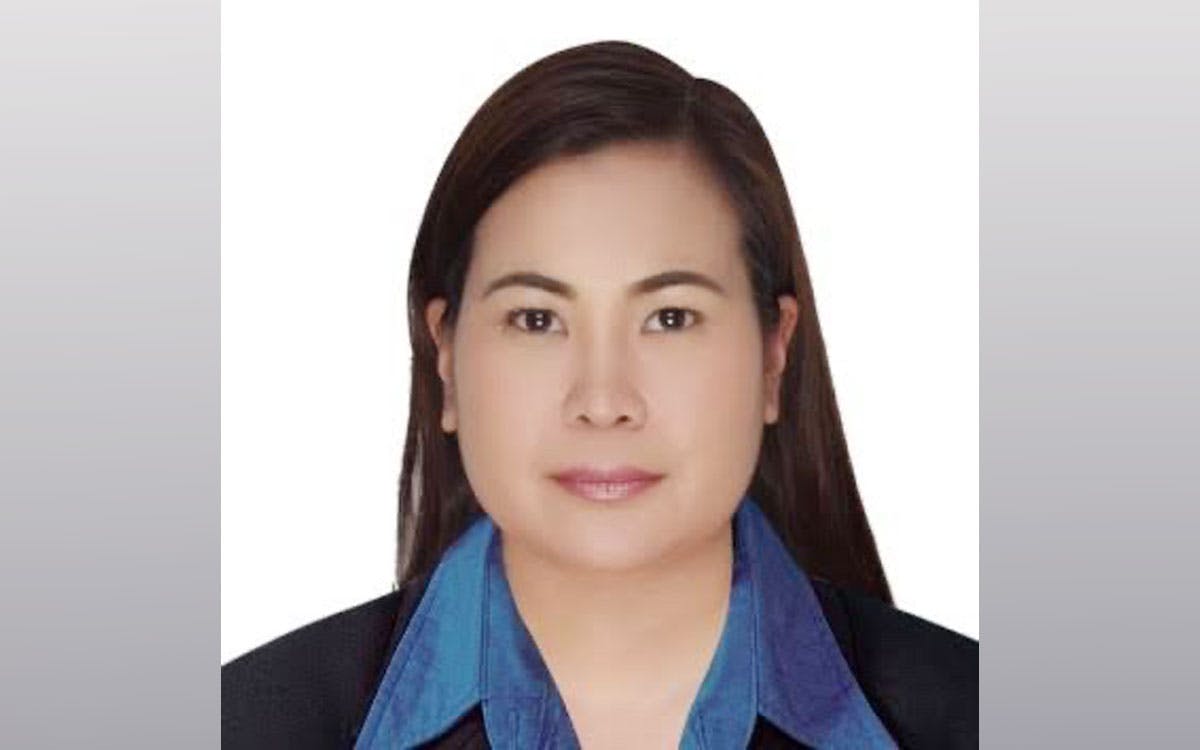
The Manila regional trial court judge who convicted Rappler chief executive officer and executive editor Maria Ressa and former writer-researcher Reynaldo Santos Jr. of cyber libel has been a judge for around two decades now.
Passing the Bar in 1999, RTC Branch 46 Judge Rainelda Estacio-Montesa has degrees from the University of Santo Tomas, San Beda College of Law and the Arellano University School of Law.
Aside from being a judge since 2002, Montesa is a frequent lecturer and trainer at many international and local seminars, according to a profile posted about her online.
On Tuesday, June 16, or a day after she handed down the decision finding Ressa and Santos guilty of cyber libel, the hashtag #iSaluteJudgeMontesa trended on Twitter, initiated by pro-administration netizens.
Media and other groups have slammed the conviction, saying it set dangerous precedents not just for journalists but also those critical of the administration online.
Montesa conducted trial on the case of Ressa and Santos for more than eight months based on the complaint filed by businessman WIlfredo Keng against Rappler for a story linking him to alleged illegal activities. The trial proper started on July 23, 2019 and the case was scheduled for promulgation last April 3 but this was delayed due to quarantine restrictions aimed at preventing the spread of coronavirus disease 2019.
Rappler, in a statement, called the cyber libel trial “possibly the fastest libel trial in recent history.”
Keng accused Rappler of running the story without his side despite clearance from the government disputing his involvement in any crime. Rappler said the certification he obtained needed to be verified by the newsroom.
In her 37-page decision, Montesa favored the complainant and cited the need for the media to wield its power responsibly, especially by taking extra precautions so as not to cause any harm especially to a private complainant.
She denied that the cyber libel trial is an attack on press freedom, quoting South African freedom fighter Nelson Mandela’s statement that “to be free is not merely to cast off one’s chains but to live in a way that respects and enhances the freedom of others.”
Mandela had supported a free press as a “vigilant watchdog of the public interest.”
In her decision, Montesa said it was a “clever ruse” on the part of Ressa to use the job title “executive editor” instead of “editor-in-chief” to avoid accountability on potentially libelous stories.
The Consortium on Democracy and Disinformation said this point of Montesa showed that her decision “is based on falsehood (and) ignorance,” and that her court “failed to understand how journalism works and what its role in a democratic setting is.”
The consortium said several media institutions use the job title “executive editor.”
“This is just unfortunate, and we wish Judge Estacio-Montesa, who must have been aware that she was in charge of a case that had drawn worldwide attention, could have reminded herself to use Google,” the consortium said in its statement condemning the verdict.
“The top editors of the New York Times, the Washington Post… and many other newspapers and news sites around the world are called ‘executive editor.’ This ‘nomenclature’ may be new to her, but it is not limited to (Rappler) and, it is, in fact so commonplace that to declare it ‘a clever ruse’ to avoid liability shows Judge Estacio-Montesa’s apparent unfamiliarity with the terrain that is journalism,” it added.
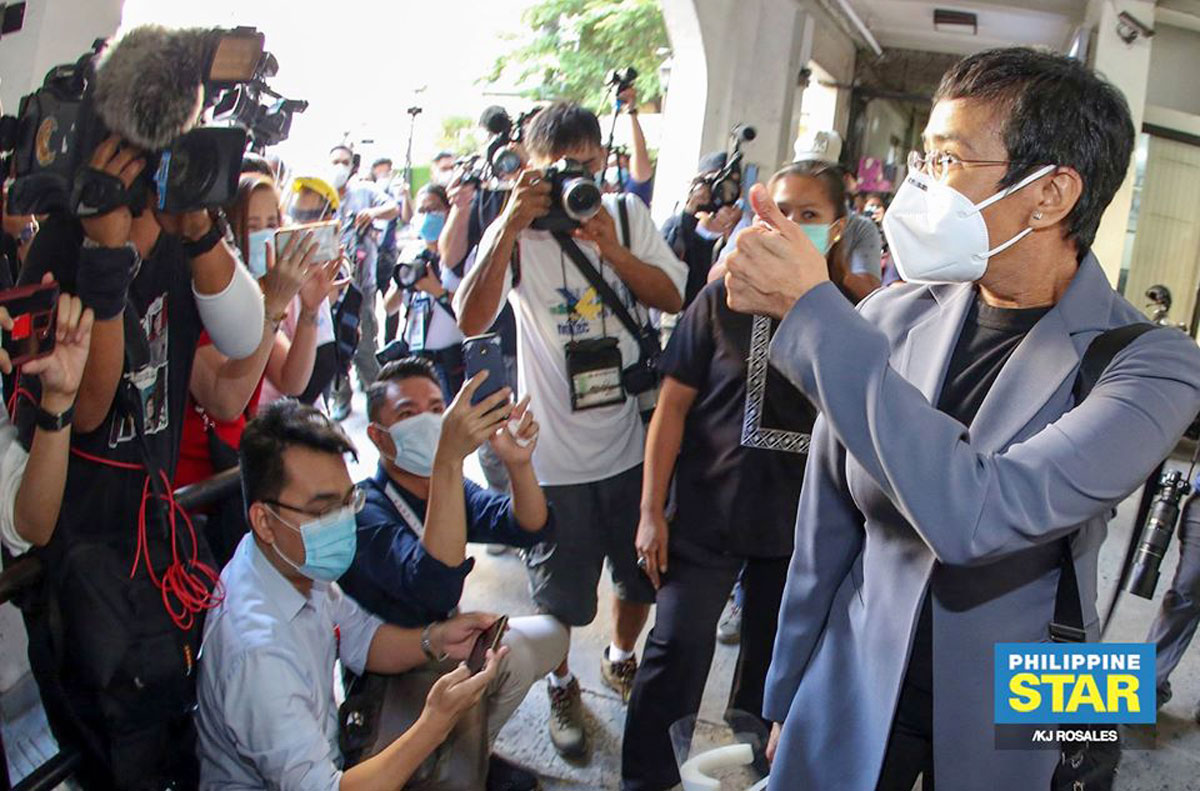
So who is Judge Montesa?
Based on available information about her on the internet, Montesa has been lecturing on cybercrime and has partnered with the Philippine government in fighting this.
A cursory search on Montesa using public records online would show that she is a “lecturer and a trainer at many international and local seminars” on cybercrime. This is based on a profile of her for the “Global Capacity Building on Cybercrime” lecture hosted by INsig2 on March 5, 2018.
She also joined the Philippine government’s delegation in a training session on cybercrime, and was even a speaker for a cybercrime forum hosted by the Philippine government.
Incidentally, the country’s delegation included the judge and a Department of Justice (DOJ) state prosecutor who was part of the prosecution team in Rappler’s cyber libel trial.
Cybercrime expert?
During the INsig2 forum called “DataFocus 2018” held in Indonesia in March 2018 in partnership with the International Association of Prosecutors, Montesa gave two lectures under the “legal track” – “How to Ensure that Electronic Evidence is Admissible in Court” and “Global Capacity Building on Cybercrime.”
The company said the forum was its “way of contributing to the digital forensics community by bringing all experts dealing with digital evidence in one place and giving them a chance to learn from one another.”
On the lecture on cybercrime, Montesa was joined by Global Prosecutors E-Crime Network (GPEN) lead cybercrime consultant Esther George.
According to the network’s website, GPEN is “a global network that improves international cooperation among cybercrime prosecutors.” The network also “organized training courses and the exchange of best practices saves a great deal of energy” so that prosecutors can “help each other develop good legislation on cybercrime.”
The network also aims to help “prosecutors have the tools to deal effectively with cybercrime.”
Lectures on the Budapest Convention
On May 9, 2018, GPEN’s George tweeted a photo of Montesa giving a “cybercrime training for judges in Cebu, Philippines” about the Budapest Convention on Cybercrime.
The Budapest Convention is also known as the Convention on Cybercrime of the Council of Europe or COE and is called the “only binding international instrument on this issue.”
According to the COE, the convention “serves as a guideline for any country developing comprehensive national legislation against Cybercrime and as a framework for international cooperation between State Parties to this treaty.”
The Philippines designated the DOJ-Office of Cybercrime as “mainly responsible for making or receiving requests for extradition or for mutual assistance with another (state party).”
In summary, the Budapest Convention “is the first international treaty on crimes” committed via the internet and other computer networks, “dealing particularly with infringements of copyright, computer-related fraud, child pornography and violations of network security,” according to the COE.
The convention “also contains a series of powers and procedures such as the search of computer networks and interception.” Its principal objective in its main preamble “is to pursue a common criminal policy aimed at the protection of society against cybercrime, especially by adopting appropriate legislation and fostering international cooperation.”
The Philippines ratified the convention on March 28, 2018. The convention entered into force on July 1, 2018.

Philippine delegation
Montesa was also a member of the Philippine delegation to the “International Workshop on Integrating the issues of Cybercrime and Electronic Evidence into Judicial Training Curricula” in April 2016 in Johannesburg, South Africa, hosted by the COE.
Montesa joined the Philippine delegation with Court Administrator Midas Marquez, DOJ Assistant State Prosecutor Jeannette Dacpano and DOJ State Counsel Angela Marie De Gracia, according to a copy of the delegation’s presentation uploaded on the COE website.
Dacpano was the government’s state prosecutor in the cyber libel case against Ressa. Keng has private lawyers, but he was also assisted by the legal team of the DOJ National Prosecution Service.
Keng’s complaint against Rappler was first filed before the National Bureau of Investigation, which conducted a probe and then filed the complaint before the DOJ for an indictment.
According to the Philippine delegation’s presentation for the workshop, the training’s objective was to “train judges on how to appreciate electronic evidence presented before their respective courts, as well as to give clarity to the tenor of the laws affecting ICTs, so that they can be enlightened in applying these laws when resolving cases.” ICT is information and communication technology.
The training is part of the COE’s “Global Action on Cybercrime” or GLACY capacity building project with the European Union.
The objective of GLACY is “to enable criminal justice authorities to engage in international cooperation on cybercrime and electronic evidence on the basis of the Budapest Convention on Cybercrime.”
She was a participant in the ASEAN “Regional Conference on Cybercrime 2017: Enhancing regional and international cooperation to improve the rule of law in cyberspace” that was held in June 2017 in Cebu. The conference was hosted by the DOJ-Office of Cybercrime and the COE.
In 2018, Montesa became a speaker for a training program of the GLACY project hosted by the DOJ and held in Manila on March 20 to 23.
A copy of the program was uploaded on the DOJ website but could not be accessed, except for a cached version.
The training entitled “Introductory Training of Trainers Course on Cybercrime and Electronic Evidence for Judges, Magistrates and Prosecutors of the ASEAN Region” is “structured as an introductory training of trainers course and will be delivered by a mixed team constituted by international experts and judicial authorities from the Philippines, who will share knowledge and expertise with representatives from the judicial and prosecution services of the other countries” of ASEAN, according to the program.
It said the meeting was co-organized by the DOJ’s Office of Cybercrime.
“Criminal justice authorities are called on a daily basis to deal with an ever expanding plethora of cases where cybercrimes or cyber-related crimes are committed, or where the need arises to collect, (analyze) and properly handle electronic evidences. In such a scenario, judges, magistrates, prosecutors and law enforcement agencies can fulfill their roles effectively only if adequate legislation is in place and aligned with international standards, and if they can acquire and maintain sufficient knowledge on how to efficiently apply it,” the program read.
The training was open to ASEAN countries.
The ceremony was opened by Marquez who delivered the welcome address, and by former justice secretary Vitaliano Aguirre, who gave the keynote address.
Montesa gave the lecture under “Cybercrime Legislation” with the topic “Procedural Articles of the Budapest Convention on Cybercrime” as well as a topic on “International Cooperation.”
According to the INsig2 profile, Montesa belongs to the International Exchange Alumni Association, US Department of State; the Supreme Court’s committee on the decongestion of provincial, city and municipal jails in the Philippines; UST Central Student Council from 1991 to 1992; the Philippine Judges Association Inc., and the Regional Trial Court Judges Association of Manila.
Montesa’s husband appointed by Duterte?
Montesa was appointed by former president Benigno Aquino III to the Manila RTC on April 17, 2012, long before issues involving Rappler came about.
She is reportedly the wife of Makati RTC Branch Judge Jacob Montesa II, who was appointed by President Duterte on Dec. 2, 2019 based on the latest masterlist of judges uploaded on the Judicial and Bar Council (JBC) website.
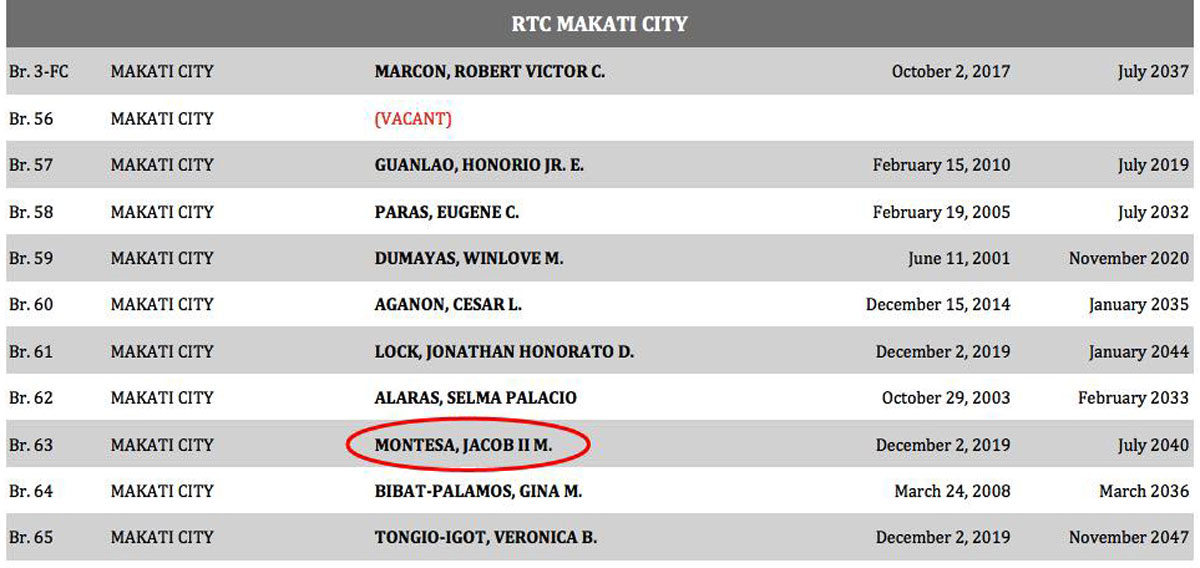
Asked about the propriety of the President appointing the husband of the judge hearing Rappler’s case, presidential spokesperson Harry Roque on Wednesday, June 17, told ABS CBN News Channel that the President does not personally know all the people he appoints.
The Manila Times reported on April 24 about Montesa’s appointment to the Makati RTC.
Roque said judges appointed by the President also went through the screening of the JBC, a constitutionally created body that recommends appointees for vacancies in courts.
“The President appoints thousands and thousands of individuals. Not all of them are known. I know this because I am somehow privy on judicial appointments,” Roque said.
“The trial court appointments are up to the CA (Court of Appeals). The President virtually does not know anyone anymore, because when he was practicing, these people were not even born yet,” he added.
Roque stressed that the President’s choices are limited to those who are in the JBC shortlist.
Besides the Rappler cyber libel case, Montesa is also hearing the case filed by the Philippine government against alleged Bureau of Customs fixer Mark Taguba and Chinese businessmen involving the importation of 602 kilos of shabu worth P6.4 billion from China, which was later brought to a warehouse in Valenzuela City in May 2017.


