



Chinese Traditional Medicine For COVID-19 Allowed In Phl; Russian Vaccine To Undergo Regulatory Processes
Officials assure the public that vaccines for COVID-19 will be scrutinized and President Duterte may have to wait before he becomes a guinea pig. Meanwhile, a traditional medicine being used in China to treat the disease is now in the Philippines.
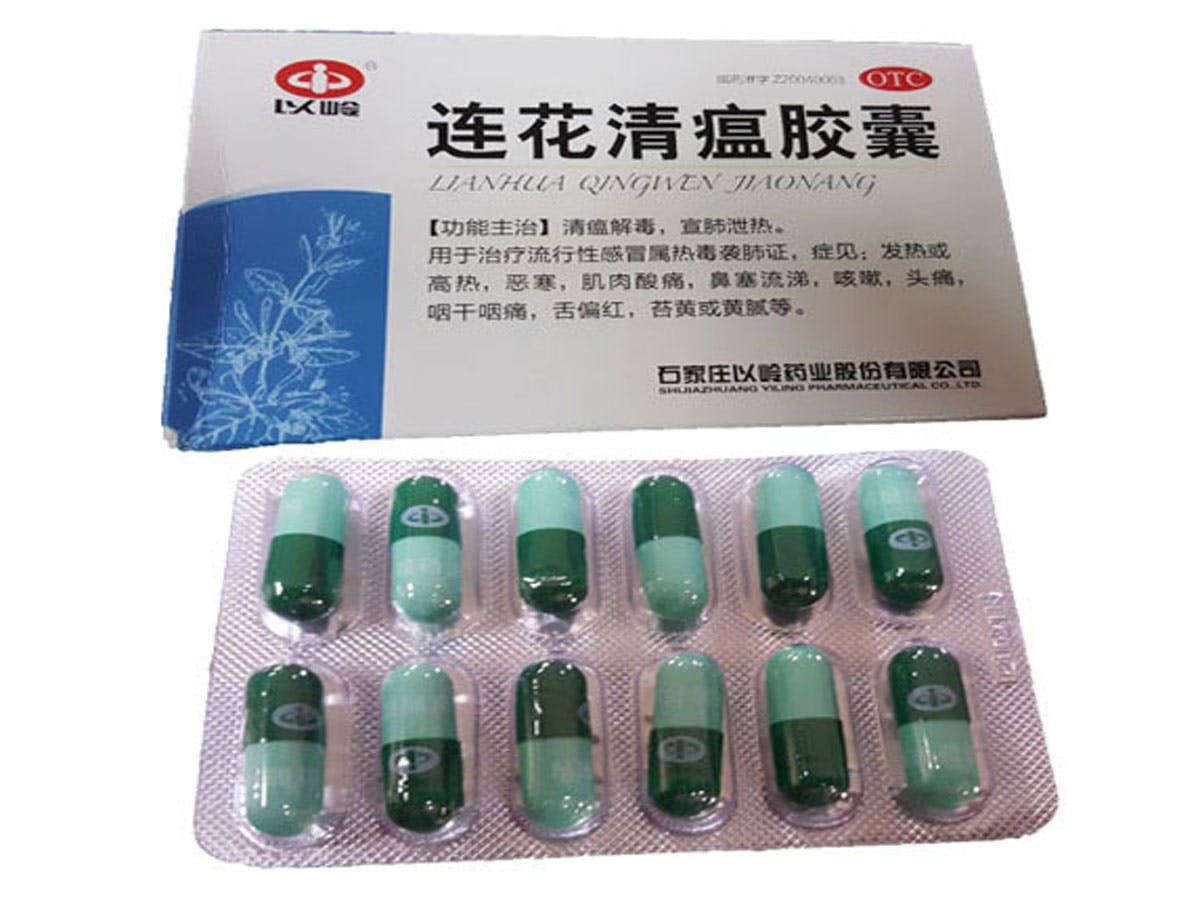
The Food and Drug Administration (FDA) confirmed on Wednesday, Aug. 12 that it has approved the application for registration of a Chinese drug called Lian Hua Qing Wen “traditional medicine” that is being used in China as a treatment for the coronavirus disease 2019 (COVID-19).
According to FDA director general Eric Domingo, the product was approved last Friday, Aug. 7. “It may now be sold in drug stores with doctor’s prescription,” he said.
On May 6, the FDA warned against the purchase and use of the medicine since it was not yet registered. But the licensing of the product was announced by the Chinese embassy in the Philippines on Wednesday through its website.
Domingo explained that while the product is being used in China as a treatment for COVID-19, its use in the Philippines is indicated in its certificate of product registration (CPR) issued by FDA.
Based on the CPR, the “pharmacologic category” of the drug in the Philippines is that it “helps remove heat-toxin invasion of the lungs, including symptoms such as fever, aversion to cold, muscle soreness, stuffy and runny nose.”
There was no indication on the CPR that the product can be used as a treatment for COVID-19 cases in the country.
Domingo reiterated on Thursday, Aug. 13, that Lianhua Qingwen was approved only as a traditional medicine and prescription drug, and not as therapeutic drug (like supplements).
"We approved it specifically for the indications stated in the CPR," Domingo added.
Domingo stressed manufacturers in the Philippines cannot place in the product's label that it can be a cure for COVID-19.
He also noted that the drug manufacturer is restricted from putting in the packaging that it is an anti-COVID product "because there’s no medicine yet for us labeled" as such.
Traditional medicine refers to health practices, approaches, knowledge and beliefs incorporating plant, animal and mineral based medicines, spiritual therapies, manual techniques and exercises, applied singularly or in combination to treat, diagnose and prevent illnesses or maintain well-being.
Domingo discounted the possibility that the Philippines will include the drug in the protocol for treatment of mild COVID-19 patients in the immediate future.
“To have it included in the DOH (Department of Health) protocol will take a lot of health processes. It has to undergo health assessment, it has to be double-checked as a medicine,” Domingo pointed out.
The Chinese embassy welcomed the FDA’s approval of the Chinese drug produced by one of China’s top traditional Chinese medicine or TCM manufacturers, Shijiazhuang Yiling Pharmaceutical Co. Ltd., “making the drug formally registered as TCM in the Philippines.”
According to the embassy, this marks an important progress in the entry of TCM products into the Philippine market.
Lianhua Qingwen capsule is an approved COVID-19 treatment for mild and moderate cases in China.
The embassy said that so far, Lianhua Qingwen capsule has been approved in Hong Kong, Macau, Brazil, Indonesia, Canada, Mozambique, Romania, Thailand, Ecuador, Singapore and Laos.
“It is our sincere hope that its entrance into the Philippine market will contribute to the fight against the spread of COVID-19 in this country and help the patients with mild and moderate symptoms recover,” the embassy said.
It advised consumers to purchase and consume “authentic TCM produced by qualified pharmaceutical manufacturers” and expressed hope “that TCM would play a bigger role to support the efforts of the Philippine government and its people to fight against COVID-19 until the final victory.”
Sputnik V
Meanwhile, the DOH assured the public on Wednesday that safety and efficacy will not be compromised should the country approve the use of “Sputnik V,” Russia’s vaccine for COVID-19.
In a press briefing, DOH Undersecretary Maria Rosario Vergeire said that Sputnik V would have to undergo the normal regulatory processes, just like other medical products being used in the country.
“All clinical trials that will be done for COVID-19 in the Philippines will go through the regulatory processes of the (FDA) and the Ethics Board,” she stressed.
Vergeire said there would also be “inclusion and exclusion criteria” that would be based on the capacity and characteristics of the vaccine.
Guinea pig
Although President Duterte is willing to become a guinea pig for Sputnik V ahead of its mass distribution in the Philippines, the Presidential Security Group (PSG) may not allow this, according to presidential spokesman Harry Roque.
Scientists have also clarified that Sputnik V cannot be administered to persons younger than 18 or older than 56, or to pregnant women and COVID-19 survivors.
“The good news is the Russians have declared that they have a vaccine,” Roque said. “As to whether or not PSG will actually allow him is a different thing… it’s difficult to be President because in a way you have limited your free will. The PSG is there to guard you and they are very good at doing their job.”
Duterte, 75, has volunteered to have himself vaccinated in public first as the Philippines participates in the third and final phase of clinical trials for Sputnik V.
“I think it was perfectly fine for him to offer it because that’s his way of telling the people that, ‘I want us to have a vaccine and I have to be the guinea pig for it, I don’t mind,’ ” Roque said.
He explained that the President has been passionate about many things to a point that he is ready to walk the extra mile for the Filipino people.
“And because that’s the attitude of the President – he’s old, he’s at the end of his term – he can sacrifice his life for the Filipino people,” Roque said.

Regulatory standards
Amid concerns that Moscow rushed the approval of the vaccine, Roque assured the public that the government will subject Sputnik V to the laws and rules governing the use of medicines and vaccines from abroad.
The FDA will still need to review the components of the vaccine before administering it to COVID-19 patients.
“Whether or not we could actually use it will depend on compliance with our existing laws, because we have a statute which penalizes the use of any drug without prior approval of the FDA. And before the FDA could approve it, the universities will have to conduct clinical studies to prove that it has no adverse effects,” Roque said.
“So it is good news, but it still has to go through our local processes, because we can’t do away with them. The only way that it can be sold on a commercial basis, I suppose, is if the FDA were to classify it as for compassionate use, which it has on a limited basis,” he added. “But I don’t think it can be OK’d for mass use on the basis of compassionate use. So it will still have to go through the process.”
He said this goes for any vaccine developed anywhere else in the world.
“That is why as early as now, we have been cooperating not only with WHO (World Health Organization) but with individual countries that are racing to develop the vaccine, to help also in the worldwide clinical studies to be conducted,” Roque said.
Budget for vaccine
Congress will be amending the proposed Bayanihan to Recover as One Act to provide funding for the purchase of the first batch of COVID-19 vaccines until the end of the year, Senate Majority Leader Juan Miguel Zubiri said Wednesday.
Zubiri said the government must act quickly to ensure that the country has early and easy access to the COVID-19 vaccines reportedly set to be rolled out soon by companies in Russia, the United Kingdom, the United States, China and Japan.
“We will set aside funds for the purchases of vaccines so we don’t have to wait until 2021. We’re looking at the ’ber months, when there could be many vaccines already and we don’t want to be left behind in buying them,” Zubiri told reporters via video conference, referring to the period starting in September.
The senator earlier said Congress would appropriate funds for the purchase of vaccines in the 2021 national budget.
He could not say for sure how much of the funding for “Bayanihan 2” would be realigned for the purpose, but noted that P3 billion to P5 billion is a reasonable amount.
The Senate and the House of Representatives are convening the bicameral conference committee to reconcile conflicting provisions of their respective versions of Bayanihan 2.
Zubiri said there would be a “pre-bicam” today, Aug. 13, to lay the groundwork for the realignment of funds for vaccine procurement.
As it is, the Senate version of the measure proposes P140 billion, to be divided into various emergency assistance and subsidy programs to sectors badly hit by the COVID-19 crisis.
Senators wanted over P600 billion for Bayanihan 2, but Finance Secretary Carlos Dominguez had told them during their deliberations on the bill that the national coffers could afford only P140 billion.
“We must give priority to buying vaccines if we want to go back to the normal we remember,” Zubiri said. “The best way to fight COVID-19 is to have a vaccine.”
Zubiri, who is a member of the Senate contingent in the bicameral committee, intends to push for a provision mandating that the vaccine must be sourced from more than one country.
“I hope we get the vaccines from expert and reputable sources,” he said even as he urged the FDA to make sure the vaccines are safe for Filipinos.
On Tuesday, Aug. 11, Russian President Vladimir Putin announced that the country had approved the first experimental vaccine on COVID-19 and that his daughter had been given a dose.
This, however, raised concern across the globe as Sputnik V, developed by Gamelya Institute in Moscow, had not yet undergone the third phase of clinical trials, during which the vaccine is administered to hundreds and even thousands of people.
According to Vergeire, officials of the Department of Science and Technology were scheduled to meet with Gamaleya on Wednesday to discuss the new vaccine. The DOST heads the sub-Technical Working Group of the Inter-Agency Task Force for COVID-19 vaccines.
Among other things, the DOST will determine how the clinical trials may be done in the Philippines, and how many vaccines the manufacturer can provide to the country.
“We have this vaccine expert panel, which provides recommendations to the national government on vaccines. We can assure the public that we are going to study this very critically,” Vergeire said. – With Mayen Jaymalin


