Buwis-buhay: Commuting In The Time Of Social Distancing
Here are some of the initiatives being taken by the government and the private sector to protect the health of the commuting public amid the coronavirus 2019 or COVID-19 outbreak.
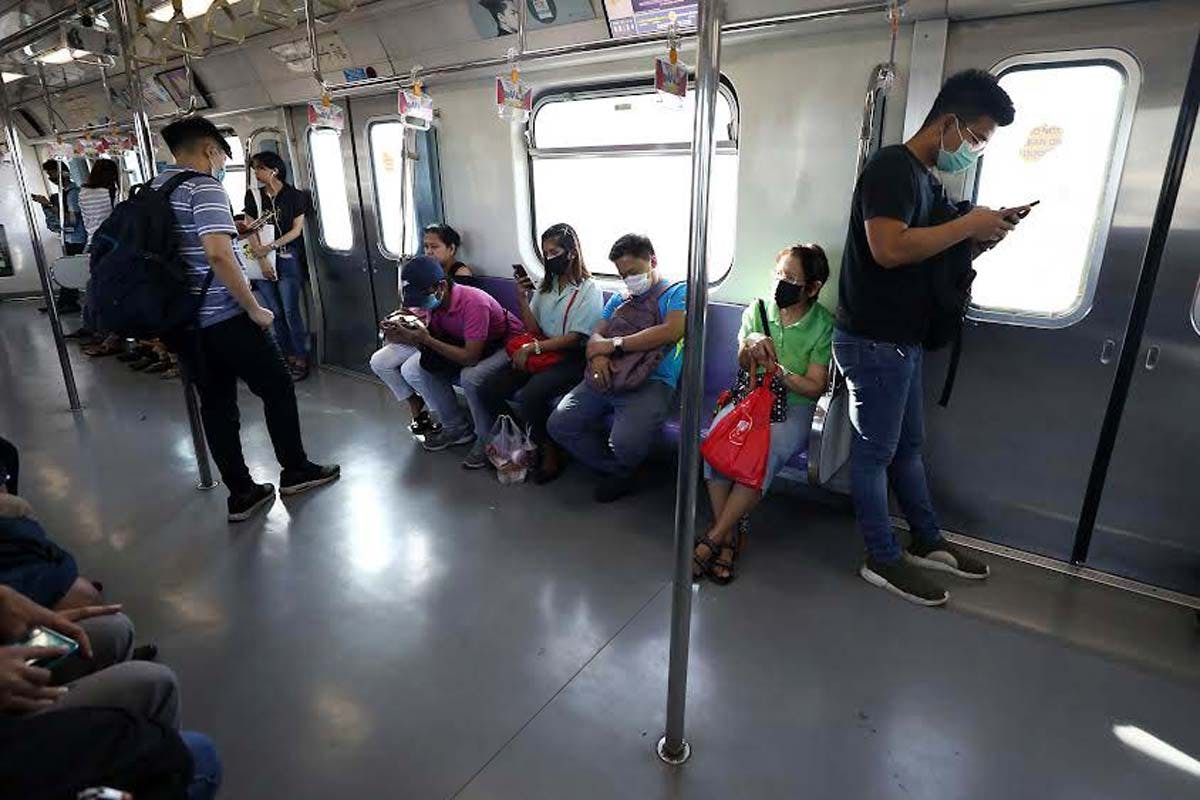
Commuters face daily problems related to the nation’s inadequate mass transportation system. Now comes the threat of the coronavirus disease 2019 (COVID-19).
With millions of people commuting daily within the National Capital Region, officials face the challenge of containing the COVID-19 contagion in the NCR, especially in crowded mass transport facilities such as trains, jeepneys and ride-sharing vehicles.
There are currently 111 from 98 confirmed COVID-19 cases with 34 new patients reported on Saturday afternoon, March 14, then another 13 at night including those locally transmitted.
Classes in all levels in both public and private schools have been ordered suspended by President Duterte until April 14 in response to the COVID-19 threat.
The country is now under Code Red Sub-Level 2 due to the increased number of COVID-19 cases, which involves a monthlong “community quarantine” and travel restrictions in Metro Manila.
But with millions of people still commuting to work and taking their chances with the transportation system amid the public health concern, what measures are being undertaken to protect them?
The Department of Transportation (DOTr), for one, has assured the public that it is taking all possible measures to prevent the spread of COVID-19 to protect commuters. Listed below are some of the initiatives taken by the government and the private sector to protect the health of the commuting public.
1) “Social distancing” measures
The first precautionary measure advised by the Department of Health (DOH) is “social distancing” to contain the spread of the virus. But implementing this measure can be challenging in the overcrowded transportation systems in the capital.
For land PUVs, the Land Transportation Franchising and Regulatory Board (LTFRB) has issued a new policy prohibiting overloading, especially in buses.
While overloading is usually frowned upon, it is a common practice especially during morning and evening rush hours. But overcrowding is tolerated, as the LTFRB admits that this is one way to address the inadequacy of mass transportation facilities.
With the state of public health emergency, however, the LTFRB said it would ban overloading, and would strictly implement the ban with the help of other law enforcement agencies.
This measure is even more difficult to implement in jeepneys, the primary transportation option for some three million commuters in Metro Manila.
On Saturday, March 4, the DOTr announced additional measures for road passengers. These are the following:
All public utility vehicle (PUV) operators and drivers shall observe the following passenger limit:
– Taxis/transportation network vehicles (TNVS), including accredited airport taxis should not have more than four passengers, including driver, one seat apart
– UV Express should not have more than six passengers including driver, one seat apart
– Old units of public utility jeepneys (PUJs) should not have more than half of their regular capacity including driver, one seat apart
– Omnibus Franchising Guidelines (OFG) compliant units (Class 2 and 3) should not have more than one half of the seating capacity, one seat apart without any standing passenger; and
– Public utility buses (PUBs) should not have more than 25 passengers, including driver and conductor, one seat apart and without any standing passenger
Multiple bookings for a single trip provided by the TNVS and the pilot implementation of motorcycle taxi shall be suspended/prohibited.
All operators are also directed to inform/educate their drivers and conductors to be observant of their passengers during travel. Should any of their passengers manifest any symptoms of COVID-19, they shall assist said person to the nearest hospital and to report the incident to the Department of Health (DOH) or the Philippine National Police (PNP) for proper handling.
All PUV drivers and conductors are also required to cooperate and observe DOH and PNP protocols/procedures.
All terminal operators shall not allow any person to enter their terminal premises if said person manifests any of the symptoms for COVID-19 such as those with 38 degrees Centigrade or higher body temperature, severe coughing or breathing difficulty.
Provincial buses and inter-regional trips of jeepneys and UV Express to and from Metro Manda shall be terminated on the entry points as identified by the PNP.
– For ALL PUVs entering and exiting Metro Manila, drivers and conductors shall remind all passengers to be ready to present valid company (showing place of work) and government-issued ID (showing place of residence) pursuant to the Department of Interior and Local Government or PNP procedures and protocols at all entry/exit points. All PUV drivers and conductors are also required to cooperate and strictly observe DOH and protocols/procedures.
Point-to-point (P2P) buses from Ninoy Aquino International Airport to Clark International Airport and Sangley Airport shall be allowed to operate as scheduled, subject to DOH and PNP protocols/procedures.
All public transport and terminal operators must ensure and maintain proper sanitation and cleanliness of the PUV fleets and their premises on a daily basis and to provide disinfectants or sanitizers dispensers for free use or passengers.
Posting of periodic announcements and precautionary reminders that could help prevent transmission or the virus; and
All PUV terminal operators encouraged to take other measures necessary to reduce the risk of transmission in public transportation.
Transport network company Grab has already suspended its GrabShare operations, wherein multiple passengers can book the same ride at the same time.
Grab suspended GrabShare services in Metro Manila and Cebu starting Friday noon. It said the service would resume as soon as the public health situation deescalates.
The company said that its other services would still be available to the commuting public, but reminded passengers to plan their trips carefully and take their personal hygiene seriously.
It refused to disclose if it had seen a drop in the number of drivers on the road or passenger bookings.
However, some drivers are apparently already feeling the impact, as there are reports of fewer passengers trying to book from public spaces.
Some drivers interviewed said that they experience longer waiting time in between bookings, especially around shopping malls.
“We continue to provide relevant preventive tips to our drivers, merchant partners and employees, and we continue to work closely with the DOH on COVID-related matters,” Grab said in a statement.
It said it has beefed up its support hotlines and help center for any concerns or reports of suspected illnesses.
Rail sector
Pursuant to IATF and DOTr guidelines implementing one-meter social distancing, trains and station platform capacity shall be reduced to 25 percent or 200 to 300 from 1,000 passengers per train to reduce the concentration of people. Station personnel shall regulate the entry of passengers from station platforms to trains.
Passenger concentration in station platforms, concourses, and elevators shall be reduced. Station personnel shall regulate the entry of passengers into stations, and shall implement measures for orderly and distanced queuing both inside and outside stations.
– It is noted that the above measures will lower our railway lines’ capacity and result in longer queues. We appeal to our passengers’ understanding as these public health measures are implemented to manage the current public health emergency. Operating hours may be extended on a case-to-case basis to accommodate passengers who are already in queues.
Passengers exhibiting COVID-19 symptoms or that register 38 degrees Centigrade and above body temperature pursuant to DOH guidelines shall be refused entry to stations and trains. In such cases, the concerned station personnel shall observe DOH guidelines on COVID-19 response procedures.
The women’s and senior citizens section of train cars will be further separated, designating a subsection for senior citizens.
PNR operations from Alabang to Calamba and vice versa shall be suspended during the period of community quarantine.
The following measures, first implemented following the DOH’s confirmation of the first local COVID-19 case, shall continue to be implemented:
– Placement in strategic areas of alcohol-based hand sanitizers, and ensuring the availability of hand wash soap in all toilets.
– Disinfection of train interiors and station premises, particularly frequently touched surfaces that are exposed to the public. Trains will be disinfected at least every loop (or every time a train reaches its end-stations).
– Wearing of appropriate face masks, especially for frontline station and security personnel.
– Non-contact thermometers will be used to identify and control entry of passengers that will register heightened body temperatures. Station personnel shall observe COVID-19 response standard operating procedures in managing such passengers.
– Use of TV screens in stations and in trains, where available, to play materials from DOH re do’s and don’ts on how to reduce the risk of COVID-19 transmission, and print materials from DOH will likewise be posted in stations.
– Posting in strategic locations, and periodic announcements, of reminders for preventive actions that could help prevent transmission of the virus.
Rail operators are encouraged to take other measures necessary and desirable to prudently reduce the risk of transmission in our rail lines.
Aviation sector
All domestic flights will cease operations the community quarantine area, except the following: cargo flights; air ambulance and medical supplies; government/military flights; weather mitigation flights; and maintenance and utility flights.
No general aviation flights within the community quarantine area during the period. General aviation flights will be diverted to Sangley Airport and Clark Airport.
International/commercial flights:
– Special airport-to-airport trips arranged by the airlines, in coordination with the airport authorities shall be allowed;
– Passengers may opt to terminate flight in Manila, and arrange their own transport within Manila;
– Airlines to communicate options of beyond Manila travel; and Civil Aviation Authority of the Philippines to endeavor local airlines to operate sweeper flight/s airlines out of Manila and into other airports.
At least one meter radius distance from the other passengers shall be implemented. Areas where queuing take place (xray, check-in counter queues, etc.) shall have signages people to observe proper social distancing and flight information display system or FIDS will display video reminders of the same.
Suspension on issuance of access passes for visitors. Only passengers and essential personnel shall be allowed entry and exit to the airport terminals.
Passenger, employees and transacting public concentration in screening areas, check-in counters, immigration areas, concourses, elevator, escalators and access pass control windows shall be regulated for orderly and distanced queuing.
Maritime sector
The following measures shall be strictly implemented:
Passengers and other maritime personnel:
– Enhancement of passenger awareness on precautionary measures to prevent the spread of COVID-19 by putting up signages and distributing fliers and pamphlets and the use of the public address or PA system in ports and onboard vessels;
– Promotion of the observance of the one meter social distancing measure in ports, terminals and onboard vessels and water crafts.
– Implementation of passenger screening, segregation and management in accordance with the DOH procedures and related guidelines; and
– Crew of cargo vessels originating from COVID-19 affected ports identified under relevant IATF Resolutions shall be subject to stringent quarantine procedures and shall not be allowed to disembark subject to existing guidelines.
For ships and cargoes:
– Passenger traffic in all ports going in and out of the NCR shall be suspended during the period of community quarantine. However, ferry services within the NCR shall continue to operate subject to the observance of 50 percent reduced capacity as prescribed by the Maritime Industry Authority (MARINA).
– Ships normally plying routes within the NCR shall be allowed to call at ports outside of the same upon application for the issuance of Special Permit with the MARINA during the period of the community quarantine;
– All passenger terminals and all vessels shall strictly observe hygienic measures as prescribed by the DOH;
– Movement of cargoes to and from the NCR shall be unhampered. All cargo trucks/vans going in and out of the Port of Manila (South Harbor, Manila International Container Terminal, North Harbor and Manila Harbor Center) shall secure a cargo entry/withdrawal permit (CEWP) from the Philippine Ports Authority (PPA), which shall be presented for validation at designated check points; and
– Waste reception services at the ports shall be suspended. Both foreign and domestic ships are obliged to unload their wastes at the next port of call outside the NCR.
Controlled areas
– “No sail” policy shall be implemented to all water conveyances carrying passengers calling to and from any ports of Metro Manila except foreign ships subject to CIQS procedures and domestic cargo, fishing and government vessels subject to health screening pursuant to DOH advisories and guidelines.
– Establishment of entry and exit controls in ports and other maritime areas and waters as identified by the Philippine Coast Guard (PCG).
2) Disinfection drives
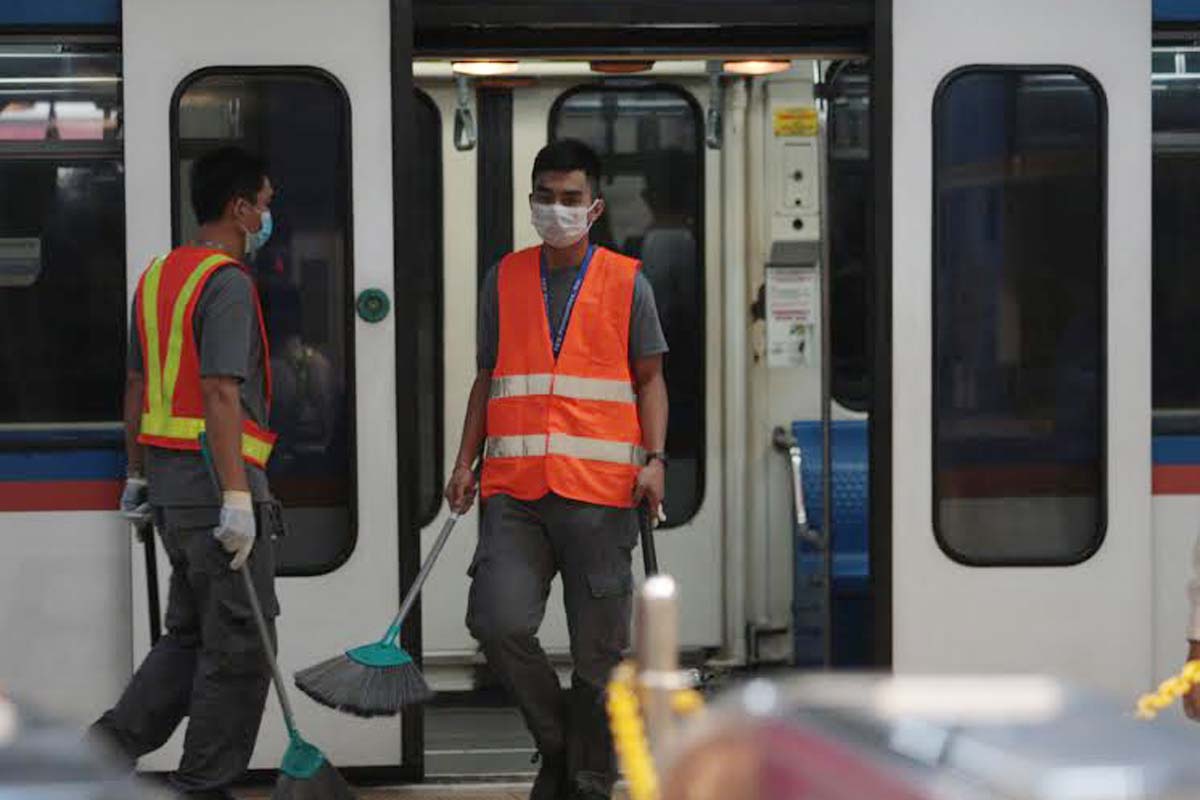
Extensive disinfection drives are being undertaken at all transportation terminals.
Larger transportation systems, such as train lines, are strictly implementing preventive measures at the terminals.
The management of the four train tracks – the Light Rail Transit Lines 1 and 2, Metro Rail Transit Line 3 and the Philippine National Railways – are conducting disinfection of the trains and their terminals.
Aside from sanitizing and disinfecting terminals, all PUV operators have been ordered to sanitize their own units before and after service.
All terminals should also have “medical checkpoints” manned by practitioners, such as nurses or doctors, at all pedestrian entries.
All persons coming into the terminal must be checked for body temperature before entering.
3. Face masks for PUV drivers
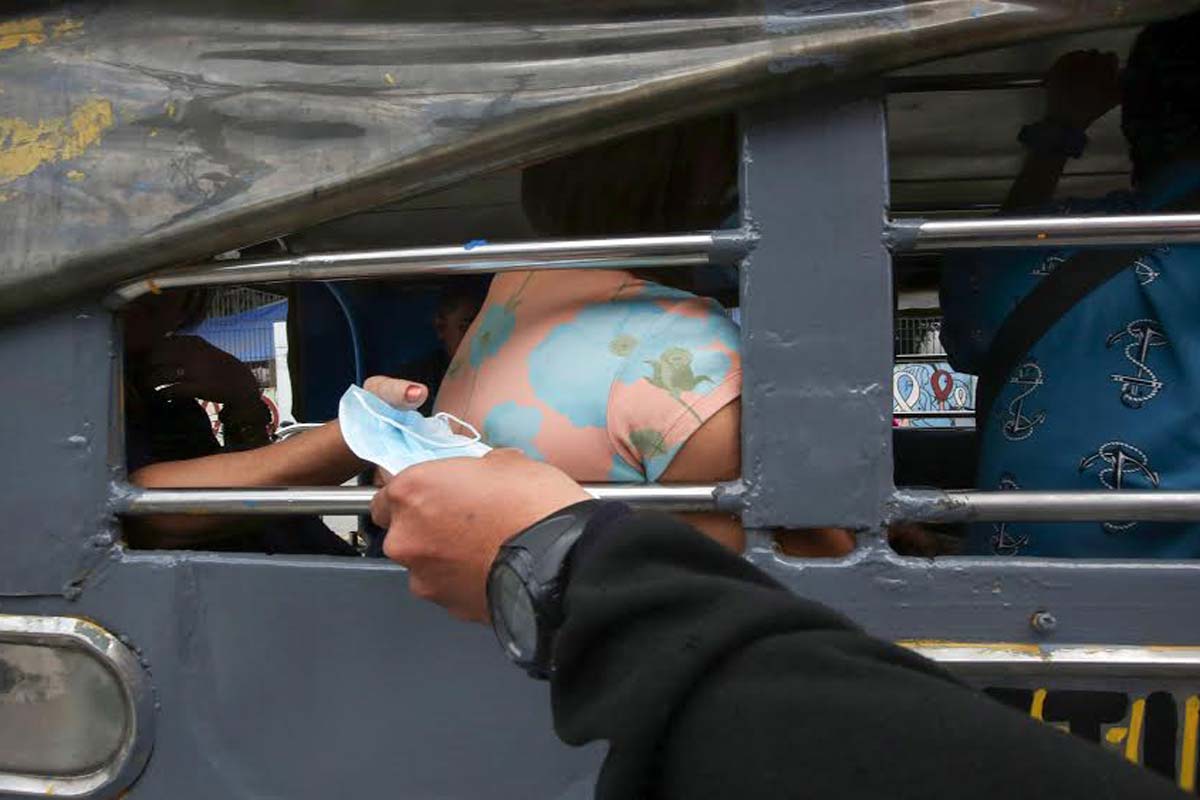
Another step taken by the LTFRB to protect the commuting public is to require PUV drivers to wear face masks during their trips.
All drivers and conductors need to properly wear face masks “at all times while on duty.”
But with the shortage of face masks, it is unclear how the LTFRB aims to implement this.
The board said the operators and franchise holders are obligated to procure face masks for their drivers.
4. Passenger registration
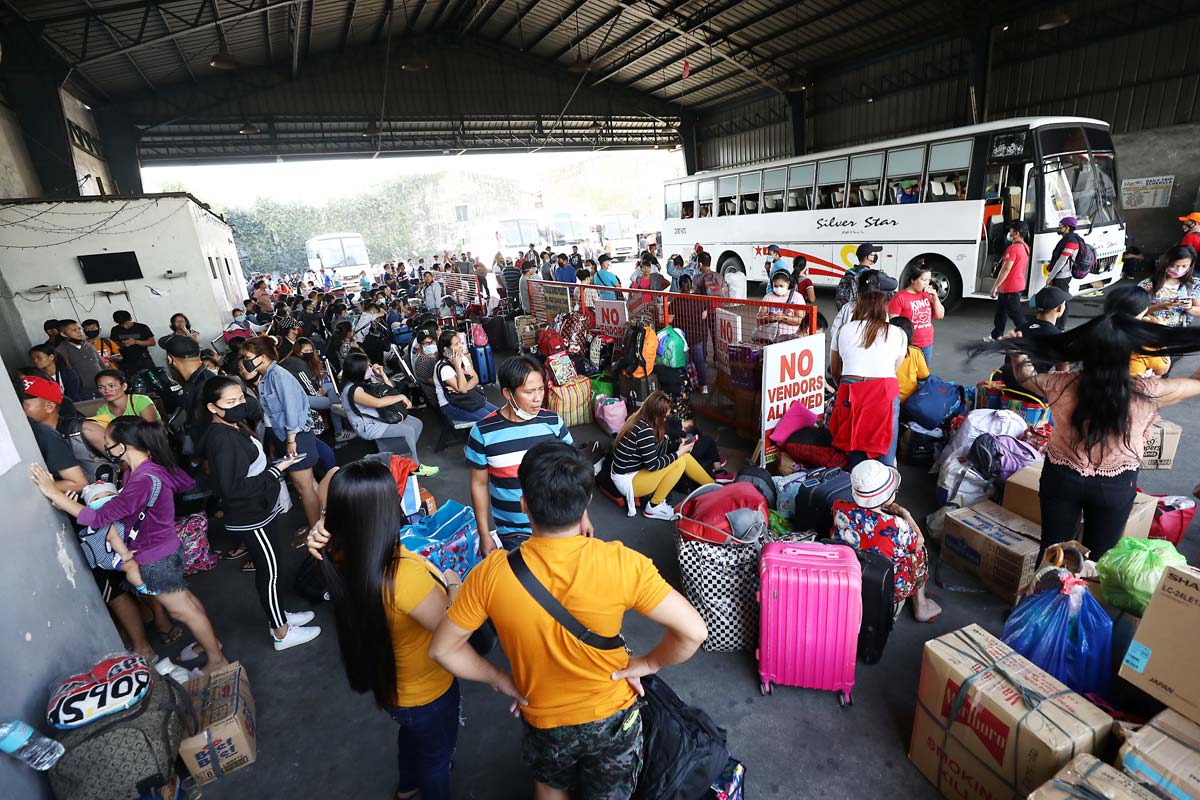
The newest measure being undertaken by the LTFRB is the registration of passengers, to facilitate contact tracing in case if infection.
The LTFRB said that all PUV operators, especially those with provincial routes, are required to register their passengers.
Registration will include the passenger’s name, gender, permanent address, destination address as well as contact information.
LTFRB chairman Martin Delgra said it is “no different from taking a plane or boat.” But there are questions on the viability of the scheme for PUVs, especially jeepneys and UV Express units.
The PUV operator will also be required to verify the authenticity of the information by requiring a government-issued identification card from the passenger.
The government and private stakeholders in the transportation sector are taking steps to make commuting in Metro Manila, described by some as “buwis-buhay,” less life-threatening in the time of COVID-19.
Only time will tell if the measures are enough.