


Body Of Pinay Found In Turkey Rubble While Another Rescued; Earthquake Toll Passes 20,000
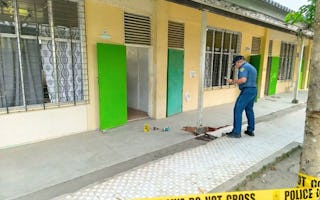
The Overseas Workers Welfare Administration said a still unverified report showed the body of an overseas Filipino worker in Turkey was pulled out from the rubble by rescuers on Thursday, Feb. 9.
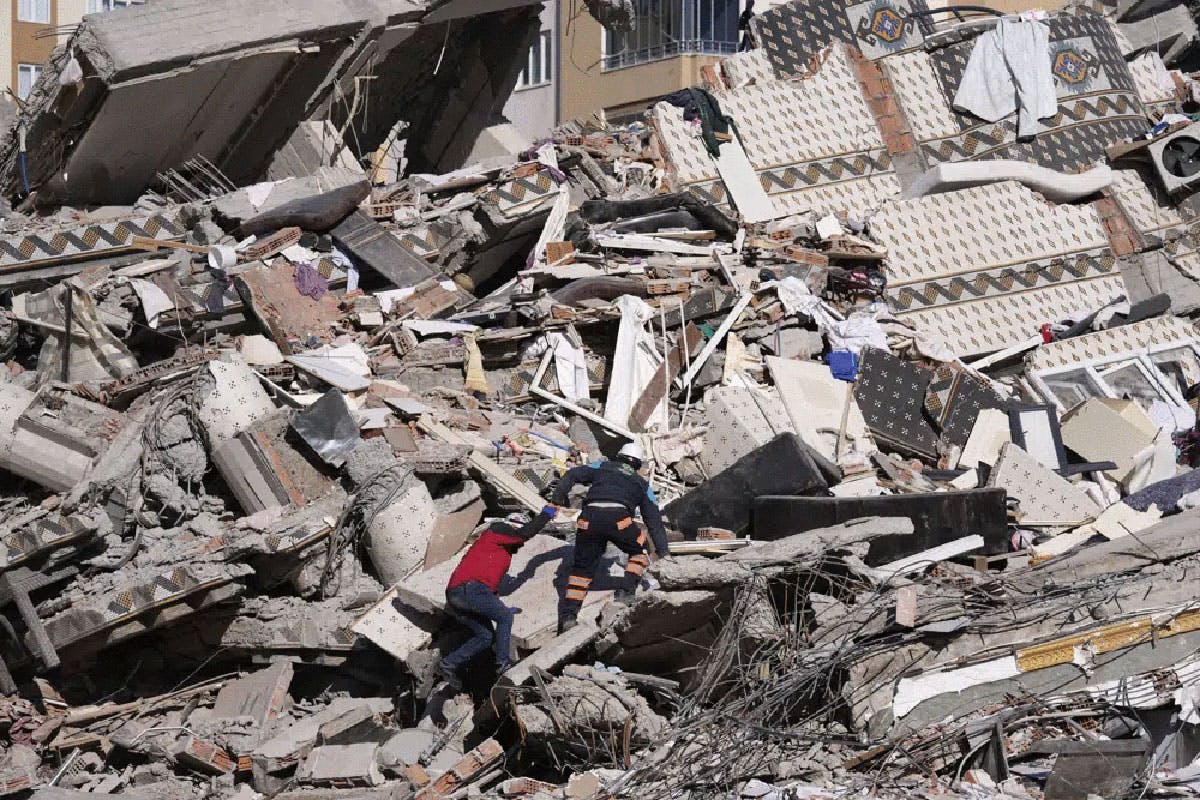
The Filipina worker initially reported missing has been found dead in the rubble of the strong earthquake that hit Turkey last Monday, Feb. 6, the Overseas Workers Welfare Administration (OWWA) said.?
The OWWA said on Thursday, Feb. 9, a still unverified report showed the overseas Filipino worker (OFW) was a certain Wilma, who was married to a Turkish national. Her body was pulled out from the rubble by rescuers on Thursday.
The second Filipino earlier feared dead in Turkey was found alive, according to OWWA chief Arnell Ignacio.
“(The Filipino) has been found, recovered from the rubble and taken to the hospital,” Ignacio told The Philippine STAR in a telephone interview.
However, Ignacio declined to name the survivor who sustained serious injuries and is now confined at a hospital.
Earlier, Migrant Workers Undersecretary Hans Cacdac said that though there are OFWs now confined in different hospitals, they have not yet received any reports of deaths or critically injured.
At least two Filipinos in Turkey were injured and four others evacuated to a safer city as a result of Monday’s strong earthquake, the Philippine embassy in Ankara reported.
The embassy mission to affected regions has begun as it tries to reach 248 Filipinos working and living there.
“Mindful of current regulations implemented by the Turkish government, the embassy has successfully begun its initial mission to the affected provinces in southeast Turkiye, in coordination with Turkish authorities,” the Filipino mission said in a statement.
Philippine Ambassador to Turkey Maria Elena Algabre was personally leading the team meeting Filipinos in earthquake-hit areas and receiving reports on those experiencing varying degrees of distress.
“These included two confirmed reports of injured Filipinos, who are now recovered,” the embassy said. “We are thankful that a number of our (fellow Filipinos) are safe and we will not give up hope for those that cannot yet be contacted.”
The team met with several Filipinos in the cities of Adana and Iskenderun, the latter being one of the most devastated areas in Hatay province.
“We are continuing to utilize our invaluable network of Filipino community leaders from across the country to get in touch with those in need, such as four Filipinos that the team evacuated from Adana to the safer city of Mersin,” the embassy added.
“We recognize that this is a meticulous process that may require more than a few days. By working hand-in hand, we hope to ensure that as many Filipinos as possible are accounted for,” it said.
Repatriation of injured OFWs
In Manila, the Department of Migrant Workers (DMW) said Filipino workers injured in the monster earthquakes that rocked Turkey are set to be repatriated and reunited with their families.
Addressing the “Laging Handa” public briefing, Cacdac said the government is working on their repatriation upon the release of their medical clearance.
At present, the DMW is coordinating its repatriation efforts with the Department of Foreign Affairs (DFA).
Cacdac said the DMW is closely monitoring the condition of 77 OFWs staying in the quake-affected areas where thousands are reported to have died.
Cacdac said the DMW has already set up a 24/7 command center to monitor them and that medical and welfare assistance are being provided to them.
The families of OFWs in Turkey who want information on their loved ones’ situation are advised to call the DMW Hotline at 1348 or send an email to [email protected].
They may also visit the Turkey help desk at the DMW office in Mandaluyong City, said Cacdac.
Phl rescue contingent in Turkey
Meanwhile, the Office of Civil Defense (OCD) confirmed that the Philippines’ 85-member search and rescue team to Turkey has arrived on Thursday afternoon.
The Philippine Emergency Medical and Urban Search and Rescue Team (PEMUSRT) is a contingent composed of trained and experienced medical and rescue personnel from the army, Philippine Air Force, Metropolitan Manila Development Authority, Subic Bay Metropolitan Authority, Department of Health and the OCD.
The Filipino rescuers will join international emergency response teams in the gargantuan task of finding survivors in the rubble of quake-devastated areas.
Turkish Ambassador Niyazi Evren Akyol, his embassy staff, and officials of the Philippine Army were present at the send-off for the PEMUSRT contingent at Terminal 3 of the Ninoy Aquino International Airport close to midnight Wednesday, Feb. 8.??The Philippine government is also considering sending a rescue team to quake-hit Syria, OCD spokesman Bernardo Alejandro IV told reporters on Thursday.
“That is what we are evaluating now, with the DFA, of course,” Alejandro said. “We can either send another contingent or send donations or relief items.”
He said the decision has yet to be made, but confirmed: “We have already received, through DFA, a similar call from Syria.
Hope fades for survivors as Turkey-Syria earthquake toll passes 20,000
In reports from Antakya, Turkey and Jandaris, Syria, Reuters said cold, hunger and despair gripped hundreds of thousands of people left homeless after the earthquakes that struck Turkey and Syria three days ago as the death toll passed 20,000 on Thursday.
The rescue of a two-year-old boy after 79 hours trapped in the rubble of a collapsed building in Hatay, Turkey, and several other people raised spirits among weary search crews. But hopes were fading that many more would be found alive in the ruins of towns and cities.
The death toll across both countries has now surpassed the more than 17,000 killed in 1999 when a similarly powerful earthquake hit northwest Turkey.
A Turkish official said the disaster posed “very serious difficulties” for the holding of an election scheduled for May 14 in which President Tayyip Erdogan has been expected to face his toughest challenge in two decades in power.
With anger simmering over delays in the delivery of aid and getting the rescue effort underway, the disaster is likely to play into the vote if it goes ahead.
The first UN convoy carrying aid to stricken Syrians crossed over the border from Turkey.
In Syria's Idlib province, Munira Mohammad, a mother of four who fled Aleppo after the quake, said: “It is all children here, and we need heating and supplies. Last night we couldn't sleep because it was so cold. It is very bad.”
Hundreds of thousands of people in both countries have been left homeless in the middle of winter. Many have camped out in makeshift shelters in supermarket car parks, mosques, roadsides or amid the ruins, often desperate for food, water and heat.
Some 40 percent of buildings in the Turkish city of Kahramanmaras, epicenter of the tremor, are damaged, according to a preliminary report by Turkey's Bogazici University.
Roadside campfires
At a gas station near the Turkish town of Kemalpasa, people picked through cardboard boxes of donated clothes. In the port city of Iskenderun, Reuters journalists saw people huddled round campfires on roadsides and in wrecked garages and warehouses.
Authorities say some 6,500 buildings in Turkey collapsed and countless more were damaged.
The death toll in Turkey rose to 17,406, Health Minister Fahrettin Koca said. In Syria, already devastated by nearly 12 years of civil war, more than 3,300 people have died, according to the government and a rescue service in the rebel-held northwest.
In the devastated Syrian town of Jandaris, Ibrahim Khalil Menkaween walked in the rubble-strewn streets clutching a white body bag. He said he had lost seven members of his family, including his wife and two of his brothers.
“I'm holding this bag for when they bring out my brother, and my brother's young son, and both of their wives, so we can pack them in bags,” he said. “The situation is very bad. And there is no aid.”
Turkish officials say some 13.5 million people were affected in an area spanning roughly 450 km (280 miles) from Adana in the west to Diyarbakir in the east. In Syria, people were killed as far south as Hama, 250 km from the epicenter.
Rescue crews looked for survivors at the site of a collapsed building in the dark in the city of Adiyaman with temperatures below freezing, Turkish broadcasters showed.
Teams frequently called for silence, asking all vehicles and generators to be turned off and reporters to keep quiet as they listened for sounds of anyone alive under the concrete blocks.
There were still some signs of hope.
A two-year-old boy was picked out of the rubble by a Romanian and Polish rescue team in Hatay 79 hours after the earthquake, video released by Turkey's Humanitarian Relief Foundation (IHH) on Thursday showed.
The boy, wearing a blue, white and black striped sweater, cried as he was gently lifted from the hole where he had been trapped. He was carried away on a blanket. No other details were immediately available.
Another video from IHH showed a helmeted and dust-streaked rescuer weeping with emotion after successfully freeing a little girl from the rubble of a collapsed building in Kahramanmaras.
Many in Turkey have complained of a lack of equipment, expertise and support to rescue those trapped - sometimes even as they could hear cries for help.
After facing criticism over the initial response, Erdogan said on a visit to the area on Wednesday that operations were now working normally and promised no one would be left homeless.
Nevertheless, the disaster will pose an additional challenge to the long-ruling president in the election.
Greece sent thousands of tents, beds and blankets on Thursday to help those left homeless by the quake, in an act of solidarity with a neighbor that is a NATO ally but also a historic foe.
Israeli satellite intelligence was helping map the disaster zones in Turkey with mapping capabilities predominantly used for special operations, the Israeli military said.
Syria overwhelmed
In Syria, relief efforts are complicated by a conflict that has partitioned the country and wrecked its infrastructure.
The UN aid convoy entered Syria at the Bab Al Hawa crossing – a lifeline for accessing opposition-controlled areas where some 4 million people, many displaced by the war, were already relying on humanitarian aid.
UN Secretary-General Antonio Guterres pushed for more humanitarian access to northwestern Syria, saying he would be "very happy" if the United Nations could use more than one border crossing to deliver help.
The Syrian government views the delivery of aid to the rebel-held northwest from Turkey as a violation of its sovereignty and territorial integrity.
Syrian civil defense said at least 2,030 people were killed in opposition-held northwest Syria, and the government has reported 1,347 deaths.
Syria's ambassador to the United Nations on Wednesday admitted the government lacked capability and equipment but blamed the war and Western sanctions.
Syrian President Bashar al-Assad has chaired emergency meetings on the earthquake but has not addressed the nation in a speech or news conference. – With Reuters, Pia Lee-Brago, Ralph Edwin Villanueva, Rudy Santos