



‘Biglang Nawala,’ Tour Guides, Other Workers In Palawan Reel From Loss Of Tourists Due To COVID-19
A tour guide admits it is difficult to understand how a place like El Nido that was teeming with tourists could suddenly become a ghost town, taking away not just residents’ sources of income but the kind of life they’ve known for years.
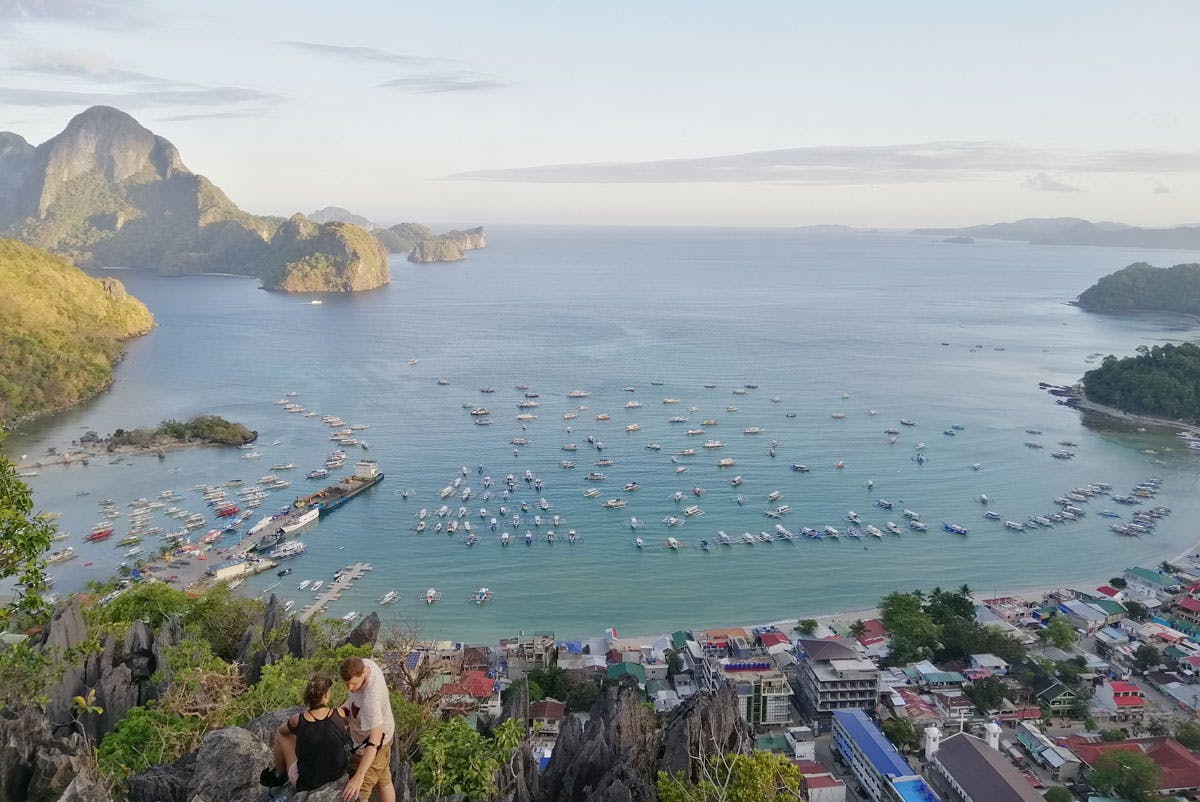
Like many other tourist spots, El Nido – a first class municipality in Palawan that is 260 kilometers away from the capital Puerto Princesa – turned into a ghost town as quarantine rules were enforced due to the coronavirus disease 2019 pandemic.
El Nido is famous for white sand beaches, crystal clear waters, extensive coral reefs and limestone cliffs.
While some tourism workers like tour guides resorted to alternative sources of income since the COVID-19 outbreak, others – if not most of them – had nothing to turn to.
Mark Anthony Genon, a tour guide, chose to go home to Quezon town, Palawan to be with his family when the enhanced community quarantine (ECQ) was imposed over Luzon and other areas in March.
Since 2013, Genon said he had been earning between P400 and P500 a day, excluding the tips given by tourists or tour operators who hired him.
He would bring up to eight travelers to attractions like the Small Lagoon and Big Lagoon, where tourists could ride kayaks to explore the lagoons, and the Taraw Cliff where the adventurous ones could experience an adrenaline rush in a hike.
As a freelance tour guide, Genon relied chiefly on bookings by travel agencies and resorts he was in contact with. The bookings did not come regularly. “Hindi po regular, depende kung tawagan kami… minsan dinadaan sa popularity at siyempre kapag masipag ka,” he told The Philippine STAR.
Even when COVID-19 cases started to be confirmed in the country early this year, tourists continued to visit El Nido, and Genon thought everything would be OK: “Kahit may pumasok na virus, tuloy-tuloy pa rin ang dating ng turista, pero parang low season lang.”
Genon still managed to have around three to four tours a week – until all tourism activities were stopped because of the ECQ.
About a hundred stranded tourists, mostly foreigners, had to be brought out of Palawan through so-called “mercy flights” provided by the government, while some opted to stay due to fear of being infected with COVID-19 in their hometowns.

The ECQ also spelled the end of Genon’s source of livelihood. Since his return to his hometown, his family has been receiving relief goods from the barangay and the local government, he said.
In El Nido, some tour guides have turned to net fishing, especially those who own boats for island hopping, while others have resorted to farming and selling produce like fruits and vegetables. Some have opened eateries.
But a majority of tour guides and other tourism workers rely on help from the local government, with some of them being given food packs for the third or fourth time now, according to Jeo Invento, vice president of the El Nido Tour Guides’ Association.
The group asked the El Nido municipal government to include tour guides among the recipients of relief goods, which was granted, Invento told The STAR.
The association also launched a fund-raising program, asking former clients to pitch in. They use the proceeds to provide additional food packs for tour guides and other tourism workers displaced by the pandemic.
The sudden loss of tourists was unimaginable, Invento said. “Ang hirap isipin na from the point na sobrang daming turista tapos biglang nawala.”
Since the Luzon-wide ECQ, he said El Nido has become a ghost town. The usual large morning crowd waiting in Bacuit Bay to join the island hopping tours, and the people enjoying the vibrant nightlife along Quezon Street – declared a walk zone lined with restaurants and souvenir shops – were gone.
Travel agencies close shop
In Puerto Princesa, famous for the Underground River, travel agencies had no choice but to shut down as the province closed its international airport to prevent the entry of travelers, said Marie Zhanne, who owns a travel agency and a lodging business in the city.
By March 15, when the Inter-agency Task Force for the Management of Emerging Infectious Diseases initially placed Metro Manila under community quarantine due to rising COVID-19 cases in the region, Zhanne had lost all her clients.
On March 17, the quarantine was expanded to cover the whole of Luzon. The enhanced community quarantine has since been extended a few more times.
This meant either cancellation or refund of hundreds of bookings, mostly from Filipinos and Europeans, and the loss of income averaging P3,000 a day, Zhanne told The STAR.
She noted that the Luzon-wide ECQ was difficult especially for a city where almost 80 percent of the population relied on tourism – working at hotels, restaurants and souvenir shops, or as tour guides, tour drivers and boatmen.
It pained Zhanne to tell her two staffers not to report for work anymore, and then to eventually close shop as part of cost-cutting measures.
She tried to apply for the government’s wage subsidy program under the Department of Labor and Employment (DOLE), but did not get any assistance like other travel agencies due to insufficient funds.
Despite this, travel agencies tried to find ways to help their displaced employees by sharing their previous earnings, Zhanne noted.

COVID-19 impact
El Nido typically registers an average tourist arrival of 37,764 a month, according to its municipal tourism officer Arvin Acosta.
On average, the town’s tourism businesses earned an average of P320,994,000 a month, Acosta said, while the local government’s Eco-Tourism Development Fee collections could reach up to P7.3 million monthly. Each tourist is charged P200 as ETDF for island hopping tours.
Acosta said the town began feeling the loss of tourists and corresponding income in January, when there was a 30-percent decline in tourist arrivals.
The municipal government had to stop all tourism activities on March 18, when inbound flights were suspended.
Even as the town transitions to a general community quarantine, wherein some businesses and certain types of mass transport are allowed to operate, the municipal government still bans all forms of outdoor activities except fishing.
Acosta said the El Nido municipal government would continue to provide training on agricultural methods and practices for its tourism workers so they can become so-called “agri-tour guides.”
The program aims to create a “balance between tourism and agriculture,” which is in line with the municipal government’s comprehensive development plan, including land and water use plan, Acosta explained.
“The strategy will enable us to survive the sudden drop in (tourist) arrivals like what we are experiencing right now,” Acosta said.
Not only would agri-tourism ensure a stable food supply for tourism businesses, their workers and the whole town, it would also prevent farmlands from being converted into commercial areas, he pointed out.
The program also hopes to encourage present and future generations to learn agriculture and tourism jointly so they do not have a reason to leave farmlands and depend on other industries in faraway towns for income, Acosta said.
The municipal government is formulating a policy to limit the number of tourists in a destination and on a tour boat, as provided by the Department of Environment and Natural Resources.
“More restrictions could mean (smaller) figures for destination capacity and boat capacity, considering the pandemic,” Acosta said.
The local government has been enforcing a carrying capacity at the Small Lagoon and Big Lagoon, allowing no more than 40 kayaks at a time to enter.

Waiting game
For tourism workers like Genon, Invento and Zhanne, the industry can go back to normal as long as safety measures against COVID-19 are put in place.
Genon wants to make sure that under the new normal, he will be safe from infection by regularly checking the health of both tourists and tour guides.
Meanwhile, his fellow tour guide Invento is proposing that the municipal government prioritize opening El Nido-based tourism businesses first.
For her part, Zhanne does not see tourism in Palawan to fully recover until late 2021, while the threat of COVID-19 still persists.
She expressed hope that when the pandemic is over, tourism workers would be added to those classified as frontliners.
“I-priority muna ng government ang hospital frontliners,” Zhanne said. “Kapag nag-negative na, saka kami mag-request na kami naman,” she said.


