Bicam-Approved 2026 Budget Bill Ratified
Senators Rodante Marcoleta and Robin Padilla voted no due to their disagreement with certain provisions that they said may be prone to corruption, particularly those in financial aid programs and unprogrammed appropriations.
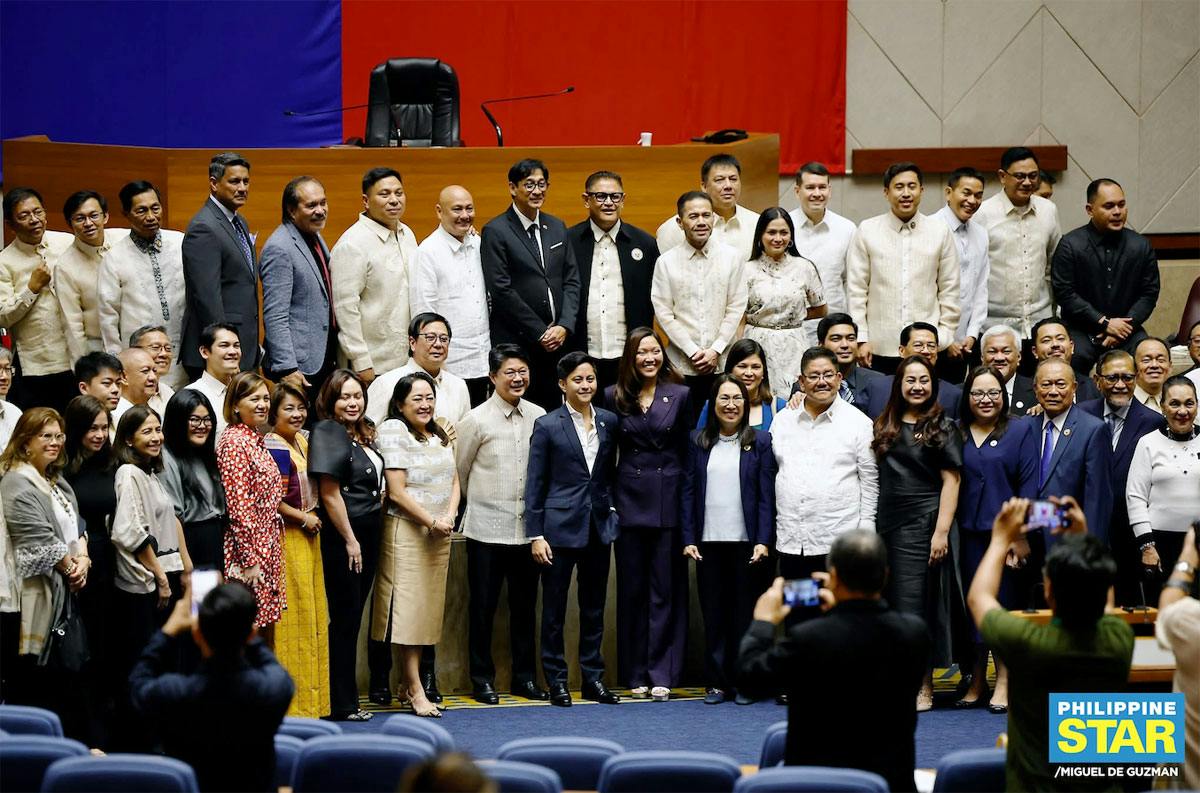
Both chambers of Congress separately ratified on Mondayt, Dec. 29, the bicameral conference committee report on the proposed P6.352-trillion national budget for 2026, clearing the final legislative hurdle before the measure is transmitted to Malacañang for review and signing.
Through a voice vote, the Senate ratified the bicameral report, with two members of the minority voting no and several others voting yes with reservations.
“This is one of the most important pieces of legislation that we are mandated to do, and the 1987 Constitution has entrusted this task to us – passing the yearly national budget,” Speaker Faustino Dy III said.
The House version of the national budget program is contained in House Bill No. 4058.
Senators Rodante Marcoleta and Robin Padilla voted no due to their disagreement with certain provisions that they said may be prone to corruption, particularly those in financial aid programs and unprogrammed appropriations.
“I voted in favor of the Senate version because it reflected hours of rigorous scrutiny. But after the bicameral conference committee meetings, tila bumalik sa dating porma ang dating alokasyon na pinaghirapan nating bantayan (it seems the allocation we tried hard to check has returned its original form). It seems we have let our guard down in deterring provisions prone to abuse and political patronage,” Marcoleta said in a manifestation at the plenary hall.
Senators Panfilo Lacson, Loren Legarda, JV Ejercito, Francis Pangilinan, Risa Hontiveros and Juan Miguel Zubiri voted yes but with reservations on financial assistance programs and unprogrammed allocations.
“It is very unfortunate that some of the reforms we are pushing for, including an overwhelming cut in unprogrammed funds, are not carried in this budget. Still, it is an improvement that the bicam version includes safeguards aimed at preventing unprogrammed funds from becoming slush funds,” Hontiveros said in her manifestation.
Lacson, who was absent at the session, sent a note through Senate President Vicente Sotto III manifesting his yes vote but with “strong reservations” on MAIFIP and AICS. “The national budget must not be a political tool and free from political exploitation,” he wrote.
Ejercito expressed similar sentiments, saying the Senate version of the MAIFIP budget should have been followed.
He said MAIFIP is helpful while the United Health Care law is being fixed, but needs to be phased out gradually to give way to a stronger and well-funded Philippine Health Insurance Corp. or PhilHealth.
Pangilinan also sent in his manifestation, wherein he urged President Marcos to veto a provision that authorizes the Department of Agriculture to enter into memoranda of agreement with the DPWH in the implementation of the P33-billion farm-to-market roads.
“This implementation modality raises significant execution and accountability concerns,” he said.
Minority bloc members Sens. Imee Marcos, Bong Go and Ronald dela Rosa did not sign the bicam report. The Senate has yet to disclose how they and other senators voted. Marcos, Go and Dela Rosa are part of the Senate contingent to the bicameral panel.
101% safe
Finance committee chairman Sen. Sherwin Gatchalian allayed fears that unprogrammed funds would be corrupted.
“It’s no longer prone to corruption – 101 percent. The SAGIP has been removed. It’s P80 billion in lump sum fund removed. So what’s left is targeted expense – targeted expense for AFP Modernization, for DTI’s programs. And there are some for foreign assisted programs,” he said. “So everything has its place, unlike before when lump sum funds could be used for flood control, road, even for IT and other programs.”
With the ratification, Congress adopted the reconciled or “enrolled” version of the budget, which will be formally transmitted to the Office of the President for final review, either for approval or for veto of specific provisions or line items deemed inconsistent with administration priorities or fiscal policy.
Gatchalian said the country is now one step closer to the enactment of landmark “people-first” budget legislation following the ratification of the measure.
“The current budget measure, once signed by the President, would be a definitive turning point in terms of fiscal policy, providing focus on human capital development and institutional integrity,” said Gatchalian, chairman of the Senate committee on finance.
He said the measure provides the highest investment in education in the country’s history and further strengthens the health care sector, particularly the government’s zero-balance billing program, bolstered by the return of funds to PhilHealth.
The measure also seeks to improve the country’s food security by allocating a higher budget to the agriculture sector.
No mic, no online access at House
At the House, Senior Deputy Minority Leader and Caloocan Rep. Edgar Erice said microphones were switched off at the session hall and online voting was in accessible during the plenary vote, so the minority failed to raise the question of quorum.
Erice said he counted only about a third of congressmen present for the vote.
He also said he plans to lodge a challenge before the Supreme Court if President Marcos does not veto the unprogrammed appropriations in the 2026 budget.
Citing the recent SC decision on PhilHealth funds, Erice told “Storycon” on One News that it is clear that “any form of unprogrammed funds is unconstitutional.”
Congress, he said, can pass a supplemental budget if there are available appropriations to fund the unprogrammed items.
Opposition Rep. Leila de Lima voted no to the committee report as did Davao Rep. Isidro Ungab – a staunch ally of detained former president Rodrigo Duterte and Vice President Sara Duterte.
While the transition to a livestreamed ‘Open Bicam’ is a historic step toward transparency, transparency alone is not reform. Transparency becomes hollow when what it merely broadcasts is the return of opaque, discretionary and patronage-driven spending,” De Lima of ML party-list said.
Explaining his vote, Ung ab cited “serious procedural and substantive issues in the final version of the national budget,” where the “executive branch was allowed to intervene through the participation of the secretary of the Department of Public Works and Highways.
“Why are they forcing the unprogrammed funds? It is not clear. It seems that Congress is giving the power of the purse to the executive,” he said. – With Janvic Mateo