



Asean Leaders Begin Arriving For Summit
The 48th Association of Southeast Asian Nations or ASEAN Summit is being held here in the Philippines as the region grapples with soaring oil prices triggered by the Middle East conflict.
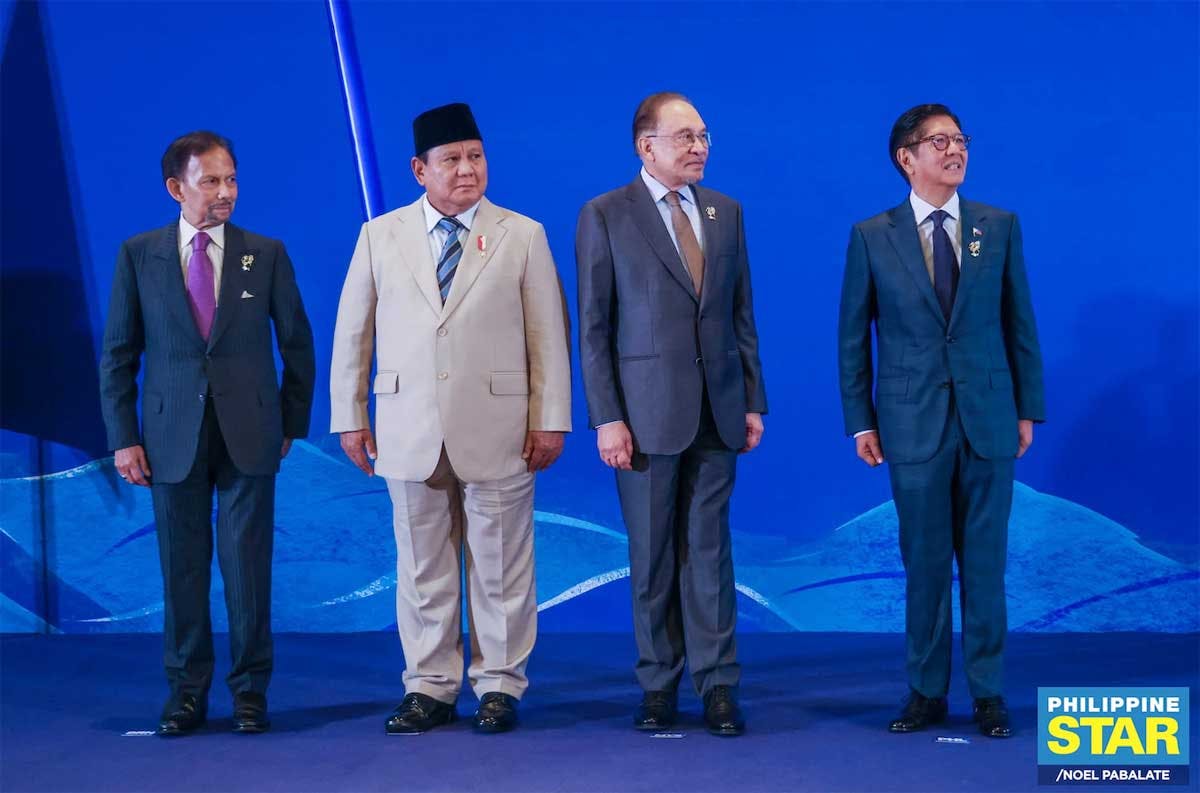
LAPU-LAPU CITY — Leaders have arrived here for the 48th Association of Southeast Asian Nations (ASEAN) summit, with Brunei Sultan Hassanal Bolkiah the first to come in on Wednesday, May 6, flying his own aircraft and accompanied by his son Prince Abdul Mate.
The 79-year-old sultan, who arrived minutes past 6 p.m. at the Mactan-Benito Ebuen Air Base, sparked online buzz after he was seen in the cockpit of the plane he flew to reach Cebu.
They were welcomed by officials, including Social Welfare Secretary Rex Gatchalian, Cebu Gov. Pamela Baricuatro, Lapu-Lapu City Mayor Ma. Cynthia Chan and presidential protocol chief Reichel Quiñones.
A licensed pilot, Bolkiah often flies his own aircraft in his overseas trips. He has been the sultan of Brunei since Oct. 5, 1967, making him the longest serving leader in ASEAN.
The 48th ASEAN Summit is being held here as the region grapples with soaring oil prices triggered by the Middle East conflict. President Marcos earlier said the Philippines would prioritize energy security, food security and the safety of ASEAN nationals across the world during its chairmanship of the regional bloc.
In his address before the special summit of the Brunei Darussalam-Indonesia-Malaysia-Philippines East ASEAN Growth Area on Thursday, May 7, President Marcos called on fellow leaders to turn plans into impact-filled actions to achieve the goals of the sub-regional economic cooperation. BIMP-EAGA was formed in 1994 to promote development in remote parts of the four countries.
“Let this summit renew our resolve to translate vision into action and plans into lasting impact,” the President said.
“Together, let us continue building a more connected, resilient, and prosperous BIMP-EAGA for present and future generations,” he added.
According to Marcos, the sub-regional economic cooperation’s vision is not just a roadmap for economic integration, but a promise that development would be meaningful, sustainable, and felt in the daily lives of the people.
The summit was held on the sidelines of the ASEAN summit.
Also on Thursday, the Philippines and Vietnam agreed to come up with a long-term rice trade mechanism to ensure adequate supply of the food commodity.
Cooperation in food security and other key areas was tackled during the bilateral meeting of President Marcos with newly appointed Vietnamese Prime Minister Lê Minh Hung on the sidelines of the summit.
“On agriculture, both sides agreed to establish a long-term rice trade mechanism aimed at ensuring stable supply and strengthening food security cooperation between the two countries,” the Presidential Communications Office (PCO) said in a statement.
The PCO said the two leaders also highlighted the significance of the 50th anniversary of Philippines–Vietnam bilateral relations and expressed confidence that the milestone would “pave the way for stronger cooperation, particularly in trade and economic engagement.” The two countries established their diplomatic ties on July 12, 1976.
In her remarks at 7th foreign ministers meeting, meanwhile, Foreign Affairs Secretary Maria Theresa Lazaro said the ASEAN has to be agile so it can readily respond to the wide-reaching impact of the Middle East conflict, which has disrupted energy flows, food supply and trade. ASEAN imports about 66 percent of its crude oil.
“Under the Philippines chairship theme, ‘Navigating our Future, Together’ we approach this meeting with the understanding that navigating uncertainty requires both agility and responding to immediate and pressing challenges and steadfast commitment in pursuing our long-term goals under the ASEAN community 2045,” she said.
Lazaro maintained that ASEAN “remains directly and ready to address existing priorities” as current developments “may demand additional attention and practical coordinated cooperation.”
“Taking stock, our experience however, our discussion at the special meetings have pointed out that ASEAN needs to strengthen our crisis coordination and institutionalized readiness in times of crisis,” the foreign affairs chief said.
“In the midst of these developments, we remain steadfast in our resolve to consider important issues related to ASEAN community building.”
𝐂𝐚𝐦𝐛𝐨𝐝𝐢𝐚, 𝐓𝐡𝐚𝐢𝐥𝐚𝐧𝐝 𝐫𝐞𝐚𝐟𝐟𝐢𝐫𝐦 𝐜𝐨𝐦𝐦𝐢𝐭𝐦𝐞𝐧𝐭 𝐭𝐨 𝐩𝐞𝐚𝐜𝐞
Thailand and Cambodia on Thursday agreed to carry out confidence-building measures aimed at promoting lasting peace during a meeting arranged by the Philippines as chair of the ASEAN.
The two countries are embroiled in a border dispute over the Preah Vihear temple that triggered armed clashes last year. More than 100 persons were killed while hundreds of thousands others were displaced because of the conflict, which has raised humanitarian and security concerns.
President Marcos held a trilateral meeting with Cambodia Prime Minister Hun Manet and Thailand Prime Minister Anutin Charnvirakul on the sidelines of the ASEAN Summit here to discuss the dispute.
Facing the media after the meeting, Marcos said Hun Manet and Anutin reaffirmed the importance of maintaining open communication, exercising restraint, avoiding actions that may escalate tensions and continuing efforts towards peaceful dialogue and constructive engagement.
“The Prime Ministers have agreed to task their respective foreign ministers to sustain this open and candid dialogue and to discuss more directly with one another in detail constructive approaches to prevent escalation, foster the conditions for peace and stability, and to safeguard the well-being of their peoples,” Marcos said.
“I believe this was possible because of a very clear, fervent belief by both leaders that it is time for peace and no longer the time for war.”
Anutin said now is the time for Thailand and Cambodia to look forward and walk the path together toward peace, an endeavor that requires “sincerity, good faith and determination.”
“Thailand and Cambodia are two neighboring countries. It is best that we avoid conflict — it only brings losses and suffering,” the Thai leader said.
Hun Manet said Cambodia remains firmly committed to the peaceful settlement of disputes based on international law and existing agreements.
“Cambodia stands ready to move forward, constructively, swiftly, and in good faith,” he said.
Greater cooperation
In a separate event, Trade Secretary Cristina Roque emphasized that the members of the regional bloc are working to enhance regional cooperation and ensure that Southeast Asia remains open and stable despite the volatilities.
She noted that the effects of the challenges posed by rising energy cost and supply chain disruptions are “immediate” and are “felt across our economies and by our people.”
“What we do here matters. Because this meeting is not simply an exchange of views. It is where we align our positions, sharpen our priorities, and ensure that when issues are elevated, they are clear, focused, and ready for decision,” she said at the 27th ASEAN Economic Community Council Meeting.
“This gives our discussions today a clear sense of purpose, we are here not only to respond to these pressures but to ensure that our region remains open, stable and moving forward,” she added.
Trade Undersecretary Allan Gepty, at a briefing, said the government is calling for improved regional cooperation among ASEAN members.
Gepty said the ongoing conflict in the Middle East deepens the need for improved cooperation on energy, food, and supply chain with neighboring countries, as local responses remain insufficient.
“We must strengthen regional coordination—particularly in energy security, food security, logistics, and supply chain resilience. A more integrated ASEAN is not just an aspiration; it is a necessity,” he said.
Gepty added the regional bloc would help ensure stability during times of increased energy prices, supply chain constrictions, and surging inflation.
“Through regional cooperation, we help keep trade flowing, avoid unnecessary restrictions, and maintain investor confidence,” he said.
Gepty added that the country’s chairship of the ASEAN summit this year can open more opportunities that would shape the region’s economic future.
He said the Philippines is pushing for the signing of a memorandum of understanding on the ASEAN Power Grid, the promotion of regenerative and resilient agriculture, and the promotion of foreign investments in the green sector and high growth sectors.
The country also seeks to develop rules for digital trade and the expansion of regional trade partnerships.
He noted that ASEAN integration has delivered benefits to its member-states by providing producers, businesses, and farmers with access to bigger markets, as well as open participation to micro, small and medium enterprises in the regional value chain.
He said the Philippines has gained better access to a wide range of products through open trade opportunities, the ability to travel, work, and do business across neighboring countries with ease. – With Adrian Kenneth Halili


