Architect Martin Nieto, Dad Of Actor And Manila Vice Mayor Yul Servo, Goes Back To His First Love – Painting
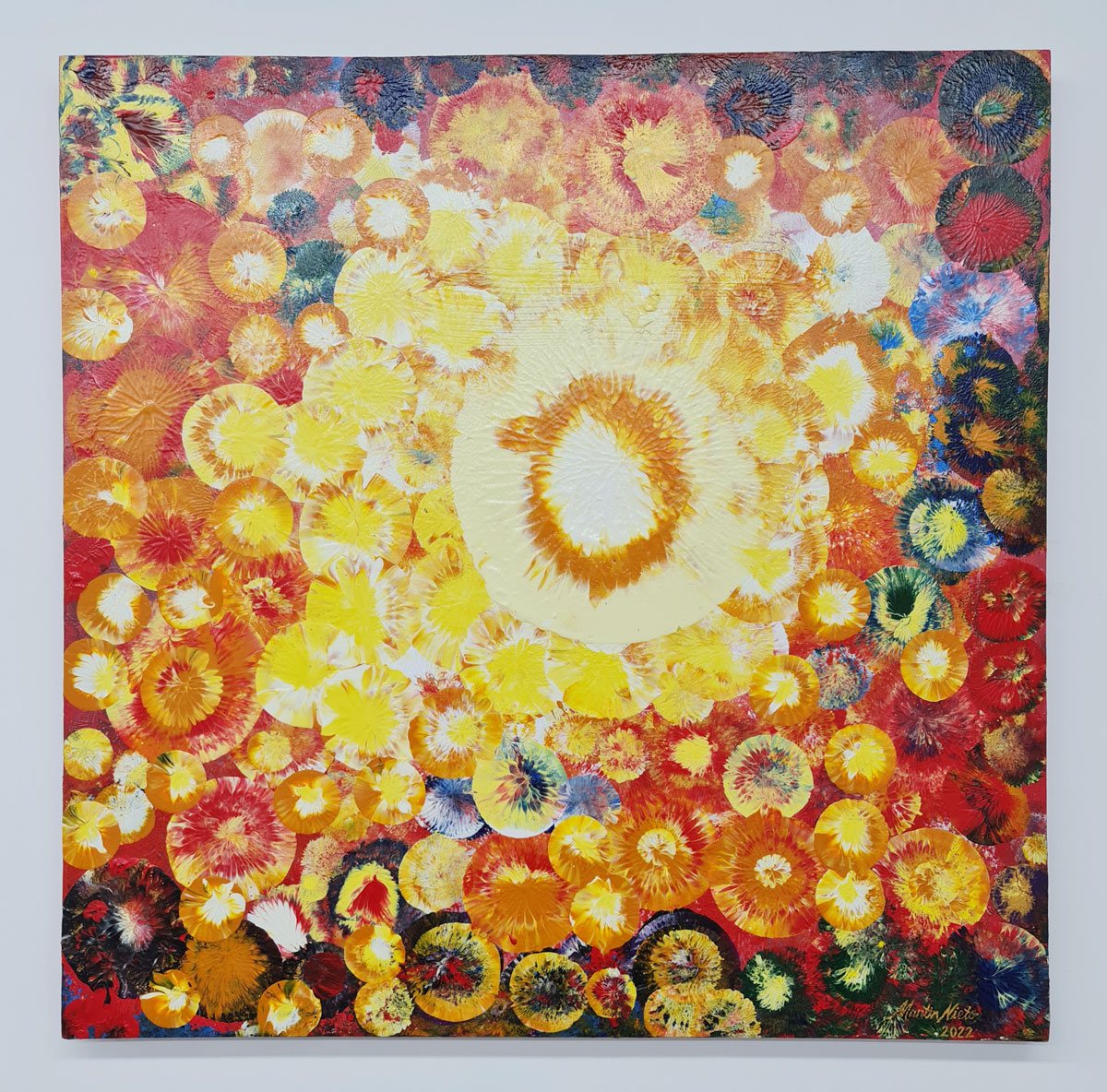
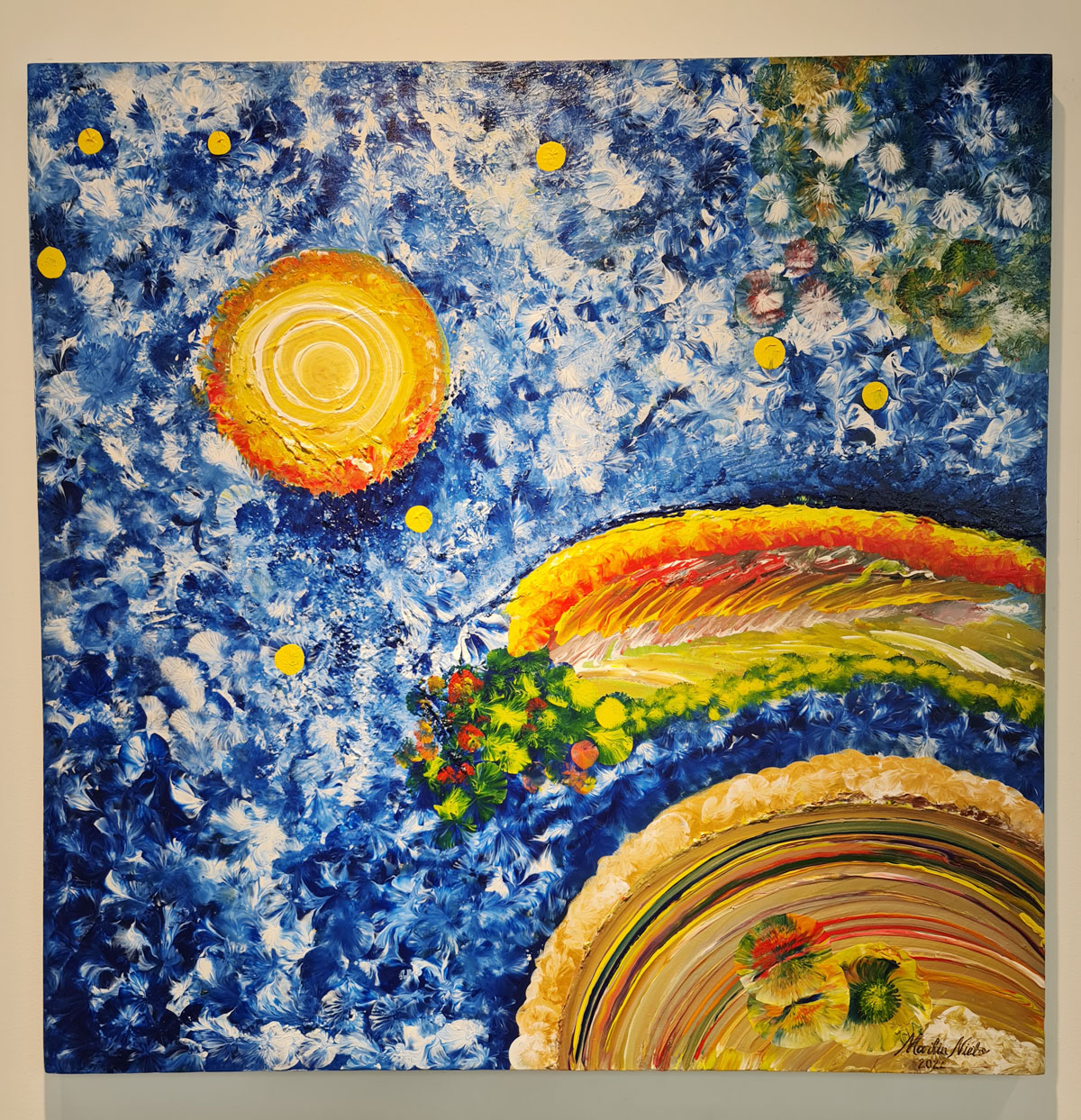
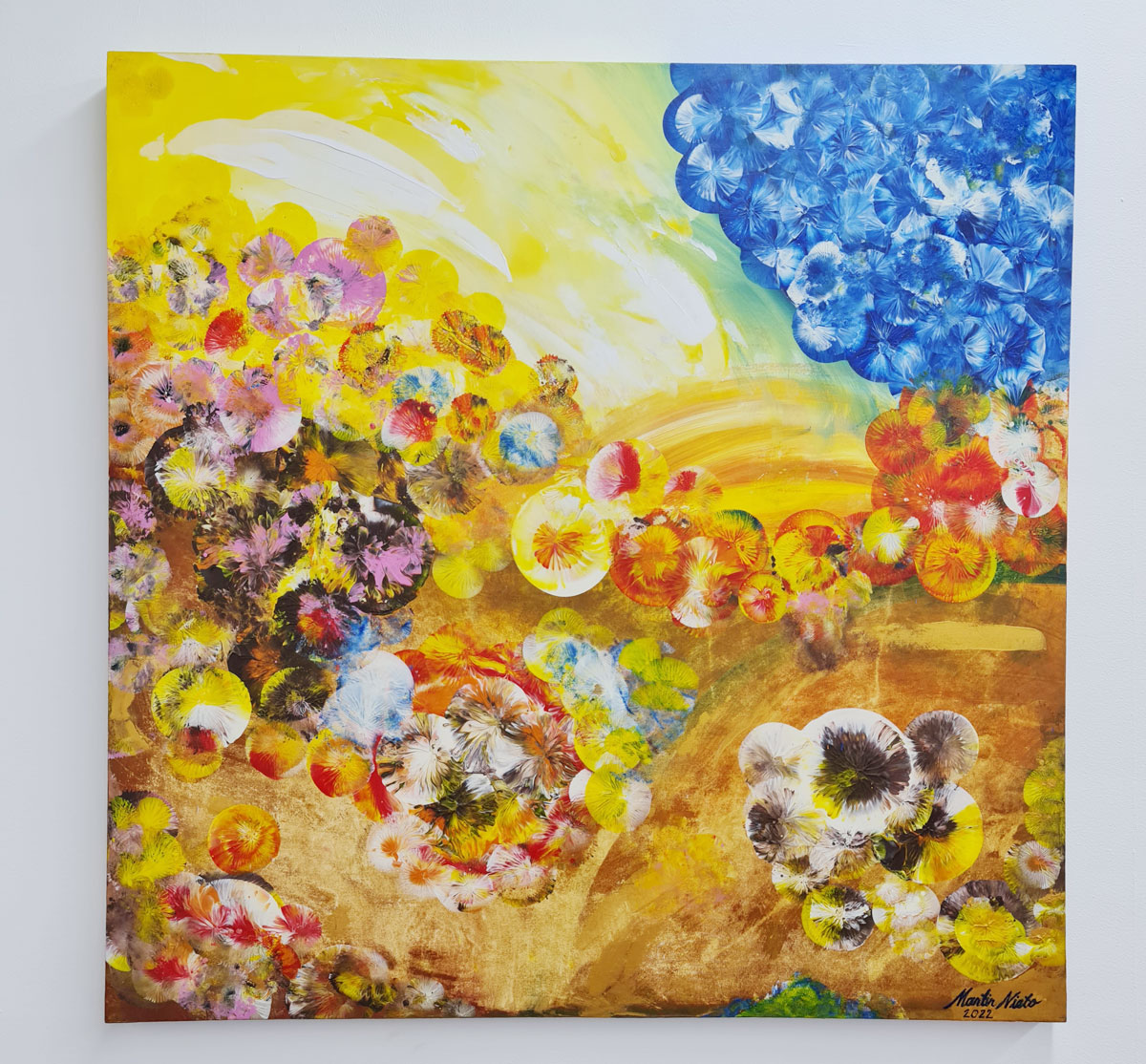
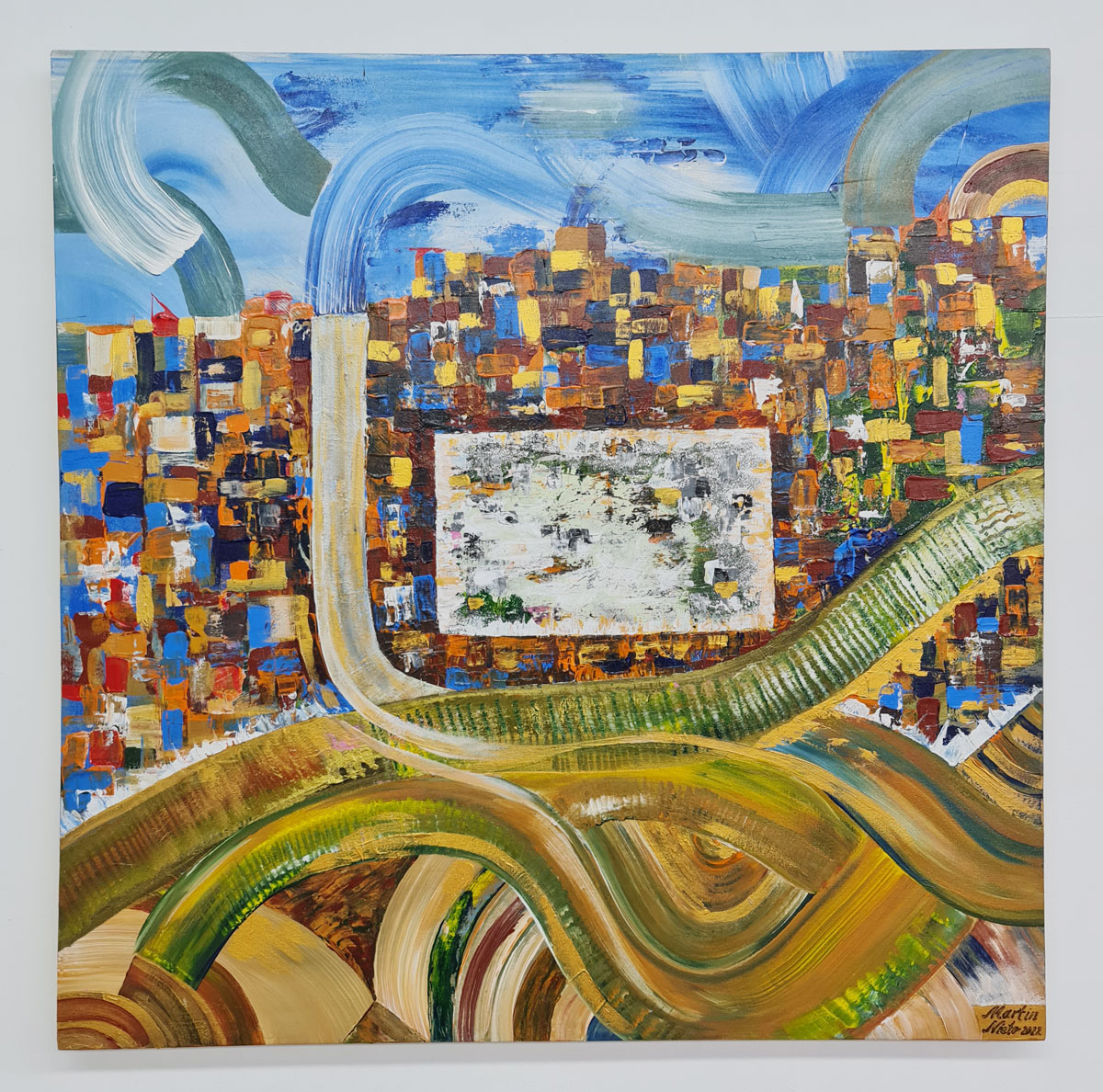
In the last couple of years, particularly during the COVID-19 lockdown, architect Martin Nieto found the time to focus on visual arts again. His semi-abstract works are evocations of bliss and optimism, faith and happiness.
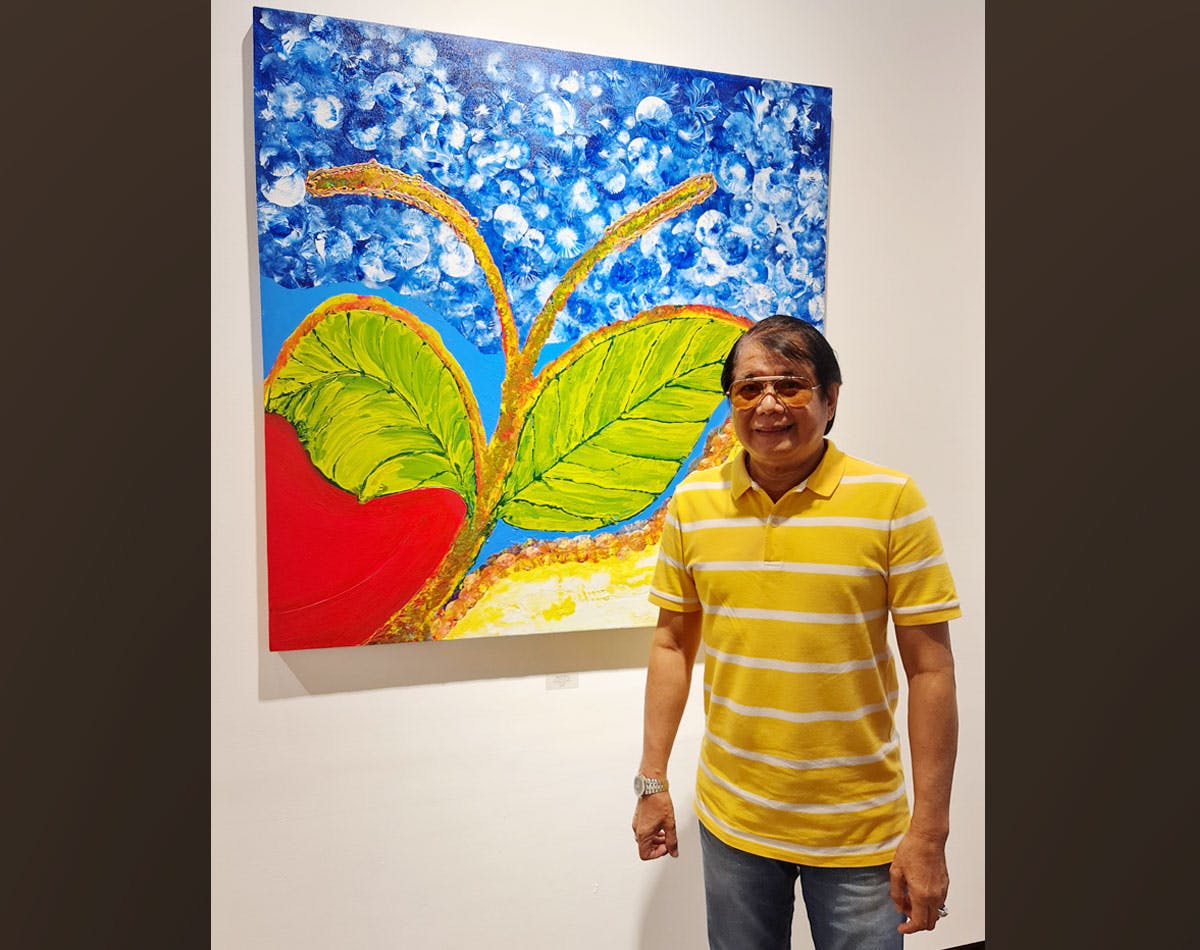
Martin Nieto may not ring an immediate bell in the arts scene, but he could be best introduced as the father of John Marvin C. Nieto, more popularly known as stage, film and TV actor Yul Servo and new vice-mayor of Manila.
Now the presiding officer of the Manila City Council, the biggest local government council in the country with 36 members, Yul Servo is also a sculptor who does no-mean found-metal sculptures. Where has he gotten his talent in the visual arts? Where else but from his dad, a B.S. Architecture graduate of the University of Santo Tomas who became one of the enterprising pioneers of the giant-billboard advertising industry in the country.
Although he’s still at the top of the game as far as giant billboards are concerned, the elder Nieto has, in the last couple of years, particularly during the COVID-19 lockdown, taken brush, oil and acrylic, and easel to return to his original childhood passion, painting and the visual arts.
His works are on exhibit in the show, “Blessed Images,” at the Art District Gallery in Escolta, Manila. The art gallery is run and managed by his grandson and Yul Servo’s son, and it is another instance of attempts by well-meaning people in the arts and culture sector to revive Escolta’s reputation as Manila’s preeminent shopping center and cultural hub as well.
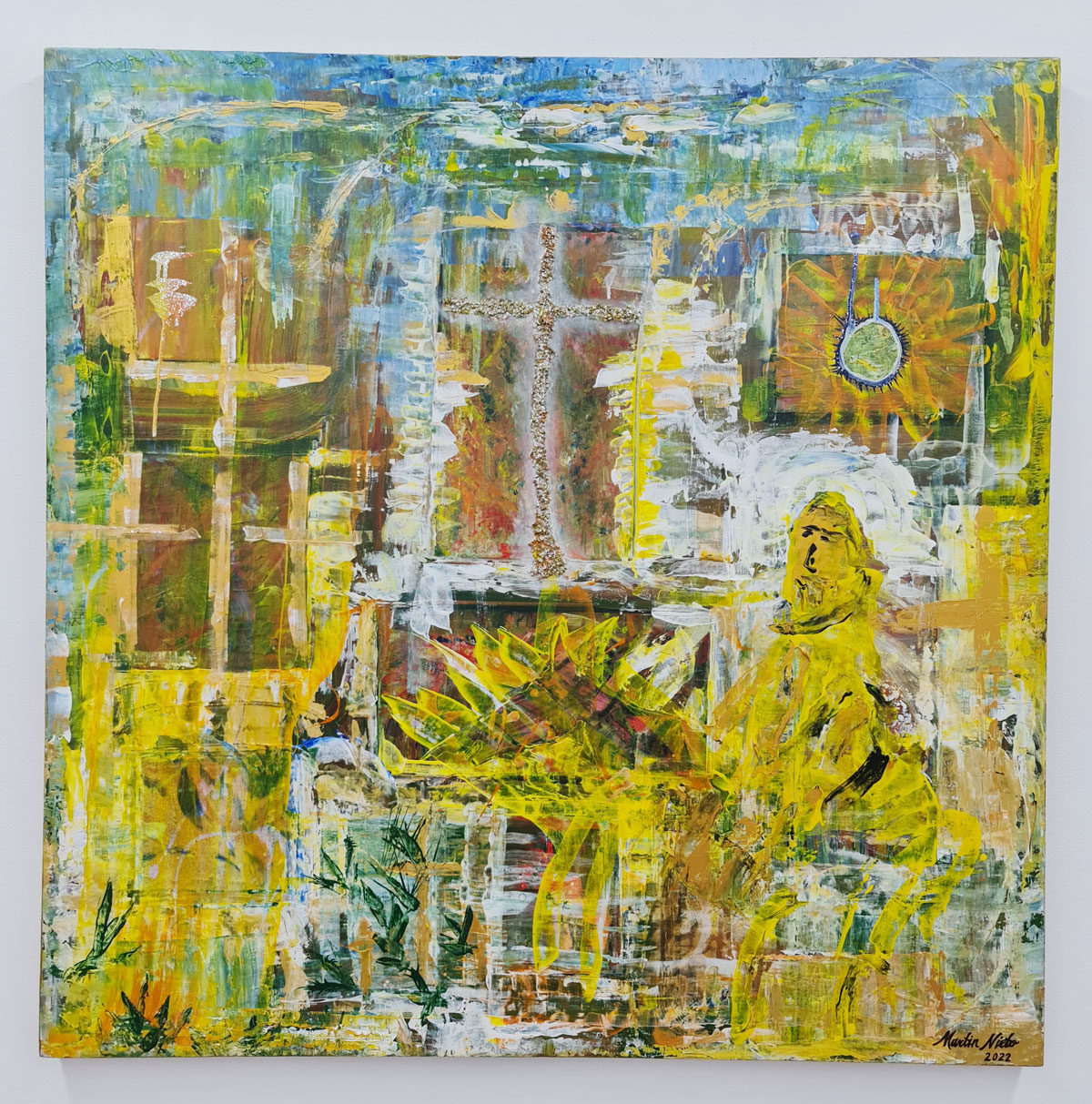
As the title of the exhibit suggests, Nieto’s semi-abstract works are evocations of bliss and optimism, faith and happiness. The dominant colors are gold and amber, Titian red and Van-Goch ultramarine. Even the Cross of Christ (Nieto is a devout Christian) is awash in the splendor of supremely clement colors.
Nieto is unabashed about his use of bright colors. “My own creative signature as an artist is my own abstraction (that’s characterized by) manipulation of basic colors – plus gold,” he said.
Nor does he wallow in the usual anxieties of art-making, especially in looking for subjects to tackle. “The inspiration for my artworks is my wife because she is my biggest fan and she believes in my best capacity as an artist,” he explained. “I also find inspiration in God and his creation.”
It was a teacher at the Jacinto Ponce Elementary School in Tangos, Baliuag, Bulacan who took note of Nieto’s art skills. During high school at Baliuag Aademy, he also got high grades in his vocational classes. At UST in the early 1970’s, as a student in the old UST College of Architecture and Fine Arts, his architecture mentors noted his drawing and design skills. Although studying to become an architect, he noted that he continued to paint taking as models artists as disparate as the Renaissance master Da Vinci and the modernist master Picasso.
Nieto married early, and he and his wife went into the garments business. Due to liberalization at the turn of the 1990’s, they left the business and, banking on his architectural eye, hit upon putting giant billboards in strategic places around Metro Manila and the surrounding regions. The COVID-19 lockdown put the economy – and advertising – at a standstill. Nieto found the time to go back to his original passion – the visual arts.
Although mainly an abstractionist, Nieto admits his art is “narrative” and even “confessional” at best: it tells the story of his life.
“The best piece of art that I have created is my first painting on canvas that tells the story of our very humble beginnings,” he said. “It’s the narrative on how we start our journey in life, me and my wife, or should I say it is a narrative on how my wife and I started our journey in life.”
Like architect-artists Victorio Edades, Roberto Chabet, and Ramon Orlina, Nieto said his architecture training has aided his art. It has helped him “in free hand drawing, coloring, and visualisation.”
Since his art is mainly “narrative” in that it tells his life story, his architecture training has helped him better to “visualize” and render in abstraction his “experiences.” He balks at defining the role of the artist in society, arguing that the artist’s first job is “self-awareness” but also admitting such self-awareness should not be divorced from social interaction. He argued that art is both personal and public.
Self-awareness and social consciousness does not preclude the spiritual. In fact his abstraction is an intuitive and quite immediate grasp of the spirit behind things. With this he admits that he’s become a quite spiritual man, a Christian through and through
“Most of my artworks try to represent the fullness and holiness God’s creation,” he declared.
Editor’s note: All photos in this article are by Dexter Matilla