Al Perez, Master Painter Of Heritage Churches, Featured In Exhibit At Barasoain Church Museum
The exhibit shows that the Filipinos’ heritage of faith encompasses as well the nation’s cultural patrimony.
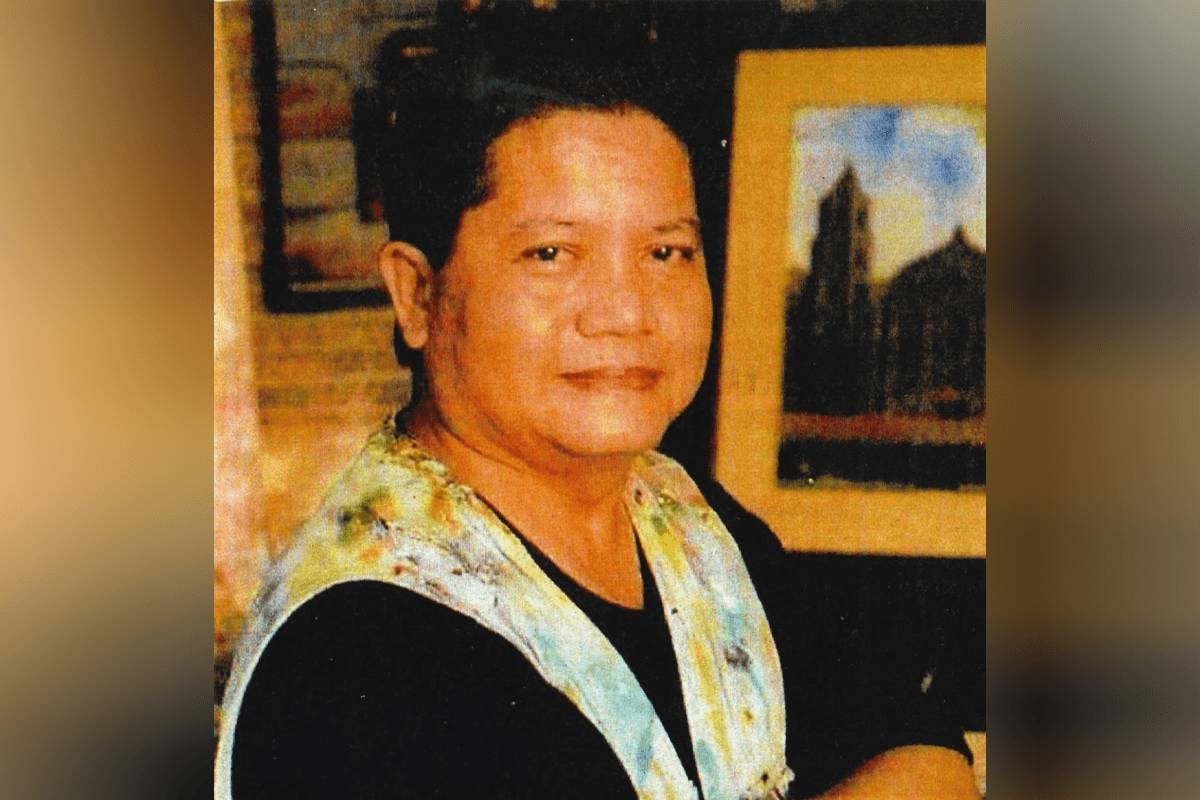
Veteran artist Al Perez said a childhood incident had prefigured early on the genre for which he would come to be acknowledged by many as a master – heritage churches.
When he was a child, he was suddenly gripped by fever. Distressed since her son was having febrile seizures, his mother rushed him to the Santo Cristo visita (or chapel) in Hagonoy, Bulacan and placed him before the icon of Santa Monica. She asked the mother of San Agustin to intercede for her so that God would cure her son.
“Pagalingin ninyo po ang aking anak (Please cure my son),” she pleaded. “Ipinapangako ko pong maglilingkod po siya sa inyo habang buhay (I promise my son will serve God forever).”
Al Perez was immediately cured. Since then, he has remained faithful to the vow made by his mother.
During the annual feast every May 4 of Santo Cristo (which has become a parish), the procession of saints would include Santa Monica, whose camarero (or gentleman-in-waiting) is Al Perez. As camarero, it is Perez’s task to safekeep the icon of Santa Monica and design her costumes.
Exhibiting early on precocious skills in art and design, he enrolled at the famous fine arts school of the University of Santo Tomas, where he came under the tutelage of Cenon Rivera, who had trained in stained-glass art at the Vertrate d’Arte Giuliani in Rome and who had been commissioned to do stained glass for various churches, notably the Immaculate Conception church (now Cathedral) in Pasig.
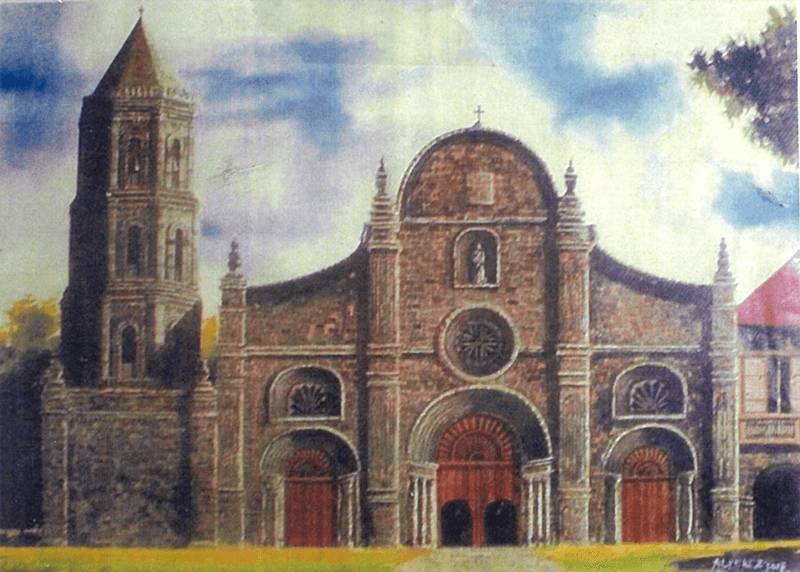
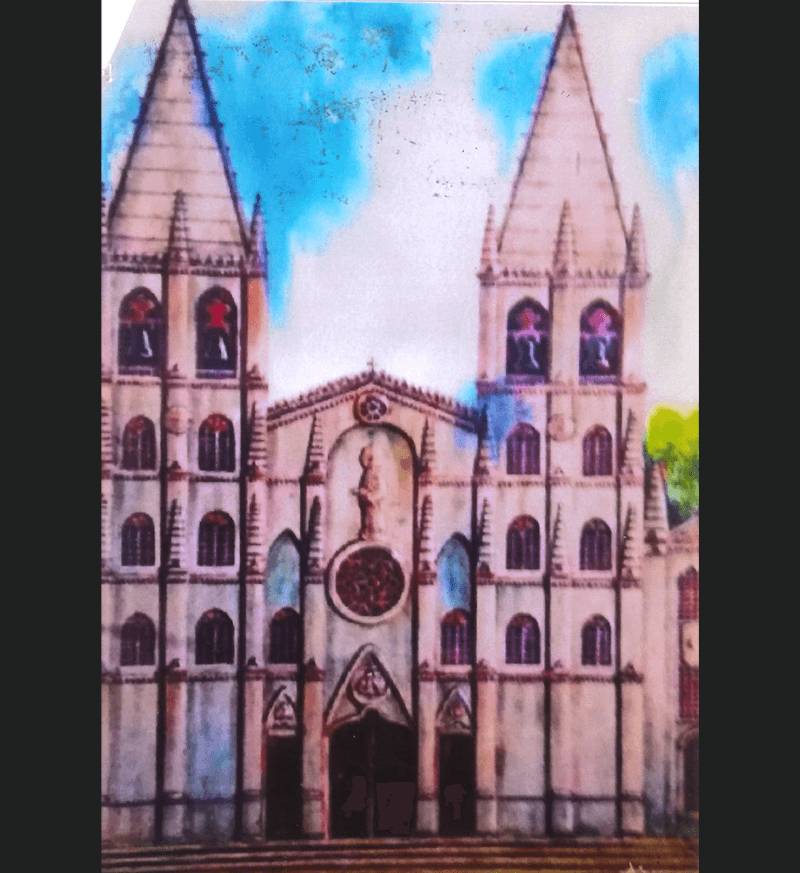
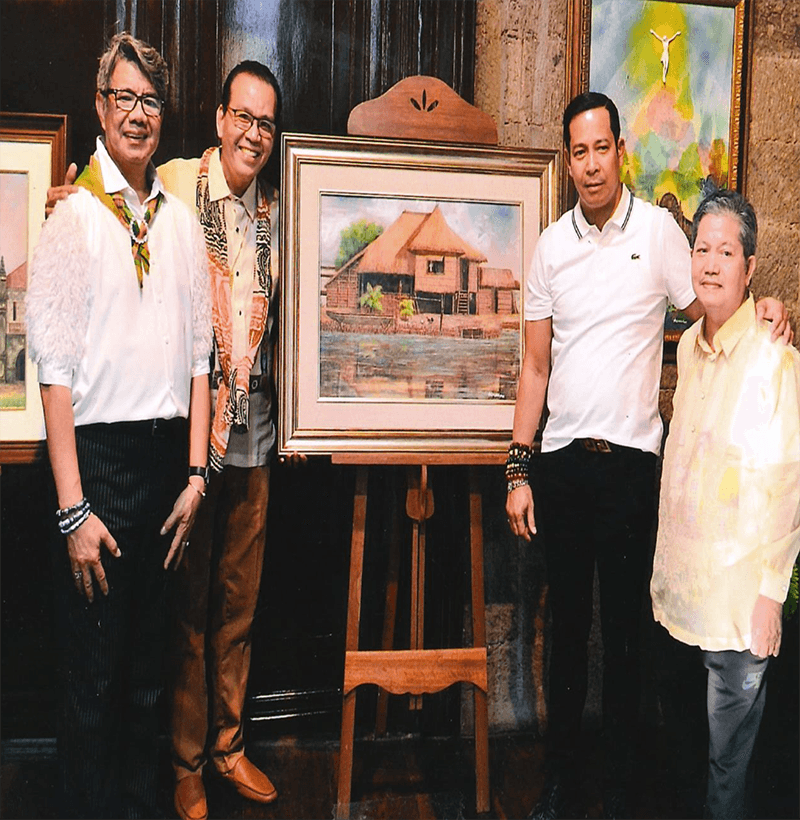
Working with the Ayala Museum later, Perez traveled around the archipelago to document old churches. Although the documentation was mainly photographic, Perez did plein-air paintings of some churches.
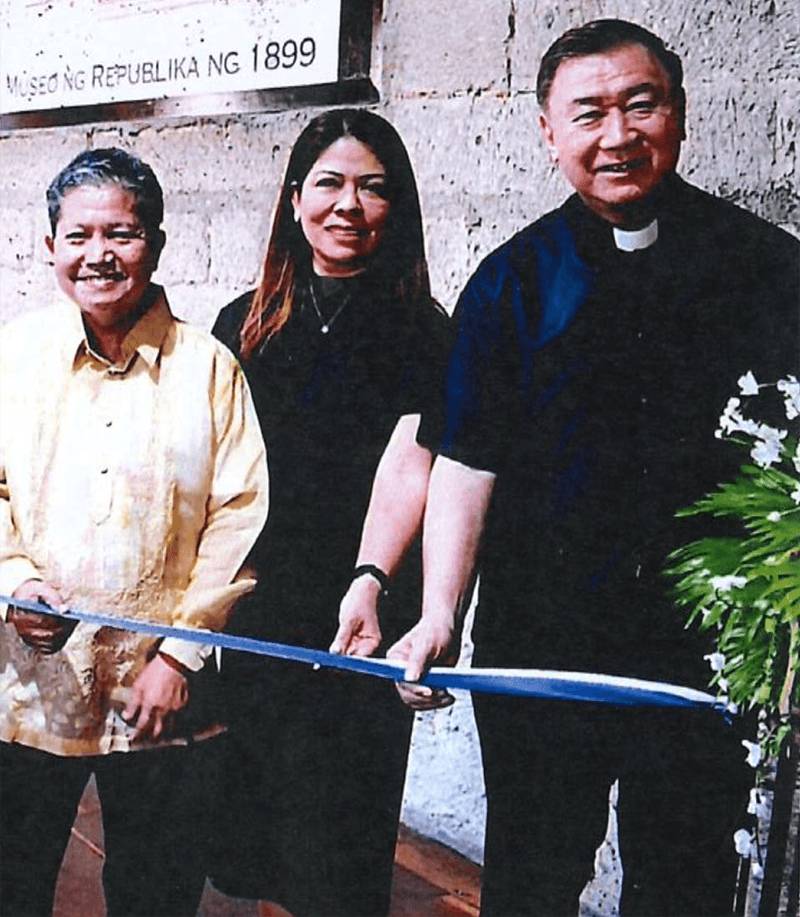
He exhibited the paintings in his first solo in the 1970’s. Labor minister Blas Ople and Don Anselmo Trinidad, one of the founders of the Manila Stock Exchange, cut the ribbon. The exhibit was a hit and the rest was history.
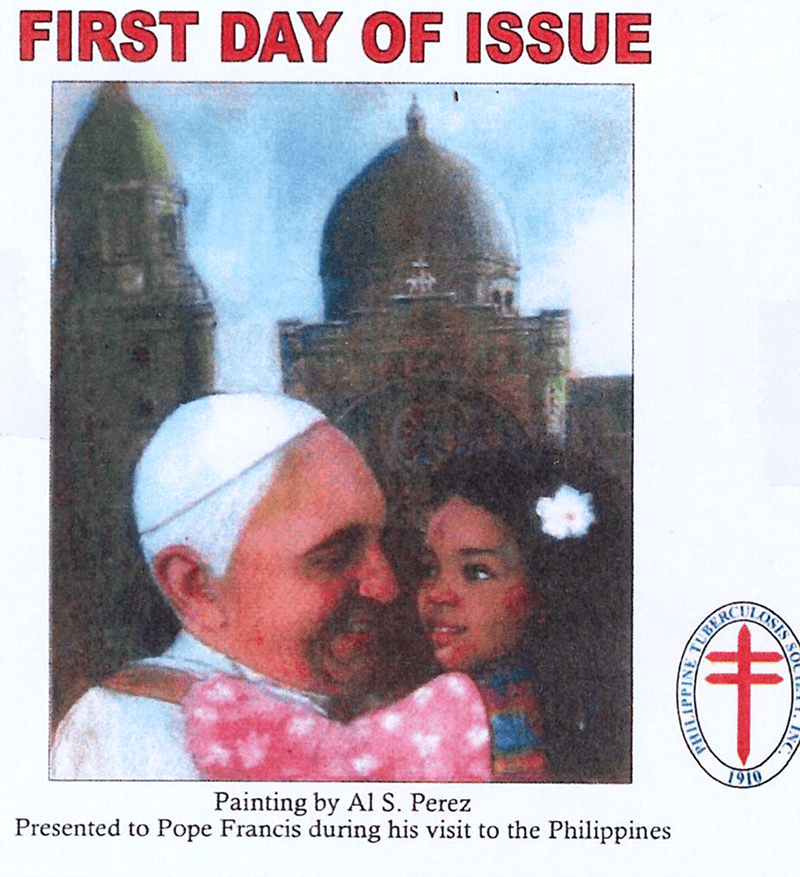
Most recently, Al Perez was asked by then Manila Archbishop Cardinal Luis Antonio Tagle to make a portrait of Pope Francis in time for the latter’s visit of the Philippines in 2015.
Gifted to the Pope, the painting showed the Pontiff carrying a child with the Manila Cathedral in the background.
The happy painting later was used in a special commemorative stamp issued by the Post Office to mark the Pope’s momentous visit.
His paintings of heritage churches and other religious subjects are on exhibit until March 16 at the Museo ng Republika ng 1899 in Malolos, Bulacan, otherwise known as the Barasoain Church Historical Landmark Museum.
The exhibit, “Obra: Mga Likhang Sining ni Al Perez,” is the contribution to the celebration of National Arts Month in February of the National Historical Commission of the Philippines (NHCP), which runs the museum. Since Ash Wednesday started early this year last Feb. 22, “Obra” could likewise be seen as a fitting artistic complement to Lent.
It is significant that the NHCP is mounting an exhibit of heritage church paintings at the museum it put up in a church complex where the 1899 Malolos Republic was established. The exhibit shows that the Filipinos’ heritage of faith encompasses as well the nation’s cultural patrimony.
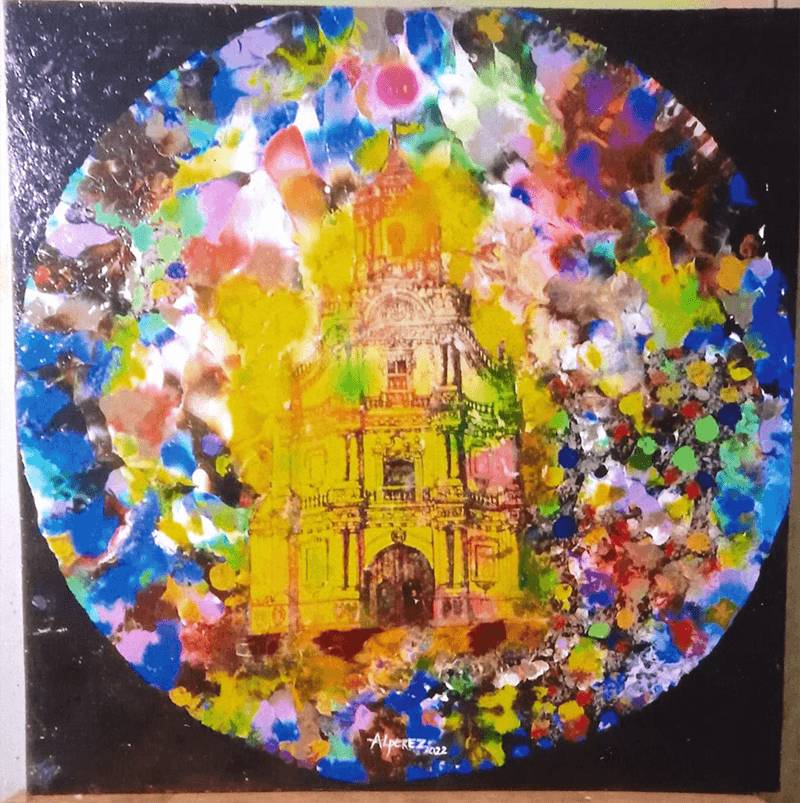
To be sure, Perez does not document the Philippine churches for the sake of documenting them: he reconfigures them, perhaps endowing them with a patina of nostalgia especially for old timers, but by and large he reconstitutes them through the magic of his art for the viewer to rediscover these timeless fortresses of the faith, so that they are visually and spiritually updated and their relevance to Filipinos is renewed and reinforced.
The ignorant but arrogant who attacked commemorations of the quincentennial of the discovery of the Philippines in 1521 because Christianity allegedly brought with it colonialism and vice versa, should view Al Perez’s exhibit.
Christianity and Spanish colonization were the key formative forces in the rise of the Philippine nation. Church architecture historian Regalado Trota Jose declared that Filipinos indigenized the Spanish (and Greek-Latin) iglesia/ecclesia into “Simbahán,” and that churches best set apart the Philippines in Asia:
“While temples and stupas may be the architectural icons of much of Asia,” Jose writes in his book, ‘Simbahán,’ “the church is arguably the Philippines’ most distinctive building. Through three hundred and fifty years of Spanish rule, the indigenous names for places of worship were retained, instead of the Spanish iglesia… The word itself developed from samba, to worship.”
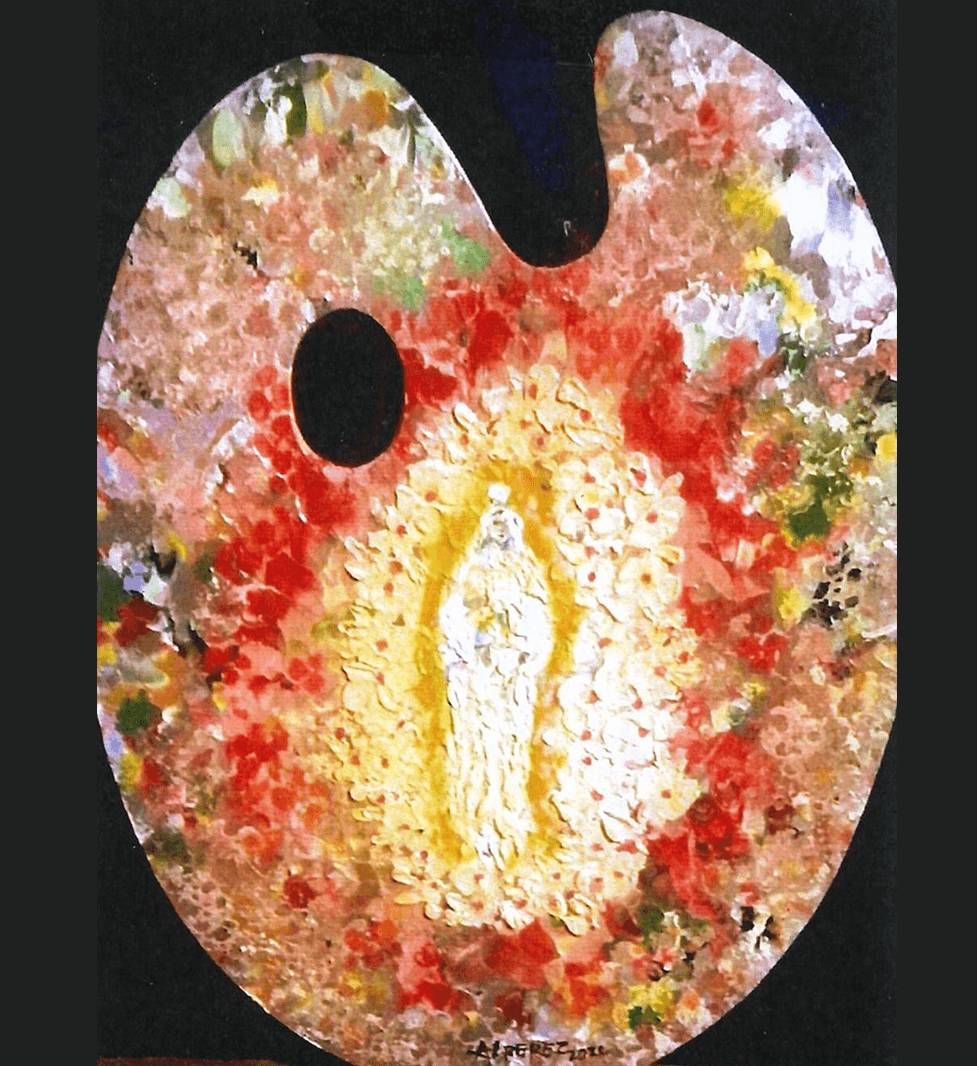
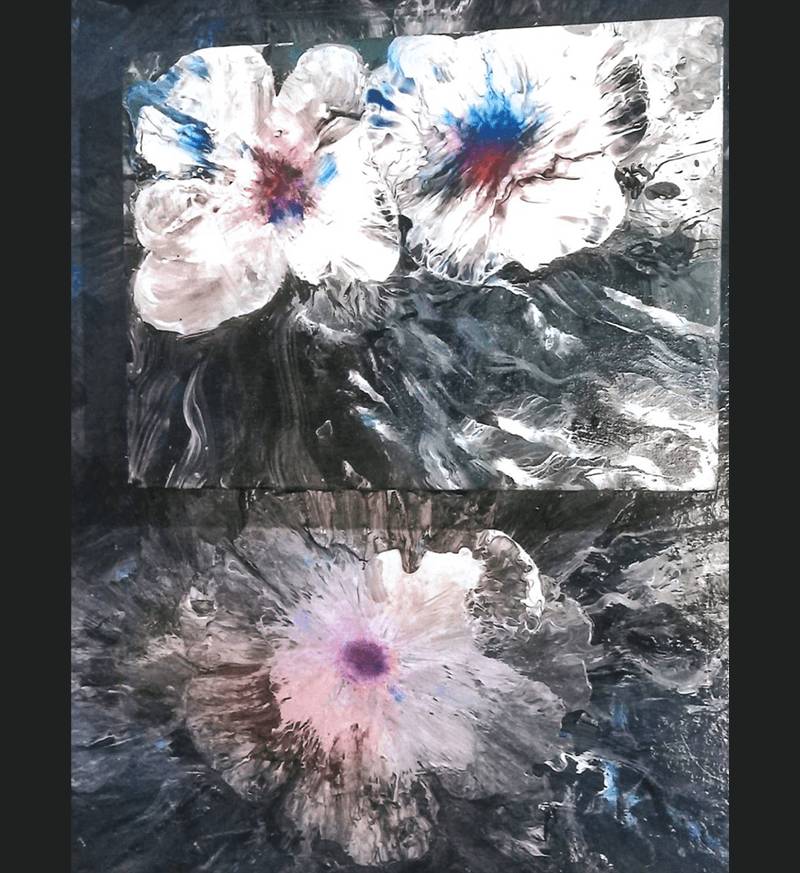
“Obra” includes other works that are not religious, such as Perez’s still-lifes, which are very recent works done during the long Covid-19 lockdown in which, stumbling on the trend of “plantitos” and “plantitas,” or men and women suddenly doing indoor gardening, he made a series of floral works.
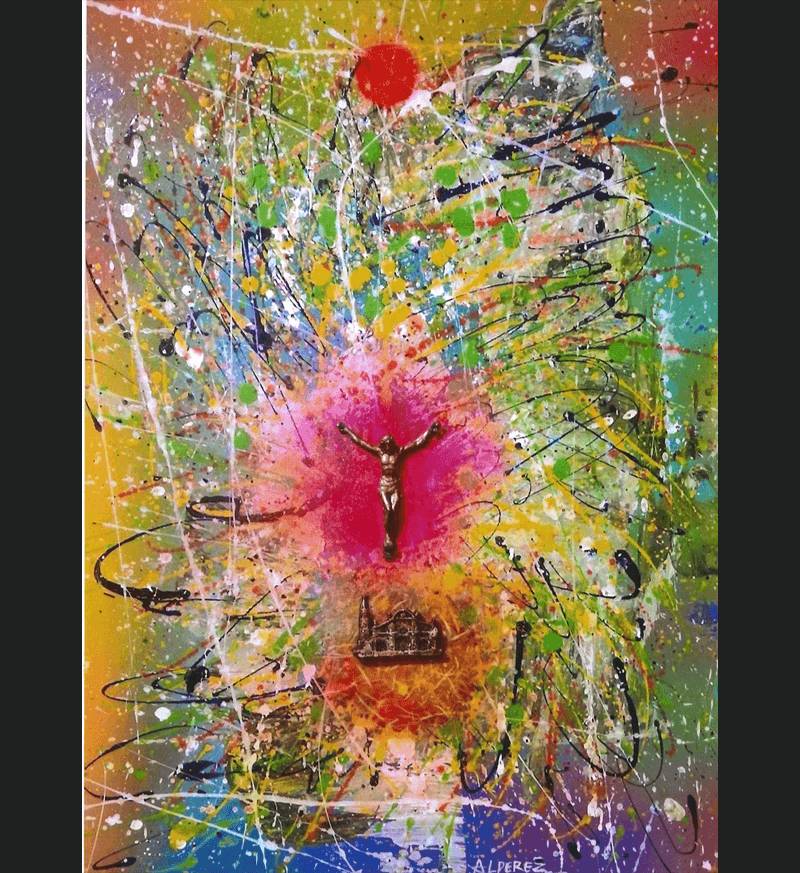
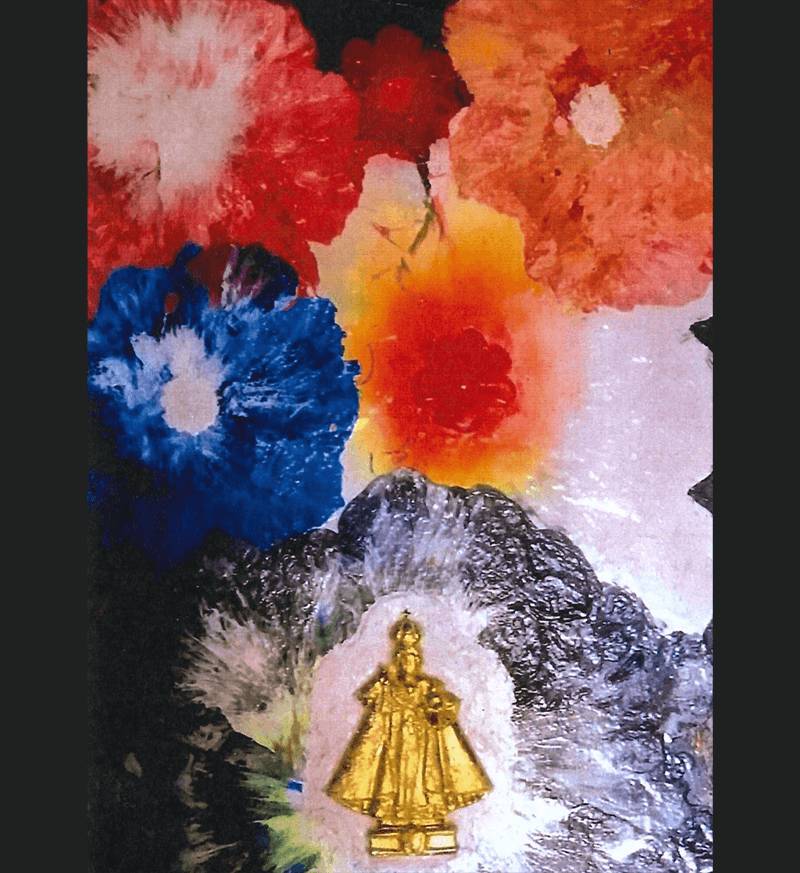
But in his floral still-lifes and even in his abstracts, Perez goes mixed-media: in them he puts his sculptural talent to work by making miniature resin sculptures of the crucifix, Our Lady, and the Santo Nino and including them in the canvas.
Which should show that the man who was pledged as a sickly child by his mother to the service and glorification of God has remained committed to fulfilling that vow up to this day.