Why Indemnification Is Important For Vaccine Manufacturers, Recipients
Pharmaceutical firms want to ensure that they are free from any liability once their vaccines are used in the country while lawmakers are working on a bill that establishes a fund to compensate recipients of the shots in case of adverse effects.
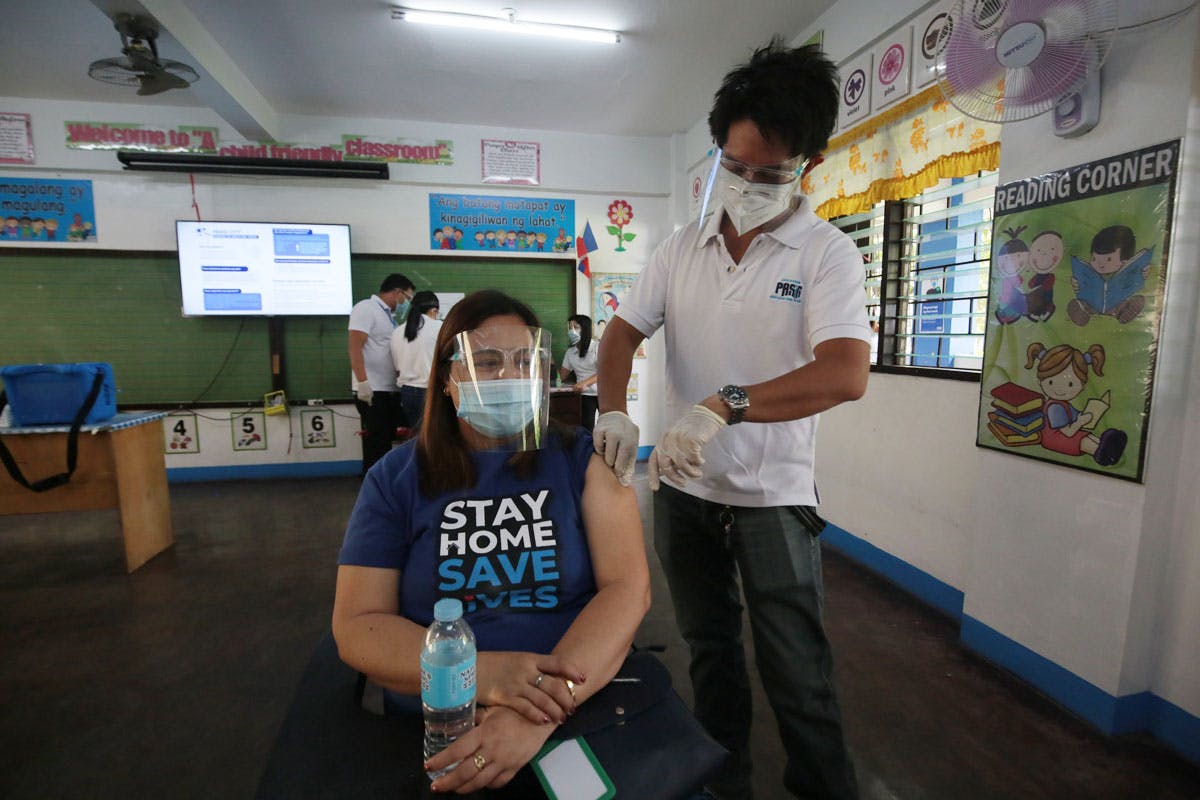
UPDATED: National Task Force Against COVID-19 chief implementer and vaccine czar Carlito Galvez Jr. announced on Wednesday, Feb. 17, that the Philippines has signed the indemnification agreements for the delivery of vaccines from Pfizer Inc. and AstraZeneca plc to the country through the World Health Organization (WHO)-led COVAX Facility.
The indicative date for the delivery of 117, 000 doses of Pfizer vaccine through the COVAX Facility was Feb. 15, but officials said this was delayed due to some additional arrangements that had to be done, including the signing indemnification or “no fault” agreements.
Such agreements hold the companies free from liability in case of unexpected adverse events arising from the emergency use of vaccines that were rushed into development because of the coronavirus disease 2019 (COVID-19) pandemic.
“So sa nakikita ko, iyong Pfizer, most likely po matutuloy po iyong ano natin. Ang nakita lang natin, iyong tinatawag nating iyong delay because they are still contemplating kung ano po ang magiging final mutual agreement po sa indemnity agreement (So, the way I see it, our deal with Pfizer will most likely push through. What we see is that the so-called delay happened because they are still contemplating what our final mutual agreement for the indemnity agreement will be),” Galvez said.
According to Galvez, manufacturers were worried that the lack of an “indemnification law” or a “no-fault law” meant they could be sued for possible side effects arising from the use of vaccines that were authorized for emergency use.
Normally, vaccine development has to undergo a three-phase process, where the size of the groups receiving the shots gradually expands in number and vary in characteristics. In urgent public health situations like the COVID-19 pandemic, vaccines that are not yet licensed may be granted emergency use authorization or EUA to allow the government to conduct an immunization program.
Aside from Galvez, the Department of Health (DOH) and the Food and Drug Administration said over the weekend that manufacturers wanted an assurance from the government that it would shoulder the costs arising from issues with emergency use or refrain from holding the companies liable. When vaccines are still in a short supply, such companies may be discouraged from dealing with the Philippines first when faced with the risk of legal troubles.
“Lahat po ng mga vaccine, hindi lang po ang COVAX, required po talaga nila iyong tinatawag na indemnification clause (All the vaccines, not only those under COVAX, required the so-called indemnification clause),” Galvez said.
“Kasi po nakita po natin na itong mga bakuna is only under trial at wala pa po talaga ito na tinatawag na full-blown na approval at under lang ng EUA, (Because we see that these vaccines are only under trial and there is really no so-called full-blown approval yet and it is only under the EUA),” he added.
Addressing senators and President Duterte, Galvez said an “indemnification law” or a “no-fault law” would also protect DOH personnel from “any possible lawsuit considering that iyong pagpunta po ng vaccine po dito ay under ng tinatawag nating (the arrival of vaccines here is under the so-called) clinical trial number three.”
Galvez admitted the lawsuits against Sanofi Pasteur, the manufacturer of the Dengvaxia vaccine for dengue have caused suppliers of shots against COVID-19 to be wary about the lack of ample protection from legal action.
Pfizer “just want the assurance” because it “learned about the lawsuits here over Dengvaxia,” Galvez said in a mix of English and Filipino during the “Laging Handa” press briefing.
Galvez had to explain to Pfizer that the issues would not be repeated “as much as possible,” because the targeted recipients were adults and their “informed consent” would be secured.
“That is what we assure them, that the situation now is different, considering also that there is a pandemic and we have an emergency situation and our government is guaranteeing that we will shoulder the so-called responsibility just in case there is a severe adverse effect,” he said.
To recall, the school-based immunization program was stopped after Sanofi Pasteur disclosed new findings that Dengvaxia would work for those who already contracted dengue. Company officials later argued that the disease was so widespread in the country that only a small portion of those vaccinated might have been affected.
Based on surveys, not many Filipinos are willing to be vaccinated and the government is finding ways to build trust and confidence in the shots, including having public officials inoculated in public to prove that the jabs are safe.
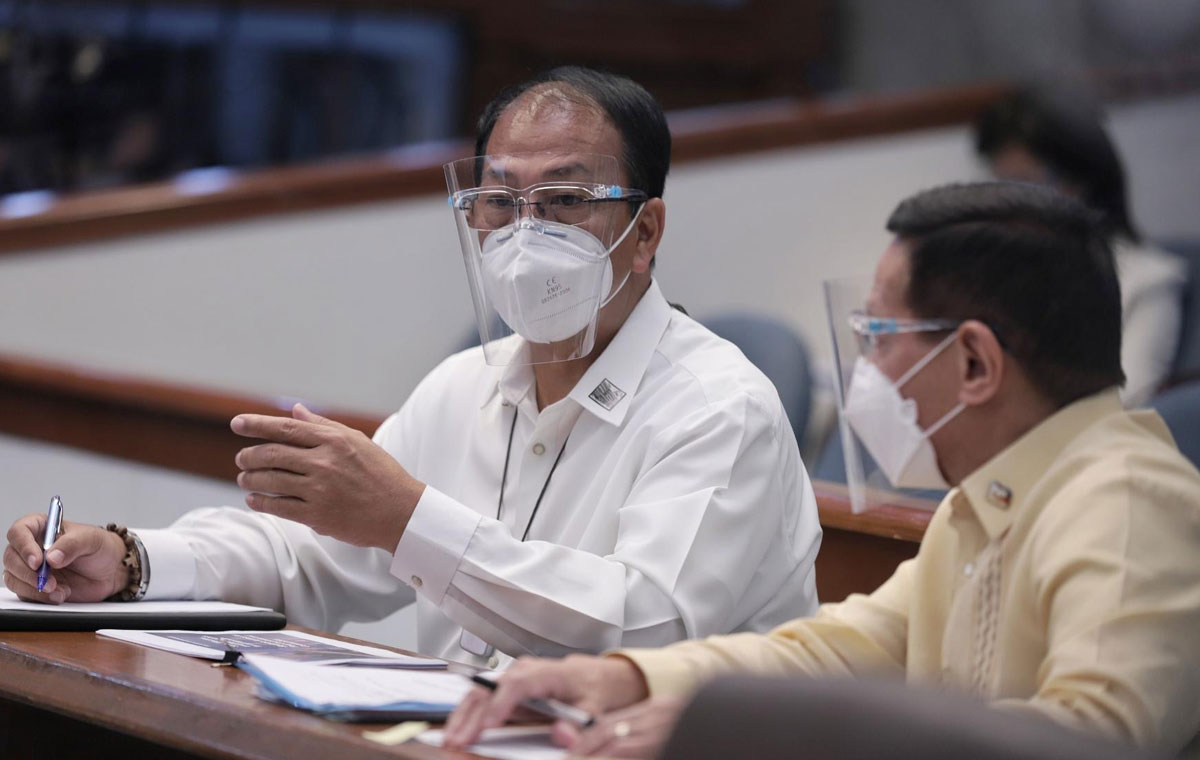
Pending bill
On Monday, Feb. 15, Galvez called on President Duterte to certify the bills to create an indemnification fund for those who would sustain adverse effects from vaccination and allowing local government units to directly purchase the serums. This way, the procurement of the vaccines will be expedited.
At a virtual meeting on Thursday, Feb. 12, the House committee on appropriations approved in principle House Bill No. 8648, or the proposed “Emergency Vaccine Procurement Act of 2021” that seeks to authorize LGUs to directly purchase vaccines from manufacturers, bypassing the national government and public bidding protocols.
Currently, LGUs may purchase vaccines only through a tripartite agreement with the national government.
“So nasa Senado po ang ball,” Galvez said.
On Wednesday, the Senate started plenary deliberations on the bill establishing the indemnification fund and allowing LGUs and the private sector to buy their own vaccines.
Senate Majority Leader Juan Miguel Zubiri told reporters that the chamber would try to pass Senate Bill No. 2057 on second reading last night even as they await the official notification from President Duterte certifying the measure as urgent.
The certification will allow the Senate and the House of Representatives to approve the bill on second reading, and third and final reading in one session.
“ASAP,” Senate President Vicente Sotto III told reporters when asked when the chamber intends to approve the indemnification bill.
“We need to expedite our procurement because we are in a race against the clock. We need mass inoculation and herd immunity as soon as possible,” Zubiri said.
Galvez and Health Secretary Francisco Duque III attended the plenary session to assist Sen. Sonny Angara, chairman of the finance committee, in defending the measure, in another indication that Malacañang wants it passed immediately.
The delayed delivery of the vaccines and the rush to pass the bill left several senators shaking their heads as to why the Inter-Agency Task Force for the Management of Emerging Infectious Diseases did not ask for it earlier when the Senate held an exhaustive hearing on the vaccination program as its officials were already in the thick of negotiations with the WHO.
The measure seeks to put up a P500-million indemnity fund to cover compensation or medical treatment arising from death or serious adverse effects to the vaccine.
The bill also exempts from taxes all activities related to the vaccination program including the procurement, importation, transportation, of vaccines and related equipment from January 2021 to Dec. 31, 2023.
It also seeks to allow LGUs and the private sector in cooperation with the DOH by allowing them to make advance payments for vaccines, and other equipment needed for vaccination.
The measure also seeks to mandate a vaccine passport program to cover all those vaccinated.
PhilHealth To Indemnify
On Saturday, Feb. 13, the DOH assured the public that the Philippine government will indemnify COVID-19 vaccine recipients who will experience adverse reactions.
According to DOH Undersecretary Maria Rosario Vergeire, the existing case rates of the Philippine Health Insurance Corp. (PhilHealth) will be used to cover the indemnification.
“If a vaccinee, for instance, needs to be utilized, our existing case rates will apply. They are covered and PhilHealth has existing funds for 2021 for case rates,” she said.
On Sunday, Feb. 14, Vice President Leni Robredo expressed her support to the indemnification bill.
Robredo said the measure would help encourage more Filipinos to get vaccinated.
“Anything that would increase the trust of the people in the vaccine, we should do it. Anything that would assure them that there is nothing to worry and in the event of untoward side effects they are protected,” Robredo said in her program over dzXL.
Sen. Nancy Binay has filed Senate Bill No. 2015, seeking to establish a fund a vaccine indemnification fund to boost public confidence on the efficacy of the vaccines and compensate those would suffer adverse side effects.
Robredo also said she believes health experts should educate the public regarding the importance of immunization against COVID-19.
“To me, it will add to the confidence of the people if many health experts will talk about the vaccines, and will be interviewed,” she said.
“It boosts the confidence of the public when they hear it from the doctors, whom they trust, that there is nothing to fear,” Robredo added. – With Helen Flores