



OPINION | Repeal RA 10349 (Revised AFP Modernization Act)
According to Defense Secretary Gilberto Teodoro Jr., both the Armed Forces of the Philippines Modernization Act and the Bases Conversion and Development Act should be scrapped because they do not serve their purpose.
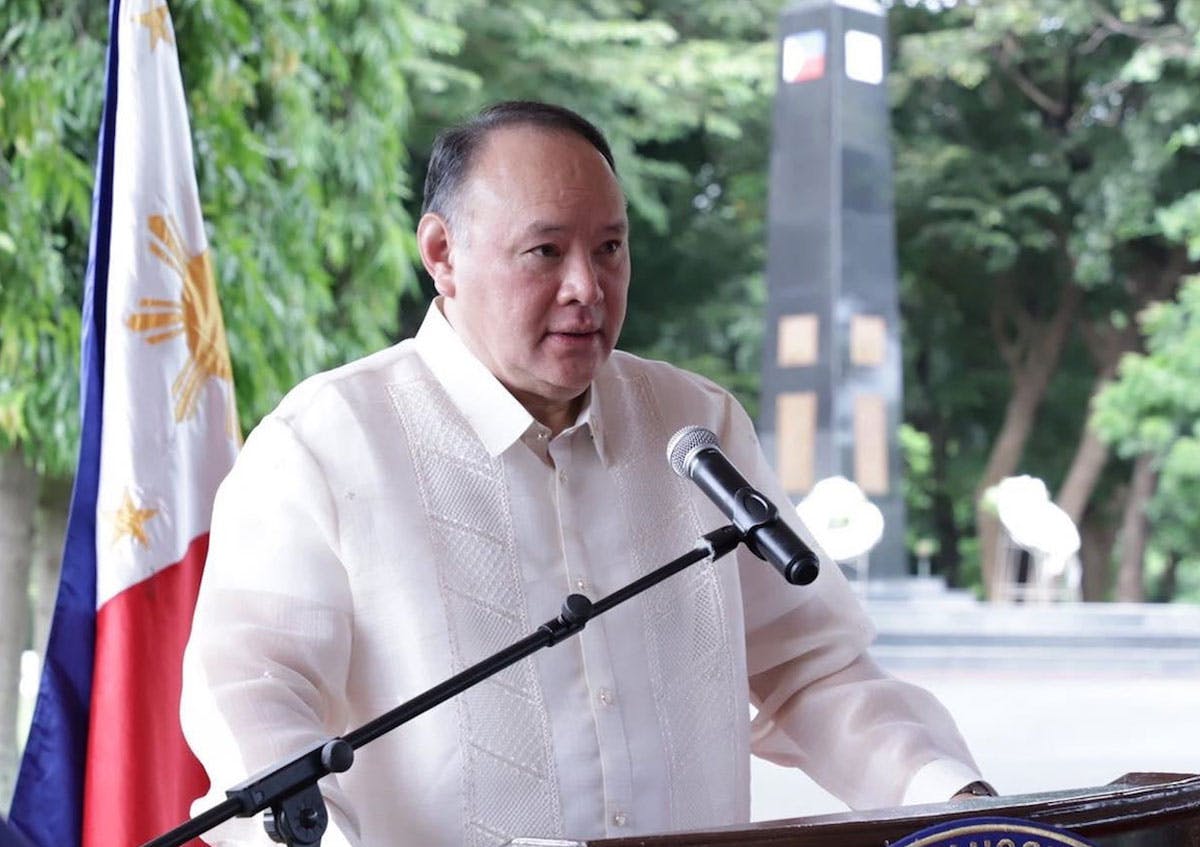
Defense Secretary Gilberto Teodoro Jr. wanted Congress to repeal the military modernization law, saying it has outlived its purpose.
There were also structural defects that limit the defense department from contracting long-term, multi-year loans to upgrade military capabilities.
Enacted in December 2012, the revised AFP Modernization Act has until end of 2017 before Congress passes another legislation extending the law authorizing the defense department to enter into deals to modernize the military’s equipment and weapons systems.
Under the current leadership, the thrust of the military modernization program or Republic Act No. 10349 was to develop a credible deterrent capability by enhancing its maritime domain awareness, command and control, and cybersecurity.
The original law, RA 7838, was enacted under then president Fidel Ramos in February 1995, to build a minimum credible defense capability after the security umbrella provided by the US was gone when it abandoned its two large overseas military bases in Subic and Clark.
The Philippines was stripped naked. It has a puny air and maritime defenses.
Its obsolete radars have limited range. It has a handful of three decades-old F-5 fighters, Vietnam War vintage UH-1H utility helicopters and operate World War II-vintage warships.
Both RA 7838 and RA 10349 have a 15-year, three phased program. The revised modernization law was funded by P300 billion.
Since 2016, Congress has appropriated more than P278 billion and another P83 billion in unprogrammed funds for RA 10349.
However, the P200 billion budget under RA 10349 is no enough to cover the costs of brand-new platforms.
For instance, acquiring 40 multi-role fighters required P400 billion, which is more than the entire defense budget of less than P300 billion.
The passage of RA 7838 was supposed to augment proceeds from the conversion of military camps, including former US bases and other facilities under another law, the RA 7227, or the Bases Conversion and Development Act, in March 1992.
The law was an offshoot of the Senate’s decision to terminate the Military Bases Agreement in September 1991.
The last US sailor left Subic in November 1992. The US Air Force abandoned Clark much earlier after it was devastated by Mount Pinatubo’s eruption in 1991.
Little was accomplished under the first modernization law, which was supposed to be funded by P150 billion.
Only P50 billion was authorized by Congress and it went to acquiring equipment used for counter-insurgency.
The BCDA also contributed little because the funds remitted to the government was used to replicating camps, like Fort Bonifacio and Villamor Air Base.
Only 32 percent of proceeds from BCDA were supposed the military’s modernization program and half were earmarked for the development of Clark and Subic.
The real military upgrade began under former president Benigno Aquino III when 12 FA-50 light fighters, two Landing Dock Platforms, and two frigates were acquired.
Under former president Rodrigo Duterte, six offshore vessels, nine Fast Attack Interdiction Crafts (FAIC), Brahmos missiles, radars, air defense missiles and Black Hawk helicopters were acquired.
Under President Ferdinand Marcos Jr., only 12 additional FA-50s were contracted. There were still negotiations to acquire two more frigates, a trainer jet, and a multi-role fighter, and a conventional submarine.
The defense and military establishments had a P1.1-trillion wish list, including air refueling tankers, AWACs, electronic jamming aircraft, attack helicopters, heavy lift helicopters, drones, corvettes, air and coastal defense missiles.
Due to inflation, Teodoro said the costs of some equipment had gone up. Some of the equipment under Horizon 1 listed during Aquino’s term were already obsolete.
That is one reason why Teodoro wanted to scrap the modernization law and replace it with a project management bases in acquiring a new platform.
Moreover, the defense department is tied with short-term five-year repayment period for the equipment under the law.
In arguing for the scrapping of RA 10349, Teodoro wanted long-term repayment scheme of up to 20 years to help the government absorb the loans.
At the same time, Teodoro wanted the BCDA law scrap because in its more than 30 years of existence, the military only received P45 billion in remittances.
For 2026, Teodoro said the defense department has only P3 billion left because more than 92 percent of the P40 billion allocated for the miliary modernization fund had been obligated to defense manufacturers who were awarded contracts.
Many of these contracts were awarded during the time of Duterte.
According to Teodoro, both RA 10349 and RA 7227 should be scrapped because the laws do not serve their purpose.
With the help of Congress and other government agencies, like the finance department, the central bank, and the Banking Association of the Philippines (BAP), the defense department can implement reforms in the military modernization program.
However, Congress can help by restoring the P50-billion fund under military modernization trust fund.
The last time the defense and military establishments enjoyed P50-billion modernization budget was in 2024.
Perhaps, the budget cuts in the public works and highway should be realigned to the defense department to help address the serious threats in the West Philippine Sea.


