



Men And Women Are Helpmates, Equals – Miriam Quiambao
“God took the woman from Adam’s side so we could be equals. Not from the head so that a woman can overpower a man,” former beauty queen and now inspirational speaker Miriam Quiambao-Roberto said.
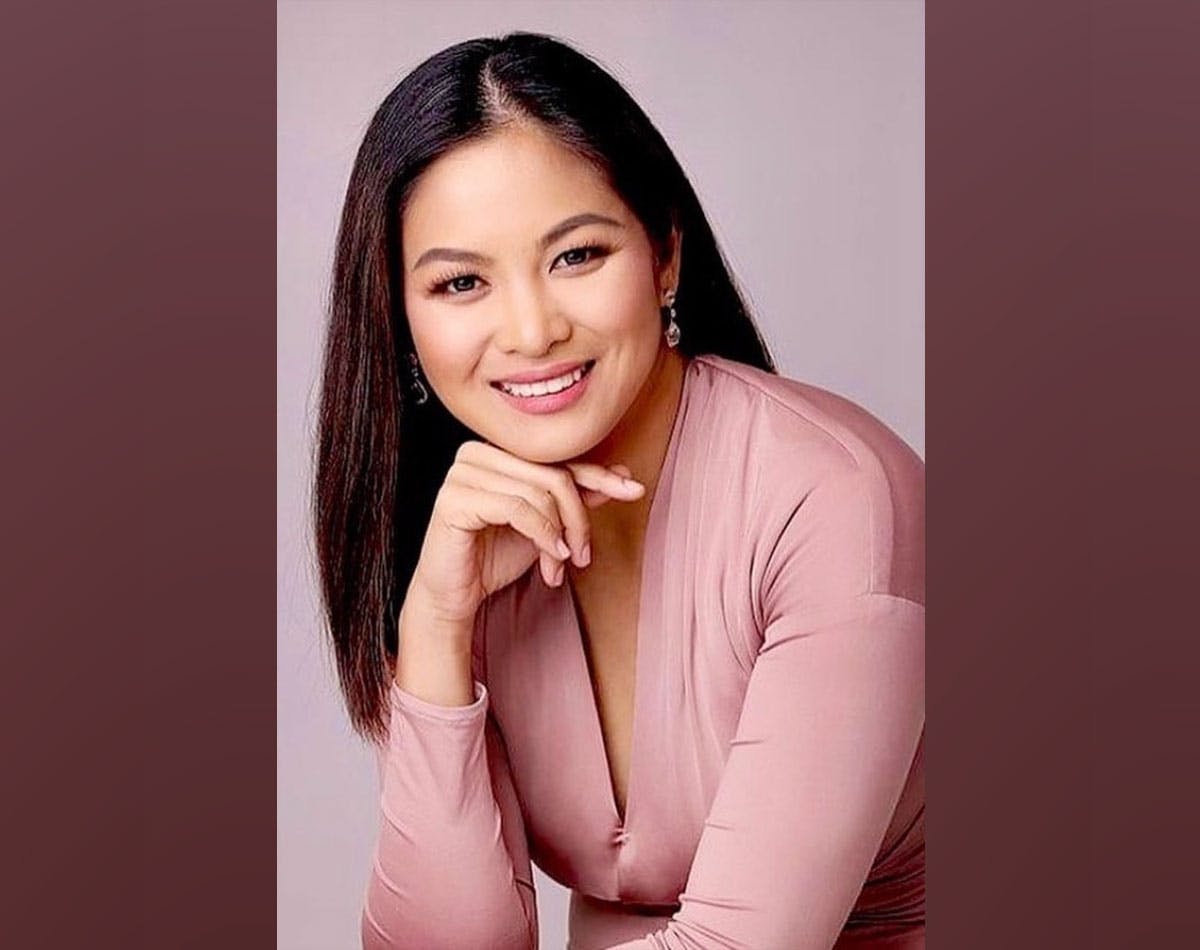
While men are considered as “leaders” of the family, 1999 Miss Universe first runner-up and TV host Miriam Quiambao-Roberto believes that this doesn’t mean they are more superior than women.
In an interview on “Breakthrough with Boris Joaquin” livestreamed on the Facebook pages of The Philippine STAR and CareerGuide on Tuesday, March 28, Miriam cited Genesis 2:22, where it was stated that God intentionally took Eve from Adam’s rib so they could be equals.
“God took the woman from Adam’s side so we could be equals. Not from the head so that a woman can overpower a man. God did not take the woman from the [man’s] feet so that she could be trampled upon by the men, but by his side so that they can side by side work together [and] be helpmates, be equals,” Miriam, now an inspirational speaker, author and entrepreneur, explained during the interview.
According to Miriam, equality is observed through different roles played by people. A man or husband is traditionally the leader or provider, while the woman is the one tasked to nurture their children.
However, because of societal needs, the roles can be reversed and women can work side by side with their husbands to also become financial providers.
Despite this, Miriam thinks that the basic fatherhood and motherhood roles can only be fulfilled by men and women, respectively. She claimed that a mother cannot be the “male figure” in the absence of a father, and vice versa.
“In certain situations where the father is absent, the woman has to step up and be the mother and father, but she can never provide the ‘male figure’ because she’s not male. So she has to outsource that from her own brother, her own father, or an uncle so she can provide that ‘male figure,’” she said.
Miriam stressed that men being leaders of the family was meant to establish order and that a “leader” is still equivalent to a “nurturer.”
Miriam noted that “submission” to one’s husband is never meant to discredit a woman’s capability but to “honor God.”
“We’ve known many women who have experienced so much and it can show their strength because they’ve overcome so much in life. In fact, even the act of giving birth shows how strong a woman is! But we are commanded to submit to our husbands…but it does not mean that it is license for the man to trample (upon) the woman,” Miriam said.
“In fact, the man, after ‘yung wives submit to your husbands, the man has a greater and heavier command by God because after that it becomes, love your wife as Christ loved the church. How did Christ loved the church? He died for the church. In other words, ang command sa husband is to die for their wives,” she added.
Miriam shared her thoughts about fatherhood and motherhood during the interview to celebrate International Women’s Month.
She said women empowerment has come a long way from the time that women had to fight for rights for compensation and suffrage.
“Women are now being more appreciated compared to before, there’s a lot of women empowerment in news. Going around, women are now being celebrated for their contributions in different parts of society,” Miriam said, citing media, business, and politics as examples.
International Women’s Month was born through demonstrations from female workers within the United States and Europe in the early 1900s due to poor labor practices, lack of legislation and lack of recognition for female workers.
The celebration was first recognized locally in 1988, when the late former president Corazon Aquino signed into law Proclamation Nos. 224 and 227, which declared the observance of Women’s Week and Women’s Month, respectively.
Miriam said “a lot more” women have established their place in society, breaking “glass ceilings” which is defined as an invisible barrier against growth, especially towards women.
“Women can accomplish much more now than before, and we’re allowed to do that and [we’re] being celebrated to do that, so that’s great,” Miriam added.
New advocacy
Now a president for Malay, Aklan’s Parent-Teacher Association, Miriam said she is working to aid the youth overcome issues that plague them.
She focuses on their mental health, being able to relate as she also went through a phase of anxiety, panic attacks and suicidal tendencies in the past.
Miriam revealed that even her own child experiences mental health issues due to the COVID-19 pandemic.
“I
feel [for the youth] because I was one of those [who had mental health
issues] and this was many, many years ago. My own child experiences
anxiety and depression coming out of the pandemic, so I can feel that,”
she said.
Miriam said she now plans to equip Malay-based youth with skills to empower them and be capable people in the long run.
“Imagine, a student learner who can creatively think of solutions in spite of the challenges that face his life today. Imagine a person who knows his strengths and [can] tap on to those strengths, the network that he has so that he can contribute to the betterment of his school [and] of his community,” Miriam added.
Watch the full episode of “Breakthrough with Boris Joaquin” here: