



LRT-1 Management Vows To Reorient Staff After Viral Incident Of Passenger’s Finger Getting Stuck Between Train Doors
Light Rail Manila Corporation head of communication and customer relations Jacqueline Gorospe said they do not tolerate disrespectful behavior following criticisms that the LRT-1 staff mishandled a mishap on Aug. 23.
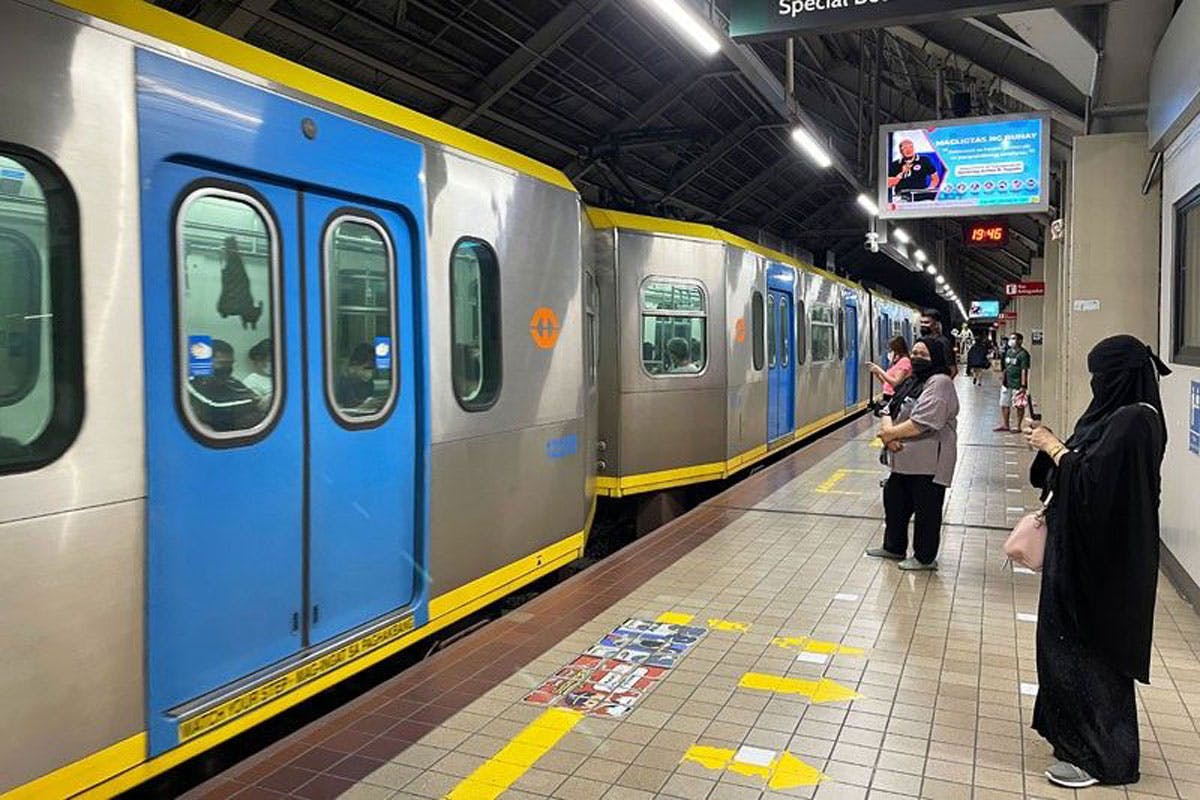
The Light Rail Manila Corporation (LRMC) has taken accountability for a now-viral mishap where a passenger’s finger got stuck between the doors of a Light Rail Transit Line 1 (LRT-1) unit, reassuring the public that its staff will undergo customer service reorientation.
In an interview on “One Balita Pilipinas” on One PH, LRMC head of communication and customer relations Jacqueline Gorospe acknowledged the inconvenience and misunderstandings caused by the commotion.
“But we would like to reassure the riding public that in the LRMC, or LRT-1, we do not tolerate disrespectful behavior. On our part, we make sure that our staff go through proper training, customer service orientedness ,” Gorospe said in a mix of English and Filipino on Tuesday, Sept. 5.
LRMC apologized for the incident in a statement issued on Monday, Sept. 4. While “more thorough investigations” are in progress, it committed to “finding ways to improve services every day.”
Customer service training for staff will also be “reiterated and refreshed” to prevent similar incidents in the future, the statement read.
The incident occurred last Aug. 23 at the LRT-1’s Monumento Station in Caloocan City. At around 7:45 a.m., netizen Mhina Fabre recalled witnessing a passenger’s finger getting stuck between train doors.
Fabre said the passenger knocked on the doors to be opened, but to no avail. She added other passengers helped the victim but the guards still failed to notice what was happening.
Someone suggested pressing the emergency button as a last resort. Another passenger did so, and the train doors opened “after a few seconds.” A security guard approached them and asked who among the passengers pressed the emergency button.
The passengers explained the commotion to the guard, who “doesn’t want to hear explanations.” The train operator also approached them, asking why the button was pressed, and reprimanded them for doing so.
Fabre said the passengers reiterated their explanation, and complained about the hassle caused by the incident. She criticized the LRT-1 personnel for failing to attend to the passenger who was hurt.
“And the passenger who pressed the button was asked to get off and submit an incident report. He was being compassionate, yet was the one inconvenienced. So LRT, what exactly is the purpose of the emergency button?” Fabre asked.
On One Balita Pilipinas, Gorospe said initial investigations showed the passenger held on to the train door, which led to the commotion. She added the incident also occurred on a first-generation LRT, or the LRTA 1000 class, which have been used since 1984.
“These trains were built in the 1980s, almost 40 years old…and these trains are designed without automatic door sensors…So when the passenger held on to the door, and it was closing, his finger got stuck,” Gorospe said in English and Filipino.
Gorospe clarified that the LRT-1 staff and security personnel assisted the passenger. First aid treatment was given while in Monumento station.
The passenger was also offered to be brought to a bigger clinic in Manila’s Central Station. Gorospe said the passenger declined, since only his right thumb suffered a “minor injury,” and already received first aid in Monumento station.
The passenger already thanked them for assistance, Gorospe said, and no longer complained of pain and other concerns.
Standard operating procedure
Gorospe cited the morning rush as a reason behind the misunderstandings. She noted that 7:45 a.m. to 8:00 a.m. are peak hours and Monumento is the “busiest” LRT-1 station.
“There was a huge volume of commuters, so perhaps misunderstandings arose from the manner things were explained, or how they were asked to disembark the train,” Gorospe said.
But everything was still standard operating procedure. Gorospe explained that it was “standard” for the security guards and the train operator to ask passengers to disembark, and try to determine why the emergency button was pressed.
She said this must be done to ensure the safety of passengers.
Even the submission of an incident report was standard, Gorospe said. “It needs to be asked, who were involved? Where exactly did it happen? So before we can clear the affected train, we are certain there are no more issues,” she pointed out.
Gorospe said the passenger who pressed the emergency button already explained what happened.
She also called on passengers to be cooperative and stressed that observing “proper passenger etiquette” can lead to safer travels, especially during rush hours.
“Discipline. I am sure they know for one, they should not push each other…and if they know train doors are about to close, they should not forcibly enter, nor insert their hands to prevent the doors from closing,” she said.


