



Killer Cop’s Young Daughter Also A ‘Victim’; May Be A Product of A ‘Culture Of Violence – Agencies
Department of Social Welfare and Development spokesperson Irene Dumlao disclosed that the daughter of Senior Master Sergeant Jonel Nuezca “has been traumatized” by the violent incident in Tarlac, just like the other witnesses at the crime scene.
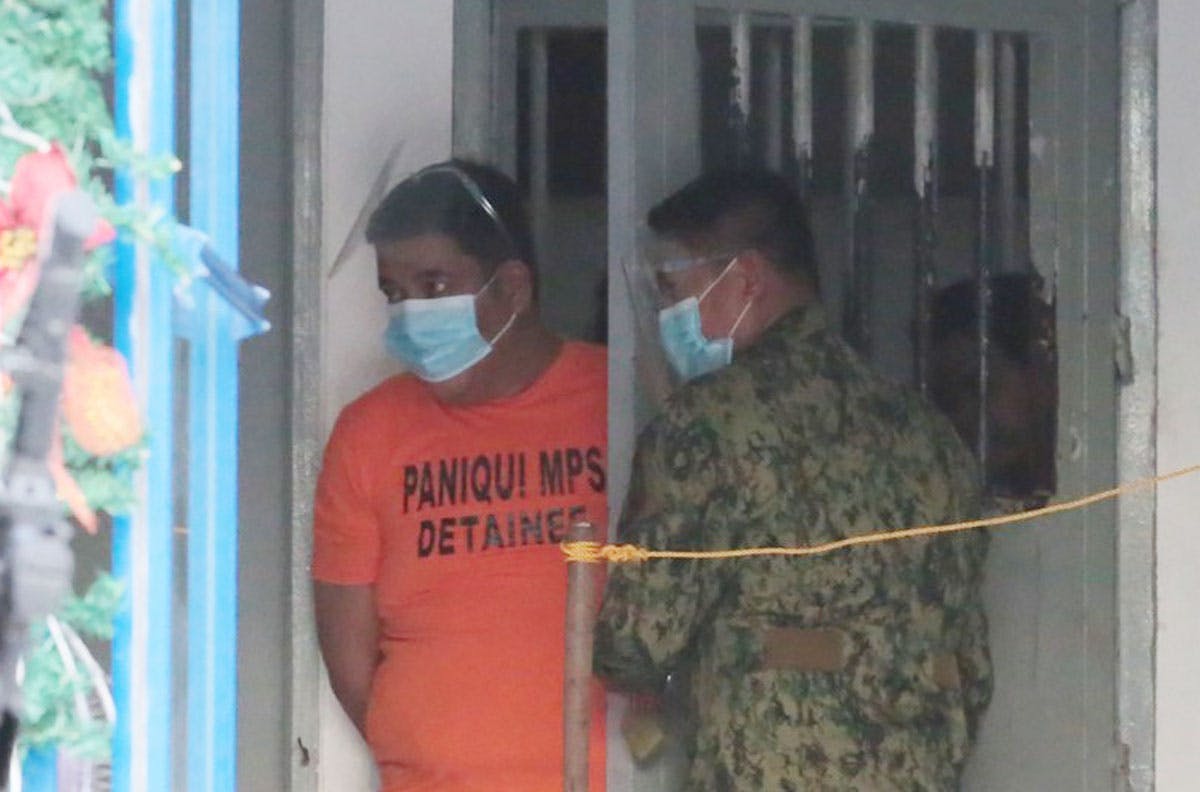
The United Nations Children’s Fund (UNICEF), the Council for the Welfare of Children (CWC) and the Department of Social Welfare and Development (DSWD) have called on the public to stop vilifying and cyberbullying the 13-year-old daughter of Police Senior Master Sergeant Jonel Nuezca, who shot dead his neighbors Sonya Gregorio and her son Frank Anthony in Paniqui, Tarlac on Sunday, Dec. 20.
In a statement, UNICEF said the incident “cast a harsh new light on the rampant abuse of authority and a fresh call for the protection of children who witnessed the violent incident.” It condoled with the family of the victims and joined the calls for justice to be served.
However, UNICEF noted that “videos circulating online and being aired on TV showed the shooting happening in front of a child.”
“UNICEF is deeply concerned for the well-being of this child whose photos are being circulated on social media platforms where she has been repeatedly vilified and verbally abused. Children have the right to be protected from all forms of violence, including bullying,” the agency said.
“The child is also a victim in this situation. We appeal to the public to refrain from using violent language and posting her photos and personal information. This only causes additional harm, trauma, and stigma to the child,” it added.
According to UNICEF, children also have the right to be supported through non-violent parenting practices and behaviors from adults to enable them to grow up in a safe environment and reach their full potential.
“Various studies have shown that children who are victims of and those who witness violence become vulnerable to physical and mental health problems, some of which will manifest when they reach their adulthood,” UNICEF said.
The CWC said the girl “spewed unintended words” during the incident and went so far as to say her behavior may be a product of how she was “possibly being raised in a prevailing culture of violence that tolerates impunity.”
It cited the rights of children and the state’s “responsibility to care for and protect them against improper influences, hazards, and other conditions or circumstances prejudicial to their development.”
The CWC said a child’s behavior generally “will reflect the kind of parenting he/she received, how the key persons in his/ her life behave and interact with one another, and possibly being raised in a prevailing culture of violence that tolerates impunity.”
This is because a child may learn through observation and through the authority figures in her life. Citing the findings of the UNICEF 2016 Systematic Literature Review on the Drivers of Violence Affecting Children in the Philippines, the CWC said exposure to violence increases the risk that a child may use violence too.
“CWC continuously reiterates that children are not little adults, and we should recognize and address the underlying factors that drive children to behave in such way,” it said.
The council called for “appropriate intervention and rehabilitation” to help the girl process the aftermath of the incident, as well as “positive parenting, which teaches courtesy, non-violence, empathy, self-respect, human rights, and respect for others.”
“We must focus on the real issue at hand – to make the police officer liable instead of crucifying the child for her behavior,” the CWC said.
Traumatized
Speaking to One PH’s primetime show “Sa Totoo Lang” on Tuesday, Dec. 22, DSWD spokesperson Irene Dumlao disclosed that the girl “has been traumatized by this incident,” just like the other witnesses at the crime scene. She said the girl had undergone debriefing by the agency’s Central Luzon regional field office.
“Somehow, may manifestations ng trauma. ‘Di nakakatulong ‘yung pamba-bash, ‘yung pag-incite ng further judgment o panghusga sa social media (Somehow, there are manifestations of trauma. The bashing, the incitement of further judgment, or the judgment on social media do not help),” Dumlao said.
Sonya’s husband Florentino had also called on the public to spare the girl from their anger and understand that her upbringing – to the point that the video showed that she seemed unfazed by the shooting – was her parent’s fault.
“Kulang ng pag-aaruga ng magulang kaya ganyan ang turing (She lacked proper care from her parents, that’s why she acted that way),” Florentino told reporters.
Florentino said the child would have cried and run away because of the violence she witnessed.
Philippines’ duty to protect the child
In its statement, UNICEF ppinted out the Philippines’ duty as a signatory to the Convention on the Rights of the Child to uphold the right of all children to be protected from all forms of violence, including bullying.
It urged the DSWD to provide psychosocial support and other needed child protection services to all children who witnessed the violent event.
“We encourage those who were traumatized or affected by the video and the incident to access mental health and counselling support services, such as the Philippine Red Cross hotlines at 143 or 1158, or the National Center for Mental Health crisis hotlines at 09178998727 and (02) 7989 8727,” UNICEF said.
It also called on the Philippine government and the Philippine National Police to immediately adopt and implement the PNP Child Protection policy, which reinforces zero-tolerance for any act of violence against children and aims to ensure special protection of children from all forms of abuse and exploitation by providing policies and guidelines to be followed by all PNP personnel.
Dumlao said it had been giving “psychosocial interventions” to the girl who remains in the custody of her mother. These also include the rehabilitation of the “entire community,” because “it takes a village to raise a child.”
She added that the DSWD is still assessing the mother’s capability to parent the girl. There is also an option to bring her to a residential care facility for temporary care.
Not able to control her emotions
Dumlao said as a 13-year-old child, her “ability to control emotional impulses and regulate emotions are still being developed.” This makes the persons of authority surrounding her all the more crucial in nurturing her.
Commission on Human Rights spokesperson Jacqueline Ann de Guia said vilifying the child and posting her information online “may inflict irreparable trauma that might worsen the situation.” It asked the public to “let proper interventions deal with the child’s situation separately.”
Importance of setting a good example
Meanwhile, Save the Children Philippines said Nuezca’s actions were even more unacceptable since “it is brazenly committed in the presence of children.”
“Exposing children to violence is in itself a form of violence against children and sets a dangerous example to a generation of future leaders and parents,” the organization said. It said the trauma that may be caused by the incident may show up later in the form of depression, anxiety, anger, disassociation, and other health problems.
“This incident should be a reminder to all of us of our responsibility to treat our fellow human beings with compassion and respect even in the midst of conflict,” Save the Children Philippines said. “It is of utmost importance for adults to set a good example to the younger generation to help bring us closer to a future without violence against children.”
Psychologist Riyan Portuguez, who runs the Facebook page Your Millennial Psychologist, said the adults ganging up on the girl “should stop” the hate, the hostility and the toxicity.
“Ang mga bata, hindi naman talaga sila ang totally in control sa ganoong klase ng situation (Children are not totally in control of those kinds of situations),” Portuguez told “The Chiefs” on One News / TV 5 on Tuesday night, Dec. 22.
She said online users would not want children on the internet to see that this is how they handle these types of situations. She said it is fine to express anger, disappointment and frustration, but not to go so far as to target the child.
A problem of a ‘culture of killing’
Looking at the big picture, Portuguez said netizens should “stop promoting the culture of hate and the culture of cyberbullying.”
“Hindi natin mapo-promote ‘yung culture ng love, compassion, respect, kung pinapatuloy natin actually ay the same thing (We will not promote the culture of love, compassion, respect, if we continue doing actually the same thing),” she emphasized.


