



DOE Eyes Fuel Purchase Limits
The measure is intended to ensure that fuel remains available and accessible to Filipinos as the country battles an emergency, the Department of Energy said.
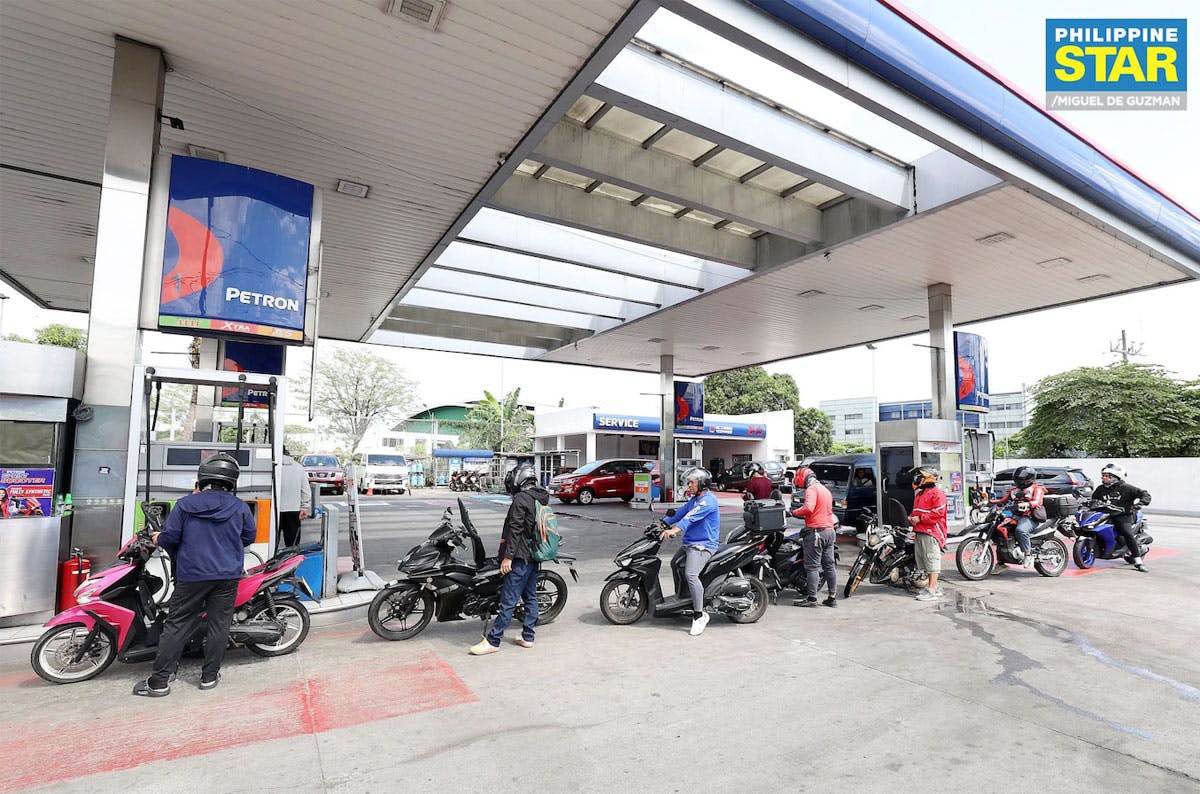
The Department of Energy (DOE) is eyeing temporary fuel purchase limits – “when necessary” – to prevent hoarding amid the raging global oil crisis triggered by the US-Israel attacks on Iran.
The measure is intended to ensure that fuel remains available and accessible to Filipinos as the country battles an emergency, the DOE said.
This follows the issuance of operating guidelines establishing a comprehensive framework for monitoring, preventing and enforcing anti-hoarding measures.
Although the guidelines have not yet been made public, the DOE said the rules would define prohibited acts and set preventive measures such as fuel purchase limits and tighter regulation of container-based transactions.
The guidelines also provide for enhanced monitoring and enforcement procedures, including the issuance of show-cause orders and timelines for evaluation and case action.
“These guidelines are meant to ensure that petroleum products continue to move where they are needed, when they are needed and at a level that protects consumers, supports economic activity and upholds public order amid the impact of the Middle East conflict on global oil markets,” Energy Secretary Sharon Garin said on Wednesday, April 1.
The DOE said the tighter rules aim to prevent artificial shortages while promoting fair and efficient distribution of petroleum products.
To ensure effective implementation, the DOE is reactivating its joint task force with the Department of Justice to investigate reports of hoarding, determine violations and pursue appropriate legal actions.
As of March 27, the Philippines had 50 days’ worth of fuel stocks, well above the 15-day minimum requirement, latest DOE data showed.
Last resort
At a briefing earlier on Wednesday, Sen. Sherwin Gatchalian said the Senate PROTECT committee has recommended to the DOE the imposition of a temporary price cap on petroleum products while the country is still under a state of national energy emergency.
According to the preliminary report by the panel chaired by Gatchalian, soaring pump prices may necessitate “extraordinary measures to provide immediate relief to ordinary consumers and fuel-intensive economic sectors before the situation worsens.”
Gatchalian stressed, however, that freezing prices must be treated strictly as “last resort” to prevent market collapse.
He also raised the alarm over the staggering spike in cooking gas prices, which directly threatens national food security and micro-enterprises.
“LPG two weeks ago was P9 per kilo. Now it’s P40 per kilo. And we all know, carinderias, household consumers, almost 90 percent of household consumers, businesses, will be affected,” Gatchalian said.
The committee report highlighted the government possession of legal mechanisms to override the free market.
Under Section 5(e) of Executive Order No. 110, series of 2026, the President has directed the DOE to exercise emergency powers.
The committee noted that Section 14(e) of the Downstream Oil Industry Deregulation Act of 1998 (Republic Act No. 8479) explicitly empowers the DOE to impose retail price caps during national emergencies when public interest requires it – a power previously upheld as constitutional by the Supreme Court.
Furthermore, the report urged the DOE to explore price ceilings specifically for liquefied petroleum gas (LPG) and kerosene under the Price Act (RA 7581), as these are legally classified as basic necessities.
Shortages
However, Gatchalian warned against hastily implementing a price freeze without a comprehensive economic strategy.
“That’s why I say it should be last resort. It should not be used on a regular basis as this can discourage selling. And there will likely be shortage,” he said.
He pointed out that while countries like South Korea and Thailand have implemented fuel price caps, their governments actively subsidize the difference to keep oil companies operation-al.
“There’s nothing like that in our case. Ours is true cost. So we need to study first the best time to implement it,” he said.
In its report, the committee explicitly recommended that the DOE “study and report to Congress whether there is a need to create a subsidy mechanism to lessen the impact of the price cap on oil industry players” to ensure a reasonable rate of return and continuing supply.
Beyond price ceilings, Gatchalian emphasized the need to amend the Oil Deregulation Law to grant the government the power to compel oil companies to disclose their pricing formulas and inventory costs.
The senator flagged the practice of oil firms selling cheap, old stock at new, crisis-inflated prices.
“Old inventory being sold at higher price – not just high mark-up, but almost double in some computation,” Gatchalian said in Filipino.
“What the government needs is ample power to get information. We’re not saying ‘to regulate,’ but to get information. Now if profiteering has been proven, then that’s the time to file a case. At present, no case can be filed because there’s no information. There’s no way we can tell how much they’re selling,” he explained.
Alternative sources
At a press briefing on Tuesday, March 31, House committee on ways and means chairman Rep. Miro Quimbo urged the government to pursue alternative sources of energy and to establish a national petroleum reserve to help soften impact of global oil crisis like the raging Middle East war.
“We need to be able to fast-track these alternative sources of energy because this is how we are going to thrive or survive this crisis,” Quimbo said.
The Marikina City lawmaker said the ongoing crisis should serve as a “wake-up call” for the country, whose heavy reliance on imported petroleum products has made it extremely vulnerable to geopolitical events.
He said the government should accelerate the development of alternative energy sources, such as geothermal and natural gas which are domestically available.
A national fuel reserve on the one hand would protect the country against future oil crisis, he added.
Meanwhile, Senate President Pro Tempore Panfilo Lacson on Wednesday doubled down on his criticisms of US President Donald Trump, whom he called out for his “whimsical arrogance” in the US-Israel war against Iran.
“Only a few years ago, we outlived the coronavirus, also known as COVID-19. Pray that the world will survive Trump-26,” Lacson posted on X. – With Neil Jayson Servallos, Marc Jayson Cayabyab, EJ Macababbad, Delon Porcalla


