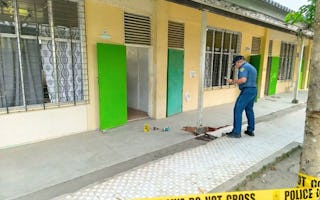
Daily Wage Earner Finds A Ride To Work – An Ambulance
For employees covered by the no work, no pay policy, to be present in their jobs every single day is no different from an emergency.

For the past 12 years, health worker Tricia (not her real name), 34, has commuted from her home in a nearby province to her office in Metro Manila.
Tricia has learned to live with the long commute, with no complaints. Now the government’s imposition of an enhanced community quarantine in the entire Luzon to combat the continuing spread of coronavirus disease 2019 (COVID-19) has disrupted her routine.
Since Monday, her fellow employees have either arrived late or failed to report for work. On March 12, President Duterte placed the country under Code Red Sub-Level 2 to prevent the spread of COVID-19 and put Metro Manila under community quarantine beginning March 15, Sunday.
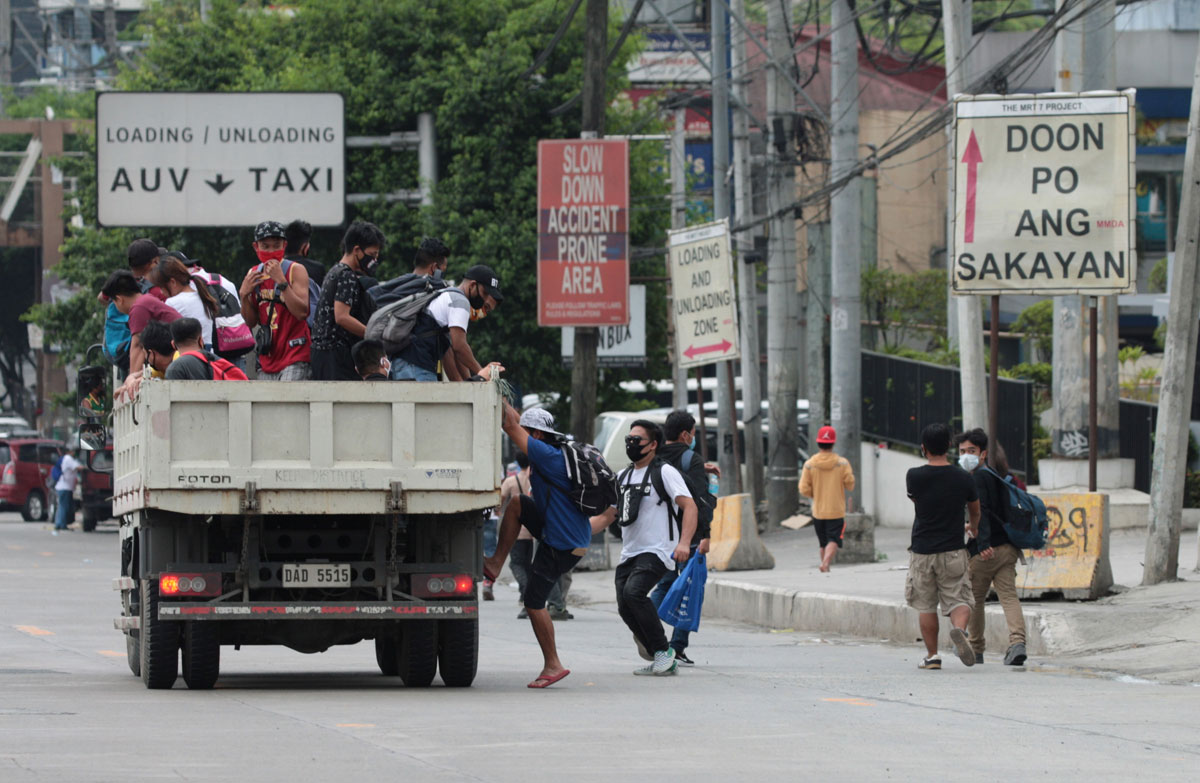
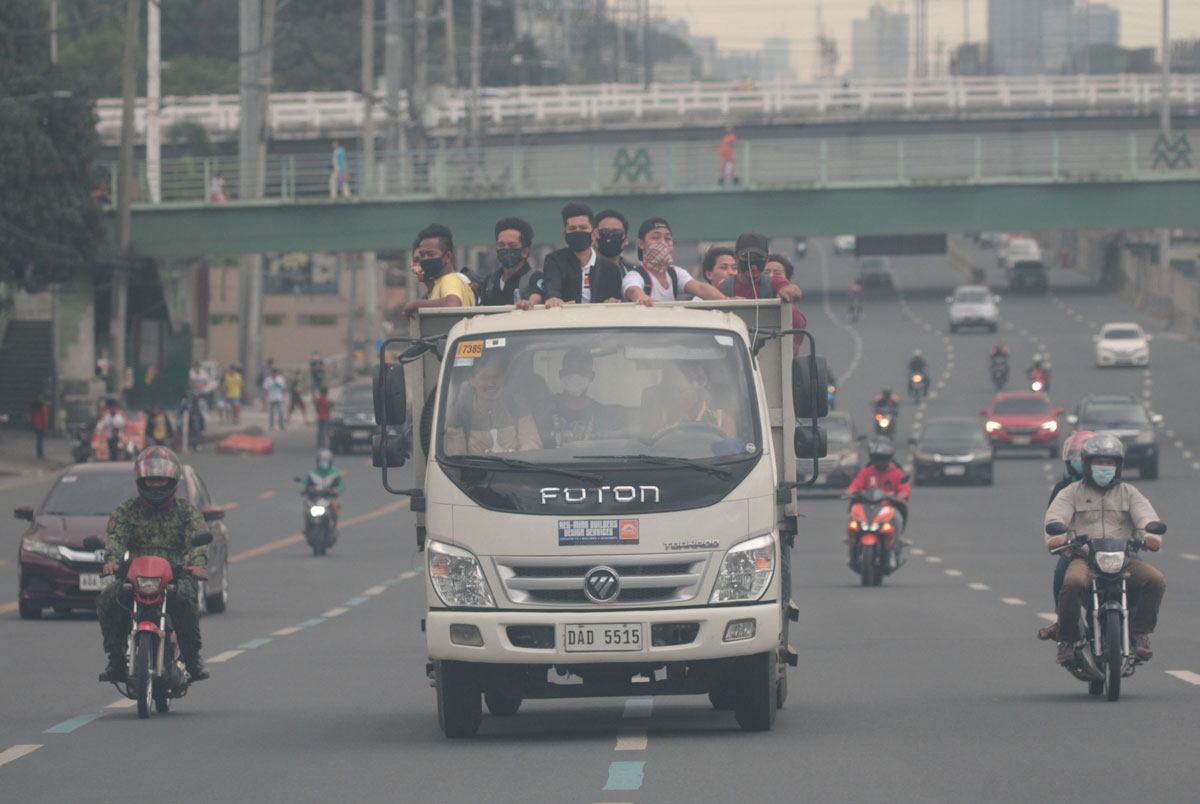
But the implementation of the community quarantine in Metro Manila as employees commuted to work on Monday became chaotic, while the number of confirmed COVID-19 cases in the country continued to rise.
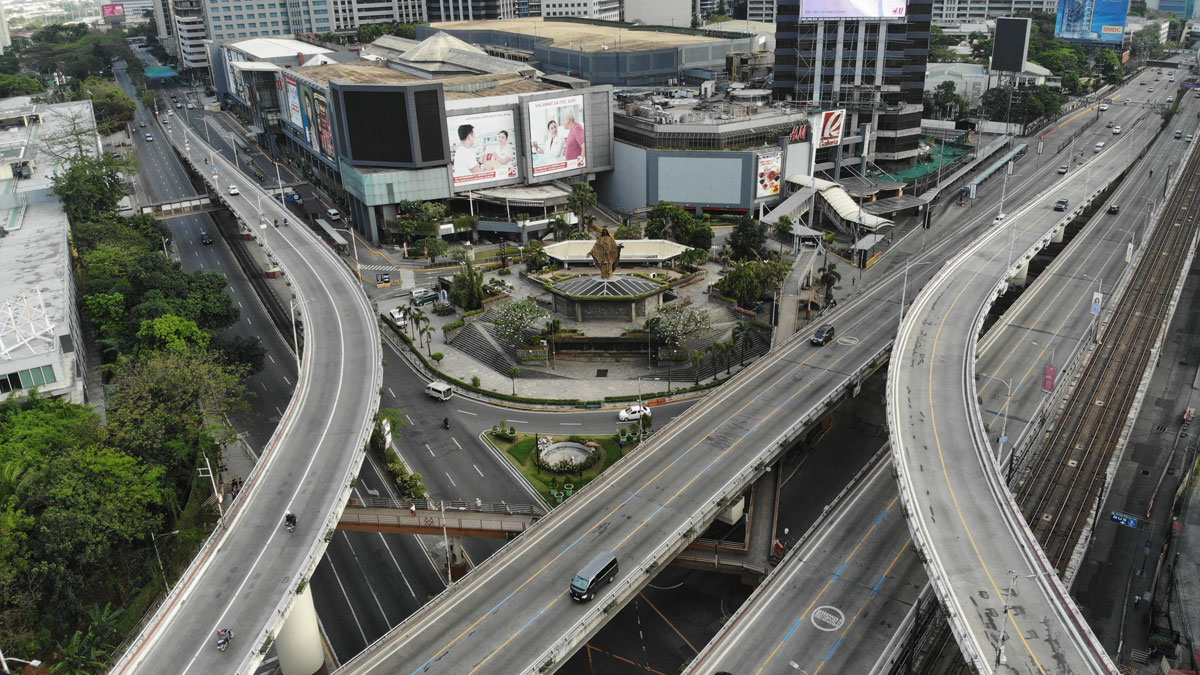
On the same day, March 16, Duterte placed all of Luzon under an enhanced community quarantine, which included the suspension of the operations of mass public transport.
Tricia said six of her co-workers were unable to report for work due to the unavailability of transportation. Because of this, her co-workers will not get any pay since they are hired under a “no work, no pay” scheme.
About a hundred of them who are working in the facility, Tricia disclosed, were hired by an agency. She reports for work three times a week and receives almost P1,000 for 24-hour duty.
She said their salary rate is lower compared to their counterparts employed in government offices.
“We don’t have any other compensation, except for our salary. So I don’t know where I will get money to pay for my expenses if I will not be able to report for work,” Tricia lamented.
Yesterday, she found a way to get to her office: by hitching a ride in an ambulance.
Impact on workers
The Federation of Free Workers (FFW) estimates that workers in Luzon stand to lose over P2 billion in wages for the entire duration of the enhanced community quarantine.
To cushion the adverse economic impact and income losses to workers, the Department of Labor and Employment (DOLE) is implementing two programs.
Labor Secretary Silvestre Bello III said effective immediately, DOLE will roll out a P180-million emergency employment program under the Tulong Pangkabuhayan sa Disadvantaged/Displaced Workers (TUPAD) for some 16,000 informal sector workers and a P1.3-billion COVID-19 Adjustment Measures Program (CAMP) for the benefit of about 250,000 workers.
Based on the latest DOLE data, the COVID-19 outbreak has already affected 11,000 workers nationwide.
“Prior to the declaration of enhanced community quarantine covering the entire Luzon, we have already received reports of 125 establishments covering 11,000 workers that have adopted flexible work arrangements or temporary work suspension due to COVID-19,” Labor Assistant Secretary Dominique Tutay said.
According to Bello, the initial allocation for TUPAD will pay for barangay workers who will disinfect the communities, while P1.3 billion will fund the financial assistance to workers who will be displaced due to the quarantine.
Bello said business establishments are also encouraged to provide financial assistance to their workers during the quarantine period.
“Again, we earnestly request the big employers to financially help their employees during this public emergency,” he said.
Tutay said affected workers could avail themselves of a one-time financial assistance of P5,000 from DOLE under the CAMP.
“Workers in the formal sector nationwide, regardless of status of employment can avail themselves of the financial assistance,” she said.
Under the guidelines, DOLE shall provide assistance to workers from private establishments that have implemented flexible work arrangements such as reduction of workdays or forced leave.
Workers from affected establishments who are no longer receiving their regular pay or whose employment is suspended are likewise covered, DOLE said.
The program covers workers in establishments affected by COVID-19 from its onset in January 2020 until the lifting of the quarantine or stringent social distancing measures.
Aside from the financial assistance, DOLE is also setting up an employment facilitation system to provide affected workers access to job opportunities suitable to their qualifications.
DOLE previously issued guidelines encouraging companies to adopt flexible work arrangements such as telecommuting, work from home, reduction of workdays or working hours, rotation of workers, or forced leave, as alternatives to outright termination of workers or total closure of establishments due to the pandemic.
Under the guidelines, leaves of absence during the quarantine period shall be charged against the worker’s leave credits. Those with no more leave credits can avail themselves of the DOLE’s adjustment program.
Workers residing outside Metro Manila are allowed to work in the region provided they present identification cards or certifications of employment stating their place of work.
Trade Union Congress of the Philippines spokesman Alan Tanjusay said they have received numerous complaints from workers regarding the lack of public transportation, but their main concern is the unclear policy of the government on pay rules during the period of quarantine.
“There’s an announcement that employers will release the 13th month pay early, that there will be an extension on the payment of house rentals or reprieve in the payment of bills, but those are still not clear,” Tanjusay said.
The government, the TUCP said, should clarify who will be paying for the salaries of the workers during the monthlong quarantine and work stoppage.
The TUCP said the policy gap has caused confusion and forced daily wage earners or “no work, no pay” employees to continue reporting for work, only to be stranded at checkpoints.
“When this kind of anxiety among workers is cured, they will fully comply with and abide by the community quarantine that the government asks us to do,” TUCP president Raymond Mendoza said.
The TUCP said calamity loans should also be provided to affected employees, including the five million “no work, no pay” workers in Metro Manila.
Workers want full compensation during the quarantine and are insisting that absence during this period must not be treated as special paid leave.
Tanjusay said employers should shoulder one to two months’ salary to ensure that “no work, no pay” workers will abide by the quarantine requirements.
Defend Jobs Philippines welcomed DOLE’s emergency financial assistance but said it is not enough. The group said workers are seeking the suspension of the “no work, no pay” policy, implementation of a “no retrenchment policy,” and the immediate payment of the 30-day salary of workers regardless of employment status.
The Federation of Free Workers (FFW), on the other hand, is encouraging workers to negotiate with their employers for the grant of assistance during the quarantine period.
“Engage in social dialogue with employers, or else we will die not of COVID-19, but of hunger,” FFW said.