



Cemetery As Heritage: Reliving History Through The Dead
Cemeteries are a rich source of heritage and history that should be preserved for future generations, according to UP Mindanao professor Andrea Malaya Ragragio.
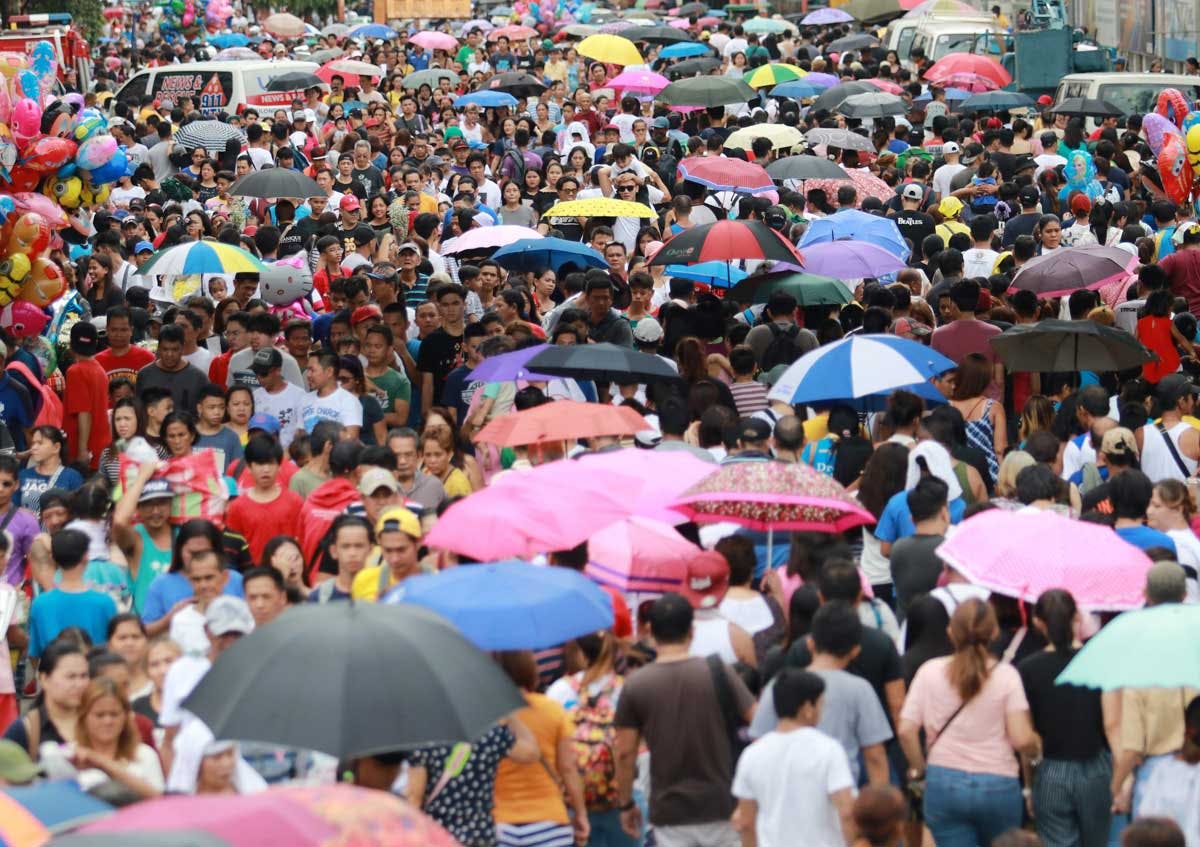
In the hundreds of thousands of people streaming in and out of the Manila North Cemetery on All Saints’ Day on Friday, a group of four foreigners — two Germans and two Americans — stood out.
Two local tour guides of Smokey Tours accompanied the four visitors to historic sites at the cemetery, home to the tombs of former presidents, national artists and a mausoleum of Katipunan veterans.
The celebratory way Filipinos remember the dead fascinated the foreigners.
According to Manila North Cemetery officer-in-charge Roselle Castaneda, tourists are welcome to the cemetery even on a busy day like Undas.
“‘Pag pumupunta sila rito, na-sho-shock sila. Kahit normal na araw, may mga nakatira pa rin dito. Parang city, hindi sementeryo,” Janet Bargo, one of the tour guides, said.
One of the Americans, Angie Kozlawski, had visited the beaches of Cebu and Palawan but still thought “it would be more interesting to experience the ‘festival’” on their last day in Manila.
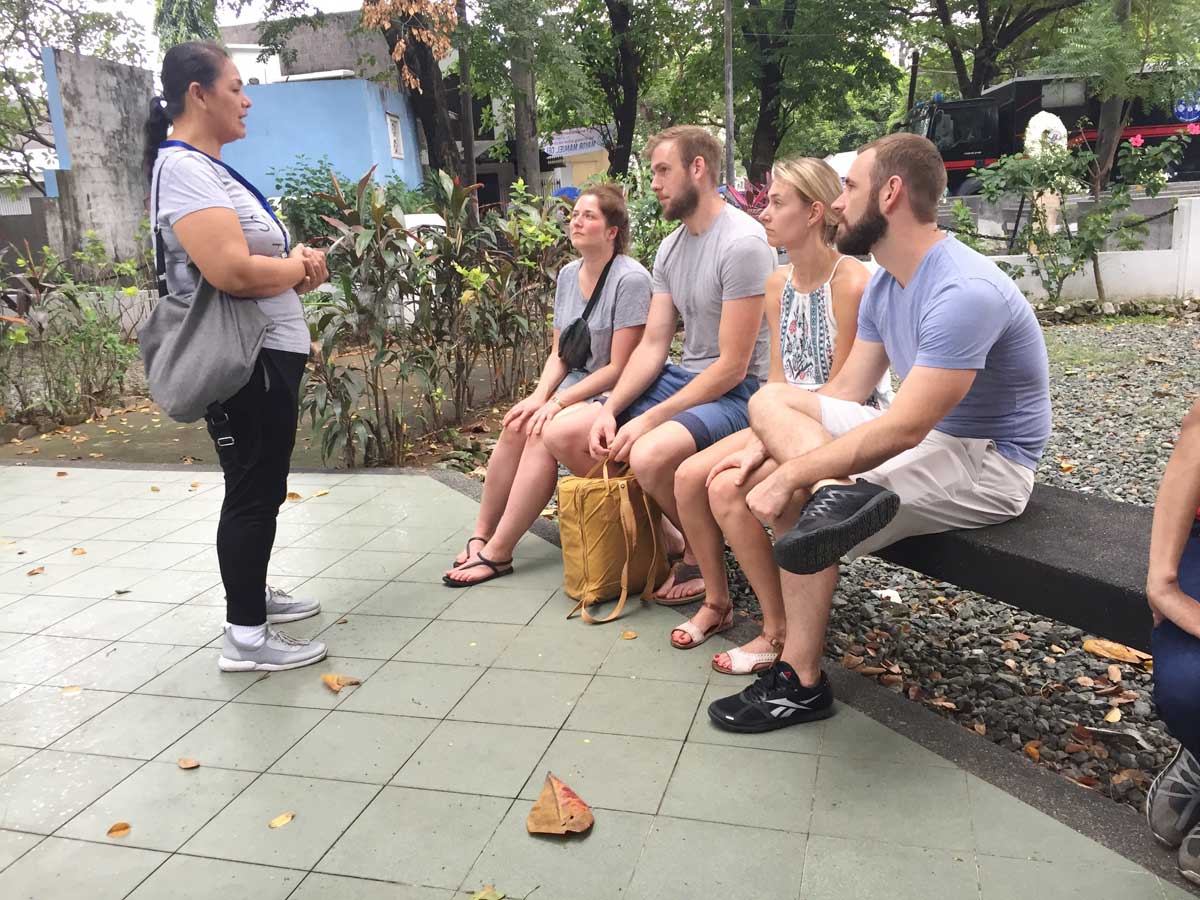
Cemeteries are a rich source of heritage and history that should be preserved for future generations, said University of the Philippines (UP) Mindanao professor Andrea Malaya Ragragio, whose study on patriots’ graves was published in the book Himlayan, Pantiyon, Kampo Santo, Sementeryo: Exploring Philippine Cemeteries (UP Press, 2016).
“How we treat the dead reflects the values and norms we hold as a society. These are not just religious values or beliefs, but also what norms we have about class and social status, about family and kinship, about art and design (what is visually pleasing or appropriate), and others,” Ragragio said in an online interview with The Philippine STAR.
“Cemeteries really are reflective of our living communities,” she added.
Burying the unborn
One way of looking at how cemeteries reflect a community’s way of life is through infant burials.
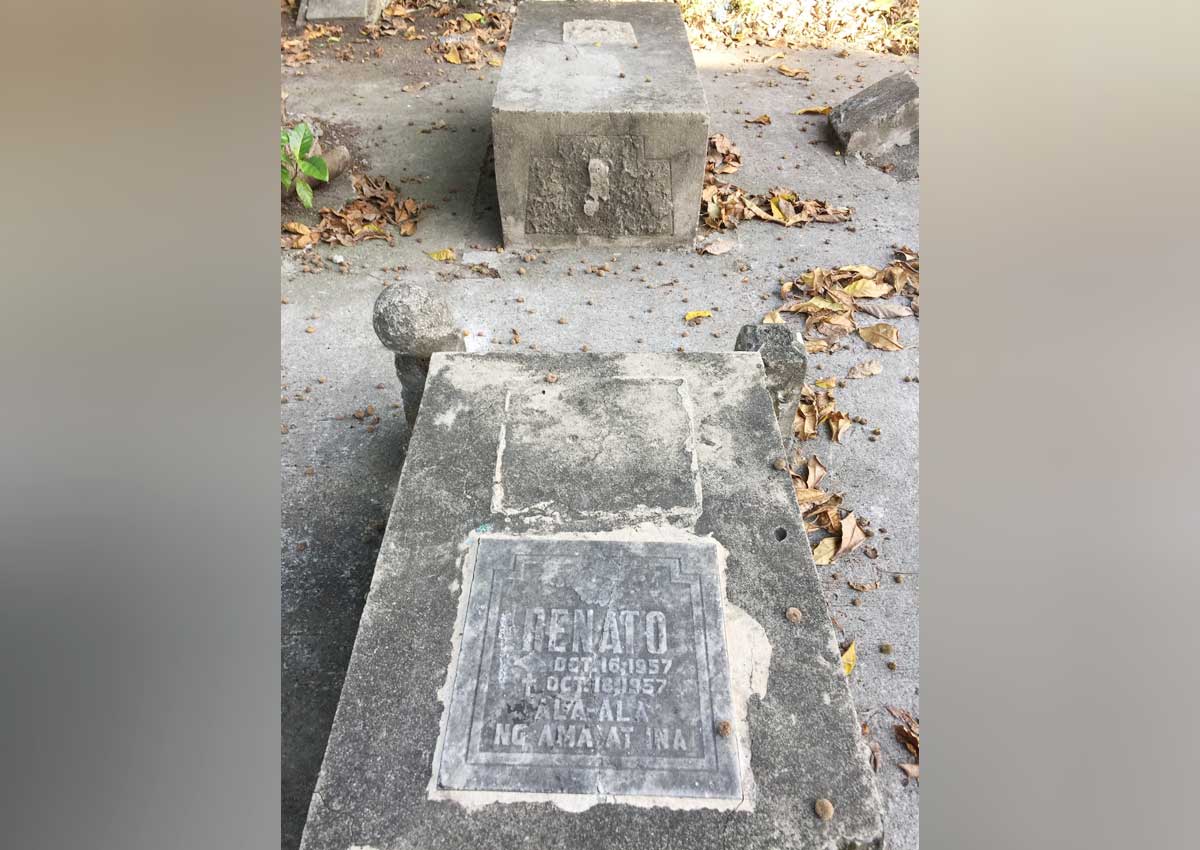
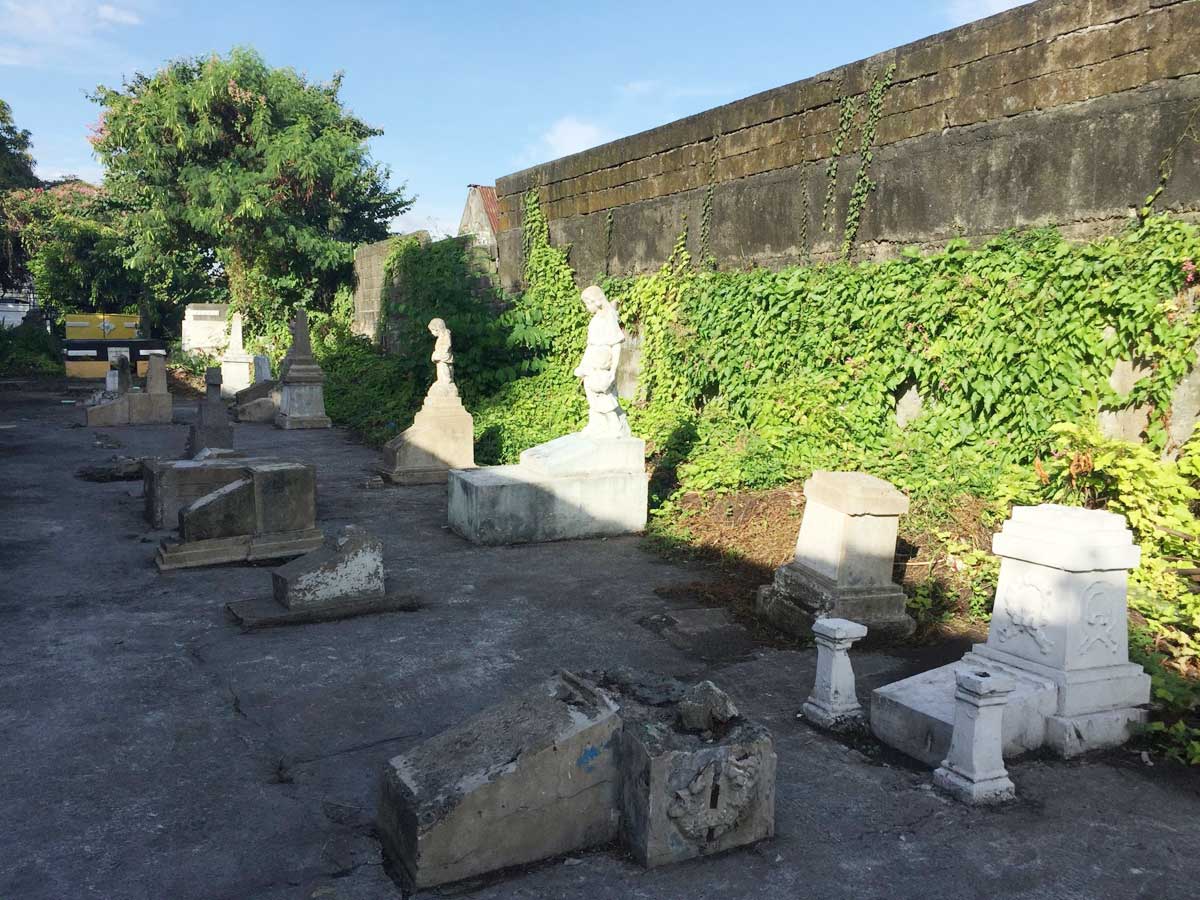
At the La Loma Cemetery in Caloocan City, under the shade of apartment tombs for the young and old are the ruins of a burial site for infants and children that died in the 1920s.
Besides the chipped statues of cherubs and angels atop the tombs, also noticeable in the gravesite are the inscriptions of the children’s names that are marked with exclamation points on each side of their names like “¡Asing!” and “¡Totoy!”
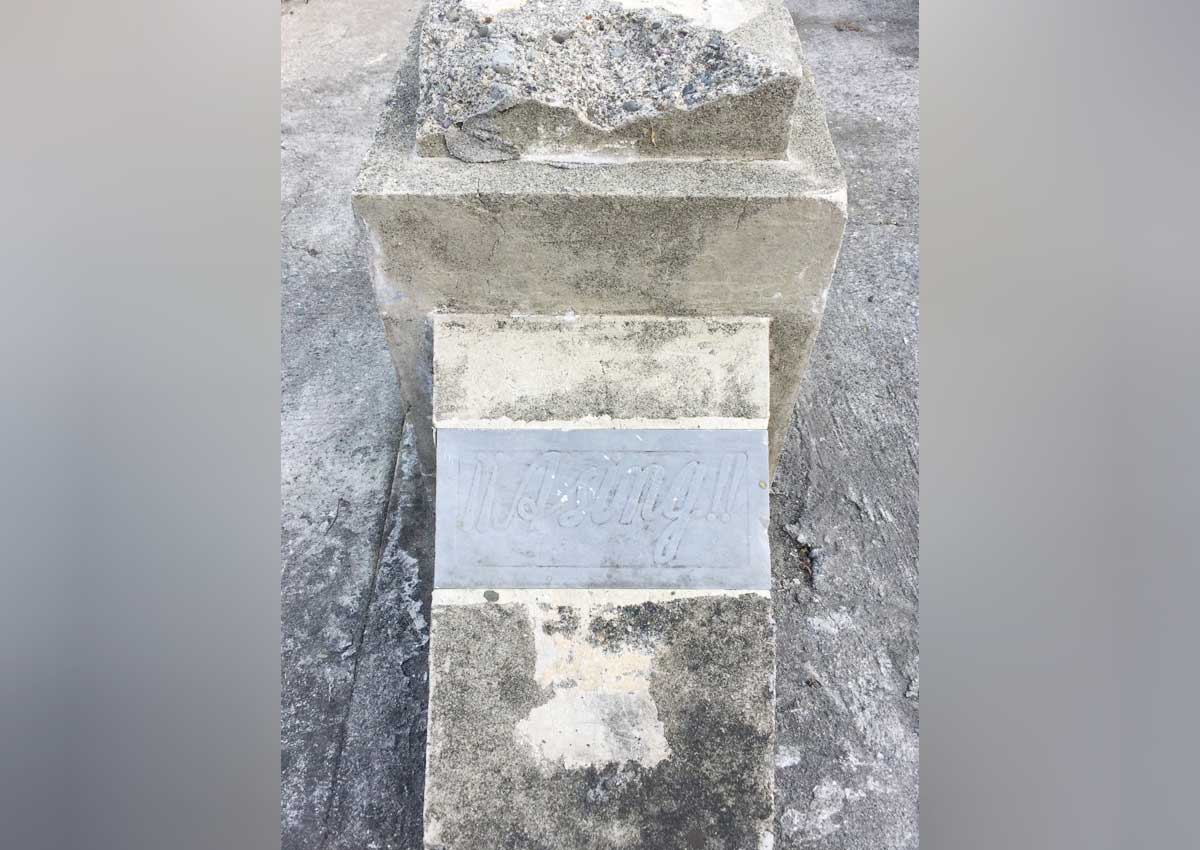
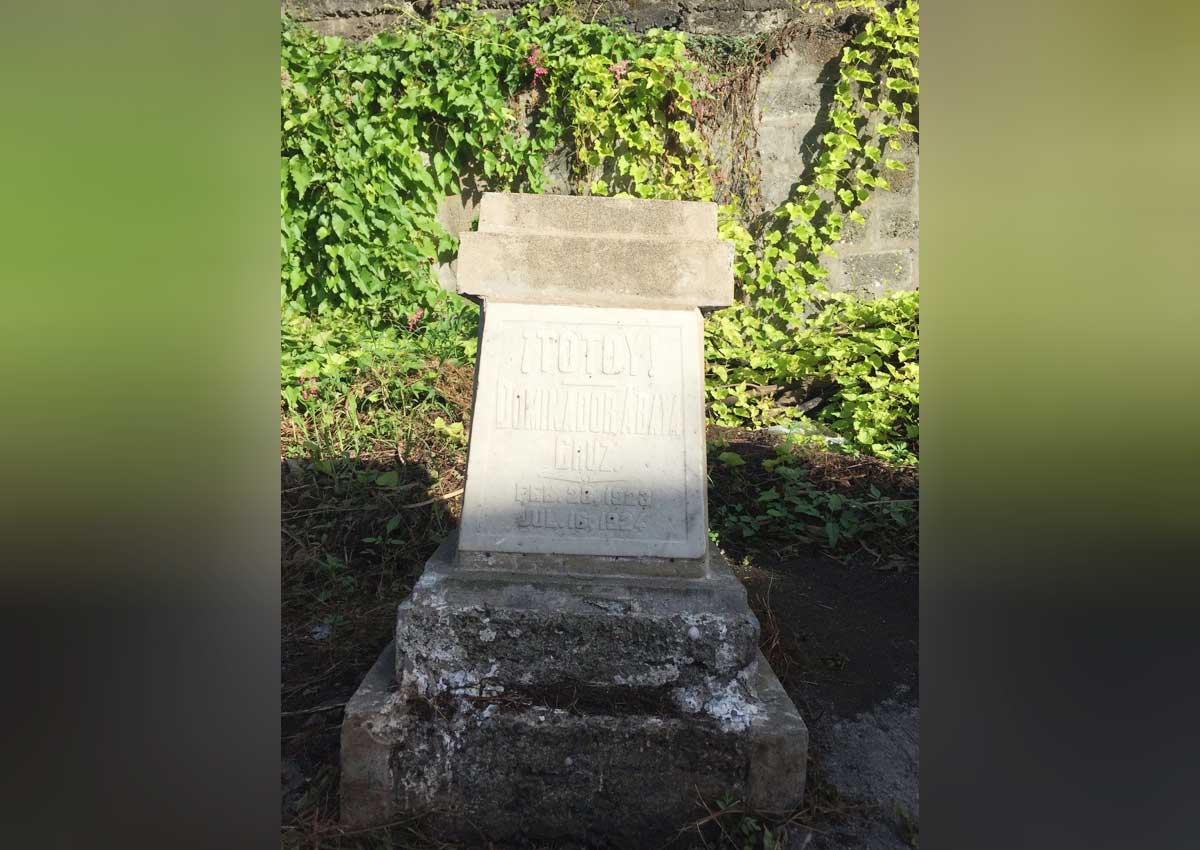
“Perhaps an exclamation point indicates strong feelings like sorrow in the loss of the infant or child," said UP Diliman archaeology professor Grace Barretto-Tesoro in her work on infant burials, Angels on Earth: Investigating Infant and Children Burials in Manila Cemeteries.
A 72-year-old caretaker who asked not to be named took The STAR on a tour of the burial site for infants, calling it an “antique” that he remembered seeing when he started working in the cemetery at 14 years old.
According to the caretaker, tombs dating back to the Spanish period are recorded by the management as among those with perpetual rights to stay in the cemetery. The La Loma Cemetery opened in 1884, making it one of the country’s oldest cemeteries.
At the rear end of the complex is an image of the Nuestra Señora del Carmen dedicated to a “Tomb of the Aborted Babies.”
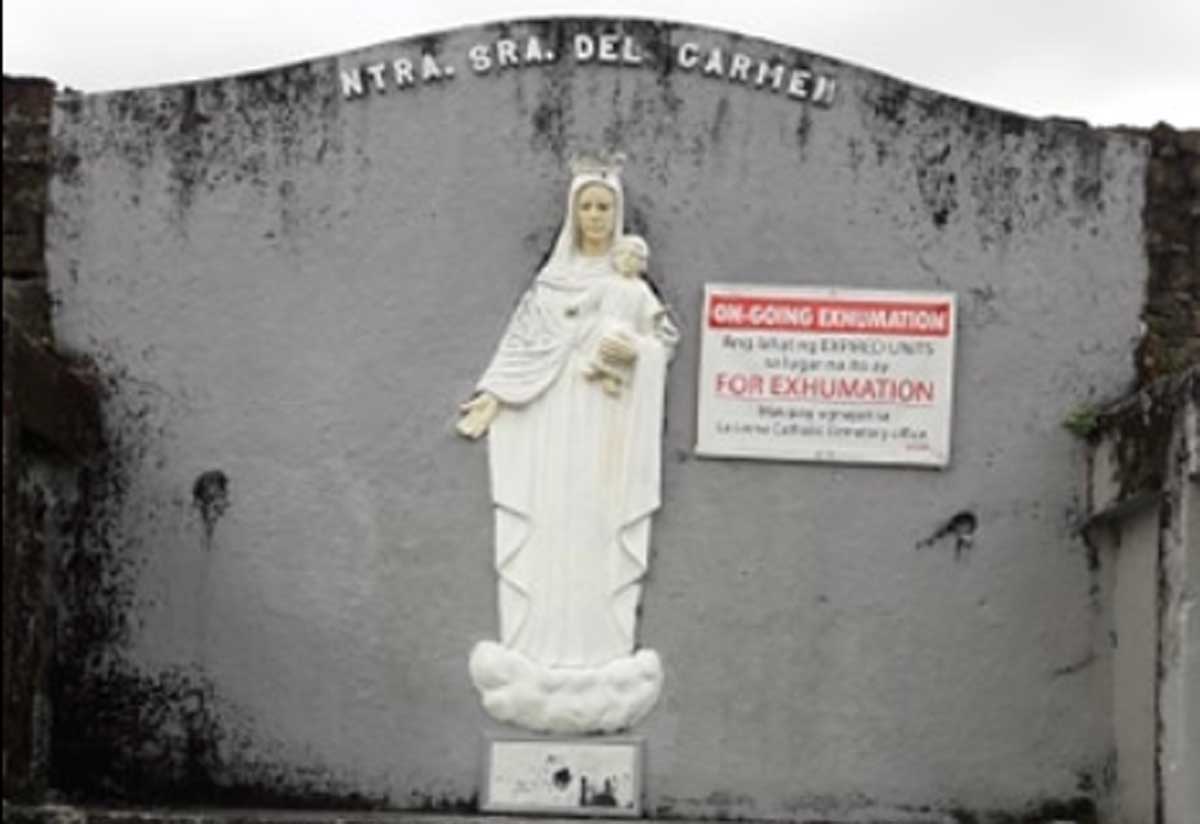
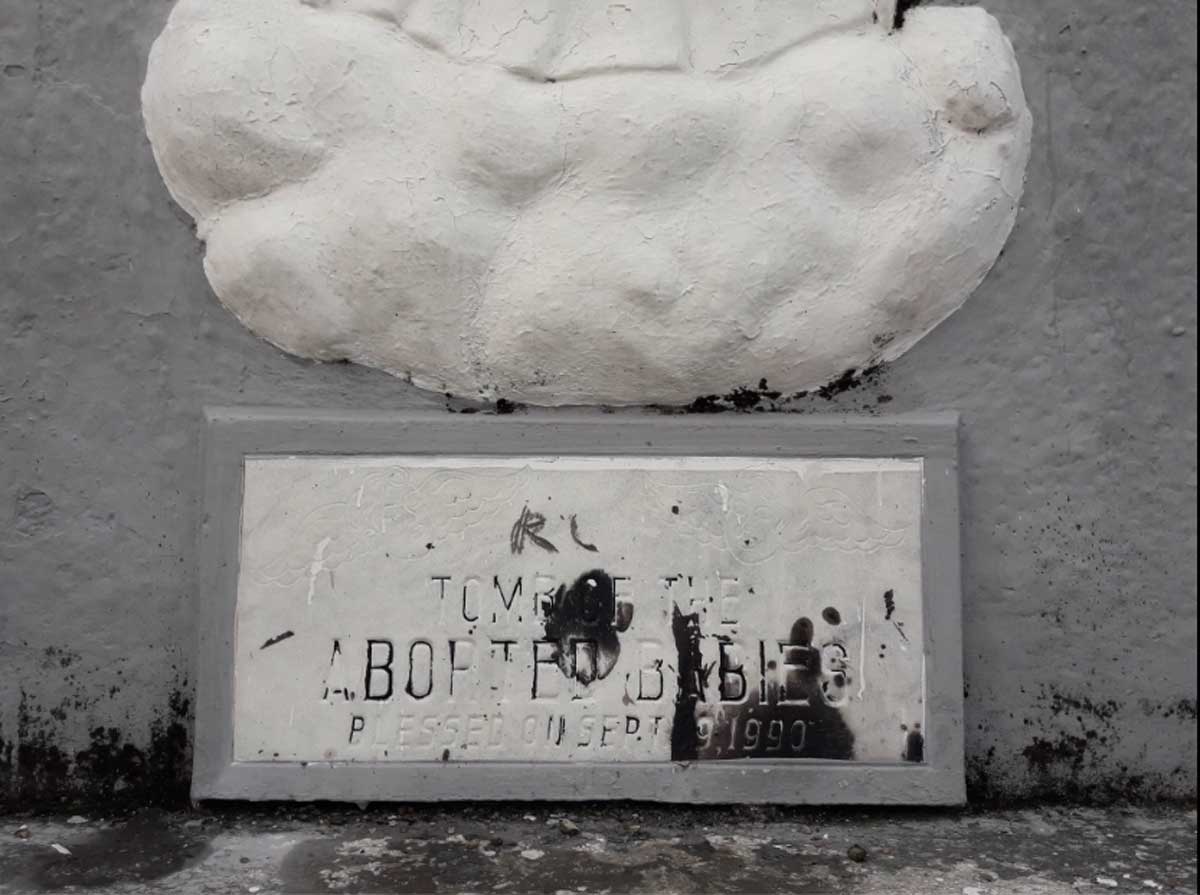
Citing a 2011 interview with Fr. Adrian Magnait and records officer Susana Elumba, Barretto-Tesoro in her study said fetuses abandoned in hospitals or left in public places, and miscarried fetuses from indigent families were allowed to be buried in the cemetery until 2009.
“Instead of a baptism, these fetuses received a blessing before burial. La Loma Catholic Cemetery provides burial services for free. The fetuses are placed in bottles or wrapped in cloth and placed in shoeboxes. Due to the small size of these fetus containers, a niche may accommodate many bottles or boxes piled on to of each other,” she wrote in her study.
This practice was stopped in 2009 because La Loma is a Catholic cemetery. Abortion goes against the teachings of the Catholic Church to respect life even of the unborn.
A similar fixture can be found at the Manila North Cemetery, where the Asociacion de los Veteranos de la Revolucion (Association of Veterans of the Revolution) founded by Emilio Aguinaldo opened in 1920 a mausoleum for Katipunan veterans called Mausoleo de los Veteranos de la Revolucion or the Mausoluem of the Veterans of the Revolution.
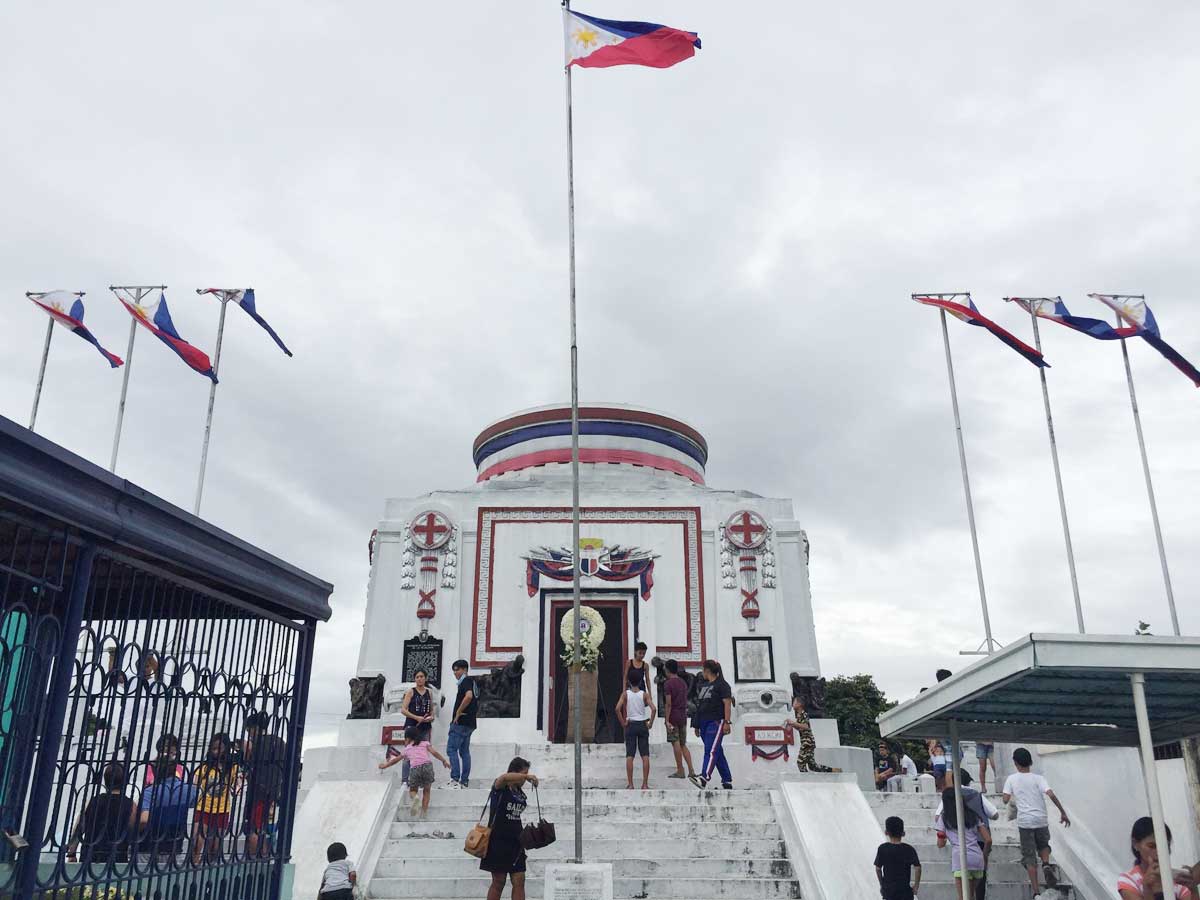
It is the only site in the cemetery where seven Philippine flags were hoisted at the time of our visit.
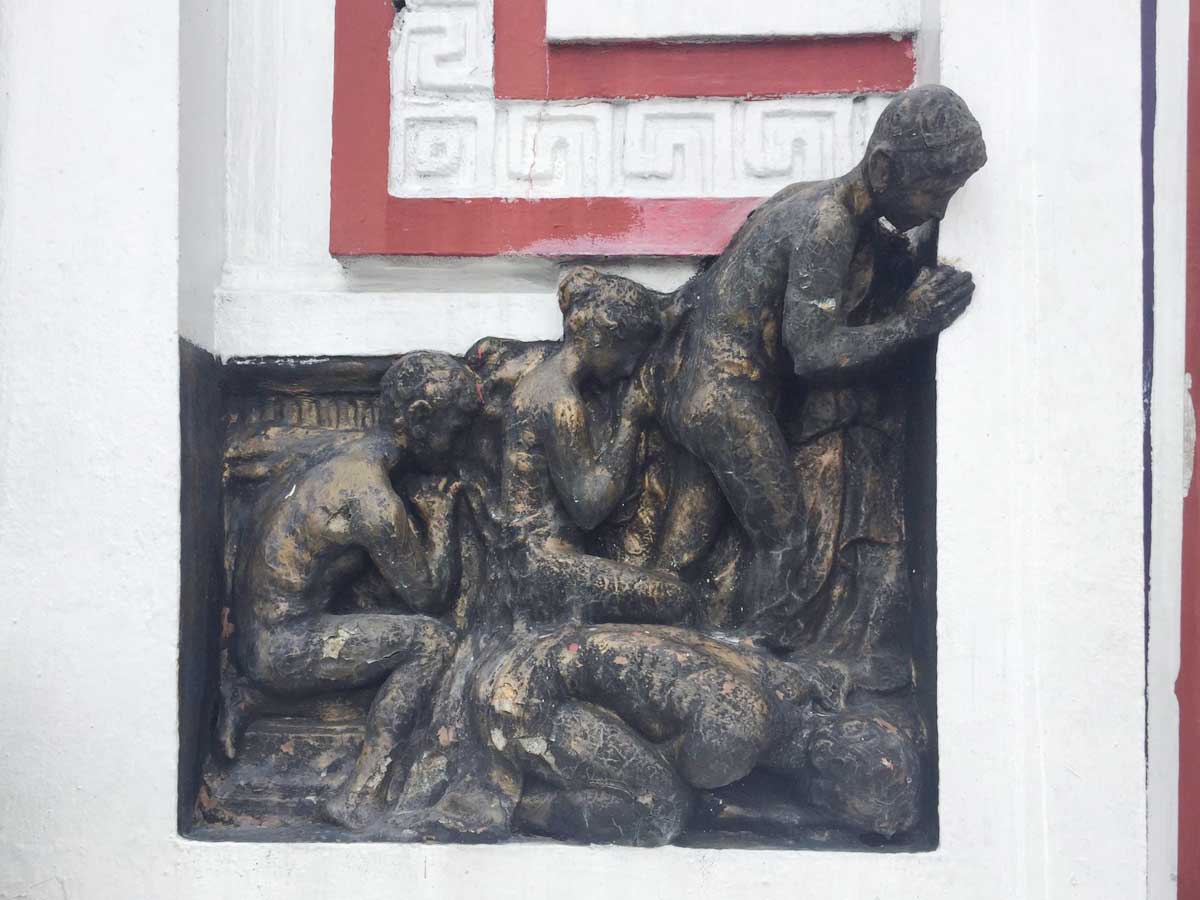
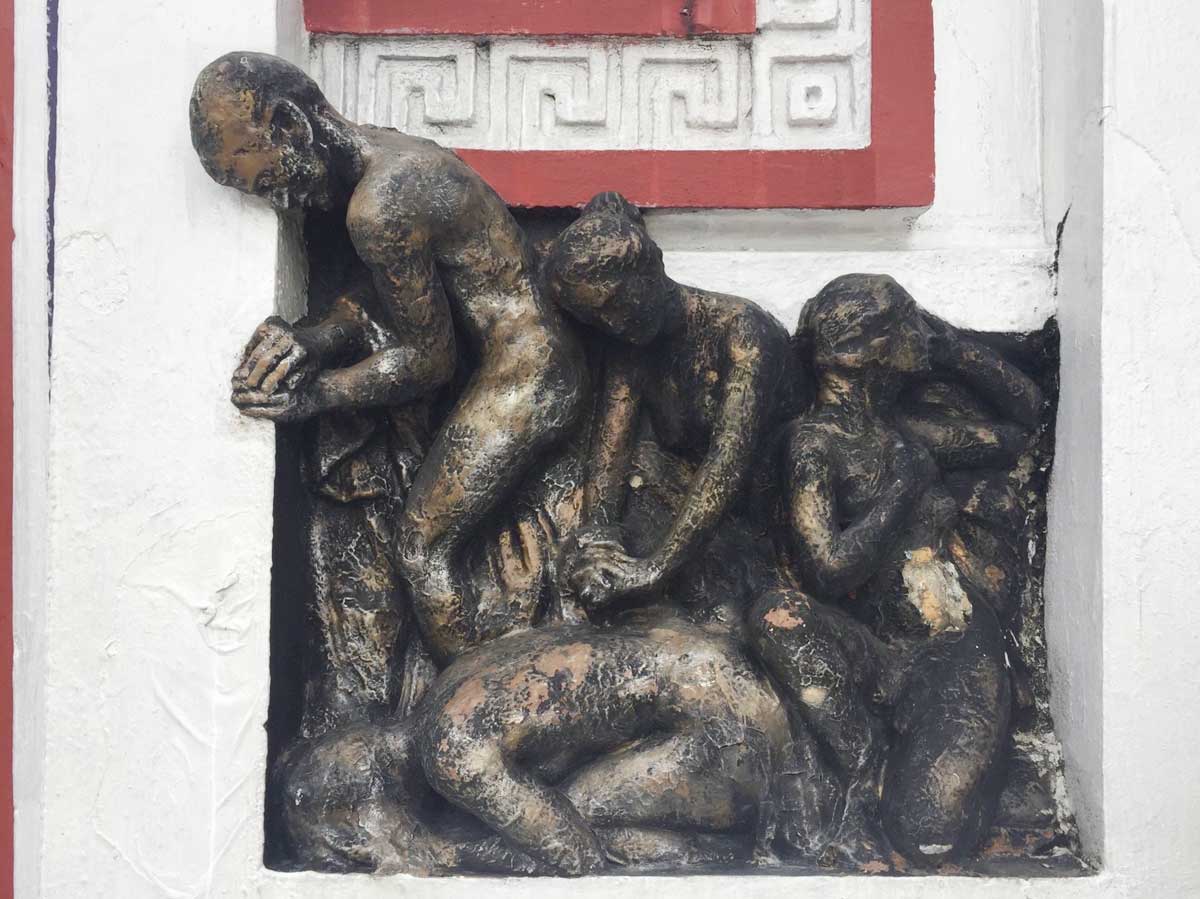
Housed in a cavern under the mausoleum is a resting place for deceased babies. It used to be called “Haven for Unborn Babies,” wrote Barretto-Tesoro, but the painted words have been scratched off.
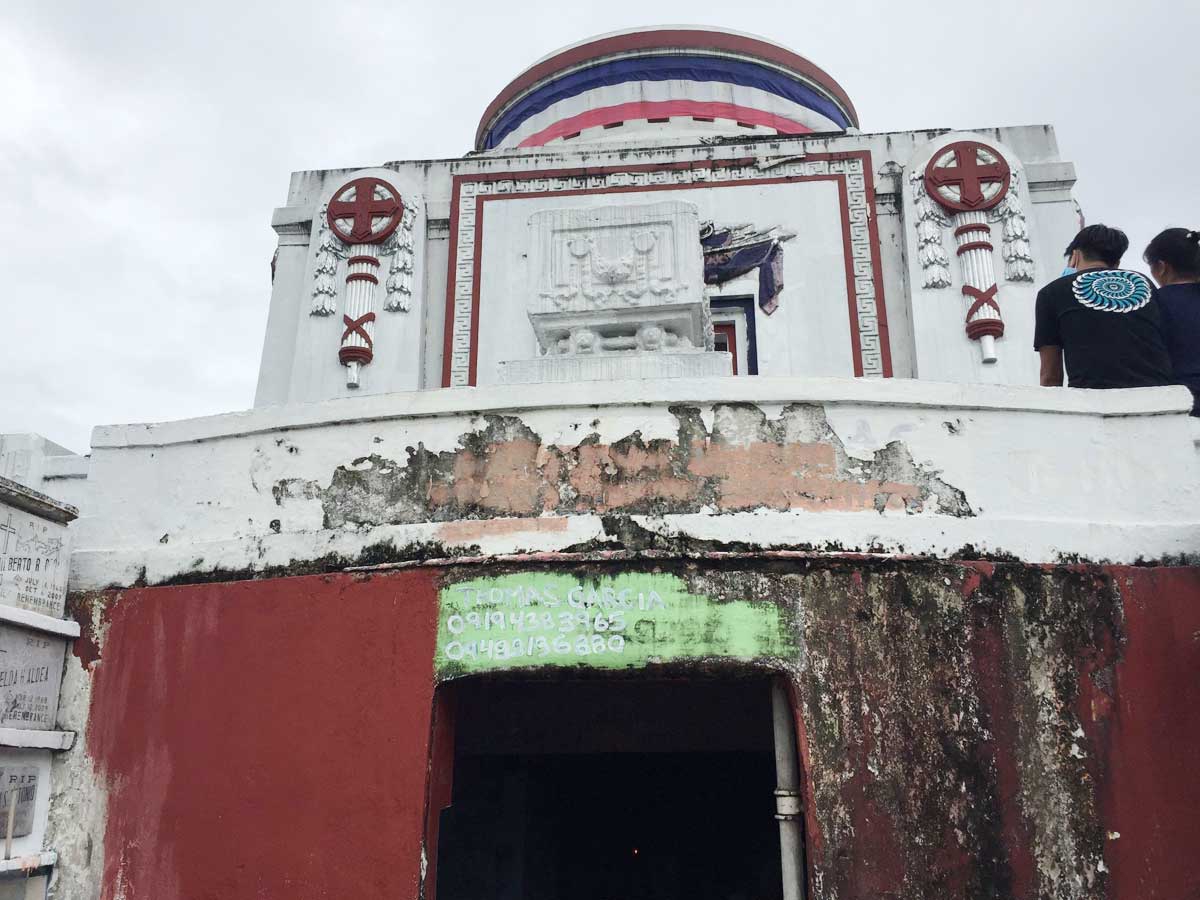
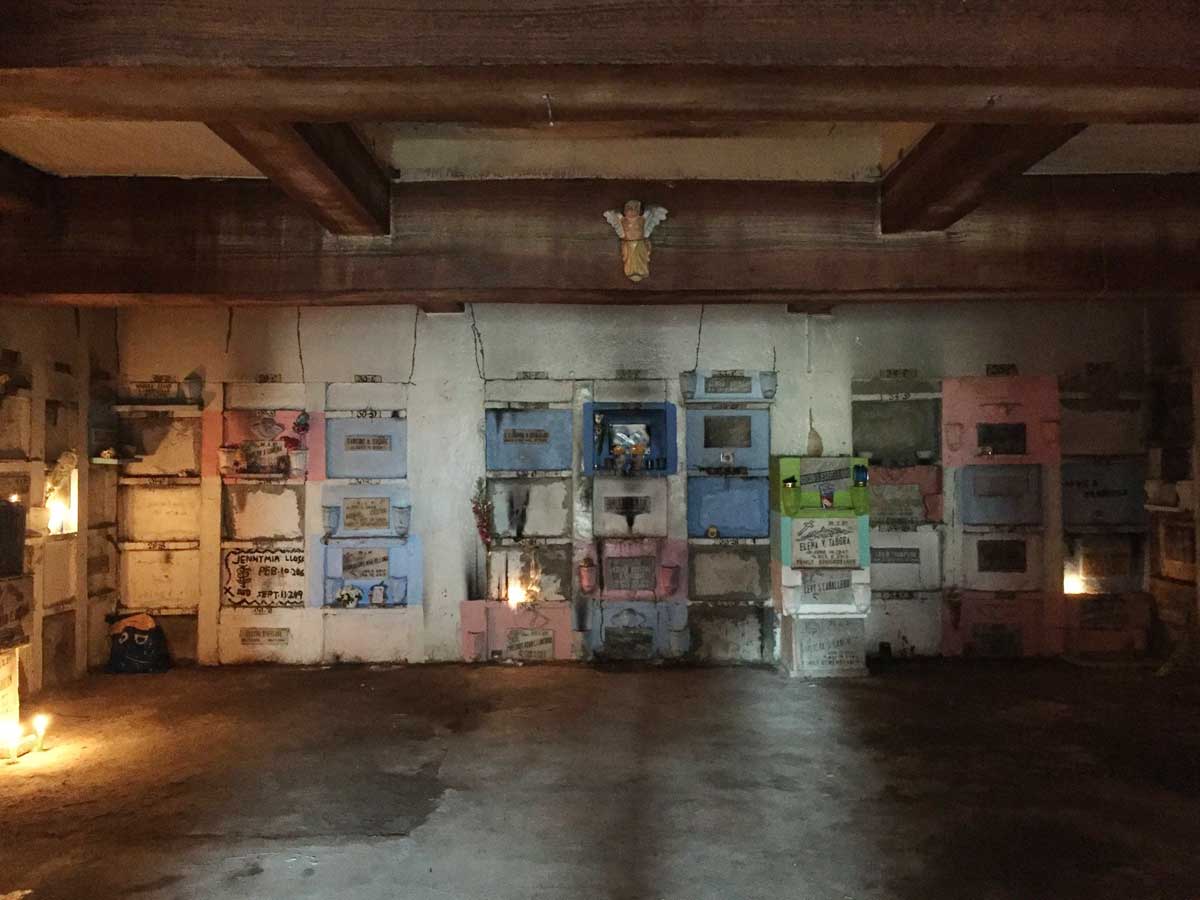
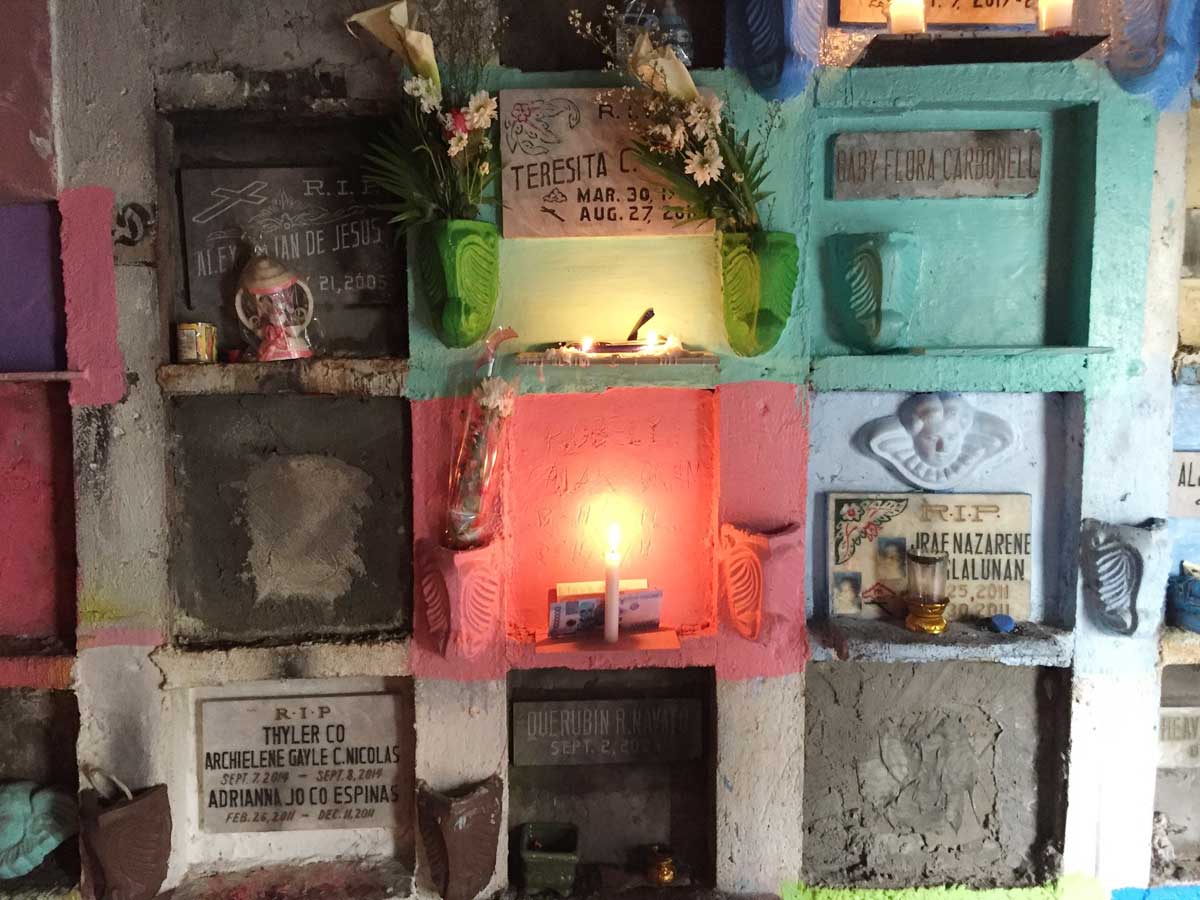
Castañeda said the Manila North Cemetery does not allow burials of aborted babies.
“Hindi naman sa hindi sila deserving na mailibing,” Castaneda explained. ”Para lang magkaroon sila ng kaunting takot (sa abortion).”
As a public institution, Ragrario said, “I understand that the North Cemetery may have their own policies” though “I personally think that all human remains need to be treated with dignity and in accordance with their or their loved ones’ wishes, regardless of the circumstances of passing.”
April Casilang, who was visiting her days-old baby girl Jovel at the “Haven for Unborn Babies,” cried upon remembering the death of her child to pneumonia in 2004.
“‘Pag hindi mo siya dinalaw, nananaginip ako na sinasabi niya, ‘Mama.’ Ngayong dumadalaw ako, naiiyak na naman ako. Kasi, hindi ko na naman siya madadalaw sa birthday at death anniversary niya,” Casilang said, explaining she lives far from the cemetery.
She is grateful for the place for deceased infants like her daughter.
The mausoleum
The mausoleum, on the other hand, is a repository of interesting architecture and historical images.
But in 1915, it was designed by Arcadio Arellano with bas reliefs of fasces, crosses, wreaths and swords in the Beaux-Arts style, Ragragio said in her study titled Ang Mamatay ng Dahil Sa Iyo: Patriots’ Graves at Manila Cemeteries and Neighboring Provinces (UP Press, 2016).
But it seems ironic that the Philippine government commemorates National Heroes Day at the mausoleum despite the biographies of those interred there.
The veterans buried there were mostly associated with the late revolutionary and first Philippine president Emilio Aguinaldo, who swore allegiance to the American government during the occupation, Ragragio pointed out.
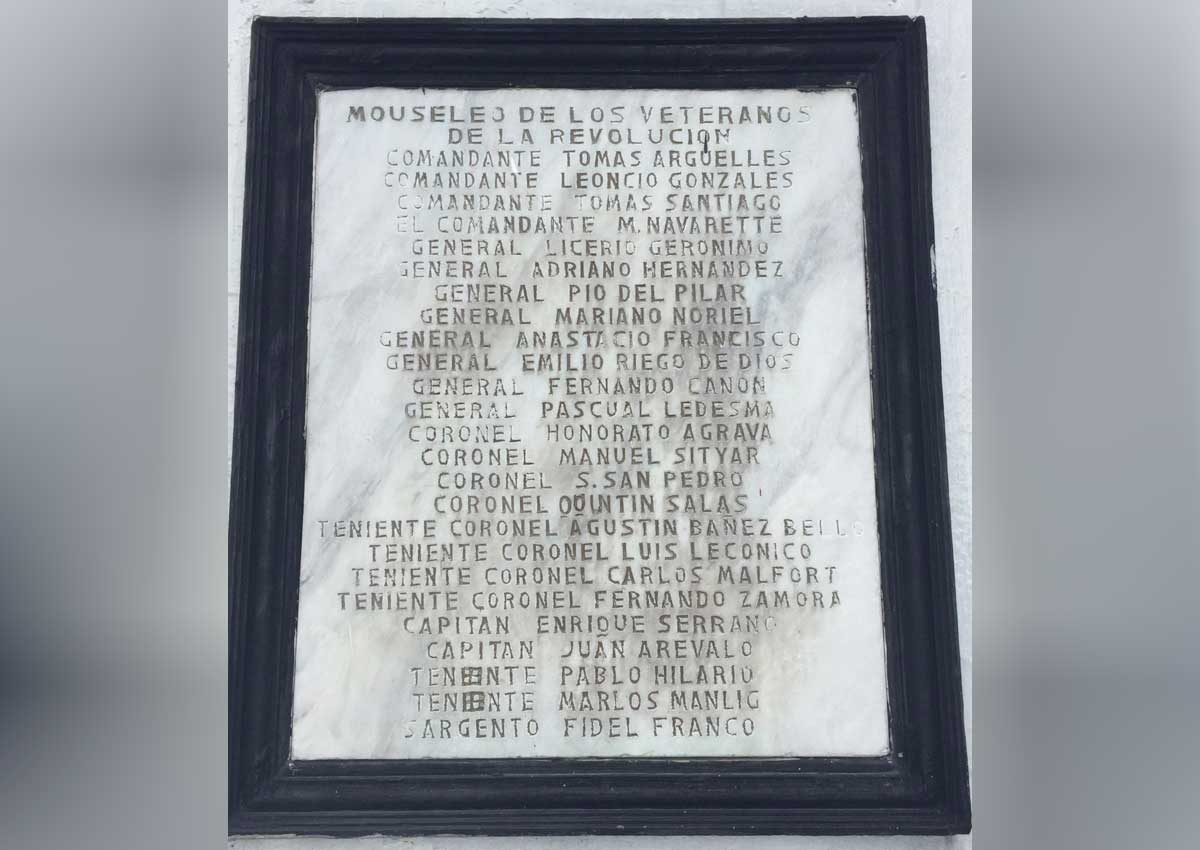
Another contradiction, she noted, was that although they had war experience, none of them died in combat during the Philippine revolution against Spain or the Philippine-American war.
“I think that one doesn’t necessarily need to die for the country to be considered a patriot, so I don’t think that should be an issue for those who are buried there,” Ragragio said. “But yes, I think that both the public at large and the state itself should revisit the meaning of this mausoleo with a better historical understanding of the biographies of the persons who were buried here, as well as the historical circumstances under which this mausoleo was built.”
“Just because it has become ‘tradition’ does not mean that we cannot pose new questions about it,” she added.
The Manila North Cemetery apparently used to be a spacious graveyard before hordes of people began flocking here yearly for Undas.
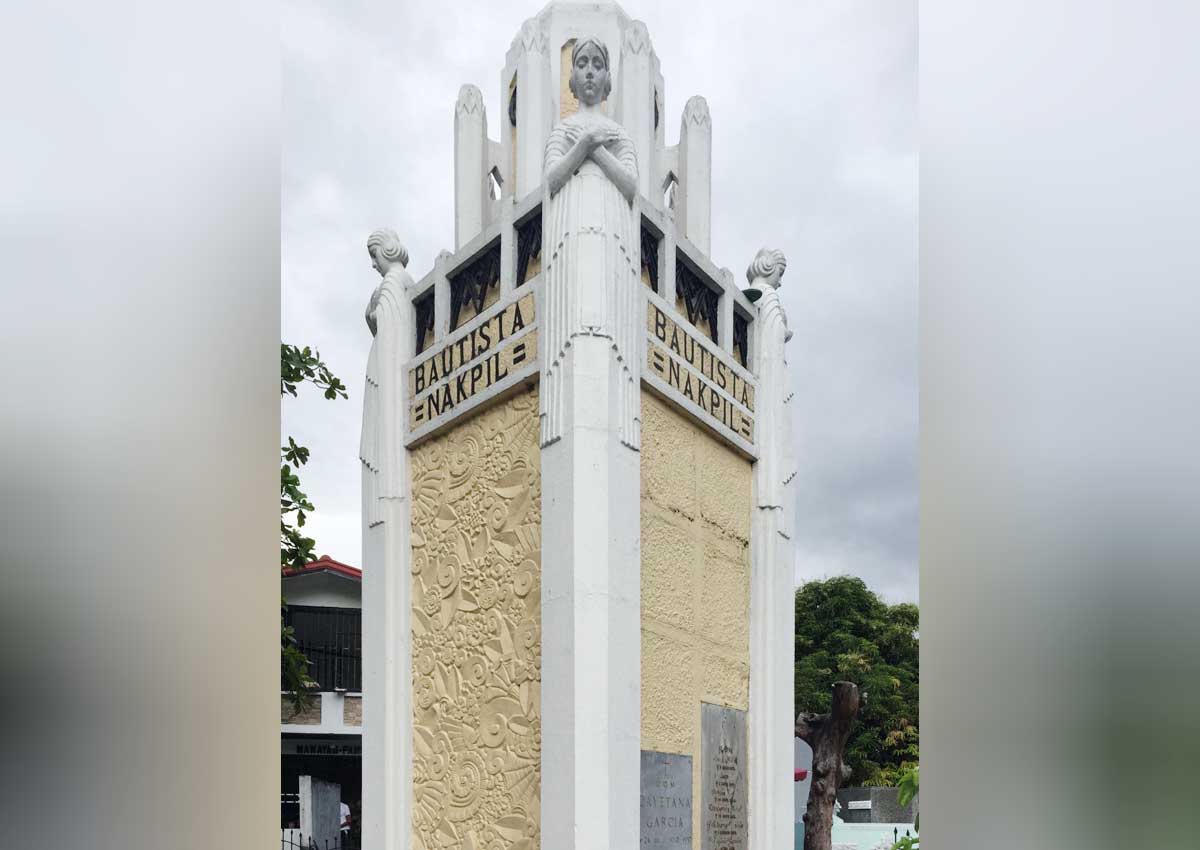
Visiting the tombs of his grandparents Ariston and Petrona Bautista, Rufino Bautista recalled still being able to drive the car up to the famed Nakpil-Bautista lot, where the Katipunan “lakambini” Gregoria de Jesus and composer Julio Nakpil were interred. Their son Juan Nakpil became national artist for architecture.
De Jesus was the wife of Katipunan founder Andres Bonifacio. She joined the Katipuneros in going to the mountains during the revolution. After Bonifacio was ordered executed, she undertook a futile search for her husband’s remains in the mountains of Maragondon, Cavite.
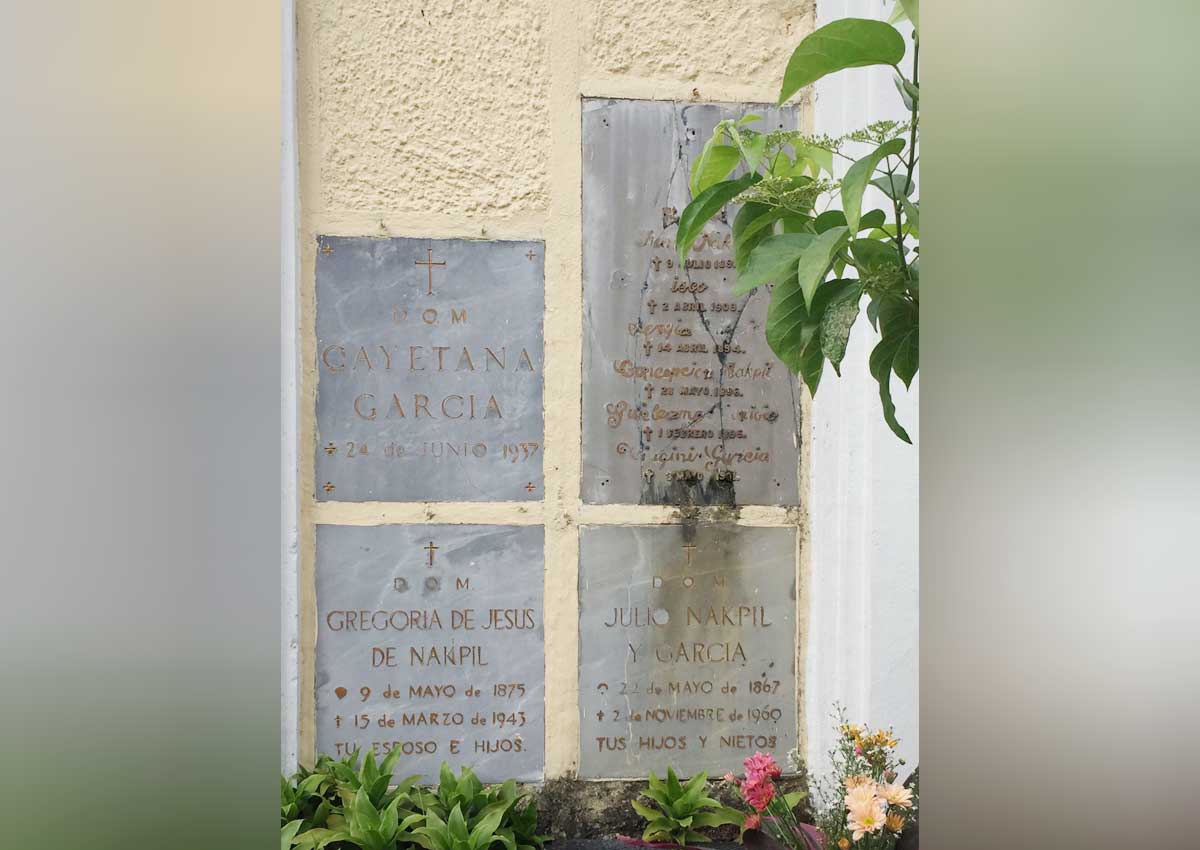
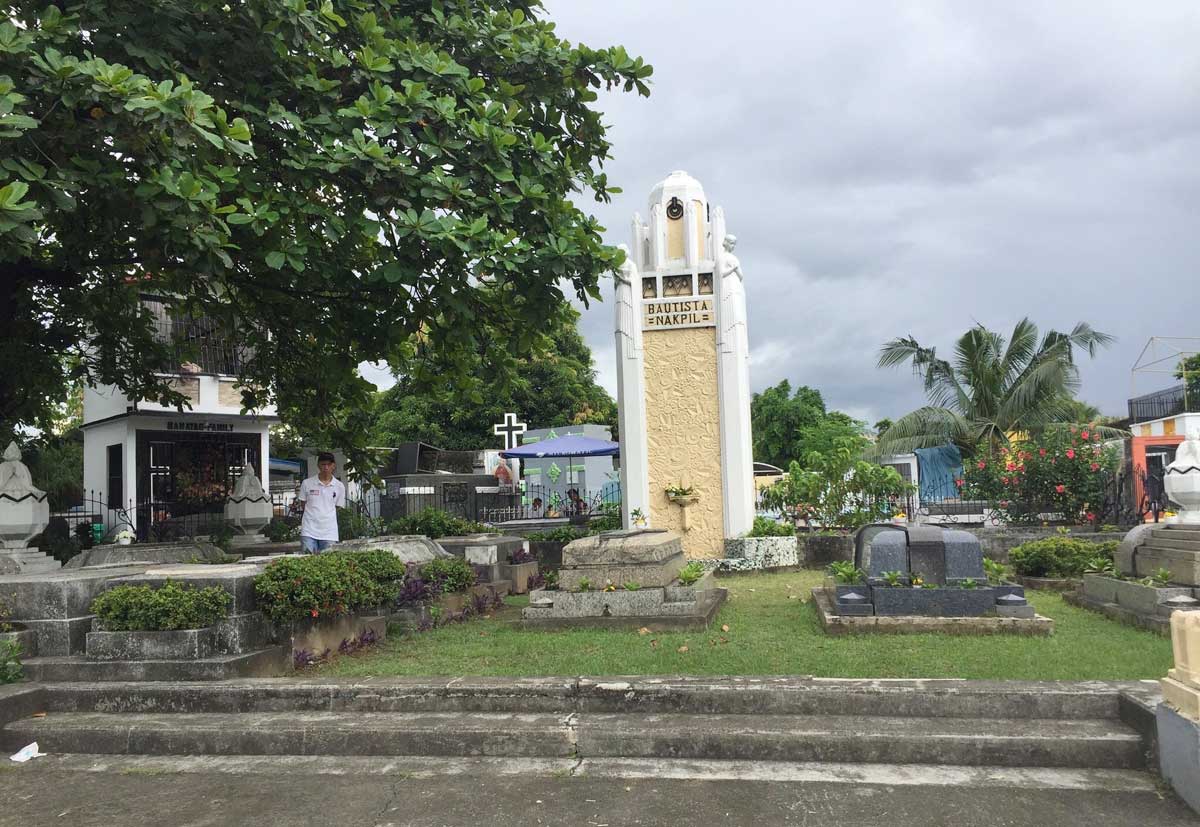
The Manila North Cemetery is also home to the tomb of the late Jose Corazon de Jesus, also known as Huseng Batute and the king of Balagtasan in Manila.
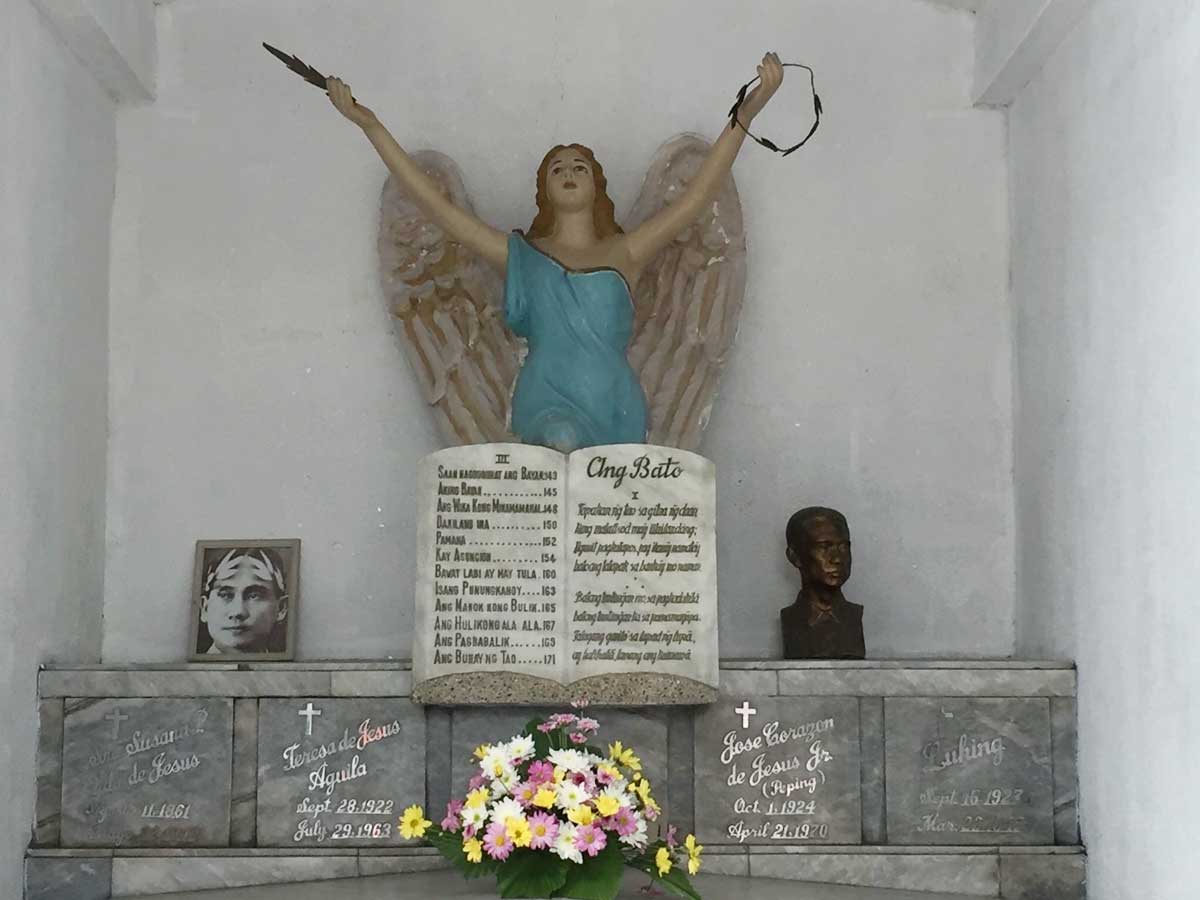
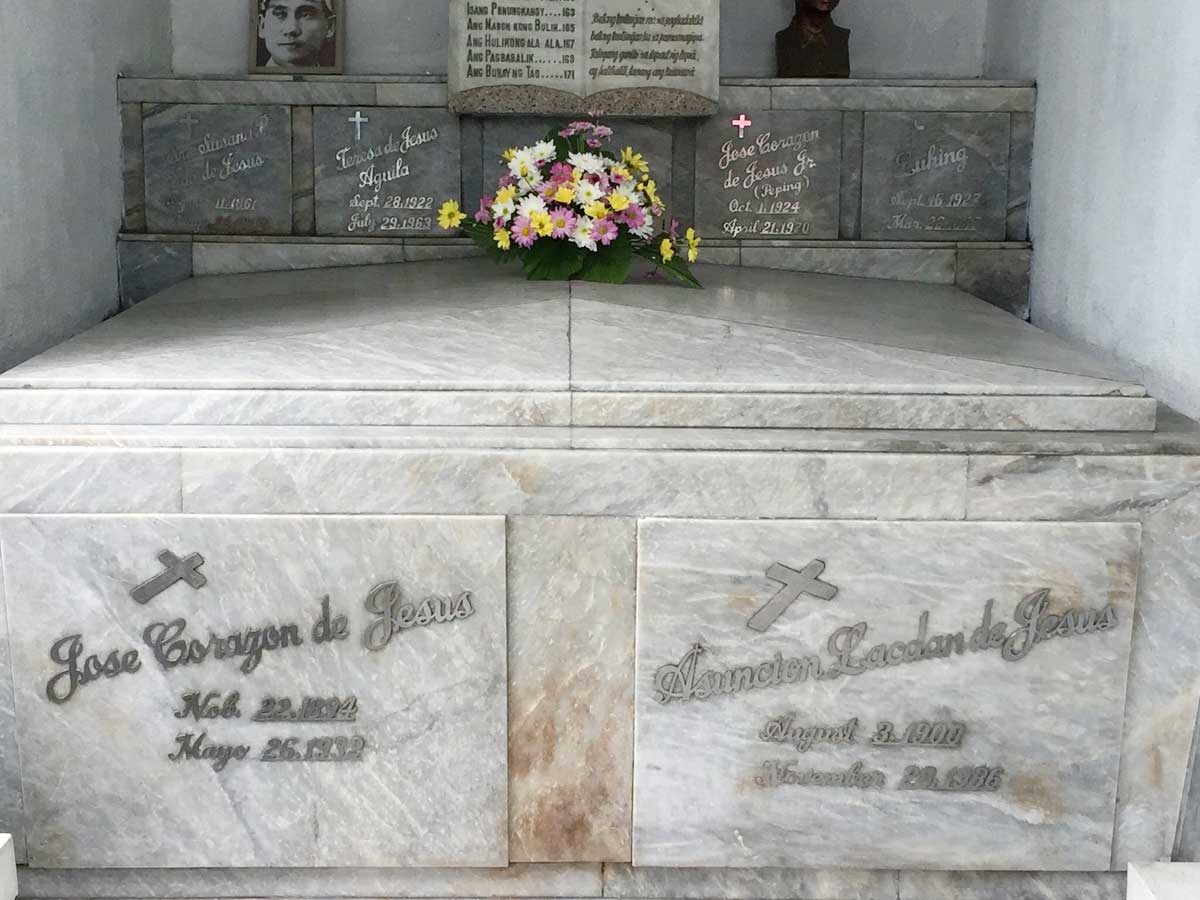
With the presence of such historic individuals, there is a need to develop the cemetery into a tourist destination while at the same time respecting the hallowed resting grounds of the country’s heroes, Castañeda said.
“The cemetery as a space and institution is still always changing, and very much alive,” Ragragio said.


